
Antihistamine Safety Checker
Is This Antihistamine Safe for Your Blood Pressure?
Check your medication against the latest research on blood pressure effects.
When you’re sneezing from pollen or itching from a bug bite, antihistamines can feel like a lifesaver. But if you have high blood pressure, a simple over-the-counter pill might not be as harmless as it seems. Not all antihistamines affect blood pressure the same way - and knowing the difference could prevent a dangerous drop or spike. The truth? Most modern antihistamines are safe, but a few - especially older ones and combo products - can mess with your numbers in ways you might not expect.
How Antihistamines Work (and Why They Might Affect Blood Pressure)
Antihistamines block histamine, a chemical your body releases during allergies. Histamine makes blood vessels widen, leak fluid, and swell - that’s why your nose runs and your eyes water. But histamine also plays a role in keeping your blood pressure steady. When you block it with an antihistamine, you’re not just calming your allergies; you might be changing how your blood vessels behave.
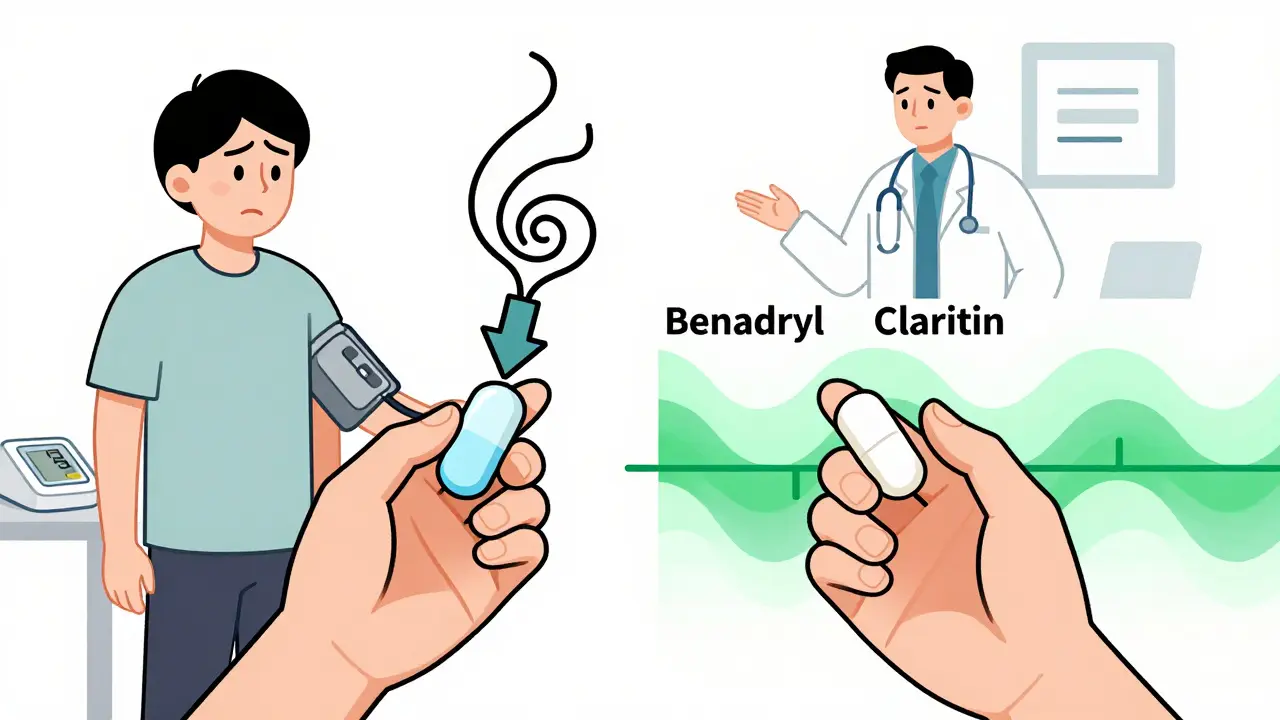
First-generation antihistamines like diphenhydramine (Benadryl) cross the blood-brain barrier easily. That’s why they make you drowsy - and why they can cause your blood pressure to dip. A 2023 analysis found that IV diphenhydramine lowers systolic pressure by 8-12 mmHg within 15 minutes. That’s not just a minor change - it’s enough to cause dizziness or fainting, especially if you’re already on blood pressure meds.
Second-generation antihistamines like loratadine (Claritin), cetirizine (Zyrtec), and fexofenadine (Allegra) were designed to avoid this. They barely enter the brain, last longer, and don’t interfere with blood pressure in most people. In fact, 97% of clinical trials reviewed by the FDA show loratadine has no meaningful effect on BP. Cetirizine even showed signs of reducing inflammation in heart tissue in a 2003 animal study.
First-Generation vs. Second-Generation: The Real Difference
Not all antihistamines are created equal. Here’s how they stack up:
| Antihistamine | Generation | BP Effect | Duration | Key Risks |
|---|---|---|---|---|
| Diphenhydramine (Benadryl) | First | Can lower BP (8-12 mmHg drop with IV use) | 4-6 hours | Orthostatic hypotension, dizziness, dry mouth |
| Chlorpheniramine | First | Mild BP drop possible | 4-6 hours | Anticholinergic effects, urinary retention |
| Loratadine (Claritin) | Second | Neutral - no significant change | 24 hours | Very low risk |
| Cetirizine (Zyrtec) | Second | Neutral - possible anti-inflammatory benefit | 24 hours | Minor drowsiness in some |
| Fexofenadine (Allegra) | Second | Neutral - least interaction risk | 12 hours | Minimal side effects |
First-gen drugs like diphenhydramine also block acetylcholine receptors. That’s why they cause dry mouth, constipation, and trouble peeing - and why they can trigger a fast heartbeat. But that doesn’t usually raise blood pressure. The bigger danger? A sudden drop in BP when you stand up. One Drugs.com review found 14% of users reported dizziness upon standing, and 7% specifically noted blood pressure drops in their diaries.
Second-gen antihistamines? They’re cleaner. They don’t cross into the brain, they’re less likely to interact with other meds, and they don’t cause the same level of drowsiness or dizziness. A 2022 survey of over 4,000 patients found 89% saw no change in their blood pressure using these drugs alone.
The Hidden Danger: Decongestant Combos
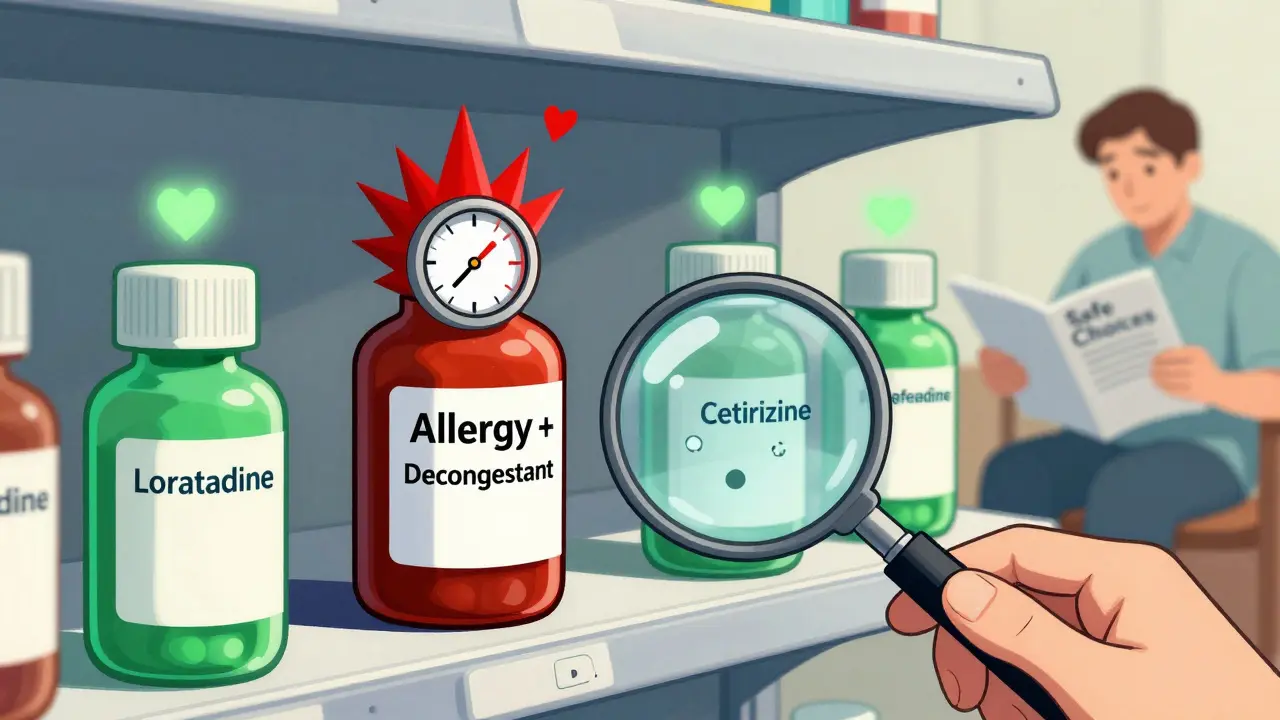
Here’s where things get tricky. Many allergy pills combine antihistamines with decongestants like pseudoephedrine (Sudafed) or phenylephrine. That’s because decongestants shrink swollen nasal passages - but they also tighten blood vessels.
That tightening? It raises blood pressure. GoodRx’s 2023 analysis of 12 studies showed:
- Pseudoephedrine raises systolic BP by about 1 mmHg on average - but in people with uncontrolled hypertension, it can spike 5-10 mmHg.
- Combos with ibuprofen can raise BP by 3-4 mmHg.
- Combos with acetaminophen can push it up by up to 5 mmHg, especially at the max daily dose of 4,000 mg.
And here’s the kicker: 22% of all antihistamine prescriptions in the U.S. include a decongestant. That means nearly 1 in 5 people with high blood pressure are unknowingly taking something that could worsen their condition. A 2022 survey found 47% of users who took these combo products noticed their BP went up - sometimes enough to trigger headaches or chest tightness.
Who Should Be Extra Careful?
Not everyone needs to avoid antihistamines. But if you fall into one of these groups, you should talk to your doctor before taking anything:
- You have uncontrolled high blood pressure (systolic over 140 mmHg)
- You take multiple blood pressure medications
- You have heart disease, arrhythmias, or a history of QT prolongation
- You’re on drugs that affect liver enzymes (like ketoconazole, erythromycin, or grapefruit juice)
- You’re over 65 - older adults are more sensitive to BP changes
Even if you’re healthy, if you’ve never taken an antihistamine before and have high BP, check your blood pressure before and 30-60 minutes after your first dose. That’s what the American Heart Association recommends. For second-gen antihistamines, you probably don’t need to monitor unless you feel off. For first-gen? Always check.
What the Experts Say
Back in 1999, the FDA pulled two antihistamines - terfenadine and astemizole - off the market because they caused dangerous heart rhythms. They didn’t affect BP directly; they blocked potassium channels in the heart, leading to long QT syndrome. That’s why doctors now avoid any drug with known QT risks.
Today’s second-gen antihistamines? They’re considered safe. The American College of Allergy, Asthma & Immunology recommends them as first-line for people with hypertension. In fact, 89% of allergists prefer them for patients with heart conditions.
Some newer research even suggests benefits. A 2014 study found that adding loratadine to heart attack treatment improved stress test results by 18%. Cetirizine reduced heart tissue damage by 27% in animal models. And a 2023 study hinted that cetirizine might reduce inflammation in blood vessels - a bonus for people with high BP.
Real-World Experiences
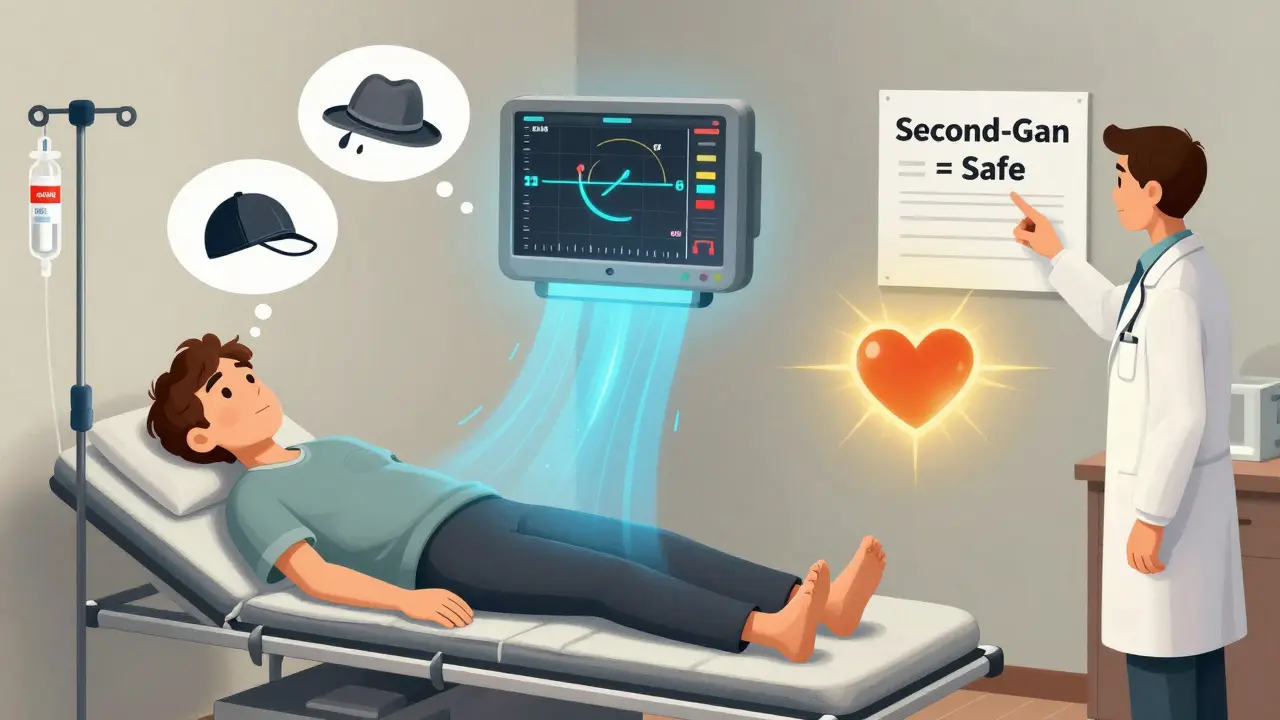
Online forums give a glimpse into what patients actually experience. On Reddit’s r/Allergy, 68% of users with hypertension said loratadine didn’t change their BP. But 22% who used diphenhydramine reported dizziness - and one user documented a 10-12 mmHg drop in systolic pressure after an IV dose during allergy testing. That’s why clinics now monitor patients for 30 minutes after IV antihistamines.
On the flip side, 92% of hypertensive patients surveyed by the American Academy of Allergy reported high satisfaction with cetirizine. No spikes. No crashes. Just relief from sneezing.
Monitoring and Next Steps
If you have high blood pressure and need an antihistamine:
- Avoid first-generation drugs like diphenhydramine unless absolutely necessary.
- Choose pure second-gen options: loratadine, cetirizine, or fexofenadine.
- Never use combo products with pseudoephedrine, phenylephrine, or NSAIDs unless your doctor says it’s safe.
- Check your BP before your first dose - and again 30-60 minutes later if you’re using a first-gen drug.
- Use a validated home monitor and log readings for 3 days before and after starting the med.
- If you feel dizzy, lightheaded, or have chest tightness, stop the med and call your doctor.
For most people, antihistamines are safe. But safety isn’t one-size-fits-all. Your body, your meds, your history - they all matter. The best choice isn’t the cheapest or most popular pill. It’s the one that keeps your allergies under control without risking your heart.
Can antihistamines raise your blood pressure?
Pure antihistamines like loratadine, cetirizine, and fexofenadine do not raise blood pressure. But combination products that include decongestants like pseudoephedrine can increase systolic pressure by 5-10 mmHg - especially in people with uncontrolled hypertension. Always check the label for hidden decongestants.
Is Benadryl safe if I have high blood pressure?
Diphenhydramine (Benadryl) can lower blood pressure, especially when given intravenously or in high doses. It may cause dizziness or fainting when standing up. While not dangerous for everyone, it’s not the best choice for people with hypertension. Second-generation antihistamines are safer and just as effective.
Which antihistamine is best for someone with high blood pressure?
Loratadine (Claritin), cetirizine (Zyrtec), and fexofenadine (Allegra) are the safest options. They don’t raise blood pressure, have minimal side effects, and rarely interact with other medications. Avoid anything labeled "sinus," "cold," or "allergy plus decongestant" - those contain pseudoephedrine or phenylephrine.
Do antihistamines interact with blood pressure meds?
Most second-generation antihistamines don’t interact with common blood pressure drugs. But first-gen antihistamines like diphenhydramine can increase drowsiness or dizziness when combined with beta-blockers or diuretics. Also, grapefruit juice and some antibiotics (like erythromycin) can interfere with how your body breaks down certain antihistamines - raising the risk of side effects.
Should I check my blood pressure after taking an antihistamine?
Yes - especially if you’re using a first-generation antihistamine or have uncontrolled hypertension. Check your BP before taking it, then again 30-60 minutes later. If you notice a drop of more than 10 mmHg or feel dizzy, stop and consult your doctor. For second-gen antihistamines, monitoring is usually only needed if you have symptoms or severe heart disease.
Comments
Megan Nayak
I don't trust any of this. They say second-gen are safe but what about long-term use? They're literally in every medicine cabinet. You think Big Pharma doesn't know this? Of course they do. They just don't care. I've been on cetirizine for 8 years. My BP was stable until last year. Coincidence? I think not. They're slowly killing us with 'safe' meds.
March 2, 2026 at 20:32
Tildi Fletes
The data presented here is largely accurate and well-sourced. However, one critical nuance is often overlooked: individual pharmacogenomic variability. While population studies show loratadine as neutral for BP, some CYP3A4 slow metabolizers may accumulate metabolites that interact with vascular receptors. A 2021 JAMA study identified a subgroup of 4.7% of hypertensive patients who experienced mild systolic increases on standard doses. Genetic testing isn't routine, but if you have unexplained BP fluctuations, it's worth discussing with your pharmacist.
March 3, 2026 at 09:56
Gretchen Rivas
Stick to fexofenadine. No drowsiness. No BP issues. No hidden junk. I'm 68, hypertensive, and take it daily. No problems. Simple.
March 4, 2026 at 09:17
Mike Dubes
i had no idea decongestants were such a sneaky trap. i always thought benadryl was fine since it's 'natural' (lol). turned out my headaches were from the pseudoephedrine in that 'allergy plus' stuff. switched to zyrtec and my bp went back to normal. thanks for the heads up!
March 4, 2026 at 14:07
Helen Brown
This is all government propaganda. They want you to take the pills so they can monitor you. Every time you buy antihistamines, your data goes to the CIA. They use it to control your blood pressure. You think that's a coincidence? Wake up.
March 4, 2026 at 17:48
John Cyrus
People need to stop being lazy and just read labels. If you don't know what's in your medicine you deserve whatever happens. I've been taking claritin for 15 years and never had a problem. Stop blaming the drug and start taking responsibility. Also stop using combo products. It's not rocket science.
March 5, 2026 at 08:58
John Smith
Y'all are overcomplicating this like it's a damn PhD thesis. Antihistamines? Yeah they're fine. Decongestants? Those are the real villains. I used to chug Sudafed like candy till my BP hit 180/110. Dumbass move. Now I take Allegra and chill. Simple as that. Stop giving me science lectures and just tell me what to take.
March 6, 2026 at 07:08
Sharon Lammas
I think it's beautiful how much we've learned about histamine's role beyond allergies. It's not just about sneezing-it's about our whole vascular system. The fact that cetirizine might reduce heart tissue inflammation? That's profound. It makes me wonder what other hidden connections we're missing. Maybe healing isn't just about blocking things… maybe it's about restoring balance.
March 8, 2026 at 03:17
marjorie arsenault
You got this. If you're worried, start with fexofenadine. It's gentle, clean, and works great. And if you're on meds already? Talk to your pharmacist-they're the real MVPs. You're not alone. Many of us are navigating this too. Small steps, big wins.
March 8, 2026 at 05:02