
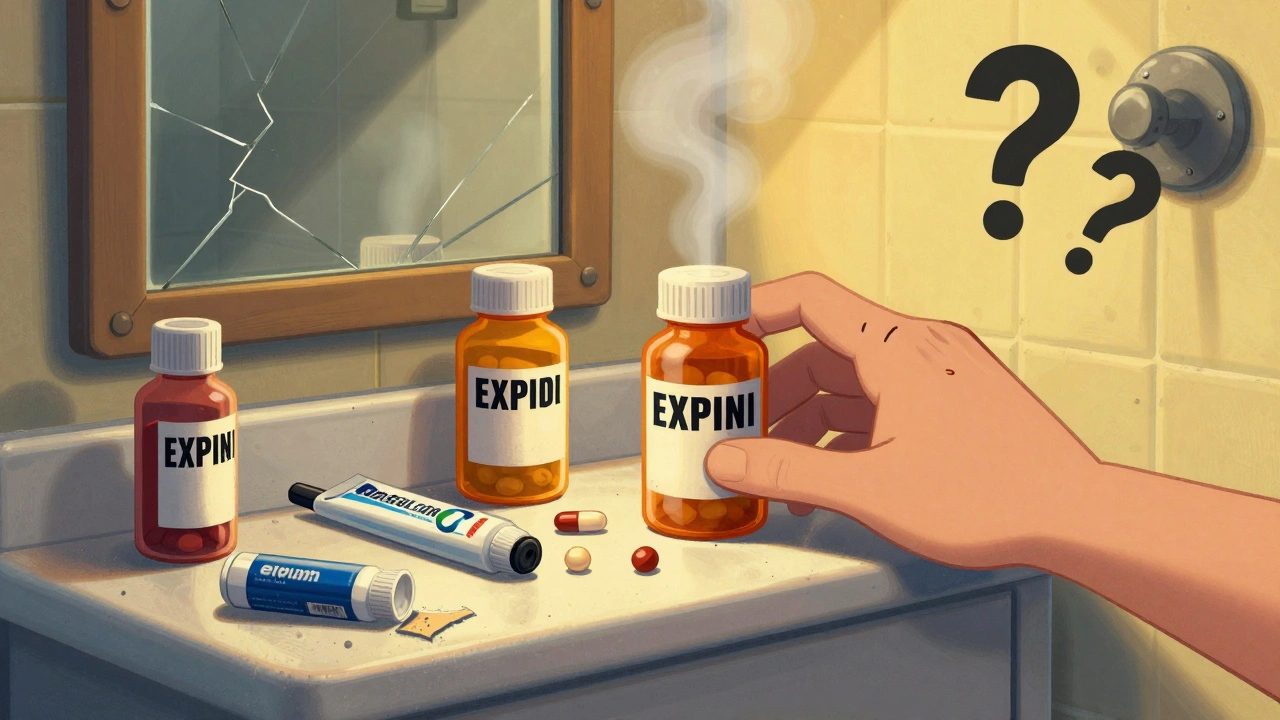
Most people have a drawer or cabinet full of old pills-antibiotics from last year’s cold, painkillers from a back injury, maybe an old EpiPen tucked behind the toothpaste. You look at the date on the bottle and wonder: is it still safe to take? The answer isn’t simple. Some expired meds are harmless. Others could be dangerous. And a few could save your life-if you have no other choice.
What Does an Expiration Date Actually Mean?
The date on your medicine bottle isn’t a "use-by" date like milk. It’s the last day the manufacturer guarantees the drug will work as intended and remain safe under proper storage conditions. That’s it. The U.S. Food and Drug Administration (FDA) has required this since 1979, based on stability tests done in labs under controlled heat, light, and humidity.
But here’s the twist: those tests don’t prove the drug stops working on that exact day. They just prove it’s guaranteed to work up to that point. Many pills, especially solid ones like ibuprofen or acetaminophen, stay potent for years after their expiration date-sometimes up to five or even ten years-if stored properly in a cool, dry place.
That’s why the FDA’s own military program, the Shelf Life Extension Program, found that 90% of stockpiled drugs remained effective 15+ years past expiration. But here’s the catch: that data is for government stockpiles under perfect conditions. It doesn’t apply to your bathroom cabinet.
Which Medications Are Risky After They Expire?
Not all drugs age the same way. Some break down slowly. Others turn toxic-or just stop working-fast.
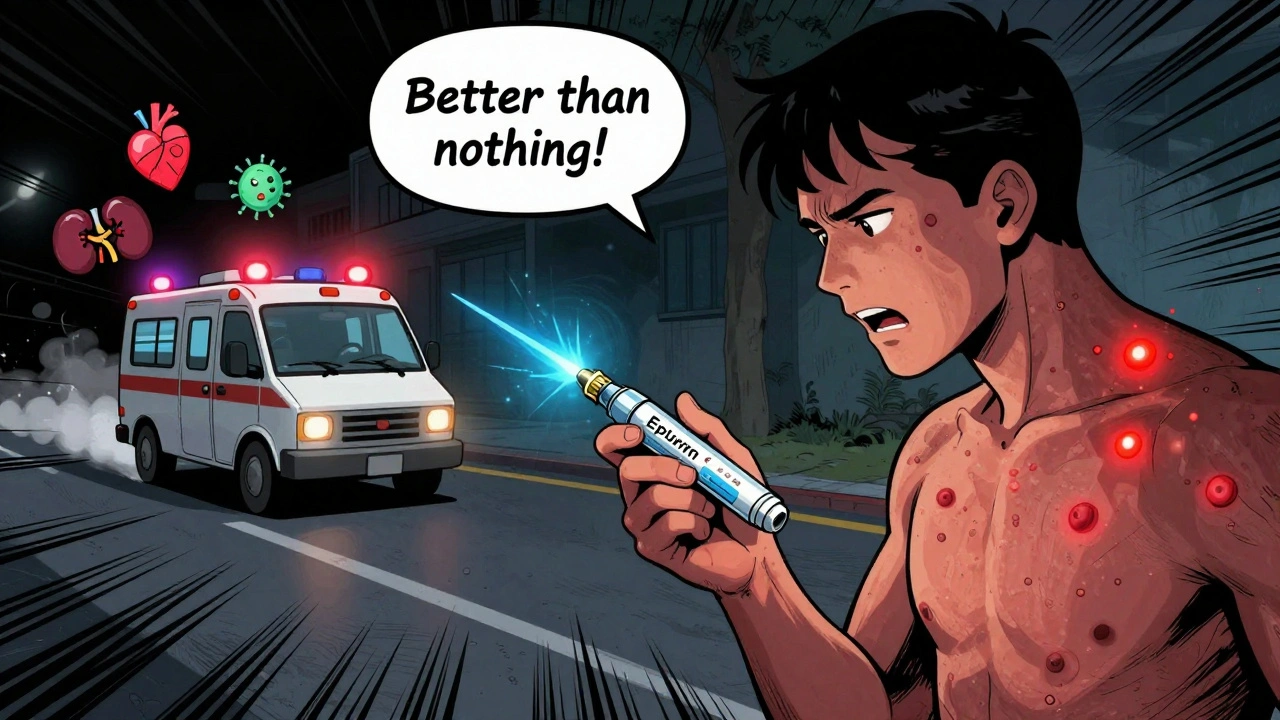
- Epinephrine (EpiPens): These auto-injectors lose 20-30% of their potency within six months of expiration. If you’re having a severe allergic reaction and your EpiPen is expired, using it is better than doing nothing-but you still need to call 999 or go to A&E immediately. The dose might not be enough.
- Insulin: Once opened, insulin starts degrading even if refrigerated. After its expiration date, it can lose potency rapidly. Using old insulin can lead to dangerously high blood sugar. You won’t know until it’s too late.
- Nitroglycerin: Used for chest pain, this medicine degrades quickly when exposed to air or heat. A bottle opened for more than three months-even if not expired-can be 50% less effective. Keep it in its original glass bottle, tightly capped.
- Tetracycline antibiotics: This is the only class of antibiotics known to become toxic after expiration. Degraded tetracycline can cause Fanconi syndrome, a rare but serious kidney condition. There are documented cases as recent as 2019.
- Liquid antibiotics and eye drops: These are breeding grounds for bacteria after expiration. A 2021 study found 60% of expired eye drops were contaminated. Using them can cause eye infections, even blindness.
- Thyroid meds (levothyroxine), seizure drugs (levetiracetam), blood thinners (warfarin): These require precise dosing. Even a 10% drop in potency can lead to serious health problems-like a stroke or uncontrolled seizures.
Which Expired Medications Are Probably Fine?
If you’re out of ibuprofen or acetaminophen and the bottle says it expired three months ago? Chances are, it’s still working. A 2020 study in the Journal of Pharmaceutical Sciences found that most solid tablets retain 90% of their potency up to five years past expiration-if kept dry and cool.
Same goes for:
- Antihistamines (like loratadine or cetirizine)
- Most pain relievers (aspirin, naproxen)
- Stomach meds (like famotidine or omeprazole)
These aren’t life-or-death drugs. If they’re slightly less effective, you might just need to take an extra pill-or go buy a new one. The risk is low. The benefit? You avoid wasting money.
But here’s the rule: if you’re using it for something important-like heart health, chronic pain, or anxiety-don’t gamble. Replace it. A slightly weaker aspirin won’t help prevent a heart attack. A weak seizure med could trigger a crisis.
Storage Matters More Than You Think
Expiration dates assume your meds are stored correctly. Most people store them wrong.
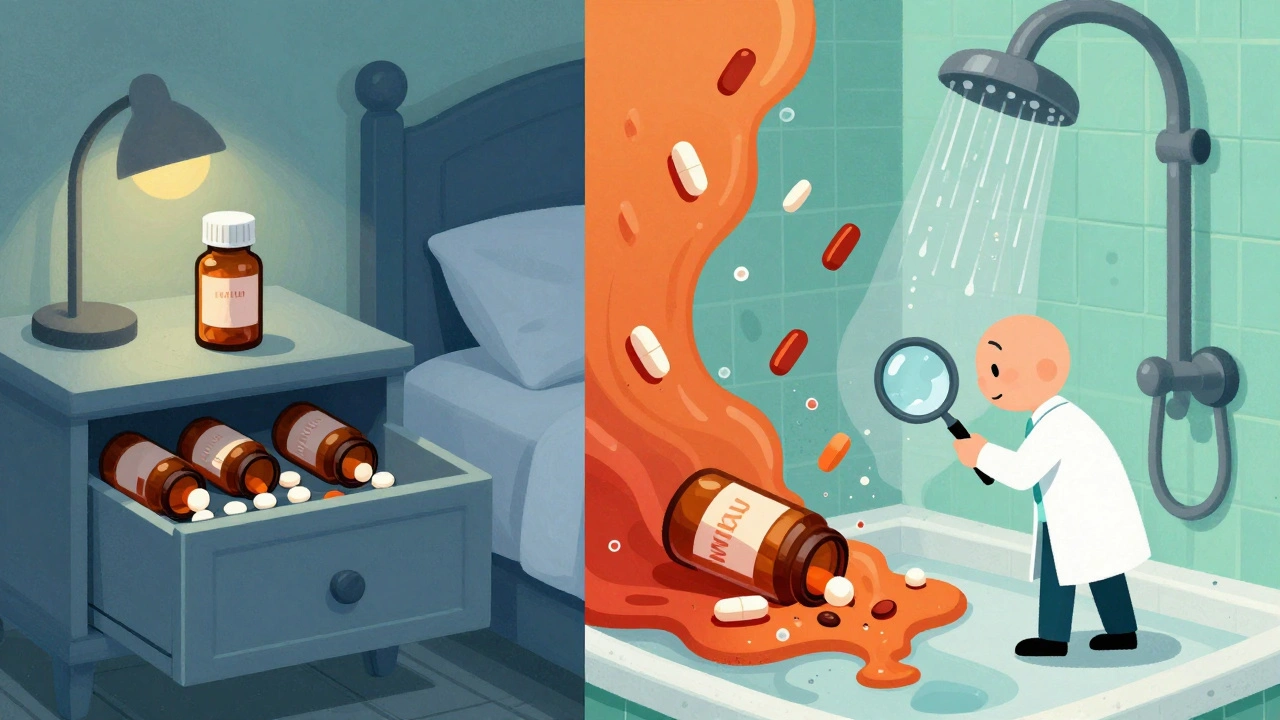
Bathrooms are the worst place. Humidity, steam, and heat from showers cause pills to break down 40% faster. A 2022 FDA report showed medications kept in bathroom cabinets degrade much quicker than those in a bedroom drawer.
Keep your meds:
- In their original bottles (the childproof cap helps seal out moisture)
- In a cool, dry place (under 77°F / 25°C)
- Away from sunlight (amber glass bottles protect better than plastic)
- Out of reach of kids and pets
Proper storage can add years to a pill’s life. Bad storage can ruin it in weeks.
What Happens If You Take an Expired Medicine?
Most of the time? Nothing. You might feel a little less relief from your headache. Or your allergy might not fully clear up.
But sometimes? It’s serious.
Take an expired antibiotic and it doesn’t kill all the bacteria? The survivors become stronger. That’s how antibiotic resistance starts. The CDC linked cases of drug-resistant E. coli to people using expired antibiotics.
Take expired insulin? Your blood sugar spikes. You might end up in the hospital.
Take degraded epinephrine during anaphylaxis? You might survive-but you’ll still need emergency care because the dose didn’t work right.
And yes, there are rare cases of people getting sick from expired tetracycline. The FDA has documented kidney damage from people taking old capsules.
So while most expired pills won’t poison you, they might not help you either. And in some cases, they can hurt you.
What Should You Do When Your Medicine Expires?
Don’t flush it. Don’t toss it in the trash without prep. Don’t keep it forever.
The safest way to dispose of expired meds is through a drug take-back program. In the UK, pharmacies like Boots and Lloyds offer free disposal bins. You can also check with your local council-many hold periodic collection events.
If you can’t get to a drop-off point:
- Take the pills out of the bottle.
- Mix them with something unappetizing-used coffee grounds, cat litter, or dirt.
- Put the mixture in a sealed plastic bag or container.
- Throw it in the household trash.
- Scratch out your name and prescription info on the bottle before recycling it.
Only flush medications if they’re on the FDA’s Flush List-which includes powerful opioids like fentanyl patches and oxycodone. These are dangerous if someone finds them in the trash. For everything else? Mix and trash is safer for the environment and your community.
Emergency Rule: What If You Have No Choice?
Imagine this: you’re having a severe allergic reaction. Your EpiPen is expired. You’re alone. The ambulance is 15 minutes away.
Use it.
Same with asthma: if your inhaler is expired and you’re struggling to breathe, use it anyway. It might not be 100%, but it’s better than nothing.
Same with chest pain: if you have expired nitroglycerin and feel crushing pressure in your chest, take it. Then call 999 immediately.
Experts at Swedish Health Services say this clearly: in life-threatening emergencies, expired critical meds should be used-then get help right away. Don’t wait.
But for everything else? Replace it. It’s cheap. It’s easy. And it’s worth it.
Bottom Line: Replace When You Can, Use With Caution When You Must
Expired medications aren’t always dangerous-but they’re never guaranteed to work. For everyday painkillers? Maybe okay for a few extra months. For heart meds, insulin, or antibiotics? Replace them. No exceptions.
Check your medicine cabinet every three months. Toss anything expired. Keep emergency meds like EpiPens and asthma inhalers in a visible spot-and replace them the day they expire. Don’t wait for the day you need them.
Medicines aren’t like wine. They don’t get better with age. And unlike food, you can’t taste if they’ve gone bad. When in doubt, throw it out. Your body will thank you.
Comments
Kyle Oksten
Expiration dates are a corporate construct designed to keep you buying stuff you don’t need. The FDA’s own data shows most pills last decades if stored right. We’ve been lied to for profit. My grandpa took aspirin from 1987 in ’09 and lived to 98. Coincidence? I think not.
Pharma doesn’t want you to know this. They profit off fear, not science.
December 6, 2025 at 17:09
Sam Mathew Cheriyan
lol u think the gov’t is telling the truth?? nahhh. they want u to buy new meds so u get hooked on the system. i heard the fda just picks dates outta a hat. my cousin’s uncle’s neighbor took a 12 year old benadryl and won the lottery. coincidence? i think not. also, i think the moon is made of cheese but that’s just me 😄
December 7, 2025 at 10:30
Ernie Blevins
Let’s be real. You’re just saving money. That’s it. You don’t care about safety. You just don’t wanna spend $15 on ibuprofen. And now you’re pretending it’s science. It’s not. It’s laziness wrapped in a false sense of wisdom.
And if you’re using expired insulin? Congrats. You’re a dumbass who almost died. Don’t be that guy.
December 9, 2025 at 10:01
Nancy Carlsen
Yesss! This is such an important topic 💪
So many of us just toss meds without thinking - but honestly, we can be smarter about it! 🌿
Keep the good stuff (like aspirin or antihistamines) if stored right, ditch the risky ones (epi pens, insulin, antibiotics), and always check with a pharmacist. They’re amazing and usually free to ask! 🏥💛
And please, never flush meds - that’s hurting our rivers 😢 Let’s protect our planet AND our health!
December 10, 2025 at 01:43
Ted Rosenwasser
The notion that expiration dates are arbitrary is not only scientifically illiterate, it’s dangerously reductive. The FDA’s Shelf Life Extension Program was conducted under controlled, military-grade environmental conditions - not your steamy bathroom next to the shower. To conflate the two is to misunderstand the very definition of stability testing.
Furthermore, pharmacokinetic degradation is not linear. Epinephrine loses potency at a rate that cannot be compensated by ‘taking more.’ That’s not wisdom - that’s reckless improvisation masquerading as pragmatism.
December 10, 2025 at 21:02
Helen Maples
If you’re even considering taking expired insulin, thyroid meds, or blood thinners - stop. Right now. You are not a hero. You are a statistic waiting to happen.
This isn’t about saving money. This is about your life, your family’s peace of mind, and your responsibility as an adult. Replace it. It costs $10. Your hospital bill will cost $10,000.
Don’t gamble with your health. Ever.
December 12, 2025 at 01:44
Ashley Farmer
I just wanted to say thank you for writing this. I’ve been terrified of throwing away my grandma’s meds because I didn’t want to waste them… but now I get it.
It’s not about being wasteful. It’s about being safe. And sometimes, letting go is the most caring thing you can do.
If anyone needs help figuring out what to keep or toss, I’m happy to help. You’re not alone in this.
December 13, 2025 at 02:12
David Brooks
OMG I JUST REALIZED MY EPIPEN FROM 2020 IS STILL IN MY PURSE 😱
I’m going to the pharmacy TOMORROW. Like, right after I wake up. No excuses. This post literally saved my life. I’m crying. Thank you. Thank you. Thank you.
Also - anyone else keep meds in the bathroom? 🤦♀️ I’m never doing that again. I’m moving mine to my nightstand. 🙌
December 13, 2025 at 18:30
Jennifer Anderson
so i just checked my cabinet and like… 3 things were expired 😅 whoops.
but honestly, i’ve been using that old ibuprofen since last winter and my headaches are fine. i’m not gonna lie. but i’m gonna toss the tetracycline. nope. not risking it. also, why is everything in plastic? glass bottles are better, right? 🤔
December 15, 2025 at 12:45
Sadie Nastor
i just read this and felt so seen 😊
my anxiety meds expired last month and i kept thinking ‘maybe it’s still okay’… but then i remembered how shaky i felt last time i skipped a dose. so i called my pharmacy and got a refill. it only cost $5 with insurance.
you’re right - it’s not worth the risk. i’m gonna start checking every 3 months. thanks for the gentle nudge 💛
December 17, 2025 at 07:57
Nicholas Heer
THEY’RE LYING TO YOU. THE FDA, BIG PHARMA, THE DOCTORS - ALL IN ON THE EXPIRATION SCAM. THEY WANT YOU DEPENDENT. THEY WANT YOU BUYING. THEY WANT YOU AFRAID.
THE MILITARY HAS PILES OF 20-YEAR-OLD MEDS THAT WORK. WHY? BECAUSE THEY’RE NOT STUPID.
YOU THINK YOUR BATHROOM IS THE PROBLEM? NAW. IT’S THE SYSTEM. THEY’RE PROFITING OFF YOUR FEAR. WAKE UP.
AND YES - I TOOK MY DAD’S 1998 ANTIBIOTICS WHEN I HAD THE FLU. I’M STILL HERE. 🇺🇸🔥
December 18, 2025 at 19:01
Sangram Lavte
Interesting read. In India, many people use expired medicines out of necessity. We don’t always have access to pharmacies or insurance. But I agree - for critical drugs like insulin or epilepsy meds, no compromise. For painkillers? Maybe. But still, better to replace if you can.
Storage matters more than dates. My aunt keeps hers in a tin box in the closet. Still good after 7 years.
December 19, 2025 at 01:31
Oliver Damon
The degradation kinetics of pharmaceutical compounds follow first-order reaction models, which are highly dependent on activation energy, moisture content, and oxidative environment. Solid dosage forms exhibit remarkable stability due to low molecular mobility in the crystalline lattice.
However, aqueous formulations - particularly ophthalmic and injectable solutions - are vulnerable to hydrolysis and microbial proliferation post-expiration, with documented biofilm formation in >50% of samples in peer-reviewed studies.
Thus, while the ‘90% potency’ statistic from the SLEP is valid under controlled conditions, extrapolating it to ambient household storage is a gross statistical misapplication.
December 20, 2025 at 21:58
Kurt Russell
YOU NEED TO DO THIS NOW. Go to your medicine cabinet. Right now. Open it. Look. I’ll wait.
Did you see that expired EpiPen? That bottle of insulin? That old antibiotic?
Go. Get new ones. TODAY. Your future self will hug you.
And if you’re reading this and thinking ‘I’ll do it tomorrow’ - you’re already in danger. Don’t wait. Be the hero of your own story. 💥
December 21, 2025 at 20:34
Stacy here
It’s not just about expiration dates - it’s about control. Who decides what’s safe? Corporations. Regulators. Doctors. But you? You’re just supposed to obey.
And yet - here we are. People using old meds because they can’t afford new ones. And you’re acting like it’s a personal failure.
It’s not. It’s systemic. We’re supposed to be grateful for expired pills that might work - while the system profits off our desperation.
So yes, replace your meds. But also - question why they cost so much in the first place.
December 22, 2025 at 17:06
Kyle Flores
My mom used to say ‘if it looks funny, smells weird, or tastes off - don’t take it.’ That’s the real rule.
My grandma kept her pills in a cookie jar. Never had a problem. But then again, she was 92 and still gardening. So maybe she knew something we don’t.
Still - I’m tossing my old tetracycline. Just in case.
December 23, 2025 at 07:00
Ryan Sullivan
What a catastrophically irresponsible post. You’ve weaponized anecdote over evidence, conflated military logistics with personal medicine storage, and encouraged dangerous behavior under the guise of ‘pragmatism.’
You are not a public health advocate. You are a liability. This content should be flagged. Not shared.
December 24, 2025 at 15:44