
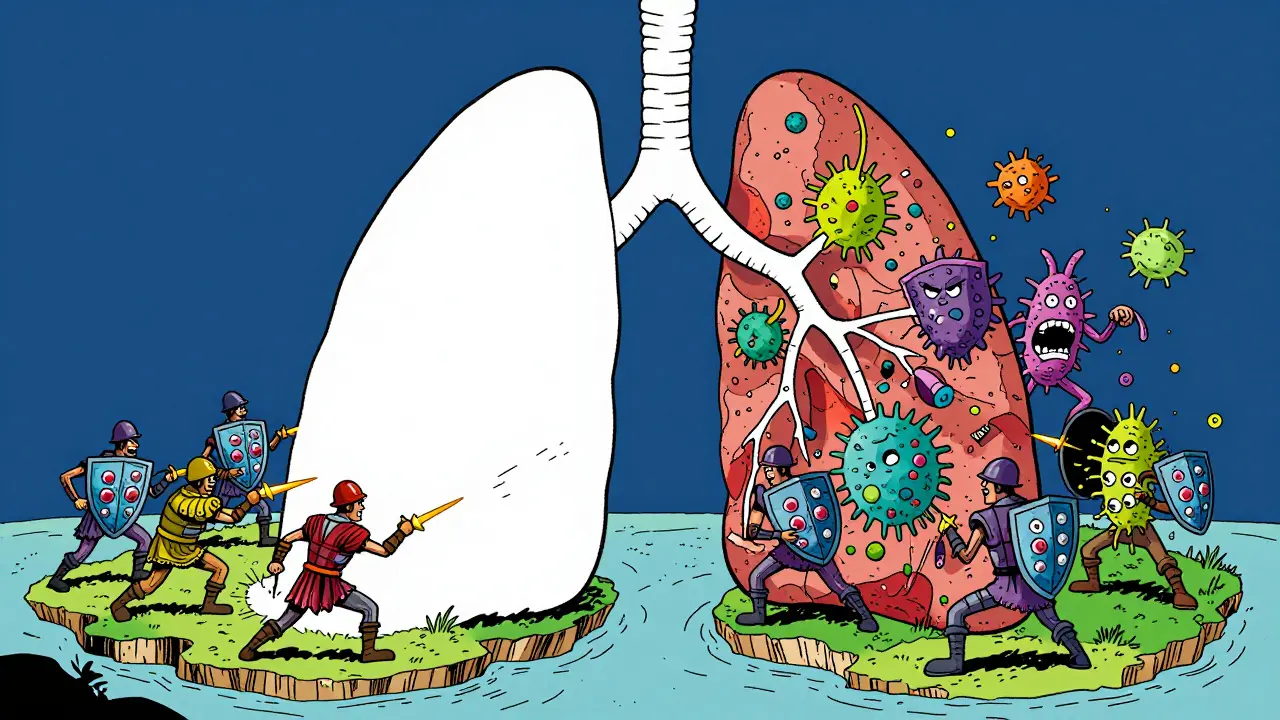
When we talk about pneumonia is an inflammatory condition of the lung parenchyma that primarily affects the alveoli (the tiny air sacs where oxygen enters your blood) , we are talking about a global health burden. In the US alone, it leads to about 1 million hospitalizations and 50,000 deaths every year. The most critical part of recovery is identifying the pathogen. According to CDC data, bacterial causes account for about 50% of community cases, viruses make up roughly 33%, and fungi represent less than 5%.
The Sudden Strike: Bacterial Pneumonia
Bacterial pneumonia usually doesn't sneak up on you; it hits hard and fast. You might go from feeling okay to having a 105°F fever and a shaking chill in a matter of hours. The hallmark of this type is a productive cough-meaning you're coughing up thick yellow, green, or even bloody sputum. You'll likely feel a sharp pain in your chest that gets worse every time you take a deep breath.
The primary culprit here is Streptococcus pneumoniae is a Gram-positive bacterium and the most common cause of community-acquired pneumonia worldwide . This bug is clever; it has a polysaccharide capsule that acts like a shield, stopping your immune system from eating the bacteria. Other players include Haemophilus influenzae, a common cause in those with COPD, and Staphylococcus aureus, which often follows a bad flu season.
If you look at a chest X-ray for bacterial pneumonia, doctors usually see "lobar consolidation." This means one specific section of a lung looks like a solid white block because it's filled with fluid and pus instead of air. Treatment requires targeted antibiotics, such as penicillin or macrolides, to kill the bacteria directly.
The Slow Burn: Viral Pneumonia
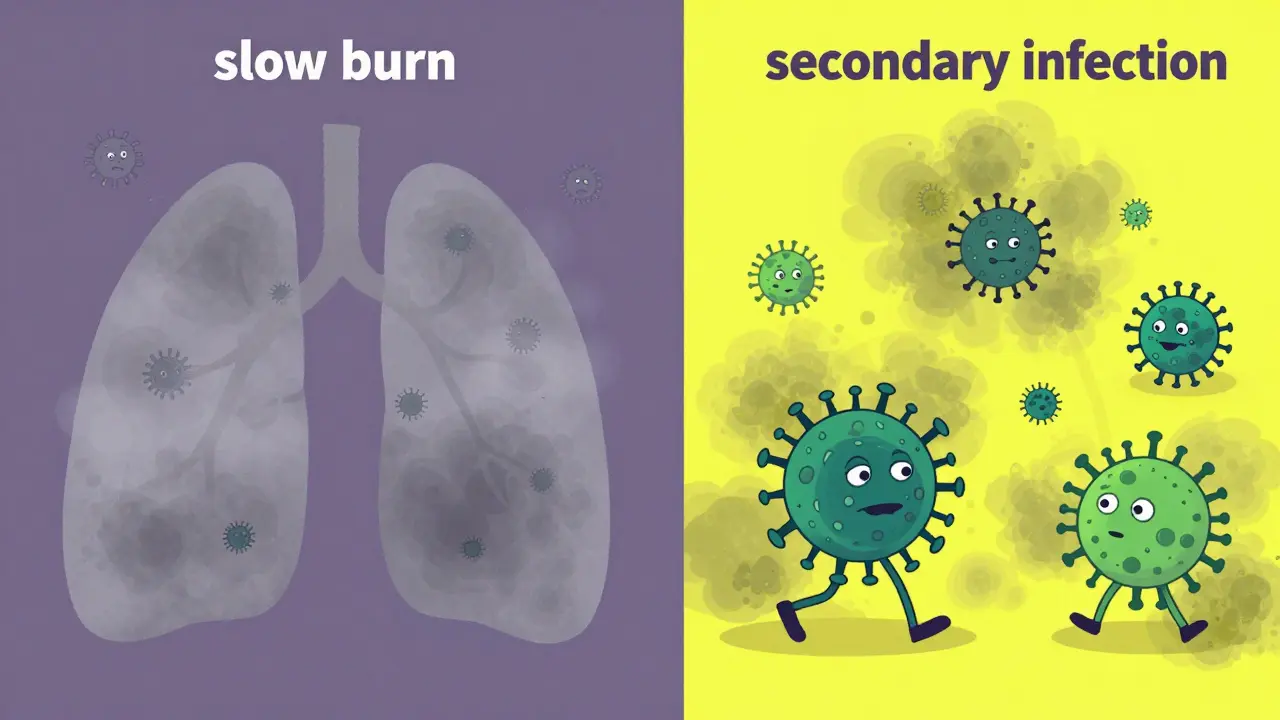
Unlike the sudden crash of bacteria, viral pneumonia often starts as a standard upper respiratory infection. You might have a runny nose, a sore throat, and a mild cough for a few days. Then, around day three or five, the infection "drops" into the lungs. The fever is typically lower-usually between 100°F and 102°F-and the cough is often dry and hacking rather than phlegmy.
The most common triggers are Influenza is a seasonal viral infection that accounts for 20-30% of viral pneumonia cases during outbreaks , as well as SARS-CoV-2 (the virus behind COVID-19) and Respiratory Syncytial Virus (RSV), which is particularly dangerous for infants and the elderly.
On an X-ray, viral pneumonia looks different. Instead of one solid block, you see "diffuse interstitial infiltrates." This means the inflammation is spread out across both lungs, creating a hazy, mottled appearance. Here is the dangerous part: viral pneumonia can weaken your lungs so much that bacteria move in for a "secondary infection." About 25-30% of severe flu cases end up with a bacterial superinfection, which can be fatal if not caught early.
The Rare Threat: Fungal Lung Infections
Fungal pneumonia is rare for most people, but for those with weakened immune systems, it is a terrifying reality. If you have HIV/AIDS or are taking immunosuppressants after an organ transplant, your lungs are much more susceptible to spores in the environment. This type of infection doesn't just stay in the lungs; it can sometimes spread to other organs.
Some of these fungi are tied to where you live or work. Coccidioides is a fungus that causes Valley fever, common in the southwestern US . Then there is Histoplasma capsulatum, which thrives in soil contaminated by bird or bat droppings. If you're a landscaper, farmer, or construction worker, your risk increases significantly. For example, people working around bird droppings have a 3.5 times higher risk of developing these infections.
Diagnosing fungal pneumonia is tricky because it mimics the others. You won't find a quick answer on a standard X-ray. Doctors usually need specialized fungal cultures or blood tests. Treatment involves potent antifungals like Amphotericin B, as antibiotics for bacteria are completely useless here.
Comparing the Three Types: A Quick Guide
| Feature | Bacterial | Viral | Fungal |
|---|---|---|---|
| Onset | Sudden / Rapid | Gradual (days) | Variable / Slow |
| Fever | High (102-105°F) | Moderate (100-102°F) | Variable |
| Cough | Productive (Colored) | Dry / Hacking | Productive (Phlegm) |
| X-Ray | Lobar (One area) | Diffuse (Both lungs) | Varies / Nodules |
| Treatment | Antibiotics | Antivirals / Support | Antifungals |
Why the Wrong Treatment is Dangerous
You might think, "Why not just take antibiotics to be safe?" This is a dangerous mindset. The CDC reports that 30% of antibiotic prescriptions in outpatient settings are unnecessary. When you take antibiotics for a viral infection, you aren't helping your lungs, but you are training the bacteria in your body to survive the drug. This is how antimicrobial resistance grows. Using the wrong drug increases resistance development by 35% in community settings.
The goal is precise targeting. For Streptococcus pneumoniae, a doctor might use a fluoroquinolone or penicillin. For a severe case of COVID-19, they might use remdesivir. For a fungal infection, azoles are the gold standard for maintenance. The difference is the difference between a quick recovery and a prolonged hospital stay.

How to Protect Your Lungs
Preventing pneumonia depends on the type you're worried about. For bacterial pneumonia, vaccines are your best friend. The pneumococcal vaccine series can cut rates of S. pneumoniae infection by 60-70% in children. For adults over 65, the Prevnar 20 vaccine has shown 80% efficacy. Yet, vaccine use in seniors remains stagnant at around 68%.
To fight viral pneumonia, the annual flu shot is non-negotiable. It reduces pneumonia risk by 40-60% when the vaccine matches the circulating strain. COVID-19 vaccinations provide an even stronger shield, reducing pneumonia risk by 90% in the months following the shot.
Fungal prevention is all about your environment. If you're in an endemic area or work in construction or farming, wearing a mask in dusty areas and avoiding contact with bat or bird droppings is the most effective strategy. If you are immunocompromised, avoid these high-risk environments entirely.
The Future of Lung Diagnostics
We are moving away from "guessing and checking." Modern medicine is shifting toward PCR-based multiplex panels. These tests can scan a single sample for over 20 different respiratory pathogens with 95% sensitivity. This means a doctor can tell you exactly which virus or bacterium is in your lungs within hours, not days.
Researchers are also working on host-response biomarkers. Instead of looking for the germ, they look at how your immune system is reacting. By analyzing specific proteins in your blood, doctors hope to distinguish between bacterial and viral infections immediately, potentially cutting inappropriate antibiotic use by 40%.
Can you have both bacterial and viral pneumonia at the same time?
Yes, this is called a secondary bacterial infection. A virus (like the flu) damages the lining of your lungs and weakens your immune system, making it much easier for bacteria like S. pneumoniae to move in and cause a second, often more severe, infection.
Is "walking pneumonia" different from regular bacterial pneumonia?
Walking pneumonia is usually caused by Mycoplasma pneumoniae. It is called "walking" because the symptoms are milder; you don't feel sick enough to stay in bed, though you still have a persistent cough and fatigue. It's still bacterial and requires specific antibiotics.
Who is most at risk for fungal pneumonia?
The highest risk groups are immunocompromised individuals, such as those with HIV/AIDS, organ transplant recipients, or people on long-term steroid therapy. People in high-risk jobs-like farmers or construction workers in the southwestern US-are also at risk due to soil exposure.
How do I know if my cough is pneumonia or just a cold?
A cold usually stays in the upper respiratory tract (nose and throat). Pneumonia moves into the lungs. Red flags include a high fever, shortness of breath, chest pain when breathing, and coughing up colored mucus. If you feel like you can't get enough air, see a doctor immediately.
Do I need a vaccine if I'm healthy and young?
While the risk is lower for healthy young adults, the annual flu vaccine is recommended for everyone to prevent viral pneumonia. The pneumococcal vaccine is typically prioritized for children under 2, adults over 65, or those with chronic conditions like asthma or diabetes.
Next Steps and Troubleshooting
If you suspect you have pneumonia, the first step is a physical exam and a chest X-ray. Do not attempt to treat a deep cough with over-the-counter suppressants if you have a high fever, as coughing is your body's way of clearing the infection from your alveoli.
- For High-Risk Adults: Schedule a consultation to check if you are up to date on the Prevnar 20 or other pneumococcal vaccines.
- For Immunocompromised Patients: Avoid dusty environments and caves or areas with high bat/bird populations. Report any new fever to your specialist immediately.
- For Parents: Ensure infants follow the recommended vaccination schedule to reduce the risk of S. pneumoniae, which is a leading cause of severe pneumonia in children under 5.