
Heart disease is still the leading cause of death worldwide, but the good news is that what you eat plays a bigger role than most people realize. You don’t need to go on a strict, short-term diet to protect your heart. Instead, science shows that three proven eating patterns-Mediterranean, DASH, and plant-forward eating-can make a real difference over time. These aren’t fads. They’re backed by decades of research, endorsed by top medical groups, and used by doctors to help patients lower blood pressure, cholesterol, and inflammation without pills.
What Makes a Diet Actually Heart-Healthy?
Not all "healthy" diets are created equal when it comes to your heart. A true heart-healthy diet doesn’t just cut out junk food-it actively rebuilds your meals around foods that lower bad cholesterol, reduce blood pressure, and calm inflammation. The American Heart Association calls these Tier 1 approaches because they’ve been tested in large, long-term studies and shown to cut heart disease risk by up to 30%.
Three key things make these diets work:
- High in fiber from vegetables, fruits, beans, and whole grains-this helps flush out cholesterol.
- Low in sodium-too much salt raises blood pressure, and most people eat double the recommended amount.
- Rich in healthy fats like olive oil, nuts, and fish oil-these replace the saturated fats that clog arteries.
These aren’t just "eat more veggies" tips. They’re specific, measurable patterns with clear food rules and proven results.
The Mediterranean Diet: Flavor, Fat, and Longevity
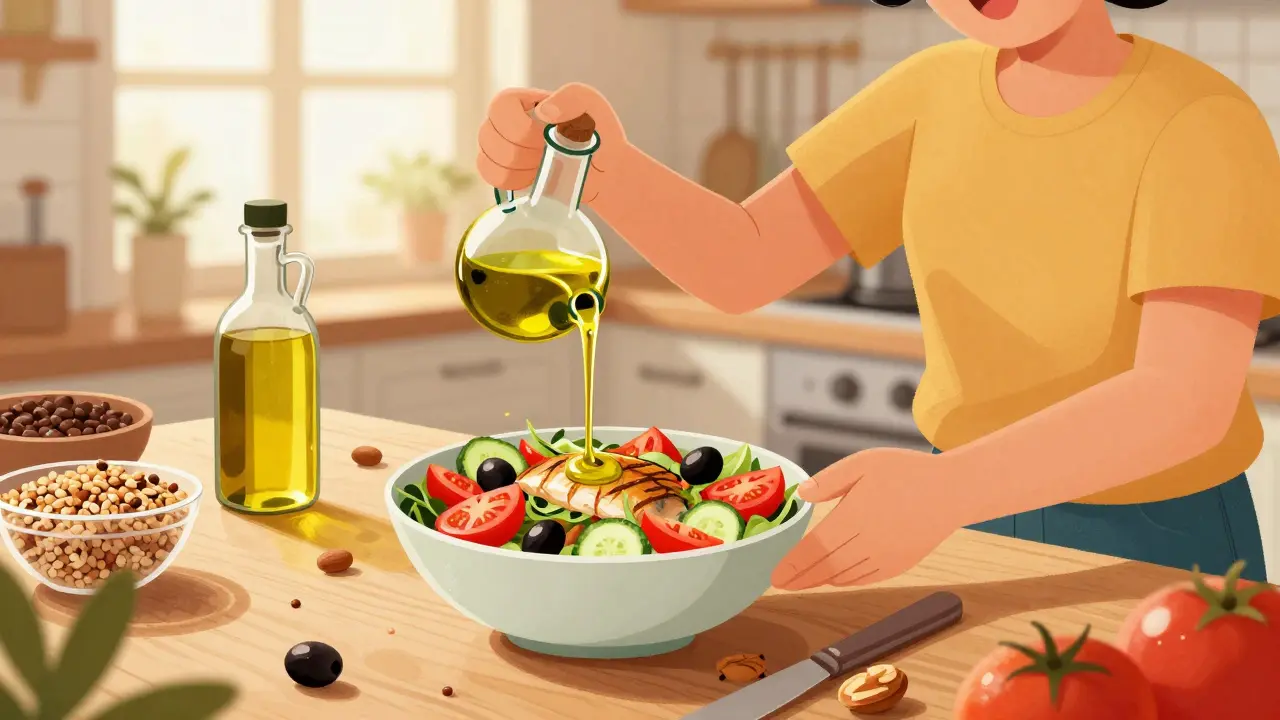
If you’ve ever eaten grilled fish with lemon, olives, and a big salad drizzled in olive oil, you’ve tasted the Mediterranean diet. It’s based on how people ate in Greece, Italy, and Spain in the 1950s-and it’s still the most studied heart-healthy diet today.
Here’s what it actually looks like daily:
- 5+ servings of fruits and vegetables
- 3+ servings of whole grains like barley, bulgur, or whole-wheat bread
- Every day: extra-virgin olive oil (not regular olive oil-it’s the first cold-pressed kind)
- Every week: legumes (lentils, chickpeas), nuts (almonds, walnuts), and fish (salmon, sardines, mackerel)
- 1-2 times a month: red meat
- 1-2 glasses of red wine with dinner (optional, not required)
The fat content is higher than you’d expect-about 35-40% of calories-but nearly all of it comes from monounsaturated and polyunsaturated fats. That’s why it lowers LDL (bad) cholesterol without touching HDL (good) cholesterol.
Studies show people who stick with this diet for 10 years have up to a 30% lower risk of heart attack or stroke. A 2023 study tracking over 2,000 people found that high adherence to the Mediterranean diet was linked to fewer fatal and non-fatal heart events than any other pattern. Cardiologists like Dr. Ailin Barseghian El-Farra say it’s not just about cholesterol-it’s about reducing death rates.
One reason it works so well long-term? It doesn’t feel like a diet. People report enjoying the food, eating with family, and never feeling deprived. Reddit users who’ve followed it for over a year say it feels like a lifestyle, not a restriction.
The DASH Diet: The Blood Pressure Fighter
If your main concern is high blood pressure, the DASH diet was made for you. Developed in the 1990s by the National Institutes of Health, DASH stands for Dietary Approaches to Stop Hypertension-and it works fast.
Unlike the Mediterranean diet, DASH is precise. It’s built around specific daily servings:
- 6-8 servings of grains (mostly whole)
- 4-5 servings of vegetables
- 4-5 servings of fruits
- 2-3 servings of low-fat dairy
- 6 or fewer servings of lean meat, poultry, or fish
- 4-5 servings of nuts, seeds, or legumes per week
- 2-3 servings of fats/oils (olive oil, avocado)
- 5 or fewer servings of sweets per week
And here’s the big one: sodium. DASH limits sodium to 1,500-2,300 mg per day. The average American eats over 3,400 mg. Cutting back-even just to 2,300 mg-can drop systolic blood pressure by 5-11 mm Hg. One study showed people with high blood pressure saw drops of up to 11 mm Hg in just 2 weeks.
What’s surprising? DASH doesn’t require going vegan. It includes lean meats, fish, and dairy. But it’s strict about processed foods, canned soups, frozen meals, and salty snacks-all major sodium sources.
Users on Reddit report big wins: one person dropped from 150/95 to 130/85 in six weeks. But many also say it’s hard. The sodium limit is brutal if you’re used to eating out or pre-packaged food. Only 27% of people in one NIH study hit the 1,500 mg target without help from a dietitian.
There’s a smarter version too-the OmniHeart variation. Instead of replacing carbs with protein, swap them with healthy fats. That version lowered blood pressure even more and was easier to stick with long-term.
Plant-Forward Eating: Flexibility Meets Science
Plant-forward eating isn’t about being 100% vegan. It’s about making plants the star, not the side dish. You can still eat meat, eggs, or cheese-but they’re the garnish, not the main event.
This pattern draws from traditional diets around the world: the Japanese with tofu and seaweed, the Indian with lentils and spices, the Mexican with beans and corn. Modern research backs it up: a 2024 PURE study showed people who got most of their protein from plants had 23% lower heart disease death rates.
Here’s what it looks like in practice:
- Breakfast: oatmeal with berries and chia seeds
- Lunch: quinoa salad with chickpeas, spinach, and a lemon-tahini dressing
- Dinner: stir-fried tofu with broccoli, bell peppers, and brown rice
- Snack: apple with almond butter
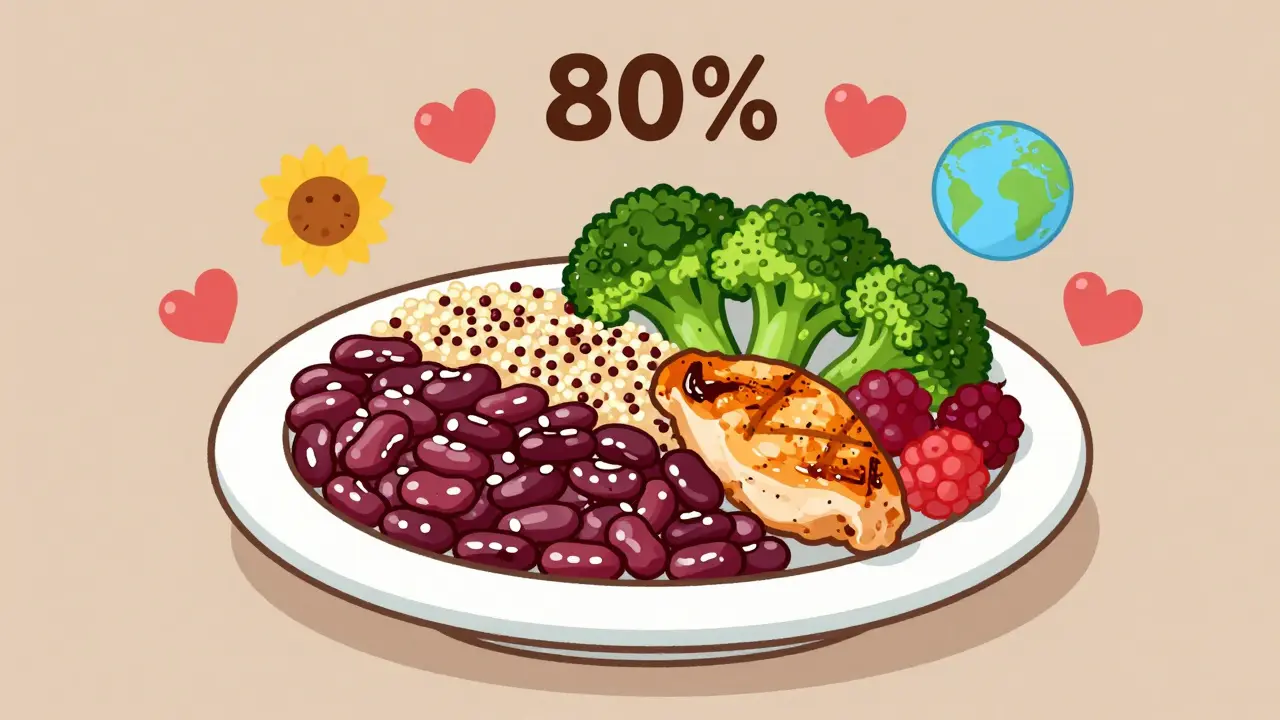
You might have grilled chicken once a week or a spoonful of yogurt. That’s fine. The goal is to shift 70-80% of your plate to plants. A 2024 Nielsen survey found 42% of Americans are already doing this-eating mostly plant-based meals at least three days a week.
Why it works: plants are packed with fiber, antioxidants, and phytonutrients that fight inflammation and keep arteries flexible. They’re naturally low in saturated fat and sodium. Even small shifts help. One study found that replacing just one serving of red meat per day with beans cut heart disease risk by 14%.
But it’s not easy. The Veganuary 2024 survey found 78% of people struggled with social situations-dining out, family dinners, holiday meals. That’s why plant-forward works better than strict veganism for most people. It’s flexible enough to stick with.

How Do They Compare? A Quick Breakdown
Choosing between them isn’t about picking the "best." It’s about picking the one that fits your life.
| Feature | Mediterranean | DASH | Plant-Forward |
|---|---|---|---|
| Primary Goal | Reduce overall heart disease risk | Lower blood pressure | Reduce inflammation, improve cholesterol |
| Sodium Limit | Not strictly limited | 1,500-2,300 mg/day | Encouraged, but no strict cap |
| Fat Source | Olive oil, nuts, fish | Low-fat dairy, lean meat, olive oil | Plant oils, nuts, seeds |
| Animal Products | Modest fish, poultry, dairy | Lean meat, poultry, fish, low-fat dairy | Optional, small amounts |
| Flexibility | High | Low to moderate | High |
| Best For | Sustainability, taste, long-term health | Fast blood pressure results | Environmental impact, ethical eating |
| Adherence Rate (6+ months) | 75% | 52% | 67% |
The Mediterranean diet scored highest in taste and long-term adherence. DASH won for measurable blood pressure drops. Plant-forward eating is growing fastest because it’s adaptable and doesn’t require giving up favorite foods entirely.
Can You Combine Them?
Yes-and doctors are starting to recommend it.
A new approach called "Medi-DASH" blends the best of both: the olive oil, fish, and veggies of the Mediterranean diet with the strict sodium limits and portion control of DASH. A 12-week trial with 350 people showed it lowered blood pressure more than either diet alone-and dropped LDL cholesterol by nearly 19 mg/dL.
And it’s not just about food. The American College of Cardiology’s 2025 draft guidelines are expected to officially put plant-forward eating on equal footing with Mediterranean and DASH, thanks to new data linking plant proteins to lower death rates.
Getting Started: What to Do Today
You don’t need to overhaul your kitchen tomorrow. Start small:
- Swap one processed snack for a handful of unsalted almonds or an apple.
- Use olive oil instead of butter or margarine for cooking or drizzling.
- Go meatless one night a week-try lentil soup or chickpea curry.
- Read labels for sodium. If a food has more than 200 mg per serving, think twice.
- Drink water instead of sugary drinks. Even one soda a day raises heart disease risk.
Use free tools: the National Heart, Lung, and Blood Institute offers printable DASH meal plans. The Oldways Preservation Trust has Mediterranean recipe collections. The American Heart Association’s "No-Fad Diet" toolkit helps you build a plan that fits your life.
Common Mistakes to Avoid
Even with good intentions, people slip up:
- Buying "Mediterranean" labeled foods-many are full of salt, sugar, or fake olive oil. Stick to whole ingredients.
- Thinking "plant-based" means unlimited carbs-white rice, pasta, and sugary cereals aren’t heart-healthy just because they’re plant-based.
- Ignoring portion sizes-even nuts and olive oil are calorie-dense. A handful of nuts is enough.
- Going too strict too fast-if you cut out all meat and salt at once, you’ll burn out. Build habits slowly.
Who Should Avoid These Diets?
These diets are safe for almost everyone. But there are exceptions:
- If you have kidney disease, high potassium levels, or take certain blood pressure meds, too many fruits, vegetables, or beans could be risky. Talk to your doctor.
- If you’re on blood thinners, large amounts of leafy greens (like kale or spinach) can interfere with medication. Consistency matters more than quantity.
- Wine is optional in the Mediterranean diet. If you don’t drink, don’t start. If you have a history of alcoholism, skip it.
There’s no one-size-fits-all. But if you’re looking to protect your heart without drugs, these three patterns are your best bet.
Is the Mediterranean diet better than DASH for heart health?
It depends on your goal. The Mediterranean diet is better for overall heart disease prevention and long-term sustainability. DASH is better if your main issue is high blood pressure-it lowers it faster and more predictably. Many experts now recommend blending both for the strongest results.
Can I eat cheese on a heart-healthy diet?
Yes, but choose wisely. Stick to small portions of low-fat or reduced-sodium cheeses like feta, cottage cheese, or part-skim mozzarella. Avoid processed cheese slices, cream cheese, and high-salt hard cheeses. A 1-ounce serving a few times a week is fine in all three diets.
Do I need to buy organic to make these diets work?
No. Organic isn’t required for heart health. Focus on eating more vegetables, fruits, whole grains, and legumes-even if they’re conventional. Washing produce well is enough. The benefits come from the food itself, not how it’s grown.
How long until I see results?
Blood pressure can drop in as little as two weeks on DASH. Cholesterol improvements usually show up in 4-6 weeks. For long-term benefits like reduced heart attack risk, you need to stick with it for at least a year. Most people report more energy and better digestion within the first month.
Are these diets expensive?
They can cost about $1.50 more per day than a standard American diet, mainly because of fresh produce and olive oil. But you can save by buying seasonal produce, canned beans, frozen vegetables, and bulk grains. Over time, you may spend less on medications and doctor visits.
Can I follow these diets if I’m vegetarian or vegan?
Absolutely. Both DASH and Mediterranean diets already include plant-based meals. Vegans can easily adapt them by replacing dairy with fortified plant milks and using legumes, tofu, and tempeh for protein. The plant-forward approach is essentially a vegan-friendly version of these diets.
What’s Next?
Heart health isn’t about perfection. It’s about progress. If you eat more vegetables, swap out processed snacks, and cook with olive oil instead of butter, you’re already on the right path. These diets aren’t meant to be followed perfectly-they’re meant to be lived.
Start with one change this week. Then another next week. In six months, you won’t recognize the difference-not just in your numbers, but in how you feel.
Comments
Ayodeji Williams
Bro just eat pizza and call it a day 🍕😂 Why stress over olive oil when you can just take a pill? I'm Nigerian and we eat palm oil daily - my heart's still beating, lol.
January 7, 2026 at 20:49
Sai Ganesh
In India we've been doing plant-forward for centuries - dal, rice, roti, veggies. No fancy labels needed. Just real food. The science finally caught up, huh?
January 9, 2026 at 08:23
Katrina Morris
i started swapping butter for olive oil last week and already feel less bloated 😊 maybe i dont need to be perfect just a little better
January 10, 2026 at 17:07
Paul Mason
Look, if you're not doing DASH, you're just winging it. I've seen people try Mediterranean and end up eating more cheese than bread. It's not a diet, it's a buffet with a fancy name.
January 12, 2026 at 01:48
Aparna karwande
They say 'plant-forward' like it's some new revolutionary idea. Meanwhile, my grandmother in rural India ate no meat for 60 years and lived to 98. We didn't need NIH or AHA to tell us what's healthy. Westerners are just now learning to eat like peasants.
January 12, 2026 at 10:07
Emma Addison Thomas
I tried DASH for a month. The sodium limit felt like torture. I missed my soy sauce so bad. But I did drop 8 points on my BP. Maybe I'll try blending it with Mediterranean next. It's not about perfection, just consistency.
January 13, 2026 at 12:56
Anthony Capunong
These diets are just liberal propaganda dressed up as science. Real Americans eat meat. Real Americans don't care about olive oil or quinoa. You want heart health? Stop eating sugar. That's it. No fancy charts needed.
January 14, 2026 at 04:53
LALITA KUDIYA
I eat mostly plants but still have paneer once a week and chicken curry on Sundays 🌱❤️ its not about being pure its about being consistent and happy
January 14, 2026 at 12:22
Rachel Steward
Let’s be honest - all these diets are just variations of ancestral eating patterns that our bodies evolved to handle. The real issue is the industrial food complex that’s been poisoning us since the 70s with seed oils, high-fructose corn syrup, and sodium bombs disguised as "convenience." The fact that we need a medical study to tell us that whole foods are better than processed crap is the tragedy. These aren’t diets - they’re damage control for a broken system. And yes, organic doesn’t matter. But glyphosate in your kale? That’s a different conversation.
January 15, 2026 at 14:55
Mina Murray
You know what they don't tell you? The American Heart Association gets funding from big food companies. Olive oil brands sponsor their guidelines. DASH? The NIH gets money from dairy lobbies. Everything’s rigged. If you really want to heal your heart, stop trusting institutions and go primal. Meat. Fat. Salt. No grains. No sugar. That’s the truth they bury.
January 17, 2026 at 03:45