
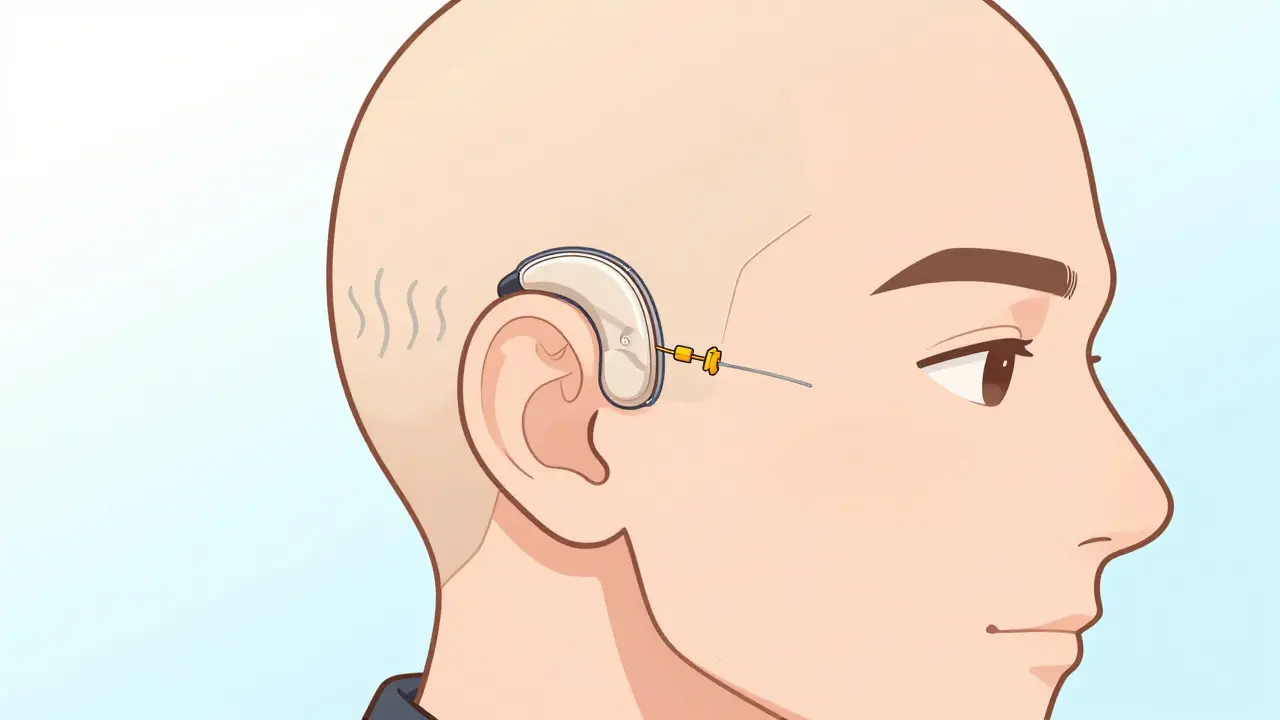
What Cochlear Implant Candidacy Really Means
When someone has severe hearing loss, a Cochlear Implant is a surgically implanted device that provides sound signals to the brain. Unlike hearing aids, which amplify sound, cochlear implants bypass damaged parts of the ear to directly stimulate the auditory nerve. This electronic medical device was first developed in the 1970s and has evolved significantly since the FDA approved the first multichannel implant in 1985.
Understanding cochlear implant candidacy is key to accessing this life-changing technology. Candidacy isn’t just about how much you can hear-it’s about whether your specific type of hearing loss will benefit from this surgery. The old idea that cochlear implants are a "last resort" after complete hearing loss is outdated. Today, guidelines from the American Cochlear Implant Alliance (ACIA) in 2023 emphasize early intervention. As Dr. Sarah Sydlowski, an audiology director at Cleveland Clinic, explains: "Just because someone has residual hearing or still gets some help from hearing aids doesn’t mean they’re ineligible. The sooner we identify candidates, the better."
Step-by-Step Evaluation Process
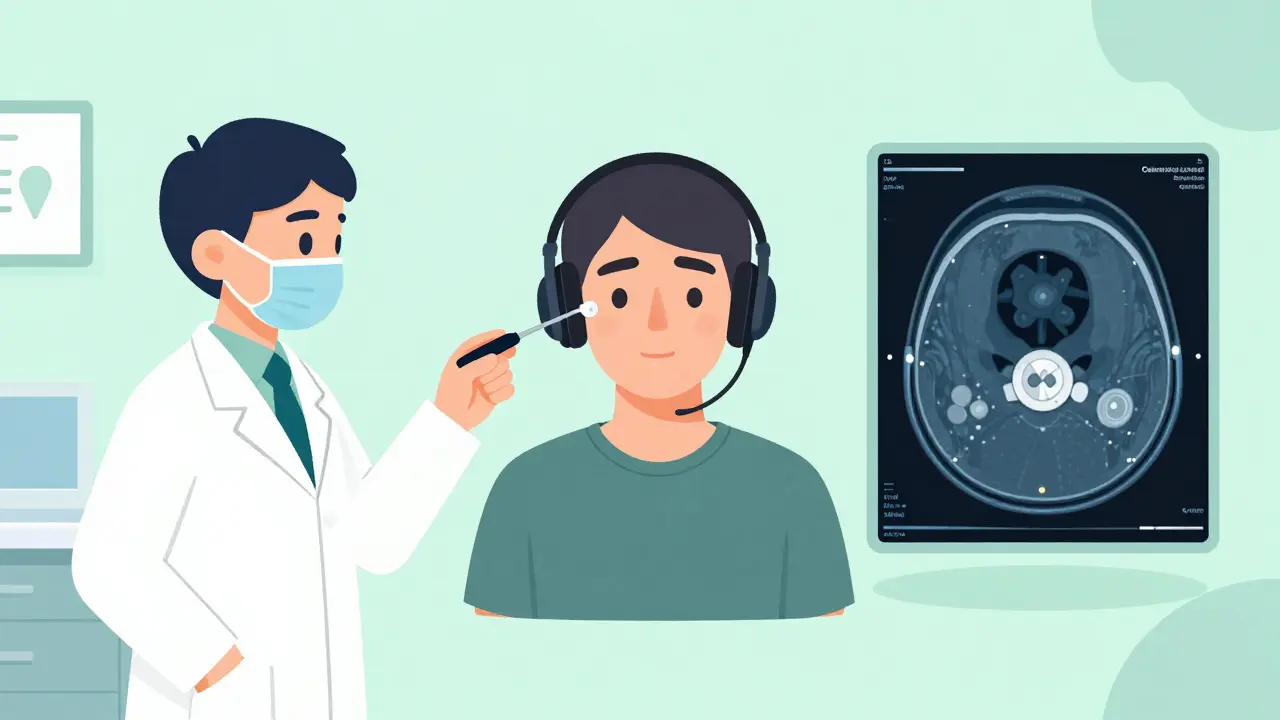
The evaluation process for cochlear implant candidacy takes about 4-6 hours across multiple appointments. It starts with verifying your hearing aid fit using real-ear measurements. Many people skip this step, but it’s critical. A 2021 University of Miami study found 43% of rejected referrals failed because hearing aids weren’t properly fitted. Next comes audiometric testing: unaided and aided speech tests using standardized materials like CNC words and AzBio sentences. These measure how well you understand words in quiet and noisy environments.
Medical history review is next. Your doctor will check for conditions like ear infections, balance issues, or previous ear surgeries. Imaging tests like CT or MRI scans then examine your cochlear anatomy. Are the nerves intact? Is there enough space for the implant? Finally, a functional assessment using tools like the Speech, Spatial and Qualities of Hearing Scale (SSQ) measures real-world communication challenges. For example, do you struggle to hear in restaurants or during family gatherings? This step often reveals gaps that booth tests miss.
How Candidacy Rules Have Changed
Old criteria required a pure-tone average (PTA) of 70 dB HL or higher with sentence recognition scores below 40% in the best-aided condition. But research changed everything. A 2013 study by Gubbels et al. showed 95% of candidates met a "60/60 rule"-PTA above 60 dB HL and word recognition below 60%. The 2023 ACIA guidelines expanded this further. Now, anyone understanding fewer than 50% of words with properly fitted hearing aids should be evaluated. This shift matters because it includes people with asymmetric hearing loss or single-sided deafness, which affects 8.3% of the hearing-impaired population according to NIDCD data.
Previously, doctors often waited until hearing loss was "complete." Now, they’re encouraged to refer earlier. Dr. Oliver Adunka, a professor at Ohio State University, notes: "The 60/60 rule captures 95% of candidates but misses the 5% with moderate-severe hearing loss who have poor word recognition. That’s a sign of neural degeneration." The guidelines also reject using duration of hearing loss as an absolute barrier. A 2021 study in Ear and Hearing found comparable outcomes for patients implanted after 10+ years of deafness when they committed to rehabilitation.
Real Outcomes: What Patients Experience
For those who qualify, the results are life-changing. A 2022 multicenter study of 1,247 cochlear implant recipients showed an average 47.3 percentage point improvement in sentence recognition scores post-implantation. Eighty-nine percent reported "substantial improvement" in daily communication. One Reddit user shared: "After 15 years of struggling with hearing aids, my CI gave me back conversations with my grandchildren-I wish I hadn’t waited so long."
Even people who didn’t meet traditional criteria benefit. The Evaluation of Revised Indications (ERID) trial looked at adults over 65 with aided sentence scores between 40-60%. Seventy-eight percent of this group achieved over 50% sentence recognition after implantation-far better than before. Common benefits include improved telephone use (92% of users) and reduced listening fatigue (87%). However, challenges remain. A 2022 Cochlear Community survey found 63% of users still struggle with music perception, and noisy environments can be tough despite overall improvements.

Common Myths and Challenges
Many myths block people from seeking help. One big one: "You need to be completely deaf." In reality, residual hearing doesn’t disqualify you. Hybrid implants or electro-acoustic stimulation can work for those with some low-frequency hearing left. Another myth: "It’s too late if you’ve had hearing loss for years." Research shows time doesn’t automatically rule out success-what matters more is cognitive health and commitment to rehabilitation.
Another hurdle is awareness. Only 32% of primary care physicians correctly identify cochlear implant referral criteria, according to a 2021 JAMA Otolaryngology survey. This leads to missed opportunities. Economic analysis by the Hearing Loss Association of America shows untreated hearing loss costs the U.S. economy $56 billion yearly in lost productivity and healthcare expenses. Cochlear implants deliver a 3:1 return on investment through better employment outcomes and reduced dementia risk. Yet only 128,000 implants were performed in the U.S. in 2022, despite 38 million adults having disabling hearing loss.
Frequently Asked Questions
Can I get a cochlear implant if I still have some hearing?
Yes. The 2023 ACIA guidelines explicitly state that residual hearing doesn’t disqualify you. Hybrid implants or electro-acoustic stimulation (EAS) combine cochlear implant technology with hearing aid features for those with usable low-frequency hearing. For example, if you hear low pitches well but struggle with high frequencies, an EAS device could help. Always get a full evaluation-even if you think you’re not a candidate.
How long does recovery take after surgery?
Most people return to light activities within 1-2 weeks. The surgical site heals in about 2-4 weeks, but full activation of the implant happens 2-4 weeks after surgery. Rehabilitation is ongoing: you’ll work with an audiologist for 3-6 months to adjust settings and train your brain to interpret new sounds. Patience is key-improvements often continue for a year or more.
Are cochlear implants covered by insurance?
Yes. Medicare covers cochlear implants for eligible beneficiaries, and most private insurers do too. The 2023 ACIA guidelines explicitly state that "there is no bad CI referral," meaning even if you’re not a candidate, the evaluation itself is valuable for future monitoring. Always check with your provider, but coverage is widespread for those meeting current criteria.
What if I’m not a candidate for a cochlear implant?
Not being a candidate doesn’t mean you’re out of options. Your audiologist might recommend advanced hearing aids, assistive listening devices, or communication strategies. Sometimes, a second opinion from a specialized cochlear implant center reveals new possibilities. Even if you don’t qualify now, regular check-ups can catch changes in your hearing that might make you eligible later.
Do cochlear implants restore normal hearing?
No-they provide a different kind of sound input. Think of it like learning a new language. Your brain adapts to interpret electrical signals as meaningful sounds. Most users achieve excellent speech understanding in quiet environments but may still struggle with background noise or music. Outcomes vary based on factors like age at implantation, duration of hearing loss, and rehabilitation effort. Realistic expectations are crucial for satisfaction.
Comments
lance black
Early intervention saves hearing.
February 6, 2026 at 09:31
Johanna Pan
Hey, this article really helped me understand that cochlear implants aren't just for total deafness.
I've been struggling with hearing aids for years, and knowing that even partial hearing loss can qualify is such a relief.
The part about early intervention is key - I wish I'd known this sooner.
The research mentioned here is solid. Gotta share this with my friend who's been hesistant to get evaluated.
February 6, 2026 at 23:45
Elliot Alejo
The study about 43% of rejected referrals due to improper hearing aid fitting is eye-opening.
It's crucial to ensure hearing aids are properly fitted before considering implants.
I've seen this happen in my clinic - many patients get dismissed too quickly.
A thorough evaluation process is key.
February 7, 2026 at 13:52
Georgeana Chantie
Ugh, I don't think it's that great. Music sounds weird and noisy places are still tough. 😑
February 7, 2026 at 21:28
Carol Woulfe
Cochlear implants are part of a Big Pharma scheme to control hearing data. The studies cited are all funded by the companies. They want to make us dependent on their devices. It's a scam. 😏
February 9, 2026 at 09:50
Laissa Peixoto
The evolution of cochlear implant criteria shows how medical understanding changes.
It's fascinating how the shift from 'complete deafness' to 'residual hearing' criteria reflects a deeper understanding of neural plasticity.
The brain can adapt even after years of hearing loss, but rehabilitation is essential.
This isn't just about the device; it's about the entire journey of auditory relearning.
February 10, 2026 at 07:01
Jenna Elliott
The government should cover all cochlear implants why is this not standard procedure people need to stop being lazy and get tested this is basic healthcare no more excuses
February 12, 2026 at 01:16
Kieran Griffiths
I agree that access is important, but let's not forget the need for proper evaluations.
Not everyone is a candidate, and forcing implants on people who don't need them could be harmful.
It's about the right fit for each person.
The current guidelines are good because they're evidence-based.
Let's work together to make sure everyone gets the right care.
February 12, 2026 at 07:56