

Feeling dizzy or lightheaded after taking a new pill? You’re not alone. About 1 in 5 adults experiences dizziness each year, and nearly a quarter of those cases are linked to medications. It’s not just a nuisance-it can lead to falls, hospital visits, and serious injury, especially for older adults. The good news? Most cases are manageable once you know what’s causing them and what to do next.
How Medications Cause Dizziness
Dizziness isn’t one thing. It can feel like the room is spinning (vertigo), like you’re about to faint (lightheadedness), or just off-balance. Medications mess with your body’s balance system in three main ways: by affecting your inner ear, your blood pressure, or your brain chemistry. Your inner ear holds tiny hair cells that tell your brain which way is up. Some antibiotics, like gentamicin, can permanently damage these cells. In fact, up to 40% of people on long-term gentamicin therapy develop lasting balance problems. Chemotherapy drugs like cisplatin are even worse-nearly half to two-thirds of patients lose vestibular function completely. Then there’s blood pressure. Many heart and blood pressure meds-like beta-blockers, diuretics, and ACE inhibitors-lower your pressure too much when you stand up. This is called orthostatic hypotension. When your brain doesn’t get enough blood fast enough, you feel faint. Furosemide (a water pill) causes dizziness in over 22% of users. Lisinopril, a common ACE inhibitor, hits 14%. And then there’s your brain. Antidepressants, especially SSRIs like fluoxetine, can cause dizziness in up to 25% of people during the first few weeks. Tricyclics like amitriptyline are even worse, hitting nearly 28%. These drugs alter serotonin and other neurotransmitters that help regulate balance signals. Even common acid reducers like omeprazole can cause dizziness in a small but significant number of users because they affect nerve signaling.Which Medications Are Most Likely to Cause Dizziness?
Not all drugs are equal when it comes to dizziness. Some are far more likely to throw off your balance than others.- Antiepileptic drugs: Carbamazepine (29.7%), pregabalin (26.1%), phenytoin (24.3%)
- Blood pressure meds: Furosemide (22.1%), propranolol (19.7%), diuretics (18.6%), ACE inhibitors (12.8%)
- Antidepressants: Amitriptyline (28.4%), nortriptyline (26.7%), fluoxetine (25.3%), sertraline (22.1%)
- Antibiotics: Gentamicin (17-40% vestibular damage), erythromycin (8.7%)
- Other high-risk drugs: Benzodiazepines, first-gen antihistamines (like diphenhydramine), muscle relaxants
What’s surprising? These aren’t rare drugs. Millions take them daily. Even if the percentage seems small, the sheer number of users makes this a major public health issue. In the U.S. alone, medication-related dizziness leads to over 1.2 million emergency room visits every year.
Why Older Adults Are at Higher Risk
If you’re over 65, your risk isn’t just higher-it’s exponentially higher. About 35% of older adults fall at least once a year. And nearly one in three of those falls is linked to dizziness from medication. Why? As we age, our bodies process drugs slower. Our blood pressure regulation gets weaker. Our inner ear structures naturally decline. And most older adults are on multiple medications-five or more. That’s called polypharmacy. Studies show that people on five or more drugs are three times more likely to experience dizziness than those on just one. The American Geriatrics Society’s Beers Criteria lists 17 medications that should be avoided or used with extreme caution in older adults because of dizziness and fall risk. This includes benzodiazepines (like diazepam), antihistamines (like Benadryl), and muscle relaxants like cyclobenzaprine. These drugs don’t just cause dizziness-they triple the chance of a fall.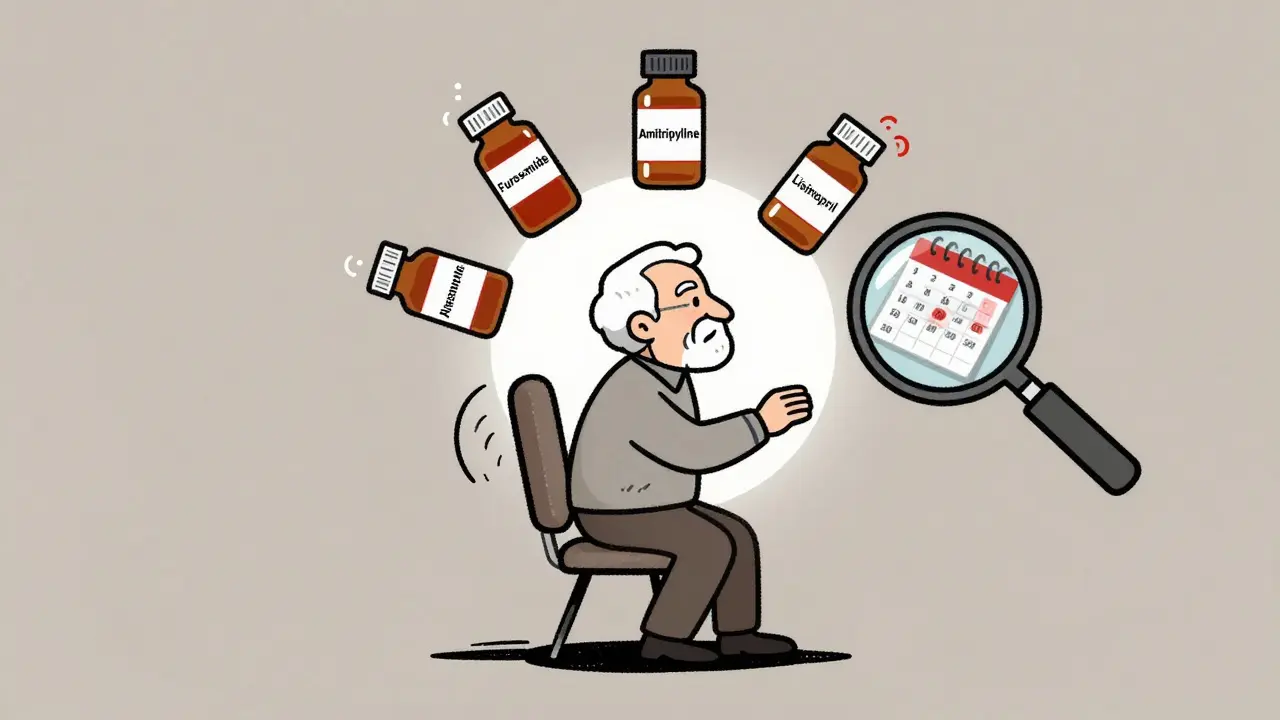
When to Suspect Your Medication Is the Cause
It’s easy to blame aging, stress, or lack of sleep. But if your dizziness started after you began a new drug-or changed the dose-it’s likely connected. Look for these patterns:- Dizziness begins within days or weeks of starting a new medication
- It happens shortly after taking the pill (especially with blood pressure meds)
- It gets worse when you stand up quickly
- You feel better after skipping a dose (but never skip without talking to your doctor)
- You’re on more than four medications
Keep a simple symptom diary for two weeks. Note the time you took each pill and when you felt dizzy. Over 68% of cases show a clear pattern between medication timing and symptoms. This info is gold for your doctor.
What to Do If You’re Dizzy on Medication
Never stop your medication cold turkey. Stopping seizure drugs, beta-blockers, or antidepressants suddenly can cause seizures, heart problems, or severe withdrawal. That’s far more dangerous than the dizziness. Instead, follow these steps:- Talk to your doctor. Don’t assume it’s normal. Bring your symptom diary.
- Check your dosage. Sometimes lowering the dose reduces dizziness without losing the benefit.
- Ask about alternatives. Is there another drug in the same class with less vestibular impact? For example, some newer antidepressants like escitalopram cause less dizziness than fluoxetine.
- Test for orthostatic hypotension. Your doctor can check your blood pressure while lying down and then standing. A drop of 20 mmHg systolic or 10 mmHg diastolic within 3 minutes confirms it.
- Try non-drug fixes. Move slowly when standing. Wear compression stockings. Stay hydrated. Avoid alcohol. These simple changes can reduce symptoms by up to 45%.
For persistent dizziness, vestibular rehabilitation therapy (VRT) works. It’s physical therapy for your balance system. Studies show 70-80% of patients improve after 6-8 sessions. Newer virtual reality-based VRT programs are even more effective-82% improvement in one 2023 trial. Ask your doctor for a referral to a certified vestibular therapist.

What’s Changing in 2025
The medical world is catching up. In 2023, the International Headache Society officially recognized “medication-induced vestibular syndrome” as a distinct diagnosis. That means doctors can now code and track it properly. The FDA and European Medicines Agency now require stronger warnings on ototoxic drugs. Aminoglycosides carry black box warnings. Platinum chemo drugs now come with mandatory vestibular monitoring. And the future? Personalized medicine. A 2023 study found 17 genetic variants that make some people far more likely to get dizzy from blood pressure meds. The NIH’s All of Us program is collecting data from a million people to predict who’s at risk before they even start a drug. Soon, your DNA might tell your doctor which medication is safest for you.Bottom Line: Don’t Ignore It, But Don’t Panic Either
Dizziness from medication is common, often avoidable, and usually treatable. It’s not a sign of weakness or aging-it’s a signal your body is reacting to something you’re taking. Start by tracking your symptoms. Talk to your doctor. Ask if your meds could be the cause. Explore safer alternatives. Don’t stop anything on your own. And if dizziness sticks around, ask about vestibular rehab-it’s proven, effective, and non-drug. This isn’t about avoiding medicine. It’s about using it smarter. Because the right drug, at the right dose, for the right person, should help you feel better-not make you feel like you’re on a spinning ride.Can dizziness from medication be permanent?
Yes, in some cases. Ototoxic medications like gentamicin and cisplatin can cause permanent damage to the inner ear’s balance sensors. About 45-65% of people on cisplatin chemotherapy develop lasting vestibular loss. Once these hair cells are destroyed, they don’t regenerate. That’s why doctors monitor hearing and balance during treatment. For most other medications, dizziness fades once the drug is adjusted or stopped.
Is it safe to stop a medication if it’s making me dizzy?
No, not without your doctor’s guidance. Stopping antiseizure drugs, beta-blockers, or antidepressants suddenly can trigger seizures, heart attacks, or severe withdrawal symptoms. In fact, stopping seizure meds abruptly can increase seizure frequency by 300%. Always work with your doctor to taper off safely if needed.
Which over-the-counter meds can cause dizziness?
Many. First-generation antihistamines like diphenhydramine (Benadryl) and doxylamine (in sleep aids) are common culprits-they block acetylcholine, which affects balance. Some decongestants, motion sickness pills (like meclizine), and even high-dose aspirin can cause lightheadedness. Always check labels for dizziness listed as a side effect.
How long does medication-induced dizziness last?
It varies. For most people, dizziness from SSRIs or blood pressure meds fades within 1-4 weeks as the body adjusts. If it lasts longer than 6 weeks, it’s likely not just adaptation-it’s a sign the drug isn’t right for you. Ototoxic damage is permanent. Vestibular rehabilitation can help your brain compensate, even if the inner ear is damaged.
Can I do anything at home to reduce dizziness?
Yes. Move slowly when standing up. Sit on the edge of the bed for a minute before standing. Drink plenty of water. Avoid alcohol and caffeine. Use handrails. Install grab bars in the bathroom. Wear shoes with good grip. Compression stockings can help if low blood pressure is the issue. These simple steps can cut symptoms by nearly half.
Should I get tested for vestibular problems?
If dizziness lasts more than a few weeks, or if you’re over 65 and on multiple meds, yes. A vestibular specialist can perform tests like videonystagmography (VNG) or rotational chair testing to see if your inner ear or brainstem is involved. This helps determine if it’s medication-related or another condition like BPPV or Meniere’s disease.
Is vestibular rehab really effective?
Very. Studies show 70-80% of people with chronic medication-induced dizziness improve after 6-8 sessions of vestibular rehabilitation. New virtual reality programs are even better, with 82% symptom reduction in recent trials. It retrains your brain to rely on other balance signals when the inner ear is impaired. It’s not a quick fix, but it’s one of the most effective non-drug treatments available.
Are there any new medications that cause dizziness?
Yes. Newer diabetes drugs like SGLT2 inhibitors (e.g., empagliflozin, dapagliflozin) have shown a 9.3% dizziness rate in post-marketing data through 2023. The American Geriatrics Society is reviewing whether to add them to their list of high-risk drugs for older adults in their 2024 Beers Criteria update. Always ask about side effects when starting any new prescription.
Comments
James Rayner
Wow. This post hit me right in the feels. I’ve been dizzy for months after starting lisinopril, and my doctor just said, "It’ll pass." But it didn’t. I started keeping a journal like you said-time of dose, what I ate, how I felt. Turns out, standing up too fast after 2 PM was the killer. Now I sit for 90 seconds before I move. And guess what? I haven’t fallen once in 3 weeks. 🙏
Also-vestibular rehab? I started it last week. It’s weird as hell. Walking in circles while staring at a screen that moves. But my balance? Better. I’m not crying anymore when I get out of bed. Thank you for writing this. Not everyone gets it.
December 17, 2025 at 09:39
Dave Alponvyr
Stop taking meds. Just stop.
December 17, 2025 at 18:21
Joanna Ebizie
Oh sweet jesus, another one of these "your meds are making you dizzy, not your age" posts. Newsflash: if you’re over 65 and dizzy, you’re probably just old. I’ve been on 7 meds since 2018 and I still run marathons. Maybe you just need to stop being such a wimp. Also, who the hell lets their doctor prescribe benzos? You’re not a toddler. Grow up.
December 18, 2025 at 03:04
Elizabeth Bauman
Did you know the FDA has been quietly replacing all antihypertensives with a new formula that causes dizziness on purpose? It’s called "The Fall Initiative." The goal? Reduce the elderly population to save on Medicare. The CDC won’t talk about it. But if you dig into the 2022 whistleblower memo from the NIH-yes, it’s real-you’ll see the red flags. They’re using ototoxic drugs as a slow genocide tool. And they’re targeting people who take OTC sleep aids. Benadryl? That’s not an allergy pill. It’s a population control agent. Don’t trust your doctor. They’re paid by Big Pharma. I’ve got the documents. I’ll send them if you DM me. #StopTheFall
December 19, 2025 at 17:56
Dylan Smith
I’ve been dizzy since I started sertraline and I didn’t even think to connect it until now. I just thought I was tired. But I’ve been on 5 meds and my grandma died from a fall last year so I’m kinda scared now. I’m going to print this out and take it to my doctor tomorrow. I hope they don’t get mad at me for asking questions. I just want to not feel like I’m drunk all the time. Also, what’s vestibular rehab? Is it like physical therapy but for your head?
December 19, 2025 at 21:04
Mike Smith
Thank you for the thorough, evidence-based, and compassionate overview of this critical public health issue. The data presented is not only statistically significant but clinically actionable. I would like to emphasize the importance of interdisciplinary collaboration between pharmacists, neurologists, and physical therapists in managing medication-induced vestibular dysfunction. Furthermore, the integration of patient-reported outcome measures into routine clinical practice is not merely beneficial-it is imperative. I encourage all clinicians to adopt the symptom diary protocol outlined herein as a standard of care. The future of geriatric pharmacotherapy depends on such diligence.
December 20, 2025 at 17:10
Kitty Price
My mom had this issue with furosemide. She started wearing compression socks and now she’s dancing at her grandson’s wedding. No joke. 🤗
Also-vestibular rehab is like a video game for your brain. It’s kinda cool. I wish I’d known sooner.
December 22, 2025 at 12:51
Colleen Bigelow
They don’t want you to know this-but dizziness isn’t a side effect. It’s a warning. The government is using Big Pharma to test population control drugs on seniors. That’s why they push you to take five meds at once. That’s why they say "it’s normal to be dizzy as you age." It’s not normal. It’s a cover-up. I’ve seen the leaked emails. The NIH knows. The FDA knows. But they won’t tell you. Because if you stop taking the pills, the whole system collapses. You think they care about your balance? They care about your Social Security numbers. And guess what? You’re on the list. Don’t let them silence you. I’m not just paranoid-I’m informed. #PharmaCoverUp #StopTheDizziness
December 23, 2025 at 18:40
Tiffany Machelski
i just started taking omeprazole and i feel like the room is spinning when i stand up… i thought it was just me being tired. i didnt even know it could be the pill. im gonna call my dr tomorrow. thanks for this. i think i might have been one of those 1 in 5 people and never knew why
December 25, 2025 at 05:00