
Elderly Renal Function & Dosage Estimator
Enter patient data and click calculate to see the estimated renal clearance.
Imagine a patient in their 80s who takes a standard dose of a common antibiotic, only to end up in the emergency room with severe confusion and a fall. It isn't because the drug was "wrong" for the infection, but because their kidneys couldn't clear it fast enough. For older adults, the kidneys don't just slow down-they change the way every single pill in the medicine cabinet works. When the kidneys fail to keep up, drugs build up in the bloodstream, turning a helpful treatment into a toxic overdose. This is the dangerous reality of renal impairment in the elderly.
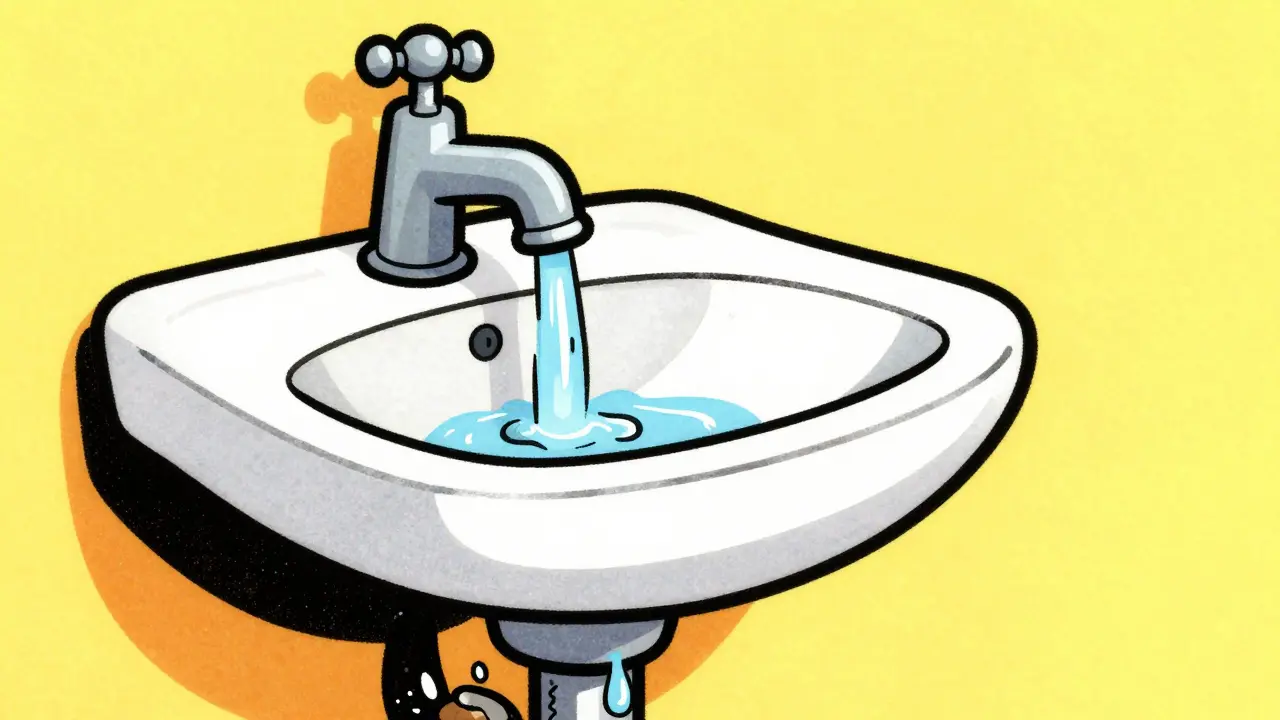
The core problem is that as we age, the kidneys' ability to filter waste drops. When a person's Glomerular Filtration Rate (GFR) falls below 60 mL/min/1.73 m², they enter the territory of chronic kidney disease. This isn't just a medical label; it's a warning that the body's "exit door" for medication is partially blocked. If you don't adjust the dose, you're essentially pouring more water into a sink with a clogged drain.
The Math Behind the Medicine: Estimating Kidney Function
You can't just guess how well a senior's kidneys are working; you need a reliable number. For decades, doctors have relied on the Cockroft-Gault equation. Developed in 1976, this formula uses age, weight, and serum creatinine to estimate creatinine clearance (CrCl). While it's the gold standard for many drug labels, it has a flaw: it often underestimates kidney function in the elderly by 15-20%. This means some patients might actually be under-dosed because the formula makes them look sicker than they are.
To get a clearer picture, many clinicians now use the MDRD (Modification of Diet in Renal Disease) equation. This looks at GFR more broadly by including sex and race. For those in the "grey area"-say, a GFR of 29 mL/min when the cutoff for a dose change is 30-using both methods helps prevent a dangerous mistake. In high-functioning seniors (GFR above 60), newer cystatin C-based tests are becoming the preferred way to get a pinpoint accurate reading since they aren't as skewed by muscle mass as creatinine is.
| Method | Primary Use Case | Key Limitation | Reliability in Elderly |
|---|---|---|---|
| Cockroft-Gault | Drug dosing adjustments | Underestimates GFR in seniors | Moderate (Conservative) |
| MDRD | Staging kidney disease | Less accurate at high GFR | High (for staging) |
| Cystatin C | Precise function check | More expensive/less available | Very High |
High-Risk Medications and the Danger Zone
Not every drug needs a tweak, but those with a "narrow therapeutic index" are like walking a tightrope. A tiny increase in the blood level can move a drug from "healing" to "poisonous." Digoxin, used for heart failure, and Lithium, used for mood stabilization, are classic examples. If the kidneys slow down, these drugs linger, potentially causing lethal arrhythmias or severe neurological toxicity.
Antibiotics are another major headache. Take Cefepime. In a healthy adult, you might give it every 6 hours. But if a senior's CrCl drops below 10 mL/min, that same dose given every 6 hours could cause neurotoxicity. The dose must be stretched out to every 24 hours to give the kidneys time to clear the previous dose.
Then there are the "hidden" dangers. Some drugs are broken down by the liver but their active leftovers (metabolites) are cleared by the kidneys. Metformin is a prime example. If serum creatinine climbs too high (above 1.5 mg/dL in men), the risk of lactic acidosis becomes too great, and the drug generally must be stopped. Similarly, glyburide can cause severe, prolonged hypoglycemia in seniors with a CrCl under 50 mL/min because its active metabolites simply won't leave the body.

Three Main Strategies for Dose Adjustment
When a doctor identifies renal impairment, they generally choose one of three paths to keep the patient safe:
- Dose Reduction: Keeping the timing the same but lowering the amount. For example, Gabapentin might be dropped from 1200 mg daily to just 300 mg in severe cases to prevent extreme sedation.
- Interval Extension: Keeping the dose the same but giving it less often. This is common with Vancomycin, where a dose might move from every 12 hours to every 48 hours.
- Combination Approach: Doing both. Some heavy-duty antibiotics, like piperacillin/tazobactam, require both a lower dose and a longer gap between doses as kidney function fails.
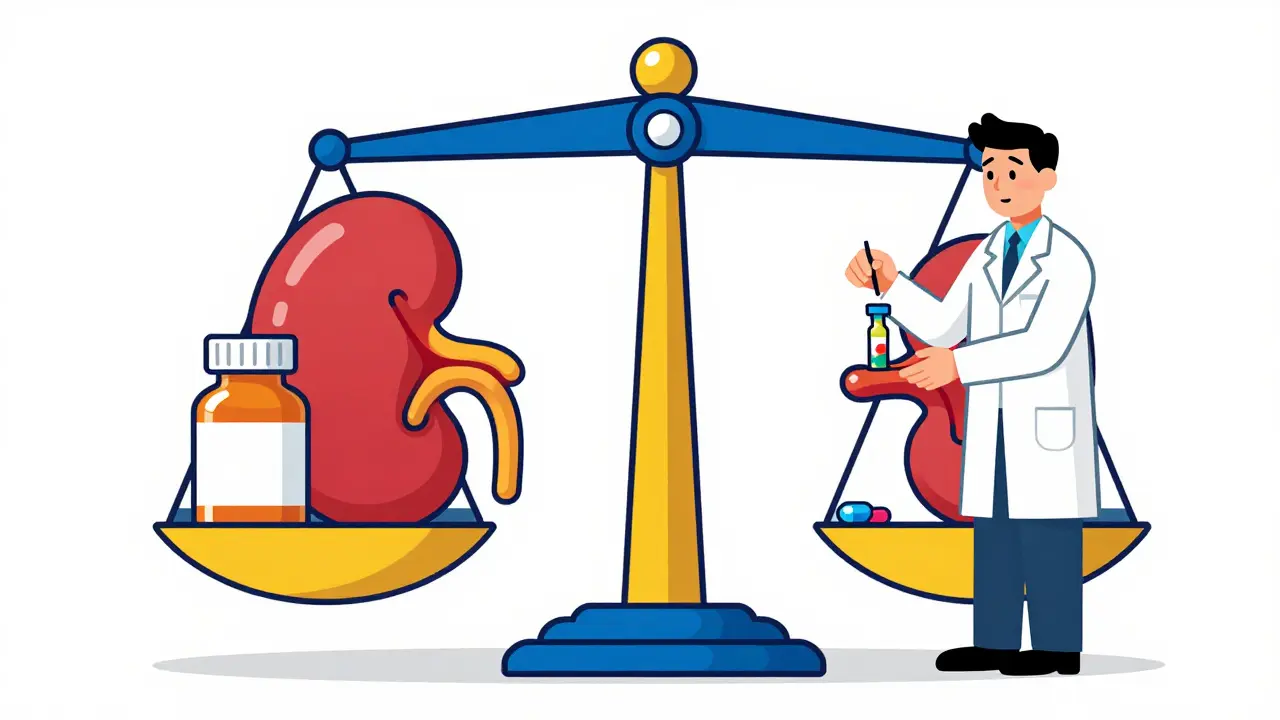
Some clinicians use a "50% rule"-if 50% of the drug is renally cleared and CrCl is under 50 mL/min, they cut the dose in half. While this is a handy rule of thumb, it's risky for drugs with nonlinear pharmacokinetics, where the relationship between dose and blood level isn't a straight line.
The Real-World Gap in Care
Knowing the rules is one thing; following them is another. Research shows a worrying gap: only about 43% of prescribers consistently adjust doses for seniors. Gabapentin and rivaroxaban are frequently overdosed in elderly patients, leading to avoidable hospitalizations. The risk is even higher in long-term care facilities, where formal dosing protocols are often missing entirely.
The good news is that technology is closing the gap. AI-powered platforms like DoseOptima are now integrating directly into electronic health records, calculating GFR in real-time and alerting doctors when a dose is too high. When pharmacists lead the dosing process, adverse drug events can drop by over 50%. It turns out that having a dedicated expert double-check the kidney math is the most effective way to keep seniors out of the hospital.
Practical Checklist for Caregivers and Clinicians
To prevent toxicity, follow these practical steps for any elderly patient starting a new medication:
- Check the latest Creatinine: Ensure the blood work is recent (within the last 3-6 months), as kidney function can change rapidly in seniors.
- Run the Numbers: Calculate both CrCl (Cockroft-Gault) and eGFR (MDRD). If they differ wildly, consider a Cystatin C test.
- Screen for Narrow Index Drugs: Flag any use of digoxin, lithium, or aminoglycosides for immediate monitoring.
- Review "Liver-Kidney" Drugs: Identify medications like metformin or glyburide that have renally cleared metabolites.
- Schedule Follow-ups: Renal function isn't static. A patient who was "stable" in January may have acute kidney injury in March due to dehydration or a new medication.
Why does renal impairment increase the risk of drug toxicity?
Most medications are either broken down by the liver or filtered out by the kidneys. When kidney function declines, the body cannot eliminate the drug as quickly as it is being administered. This leads to a "stacking" effect where the drug concentration in the blood rises to toxic levels, even if the patient is taking a standard dose that would be safe for a younger person.
Is the Cockroft-Gault equation still reliable for older adults?
It is still widely used because most drug manufacturers use it to determine the dosing instructions on the label. However, it tends to underestimate kidney function in the elderly by 15-20% because it relies heavily on serum creatinine, which is affected by a loss of muscle mass in older age. Clinicians are encouraged to use it as a conservative guide but verify with MDRD or Cystatin C for more accuracy.
Which medications are most dangerous in patients with kidney failure?
Drugs with a narrow therapeutic index are the most dangerous, such as digoxin and lithium, because the gap between a helpful dose and a toxic dose is very small. Additionally, certain antibiotics like cefepime can cause neurological issues if not adjusted, and diabetes drugs like metformin can lead to life-threatening lactic acidosis if the kidneys cannot clear the drug.
What is the difference between dose reduction and interval extension?
Dose reduction means giving a smaller amount of the drug at the same frequency (e.g., changing 500mg twice a day to 250mg twice a day). Interval extension means giving the full dose but less frequently (e.g., changing a dose from every 12 hours to every 24 hours). The choice depends on whether the drug needs a consistent minimum level in the blood or if the goal is simply to prevent the peak concentration from reaching toxic levels.
How often should kidney function be monitored in the elderly?
There is no single rule, but for patients on high-risk medications, monitoring should occur every 3-6 months. However, it should be done more frequently if the patient starts a new medication (like an ACE inhibitor or diuretic), experiences a severe illness, or becomes dehydrated, as these factors can cause a sudden drop in GFR.