
Medication Bladder Side Effect Checker
Check if Your Medications Are Causing Bladder Issues
Many common medications can cause frequent urination or urinary urgency. This tool helps you identify if your medications might be the cause.
Select your medications:
Includes hydrochlorothiazide, furosemide, spironolactone
Includes amlodipine, nifedipine, verapamil
Includes venlafaxine, escitalopram, paroxetine
For bipolar disorder
Includes clozapine, risperidone, olanzapine
Includes diphenhydramine (Benadryl)
Actionable Tips
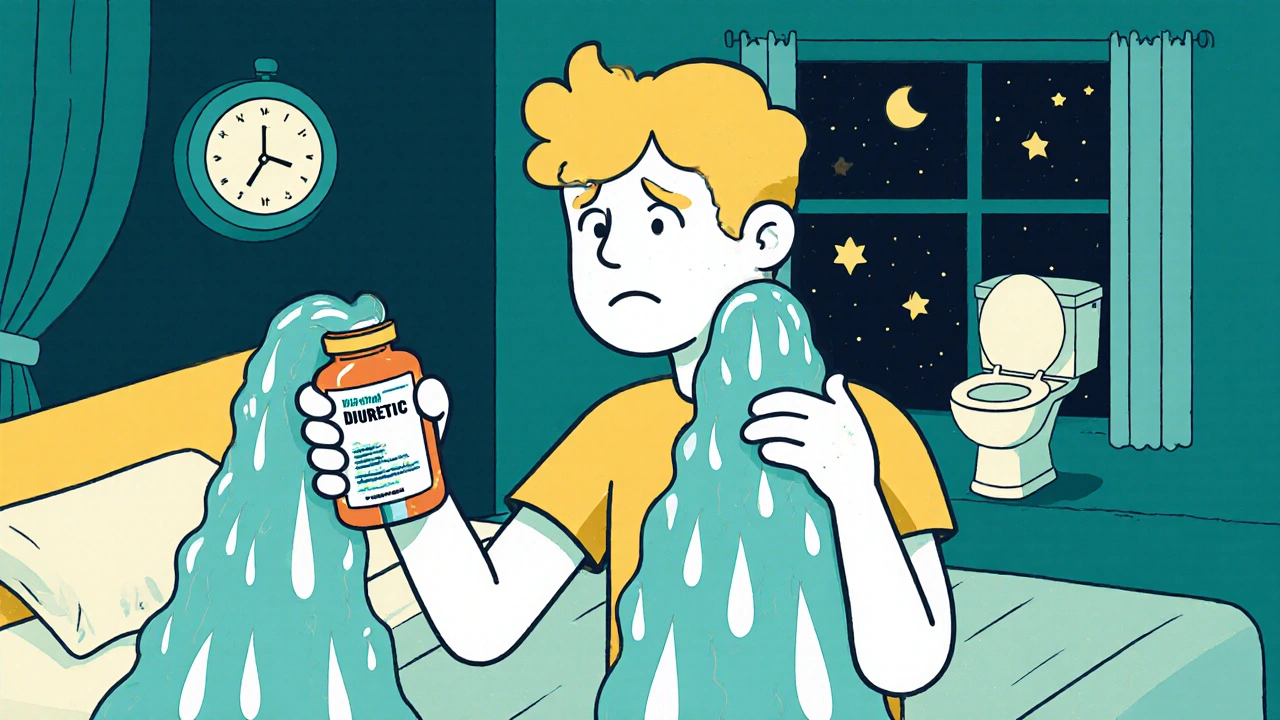
When you start a new medication, you expect to feel better - not like you’re constantly racing to the bathroom. Yet for many people, common prescriptions like blood pressure pills, antidepressants, or water pills are causing unexpected and disruptive bladder issues: frequent urination and sudden, intense urinary urgency. These aren’t just minor annoyances. They can wreck sleep, limit travel, and make daily life feel like a constant countdown to the next bathroom break.
Why Your Medication Is Making You Pee All the Time
Your bladder doesn’t work in isolation. It’s controlled by nerves, muscles, and hormones - and many medications interfere with those systems. When a drug changes how your kidneys produce urine, how your bladder contracts, or how your urethra stays closed, you end up with symptoms that feel like a bladder infection - but aren’t. The most common culprit? Diuretics. These are often called "water pills" and are prescribed for high blood pressure, heart failure, or swelling. Drugs like hydrochlorothiazide, furosemide (Lasix), and spironolactone (Aldactone) force your kidneys to flush out more salt and water. That means more urine. A lot more. Studies show diuretics can increase urine output by 20-50% within two hours. That’s not just an extra trip to the toilet - it’s a full-blown bladder overload. Around 65% of people taking diuretics report needing to go more often during the day, and 40% wake up at night to pee.Calcium Channel Blockers: The Silent Bladder Disruptors
If you’re on amlodipine, nifedipine, or verapamil for high blood pressure, you might be surprised to learn these drugs can mess with your bladder too. Unlike diuretics, they don’t make you produce more urine. Instead, they weaken your bladder’s ability to squeeze properly. Calcium is needed for muscle contractions - including the detrusor muscle that empties your bladder. When calcium channel blockers block that signal, your bladder doesn’t contract as strongly. The result? You feel the urge to go, but you can’t fully empty it. That leads to more frequent trips, especially at night. Research shows people on verapamil have a 42% higher chance of waking up to urinate than those on other blood pressure meds. One 2019 study found patients on nifedipine were going an extra 1.8 times per night compared to placebo. These symptoms often show up within 2-4 weeks of starting the drug - long enough that many patients assume it’s just aging or a prostate issue.Antidepressants and Mood Stabilizers: When Your Mind Affects Your Bladder
Antidepressants like venlafaxine (Effexor), escitalopram (Lexapro), and paroxetine (Paxil) are linked to overactive bladder in about 22% of users. These drugs affect serotonin and norepinephrine - chemicals that also control bladder nerves. Too much stimulation can make your bladder feel full even when it’s not, triggering sudden urges. Lithium, used for bipolar disorder, has a unique and serious effect. It can cause nephrogenic diabetes insipidus - a condition where your kidneys can’t concentrate urine. That means you pee out huge amounts: more than 3 liters a day. About 9% of long-term lithium users develop this, and many have to stop the drug because of it. Even if you don’t develop full diabetes insipidus, you might still notice your nighttime bathroom trips doubling or tripling. Antipsychotics like clozapine, risperidone, and olanzapine also cause problems. They block acetylcholine, a key neurotransmitter for bladder emptying. This leads to urinary retention - your bladder fills up but won’t release. That can cause overflow incontinence: you leak without realizing it. It’s confusing because you think you’re peeing too much, but you’re actually not emptying properly.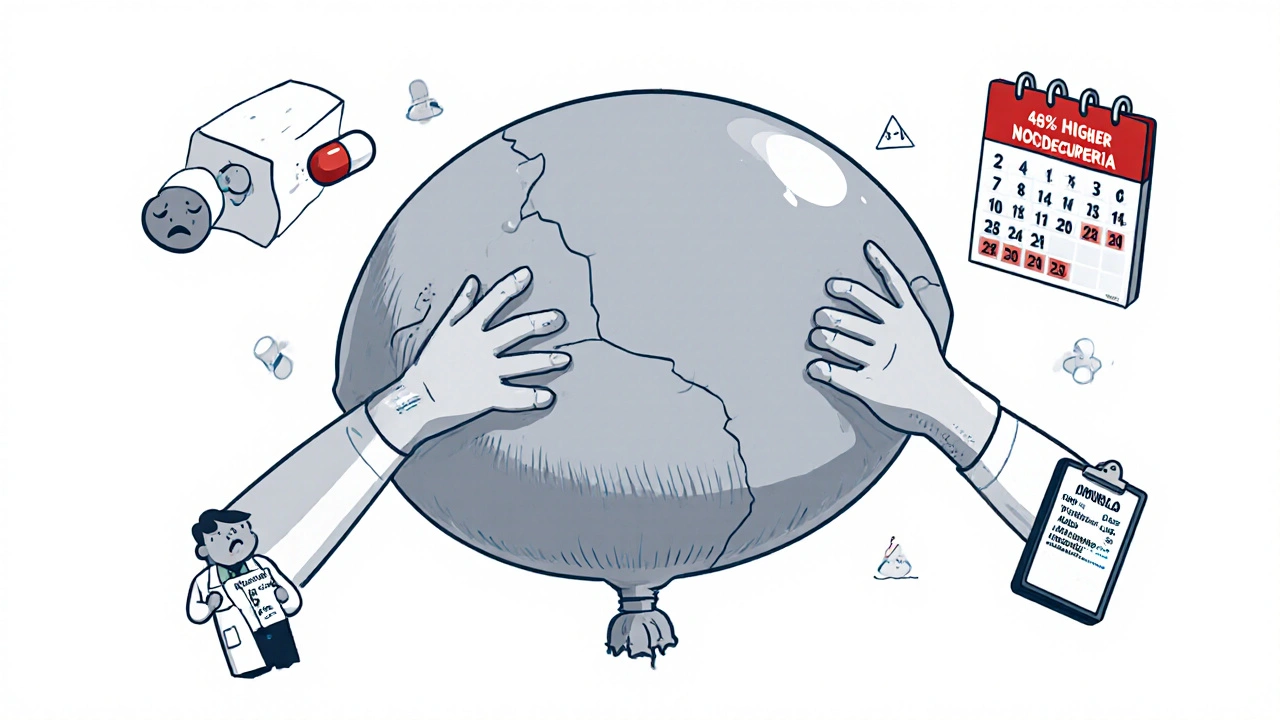
Other Surprising Culprits
You might not think of allergy meds like diphenhydramine (Benadryl) as bladder disruptors - but they are. These antihistamines relax the bladder muscle, making it harder to empty. That leads to retention, which then causes overflow leakage - the opposite of urgency, but just as messy. ACE inhibitors like captopril can trigger a persistent cough. That cough puts pressure on your pelvic floor, leading to stress incontinence - you leak when you laugh, sneeze, or lift something. About 15% of people on captopril experience this. Even medications meant to help your bladder can backfire. Alpha-blockers like tamsulosin (Flomax) improve urine flow in men with enlarged prostates, but they cause retrograde ejaculation in 25-30% of users. Semen flows backward into the bladder instead of out the penis. It’s not dangerous, but it’s unsettling and often unmentioned by doctors.What You Can Do - Without Stopping Your Medication
The good news? You don’t always have to quit your meds to fix this. Many strategies work well alongside treatment. First, timing matters. If you’re on a diuretic, take it before 2 p.m. That simple switch reduces nighttime bathroom trips by 60%, according to clinical data. No more 3 a.m. wake-ups. Second, bladder training helps. Set a schedule: go every 2-3 hours, even if you don’t feel the urge. Over 6-8 weeks, your bladder learns to hold more and react less to small signals. Studies show this works in 70% of cases. Third, combine it with pelvic floor exercises. Kegels strengthen the muscles that control urine flow. One study found that doing timed voiding plus Kegels reduced incontinence episodes by 55% compared to just adjusting medication.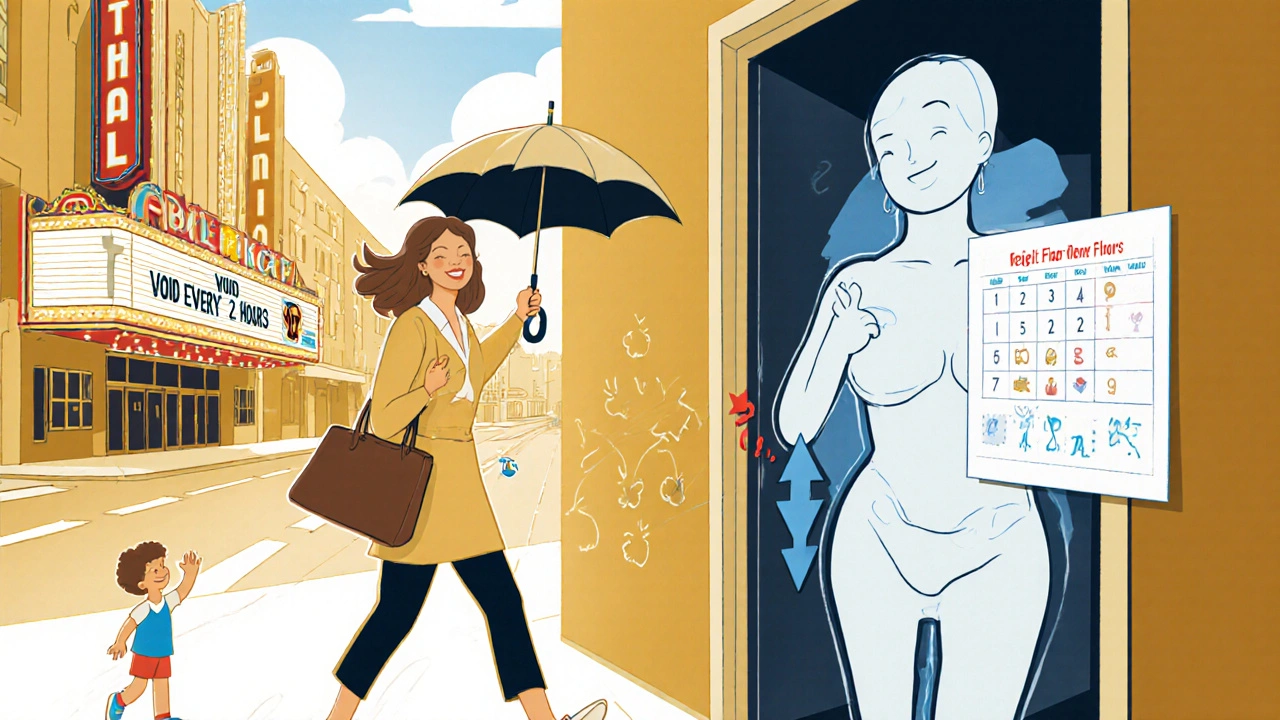
When to Talk to Your Doctor
If you started a new medication and noticed bladder changes within the past 4-6 weeks, that’s a red flag. Don’t assume it’s normal aging. Don’t suffer in silence. Your doctor should check for other causes first - like a UTI, prostate issues, or diabetes. A simple urine test and a post-void residual scan (which measures how much urine is left after you go) can rule those out. If the problem is clearly tied to a drug, ask about alternatives. For example, if you’re on a thiazide diuretic, maybe an ARB or ACE inhibitor without the same bladder impact would work. If you’re on a high-dose furosemide, could a lower dose split into two morning doses help? One patient reported going from 12 bathroom trips a day to just 5 after switching to a split dose.Real People, Real Struggles
Online patient forums are full of stories like these. On Reddit’s r/Urology, 42% of people said they had to push hard to get their doctor to consider medication as the cause. Too often, symptoms are blamed on age, weight, or "just being a woman." One man on PatientsLikeMe, on lithium for 12 years, said his life revolved around bathrooms. He couldn’t go to movies, take road trips, or even attend his kid’s school plays. After switching to a different mood stabilizer, his symptoms vanished. Another woman, on a combination of antidepressants and blood pressure meds, started wearing pads just in case. She didn’t tell anyone until she found a urologist who asked about her meds - not her age, not her weight, not her "lifestyle." That question changed everything.The Bottom Line
Frequent urination and urgency from medications are real, common, and often treatable. They’re not something you have to live with. The key is connecting the dots between when you started a new drug and when symptoms began. If you’re struggling, bring your full medication list to your next appointment. Highlight the ones you started in the last couple of months. Ask: "Could any of these be causing my bladder issues?" You’re not imagining it. And you don’t have to choose between managing your health condition and living your life.Can diuretics cause nighttime urination?
Yes. Diuretics like furosemide and hydrochlorothiazide increase urine production, often leading to nighttime trips to the bathroom (nocturia). About 40% of people on these medications wake up to urinate at night. Taking them before 2 p.m. can reduce nighttime episodes by up to 60%.
Do antidepressants make you pee more?
Some do. SSRIs and SNRIs like venlafaxine, escitalopram, and paroxetine can overstimulate bladder nerves, causing urgency and frequency. About 22% of users report worsened overactive bladder symptoms. If you notice changes after starting one, talk to your doctor - switching to a different antidepressant may help.
Can lithium cause frequent urination?
Yes. Long-term lithium use can cause nephrogenic diabetes insipidus, where the kidneys can’t concentrate urine. This leads to excessive urine output - often more than 3 liters a day. About 9% of long-term users develop this condition, and many need to switch medications because of it.
Is it normal to pee more as you get older?
Not necessarily. While aging can affect bladder function, a sudden increase in frequency or urgency is often linked to new medications - not just age. About 15-20% of urinary symptoms in adults over 40 are caused by drugs, not natural aging. Always check for medication triggers before assuming it’s just getting older.
What’s the best way to manage medication-induced urinary symptoms?
Start with timing: take diuretics early in the day. Add bladder training - going on a schedule even if you don’t feel the urge. Combine it with pelvic floor exercises like Kegels. These non-drug approaches help 70% of people after 6-8 weeks. If symptoms persist, talk to your doctor about adjusting the dose or switching to a different medication with fewer bladder side effects.
Should I stop my medication if it’s causing bladder problems?
Don’t stop without talking to your doctor. Many medications causing urinary symptoms - like blood pressure or antidepressant drugs - are essential for your health. Instead, ask about alternatives, dose adjustments, or timing changes. Often, you can keep the benefits of the drug while reducing the side effects.
Can over-the-counter allergy meds cause urinary issues?
Yes. Antihistamines like diphenhydramine (Benadryl) and chlorpheniramine relax the bladder muscle, making it harder to empty completely. This can lead to urinary retention and overflow incontinence - where you leak because your bladder is too full. Even occasional use can trigger this in sensitive individuals.
Comments
Maria Romina Aguilar
Wow. I didn’t know my blood pressure meds were turning me into a human toilet. I’ve been waking up 4x a night for months-thought it was just ‘aging’ or ‘stress.’ Now I’m going back to my doctor with this article printed out. Finally, someone gets it.
November 28, 2025 at 20:34
Brandon Trevino
The data presented here is statistically significant but methodologically flawed. Diuretic-induced nocturia is well-documented in nephrology literature since the 1980s. The 60% reduction figure from early dosing lacks control for fluid intake variance. Also, Kegels are ineffective for neurogenic bladder dysfunction. You’re conflating stress incontinence with pharmacologically induced polyuria. Fix the methodology before publishing.
November 29, 2025 at 08:31
Denise Wiley
THIS. I’ve been silently suffering for two years. Started Lexapro, then added amlodipine-and suddenly I was wearing pads to yoga class. My doctor laughed when I mentioned it. ‘You’re just anxious,’ she said. I cried in the parking lot. Thank you for naming what I couldn’t. I’m scheduling a urology consult tomorrow. You’re not alone. We’re not crazy. We’re just medicated.
November 30, 2025 at 08:38
Hannah Magera
Hi everyone. I’m new to this, but I had a similar issue after starting lithium. My kidneys just kept making urine-like, gallons. I didn’t know what was happening. I thought I was drinking too much water. Then I read about nephrogenic diabetes insipidus and finally connected the dots. I’m so glad this post exists. If you’re worried, just ask your doctor for a urine concentration test. It’s simple. You’re not weird. Your body’s just reacting. We can figure this out together.
December 1, 2025 at 14:47
Austin Simko
Big Pharma knows. They don’t care. Your bladder is collateral damage. They profit from your new meds, your new pads, your new urologist visits. This is a money machine. Don’t trust the system.
December 1, 2025 at 21:38
Nicola Mari
It’s appalling how casually doctors dismiss these symptoms. I’ve seen women told to ‘just drink less water’ or ‘get used to it.’ Meanwhile, men with prostate issues get immediate referrals. Gender bias in medicine isn’t a theory-it’s a daily reality. And now we have people blaming their bladder problems on ‘aging’ instead of questioning the drugs. Pathetic.
December 2, 2025 at 21:51
Sam txf
Let’s be real-this isn’t about meds. It’s about weak pelvic floors, bad diets, and people who refuse to stop drinking coffee at 7 p.m. I’ve been on ten different prescriptions since 2010. No bladder issues. Your body’s just lazy. Stop blaming the pills. Do the work.
December 4, 2025 at 13:54
George Hook
I’ve been managing this for over a decade-diuretics, antidepressants, you name it. I used to think I was broken. Then I found a urologist who actually listened. He didn’t just say ‘take it earlier’-he mapped out my entire med list, checked my post-void residual, and adjusted my doses one by one. Took six months. I went from 15 trips a day to three. It’s not magic. It’s medicine. But you have to be your own advocate. Keep asking. Keep pushing. You’re worth the effort.
December 4, 2025 at 21:54
jaya sreeraagam
Oh my god, I am so glad I found this! I’ve been taking hydrochlorothiazide for 5 years and started sertraline last year-and suddenly I’m peeing every 45 minutes. I thought I was going crazy. I didn’t tell anyone because I felt embarrassed. But now I know it’s not me-it’s the meds. I’m going to my doctor tomorrow with this list. And yes, I’m doing Kegels. I already started doing them while brushing my teeth. Small steps. Thank you for writing this. You made me feel less alone. 💪❤️
December 6, 2025 at 20:43
Katrina Sofiya
Thank you for sharing this with such clarity and compassion. As a healthcare professional, I see patients every day who suffer in silence because they’re told, ‘It’s just part of getting older.’ But this isn’t aging-it’s iatrogenic. We need more awareness, more dialogue, and more doctors who listen. To anyone reading this: your symptoms are valid. Your voice matters. Bring this article to your next appointment. You deserve to live fully, without fear of the next bathroom break.
December 8, 2025 at 10:00