
Acid Suppression Comparison Tool
Select a medication type below to see how it compares in terms of speed, strength, and long-term safety.
H2 Blockers (H2RAs)
e.g., Pepcid, TagametPPIs
e.g., Prilosec, NexiumKey Characteristics
Risk Profile & Usage
Best For: -
Taking one stomach medication is common, but taking two at once is a different story. Many people find themselves prescribed both H2 blockers (H2RAs) and Proton Pump Inhibitors (PPIs) to handle chronic heartburn. While it might seem like "double the medicine equals double the relief," the reality is that this combination often provides very little extra benefit while increasing your risk of serious side effects. In some cases, these two drugs can actually get in each other's way.
How They Work: The Fast Fix vs. The Deep Clean
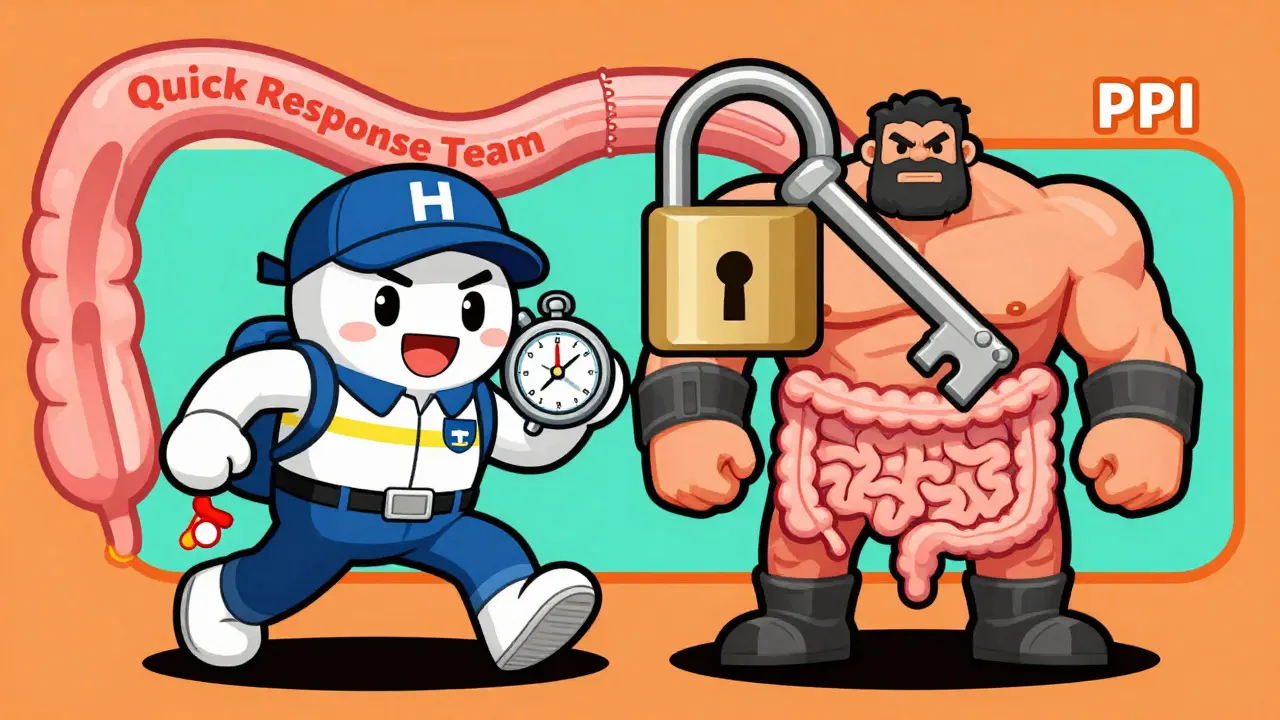
To understand why taking both might be overkill, you first have to understand how they differ. H2 Blockers, such as famotidine (Pepcid) or cimetidine (Tagamet), act like a quick-response team. They block the histamine receptors that tell your stomach to produce acid. They kick in fast-usually within an hour-but they only last about 6 to 12 hours and reduce acid secretion by roughly 50-70%.
On the other hand, Proton Pump Inhibitors, like omeprazole (Prilosec), are the heavy hitters. Instead of just blocking a signal, they shut down the "pumps" (the H+/K+ ATPase enzyme) that actually push acid into your stomach. This results in a massive reduction in acid-up to 98%-and the effect lasts a full 24 hours. However, PPIs aren't instant; they can take 2 to 5 days to reach their full strength.
| Feature | H2 Blockers (H2RAs) | Proton Pump Inhibitors (PPIs) |
|---|---|---|
| Onset of Action | Fast (within 1 hour) | Slow (2-5 days for max effect) |
| Acid Reduction | Moderate (50-70%) | High (90-98%) |
| Duration | Short (6-12 hours) | Long (24 hours) |
| Main Use Case | Quick relief / Occasional use | Long-term healing / Severe GERD |
The Problem with the "Double Dose"
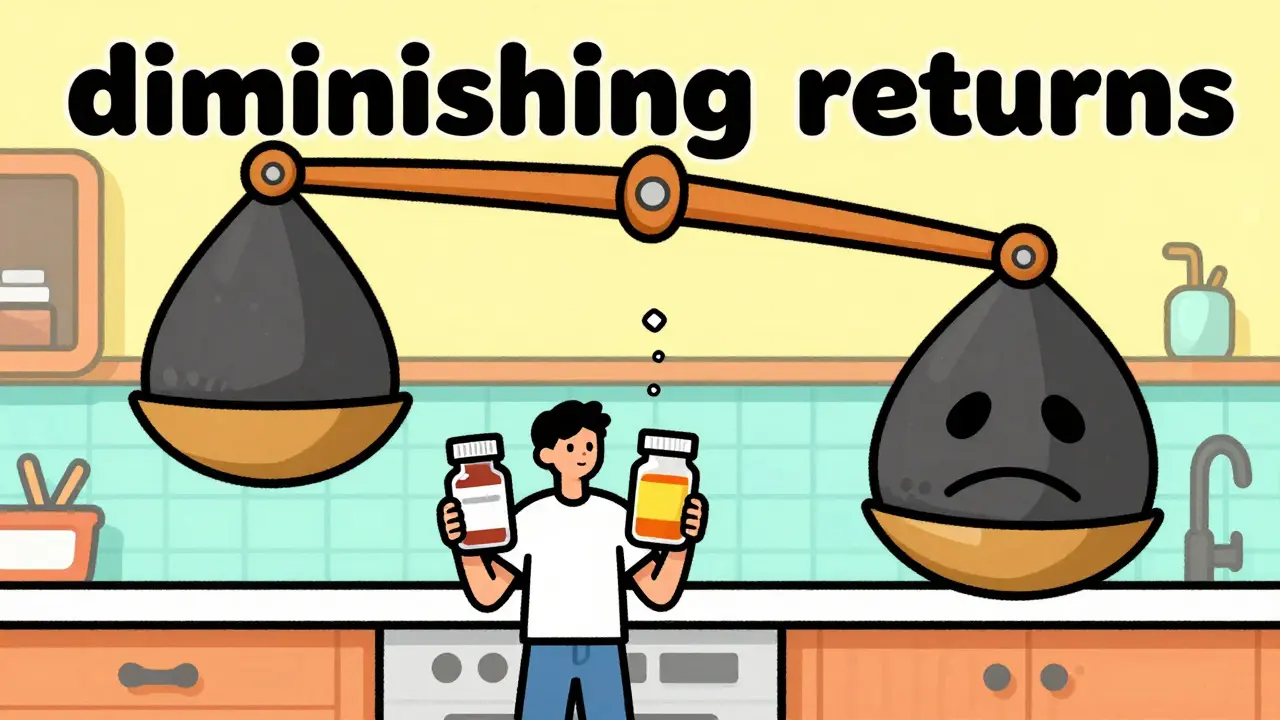
If you're already using a PPI to shut down 98% of your acid production, what is left for an H2 blocker to do? This is where the interaction gets interesting. H2 blockers need histamine to be present to effectively block the receptors. But because PPIs are so powerful at suppressing the overall environment, the marginal gain of adding an H2 blocker is tiny. Research in the Journal of Clinical Gastroenterology showed that adding ranitidine to omeprazole only gave patients an extra 5% reduction in acid exposure. For most people, that's a negligible difference that doesn't translate to feeling any better.
Because of this, the American College of Gastroenterology suggests that long-term combination therapy doesn't offer a real advantage for managing GERD (Gastroesophageal Reflux Disease). When you're taking both, you're not just paying more for your prescriptions; you're exposing your body to more chemicals without a proportional reward.
The Hidden Risks: More Than Just Heartburn
The biggest concern isn't that the drugs don't work-it's what happens when you use them too much. When you combine these medications, you amplify the risk of side effects. Long-term PPI use is linked to bone fractures and vitamin deficiencies because your body needs stomach acid to absorb nutrients like B12 and magnesium.
More alarming are the systemic risks. A large study published in JAMA Internal Medicine analyzed nearly 80,000 ICU patients and found that those on PPIs had a 30% higher risk of hospital-acquired pneumonia and a 32% higher risk of Clostridium difficile (C. diff) infections compared to those using H2 blockers alone. C. diff is a severe bacterial infection that causes life-threatening diarrhea, and it thrives when the stomach's natural acid barrier is too low.
For people with kidney issues, the choice is even more critical. Data from a Chronic Kidney Disease registry showed a 28% higher risk of progressing to end-stage kidney disease in PPI users compared to those using H2 blockers. This suggests that for certain patients, the "stronger" drug is actually the more dangerous one.
When is the Combination Actually Useful?
Does this mean you should never take both? Not necessarily. There is one specific scenario where this combo makes sense: nocturnal acid breakthrough. Some people find that while their PPI works great during the day, they wake up at 3 AM with a burning throat. Since PPIs have a specific timing for their peak effect, an H2 blocker taken before bed can bridge that gap.
However, this should be a targeted strategy, not a default setting. Doctors typically only recommend this if:
- You've tried twice-daily PPIs and still have nighttime symptoms.
- A 24-hour pH monitor shows your stomach pH is below 4 for more than an hour between midnight and 6 AM.
- The combination is used as a short-term bridge (4-8 weeks) rather than a lifelong habit.
Navigating the Path to Deprescribing
If you're currently on both, don't stop your medication abruptly. Many people experience "rebound acid hypersecretion"-where your stomach overproduces acid because it's trying to compensate for the drugs-making you feel like you need the meds even more.
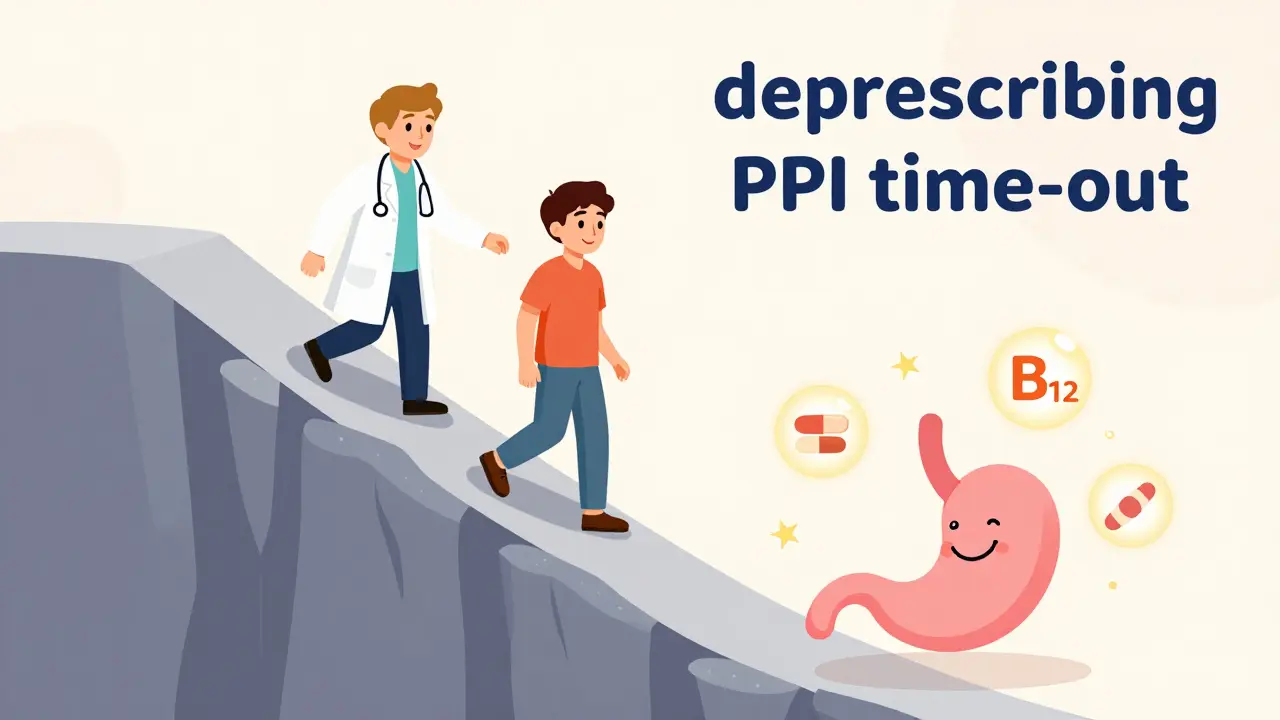
Instead, talk to your doctor about a "PPI time-out." The Department of Veterans Affairs recommends assessing the need for these drugs every 90 days. A safe way to transition off is to slowly taper the dose or switch from a daily PPI to an "as-needed" H2 blocker. This allows your stomach to gradually return to its natural acid-producing levels without the shock of a sudden flare-up.
Can I take Pepcid and Prilosec at the same time?
While it is physically possible and sometimes prescribed for severe nighttime reflux, it is generally not recommended for routine use. The extra acid suppression is minimal, but the risk of side effects like C. diff infection and nutrient deficiencies increases.
Which is safer for my kidneys, H2 blockers or PPIs?
Research suggests that H2 blockers may have a more favorable safety profile for people with chronic kidney disease. Some studies indicate PPIs are associated with a higher risk of progressing to end-stage kidney disease.
Why does my doctor want me on both?
Your doctor might be trying to treat "nocturnal acid breakthrough," where your acid levels spike at night. However, this is usually considered a short-term solution. You should ask if a different PPI dose or timing would be more effective than adding a second medication.
What are the most common side effects of long-term PPI use?
Common issues include headaches, diarrhea, and deficiencies in vitamins B12 and magnesium. More serious long-term risks include an increased likelihood of bone fractures and pneumonia.
Will I have a relapse if I stop taking these medications?
Many people experience rebound acid production when stopping PPIs, which can feel like your GERD is returning. This is why a gradual taper-reducing the dose slowly over several weeks-is recommended over stopping cold turkey.