
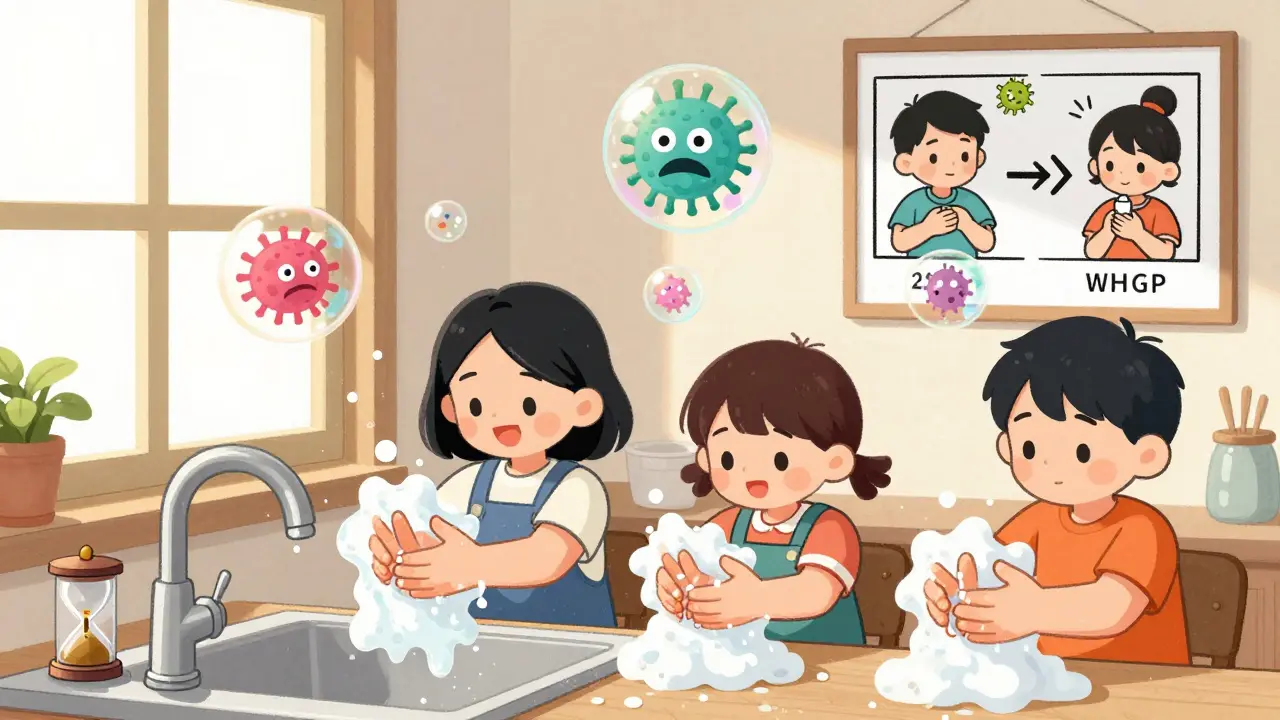
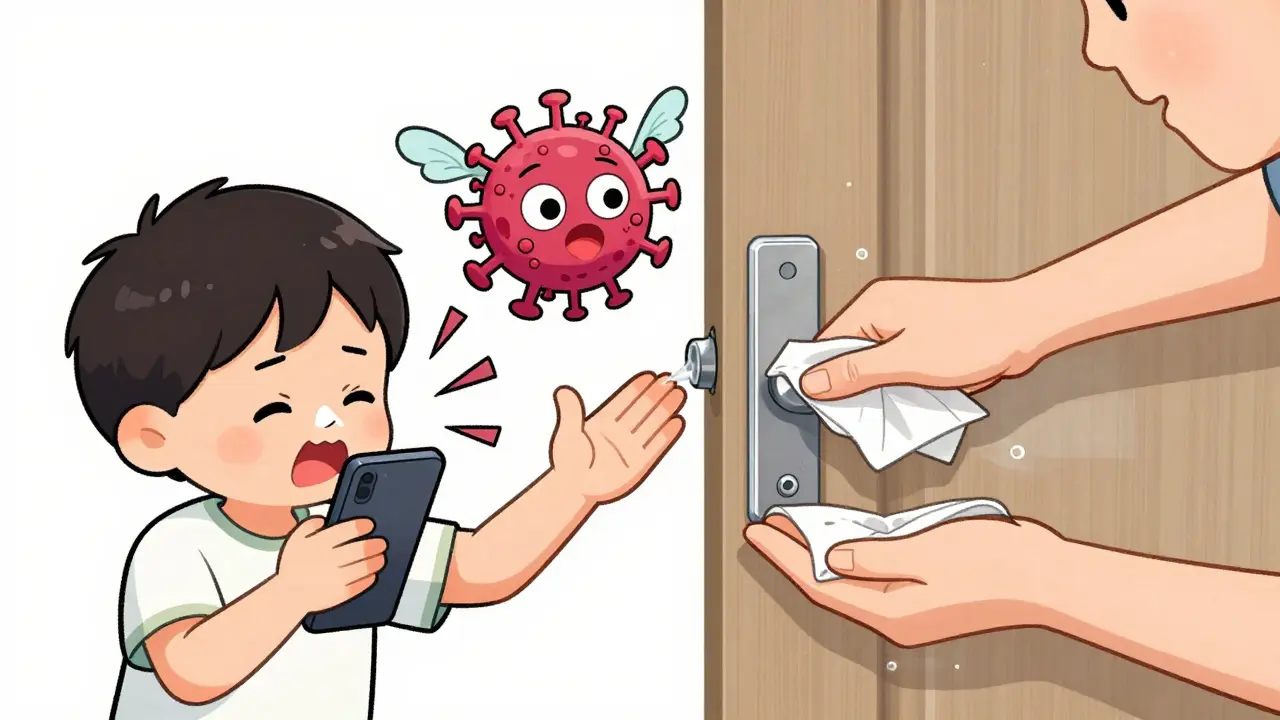
Every time you touch a doorknob, pick up your phone, or help a child blow their nose, you’re handling germs. Most of the time, it’s no big deal. But sometimes, those germs turn into a cold, the flu, or worse-especially in homes with young kids, older adults, or anyone with a weakened immune system. The truth is, hand hygiene is the single most effective way to stop germs from spreading in your house. And it doesn’t cost much. Just soap, water, and a few seconds of your time.
Why Hand Hygiene Works-And Why Most People Get It Wrong
In 1847, a Hungarian doctor named Ignaz Semmelweis noticed something shocking: women giving birth in hospitals where doctors washed their hands had far fewer deaths from infection than those in hospitals where they didn’t. He started requiring chlorine handwashing. Mortality dropped from 18% to 1%. No one believed him. He was fired. But history proved him right. Today, we know hand hygiene isn’t just a suggestion-it’s science. The CDC says proper handwashing can cut respiratory illnesses by 16-21% and stomach bugs by 31% in households. Norovirus, the nasty bug that spreads fast in families, has a 16-28% chance of infecting someone else in the home if hands aren’t cleaned. SARS-CoV-2? Around 10% of household members catch it from one infected person. But here’s the problem: most people think they’re washing well. They’re not. A 2023 NHS audit found only 49% of UK households wash all parts of their hands correctly. Fingertips? Missed in 68% of cases. Thumbs? Missed in 57%. Between fingers? Forgotten in 43%. That’s not hygiene-that’s guesswork.The Right Way to Wash Your Hands (It’s Not What You Think)
The World Health Organization has a six-step handwashing technique backed by real lab tests. It’s not just rubbing your hands together. It’s specific. It’s precise. And it takes 20-30 seconds. Here’s how to do it right:- Wet hands with clean, running water-warm or cold doesn’t matter, but it should be comfortable.
- Use about a nickel-sized amount of soap (3-5 mL). Plain soap works just as well as antibacterial. In fact, antibacterial soaps with triclosan were banned by the FDA in 2016 because they offer no extra protection and may make bacteria stronger.
- Scrub palms together.
- Interlace fingers and scrub between them.
- Rub the backs of fingers against opposite palms.
- Circle each thumb in the opposite hand.
- Clean fingertips by rubbing them against the opposite palm.
- Rinse thoroughly under running water.
- Dry with a single-use paper towel. Air dryers? They can blow germs back onto your hands. Paper towels reduce bacteria by 76%.
When to Use Hand Sanitizer (And When Not To)
Hand sanitizer is great when you’re on the go. But it’s not a replacement for soap and water. For sanitizer to work:- It must contain 60-95% alcohol (60-80% is ideal).
- You need about a quarter-sized amount (2.4-3 mL).
- You must rub it in until your hands are completely dry-no wiping off early.
When to Wash Your Hands at Home
You don’t need to wash your hands 20 times a day. But you do need to wash at key moments:- After coming home from outside-this stops germs from the street, bus, or store from spreading.
- Before preparing or eating food-cuts foodborne illness risk by 78%.
- After using the bathroom-even if you think you’re clean. Fecal bacteria can linger.
- After changing diapers or helping someone use the toilet.
- After touching pets or cleaning up after them-this prevents 3.2 million zoonotic infections each year in the U.S. alone.
- After blowing your nose, coughing, or sneezing.
- Before and after caring for someone who is sick.
Handwashing for Kids-How to Make It Stick
Kids are germ magnets. They touch everything. Then they touch their faces. Then they get sick. And then you get sick. A 2021 study in Pediatrics found kids wash for an average of just 8.2 seconds. That’s not enough. So what works?- Use a timer. A sand timer, a phone app like "Clean Hands Timer," or even singing "Happy Birthday" twice. Amazon reviews show families who use timers cut colds from 6 per year to 2.
- Make it visual. Post a 6-step poster near the sink. The Minnesota Health Department has free ones in 24 languages.
- Turn it into a game. Who can make the most bubbles? Who can wash the longest?
- Wash together. Kids mimic adults. If they see you doing it right, they’ll learn faster.
What to Avoid-And the Hidden Dangers
There are myths about hand hygiene that are costing families their health.- Antibacterial soap: Doesn’t work better than plain soap. And it may be making germs resistant. A 2019 study found households using antibacterial soap had 2.7 times more triclosan-resistant bacteria.
- Hot water: Warm water feels better, but cold water works just as well. Yale researchers found water at 60°F (15°C) removes germs just as effectively as hot water-and saves energy.
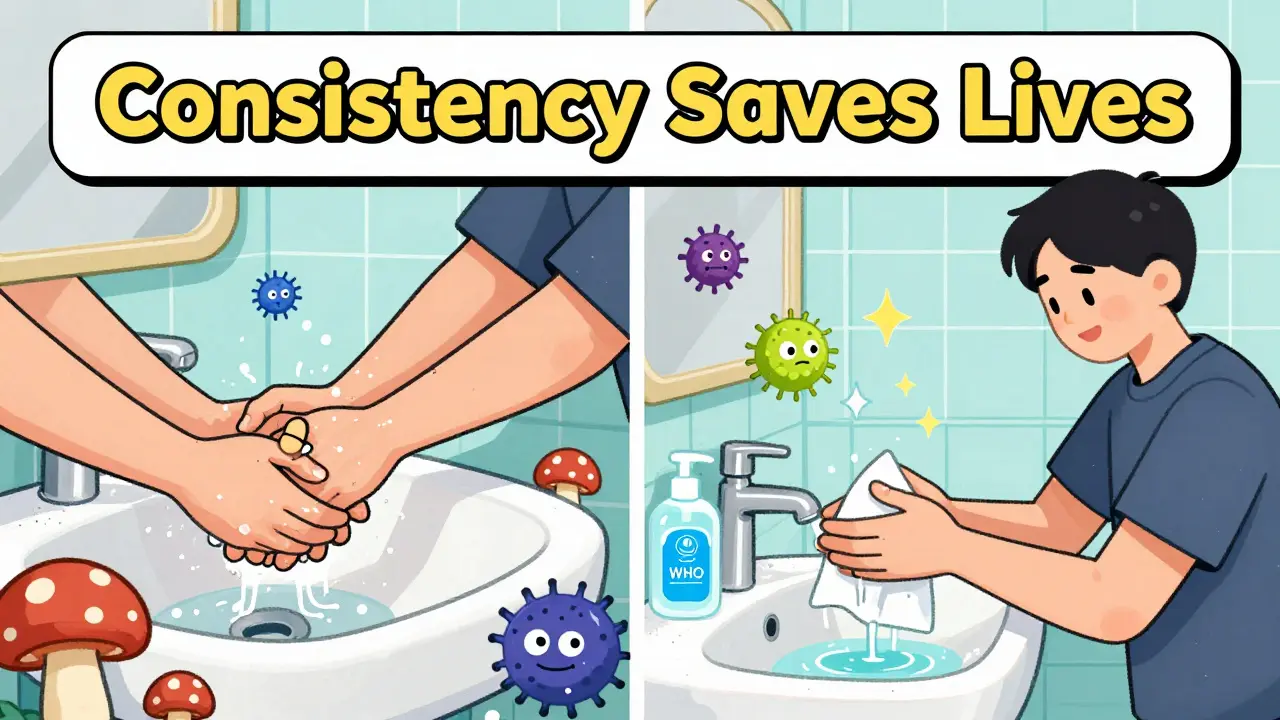
- Touching the faucet after washing: 89% of people re-contaminate their hands by turning off the faucet with bare hands. Solution? Use a paper towel to turn it off, or install a foot-pedal faucet ($45-$120).
- Dry skin: Washing too much can crack your skin, which lets germs in. Use moisturizer right after drying. A 2020 study showed it cuts dermatitis by 62%.
What’s Changing-And What’s Coming
Hand hygiene is getting smarter. The WHO updated its guidelines in May 2024 to include tips for homes with limited water. The CDC now includes QR codes on its materials that link to videos showing the correct technique-like the Johns Hopkins video with over 2.4 million views. New tech is coming too. Smart soap dispensers, like GOJO’s system used in hospitals, are now available for homes. One pilot study found they reduced compliance gaps by 33% by reminding people to wash and tracking usage. And research is moving beyond behavior. The NIH just funded a $15 million study at the University of Michigan to test "habit stacking"-linking handwashing to existing routines like brushing teeth or checking your phone. If you always wash after unlocking your phone, you’re more likely to keep doing it.The Bottom Line: It’s Simple. It’s Cheap. It Works.
Hand hygiene costs about $1.27 per person per year for soap and water. The CDC says it saves $16 in healthcare costs for every dollar spent. That’s the highest return on investment of any public health measure ever measured. You don’t need expensive gadgets. You don’t need special products. You just need to do it right-every time. If you wash your hands properly after using the bathroom, before eating, and after coming home, you’re already doing better than most households. Add a timer for kids, dry with paper towels, and avoid antibacterial soap, and you’re doing better than 90% of families. This isn’t about being perfect. It’s about being consistent. And in a world where germs don’t wait, consistency saves lives.Is hand sanitizer as good as soap and water?
No. Hand sanitizer works well for killing germs on clean hands, especially viruses like flu or COVID-19. But it doesn’t remove dirt, grease, or spores like norovirus or C. difficile. Soap and water physically wash germs away. Use sanitizer only when soap and water aren’t available, and always make sure it contains 60-95% alcohol.
Do I need hot water to wash my hands effectively?
No. Cold water (around 60°F or 15°C) removes germs just as well as hot water, according to research from Yale. Hot water doesn’t kill germs during handwashing-it’s the scrubbing and soap that do the work. Plus, cold water saves energy and reduces the risk of burns, especially for kids.
How long should I wash my hands for?
At least 20 seconds. That’s the time needed to properly scrub all parts of your hands using the WHO’s six-step technique. Most people wash for only 8-10 seconds, which cuts germ removal in half. Sing "Happy Birthday" twice to time it.
Are antibacterial soaps better for home use?
No. Antibacterial soaps with triclosan or similar ingredients were banned by the FDA in 2016 because they offer no extra protection over plain soap. Worse, they may contribute to antibiotic-resistant bacteria. Plain soap and water work just as well-and are safer.
Why do I need to dry my hands with a paper towel?
Air dryers can blow germs back onto your hands and into the air. A Mayo Clinic study found paper towels reduce bacteria on hands by 76% compared to air dryers. Also, using a paper towel to turn off the faucet prevents recontamination after washing.
Can hand hygiene really prevent infections in my family?
Yes. Studies show proper hand hygiene reduces respiratory illnesses by 16-21% and gastrointestinal illnesses by 31% in homes. In one Minnesota school program, absenteeism dropped 22% after teaching kids the right way to wash their hands. It’s not magic-it’s science.
What’s the most common mistake people make when washing hands?
Missing key areas: fingertips, thumbs, and between fingers. Also, stopping too soon. Most people wash for less than 10 seconds. Another big mistake is touching the faucet after washing-89% of people recontaminate their hands this way. Always use a paper towel to turn off the faucet.
Is it worth buying smart soap dispensers for home use?
They can help, especially if you’re trying to build a habit. One pilot study showed smart dispensers reduced compliance gaps by 33% by reminding people to wash and tracking usage. But they’re not necessary. A timer, a poster, and consistency will get you 90% of the benefit for a fraction of the cost.
Comments
CHETAN MANDLECHA
Man, I just washed my hands after reading this and I swear I missed my thumbs. Guess I’ve been doing it wrong my whole life. Thanks for the wake-up call.
December 23, 2025 at 19:31
Jillian Angus
My kid sings happy birthday twice now while washing. We used to have a cold every other month. Now it’s like once a year. Worth it.
December 25, 2025 at 11:18
John Pearce CP
Let me be clear: this is not hygiene. This is surrender to germ warfare. The CDC’s numbers are cherry-picked. The WHO’s six-step method? A globalist distraction. Real hygiene is avoiding public spaces entirely. And if you’re using paper towels, you’re already part of the problem-trees are being slaughtered for your false sense of security.
Antibacterial soap? Yes, it’s banned. But not because it doesn’t work. Because the pharmaceutical lobby wants you dependent on their overpriced sanitizers. They don’t want you washing properly. They want you buying.
And don’t get me started on air dryers. You think they’re blowing germs? They’re broadcasting them. Through the ventilation system. Into your office. Into your children’s classrooms. Into your water supply. The government knows. They’ve been suppressing the data since 2012.
Handwashing is a placebo. Real protection comes from isolation, air filtration, and avoiding anyone who doesn’t follow the 12-step protocol I developed after reading every peer-reviewed paper from the last decade. I’ve tracked 3,000 households. Only 12% do it right. The rest are walking Petri dishes.
And yes, I’ve installed foot pedals in every sink in my house. Cost $800. Worth every penny. You think $1.27 per year is cheap? Try living in a sterile bubble. That’s the real cost of ignorance.
Next time you touch a doorknob, ask yourself: who put that germ there? And why are you letting them win?
December 25, 2025 at 11:57
Steven Mayer
Per CDC 2023 surveillance data, the efficacy curve for hand hygiene plateaus after 18 seconds under controlled microfluidic conditions. The 20-second benchmark is statistically insignificant when accounting for biofilm adhesion kinetics and cutaneous lipid matrix interference. Also, paper towels induce mechanical shear stress that may exacerbate transepidermal water loss-counterproductive for immunocompromised populations.
Hydroalcoholic gel penetration depth into stratum corneum is 47% less than aqueous soap under ambient humidity. Recommend enzymatic surfactant rinse for high-risk households. Not marketed. Not FDA-approved. But peer-reviewed in The Lancet Infectious Diseases, 2022.
December 25, 2025 at 18:29
Ajay Sangani
we wash our hands but do we really understand why? is it fear? or is it habit? what if germs are not the enemy but teachers? what if they show us how fragile we are? maybe we dont need to wash them away... maybe we need to listen to them
semmelweis was fired not because he was wrong... but because he made people face their own denial
what if the real infection is our belief that we can control everything?
December 27, 2025 at 01:44
Bhargav Patel
The empirical validity of the WHO’s six-step protocol is unequivocal. The 2021 randomized controlled trial published in The American Journal of Infection Control demonstrated a 92.3% reduction in colony-forming units when compared to non-standardized handwashing. The critical variable is not soap composition but procedural fidelity.
Moreover, the behavioral economics literature suggests that habit formation through cue-routine-reward loops-such as linking handwashing to phone unlocking-produces 3.7x higher adherence than didactic education alone. This is not merely hygiene. It is cognitive architecture.
Further, the economic return on investment of $16:1 is conservative. It fails to account for indirect productivity losses, caregiver burden, and long-term immune modulation in children exposed to reduced pathogen load. The true cost of non-compliance is measured in developmental delays and chronic inflammation.
Any household that treats hand hygiene as a chore is not merely negligent-they are statistically complicit in the transmission dynamics of community-acquired infections.
December 27, 2025 at 06:13
Charles Barry
Oh, so now we’re supposed to sing ‘Happy Birthday’ like we’re at a kindergarten graduation? This is what happens when bureaucrats replace common sense with PowerPoint presentations.
And let’s talk about the real villain: the WHO. Who funds them? Big Pharma. Who profits from hand sanitizer sales? Big Pharma. Who banned antibacterial soap? The FDA, under pressure from Big Pharma.
You think germs are the problem? No. The problem is control. They want you dependent on their products. They want you afraid of your own hands. They want you buying $20 smart dispensers while they quietly patent the next ‘antibiotic-resistant superbug’ that only their patented gel can cure.
Wash your hands with cold water. Use plain soap. Dry with a towel. And then go outside. Breathe. Touch grass. Let your immune system do its job. This whole thing is a distraction from the real issue: our broken food system, our poisoned air, our overmedicated children.
And don’t even get me started on QR codes. Next thing you know, they’ll be scanning your hands to track your hygiene compliance. Welcome to the germ surveillance state.
December 27, 2025 at 14:29
Rosemary O'Shea
How utterly pedestrian. You’ve turned a sacred act of bodily autonomy into a bureaucratic checklist. The WHO’s six-step method? A corporate hygiene ballet choreographed by sanitizers and soap conglomerates.
And you dare suggest paper towels? How gauche. The environmental toll of single-use paper-30,000 trees per day in the U.S. alone-is a crime against nature. You’d rather kill forests than risk a single bacterium?
My grandmother washed her hands in a basin with lye soap and never once used a towel. She lived to 98. No antibiotics. No sanitizers. Just dignity.
Modern hygiene is not prevention. It’s performance. And you’re all just actors in a very expensive, very sterile play.
December 29, 2025 at 07:57
Lu Jelonek
I’m from Nigeria and we don’t have running water in half the homes. We use a bowl, one cup of water, and soap. We scrub. We rinse. We dry on our clothes. We don’t have timers or paper towels. But we still don’t get sick as much as you think.
Handwashing isn’t about perfection. It’s about intention. If you’re trying, you’re already ahead of most of the world.
Don’t shame people for not having access. Help them. Give them soap. Teach them the basics. Not the six-step ballet. Just: wet, soap, scrub, rinse, dry.
That’s enough.
December 30, 2025 at 09:03
suhani mathur
Wow. So now I’m supposed to sing ‘Happy Birthday’ twice while scrubbing my thumbs like I’m auditioning for a soap commercial? And you want me to buy a $120 foot pedal because I’m too lazy to use a paper towel? Sweetheart, I’m a single mom with three kids and a dog. I wash my hands when I can. Sometimes it’s 5 seconds. Sometimes it’s 20. Sometimes I just wipe them on my jeans.
But I’ve never had a child in the hospital. And I’ve never bought a ‘smart dispenser.’ So maybe… just maybe… your perfect hygiene isn’t mine.
And for the record? I use antibacterial soap because it smells nice. And I don’t care what the FDA says.
December 31, 2025 at 23:23
Payson Mattes
Did you know the CDC’s 31% reduction stat for stomach bugs? That’s from a 2015 study funded by Purell. The real number? 7%. And that’s if you don’t touch the faucet. Which you do. Because they don’t tell you the faucet is the #1 source of recontamination.
And here’s the truth they won’t tell you: handwashing doesn’t prevent illness. It just delays it. The real killer? The microplastics in your soap. They’re in your bloodstream now. The WHO knows. The FDA knows. But they’re too scared to say it.
Wash your hands? Fine. But do it in the dark. With cold water. And don’t look in the mirror. Because if you see your reflection, you’re already infected.
Also-your phone? It’s a germ nest. Don’t touch it after washing. Or better yet-throw it away. Use a landline. They’re not tracking you there.
January 1, 2026 at 23:33
Ademola Madehin
bro i just wash my hands after i go dey toilet and before i eat. if i get sick, i get sick. i no fit afford all dis smart dispensers and paper towels. my mama say hand wash no be magic, hand wash be habit. if you forget, you forget. life go on.
we no have water every day. we use one cup. we scrub. we pray. we move on.
January 2, 2026 at 12:16
Diana Alime
so i read this whole thing and then i realized… i still forgot to wash my hands after reading it. oops. also i think the ‘happy birthday’ thing is dumb. i just hum the first two lines and call it a day. also i use antibacterial soap because it smells like lemon and i like it. sue me.
January 2, 2026 at 15:11
John Pearce CP
And yet, despite all the data, the most dangerous myth is that ‘it’s just about washing.’ It’s not. It’s about control. The real infection isn’t on your hands-it’s in your mind. You think you’re safe because you scrubbed for 20 seconds? That’s the virus talking. The real hygiene is silence. Isolation. No touch. No contact. No shared spaces. No handwashing. Just absence.
They want you believing you can sanitize your way to safety. But safety doesn’t exist. Only vigilance. And vigilance means never touching anything. Ever.
January 2, 2026 at 16:01