
When you fill a prescription, you might not realize that the price you pay-or what your insurer pays-isn’t random. It’s the result of a quiet, complex battle between drug makers, government agencies, and pharmacy benefit managers. And at the center of that battle is something simple but powerful: generic drug competition.
Why generics change everything
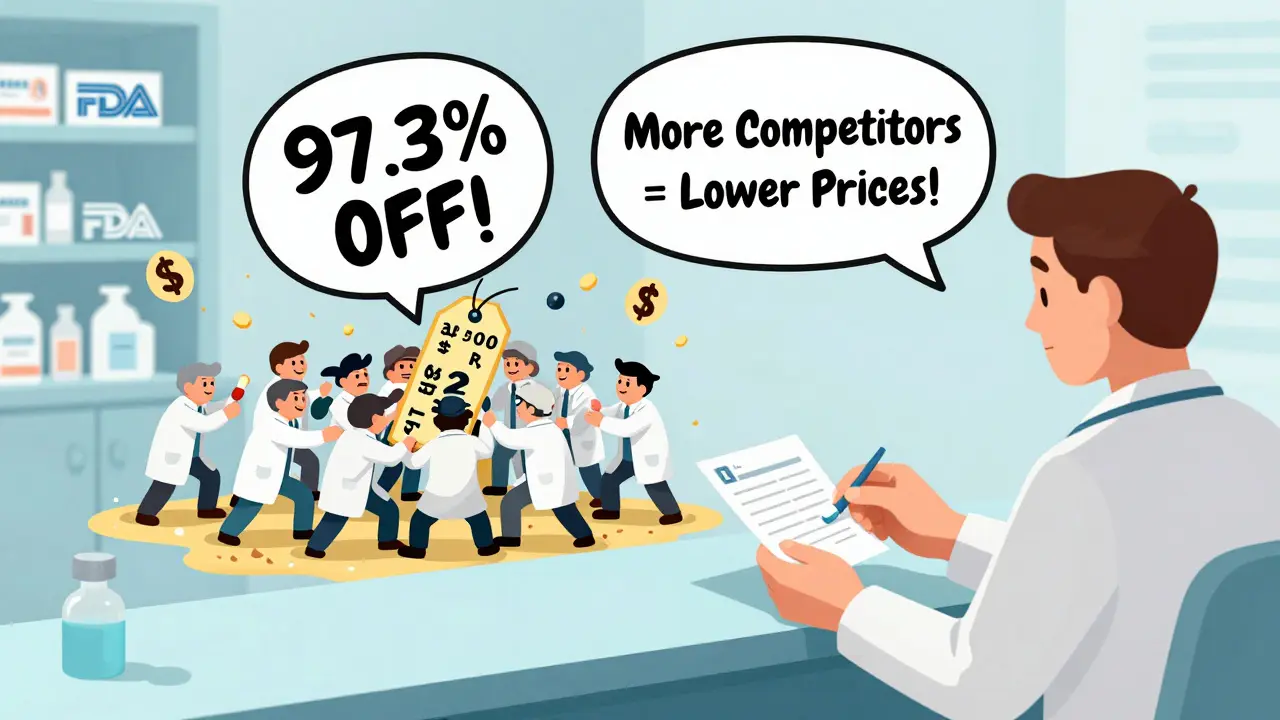
A brand-name drug might cost $500 for a 30-day supply. But once generics enter the market, that same pill can drop to $10. Or even $2. That’s not a guess. It’s data. The FDA found that when nine generic manufacturers sell the same drug, prices fall by 97.3% on average. That’s not a trend. That’s a demolition of monopoly pricing. This isn’t magic. It’s basic economics. When more companies make the same thing, they fight for your business. They cut prices. They improve service. They innovate in manufacturing. And that pressure doesn’t just hurt brand-name companies-it forces everyone to lower their prices, even the generics themselves. In the U.S., generics make up 90% of all prescriptions but only 22% of total drug spending. That’s the power of competition. It’s not about lowering quality. It’s about removing artificial price tags.How buyers use competition as a weapon
Buyers-whether it’s Medicare, a private insurer, or a hospital system-don’t just wait for prices to drop. They actively use the presence of generics to push for lower prices on everything. Take Medicare’s new drug negotiation program under the Inflation Reduction Act. The law says CMS can’t directly negotiate with brand-name drugs if generics are already on the market. But here’s the clever part: CMS can still use the prices of those generics as a starting point. Let’s say a brand-name heart medication costs $400. There are five generic versions selling for $8 each. CMS doesn’t have to accept the $400 price. Instead, they look at the average price of the generics-say, $8-and use that as the baseline. Then they ask the brand-name maker: “Can you match this? Or at least come close?” It’s not a direct price cap. It’s a reference. And it works. In 2023, CMS used this method to set initial offers for the first 10 negotiated drugs. The result? Average savings of 60% compared to what the brand-name companies originally asked for. This isn’t just a U.S. trick. Canada’s system since 2014 uses tiered pricing: the more generic competitors there are, the lower the maximum price allowed. It’s like a sliding scale. One generic? $50 cap. Five generics? $15 cap. Ten generics? $5 cap. The system doesn’t force prices down-it just makes it impossible for any company to charge more than the market will bear.The hidden games: how brand-name companies fight back
You’d think the moment a generic hits the market, the brand-name drug’s days are numbered. But that’s not always true. Some brand-name companies delay generic entry by paying them to stay away. These are called “reverse payments.” Between 2010 and 2020, the FTC found 106 cases where brand companies paid generic makers to postpone their launch. One case involved a drug for high cholesterol. The brand paid the generic maker $200 million to wait 13 months before selling their version. That’s not competition. That’s bribery. Another tactic is “product hopping.” A company slightly changes a drug-maybe switches from a pill to a capsule-and then pushes doctors to prescribe the new version. Patients who were stable on the old drug get switched. The old version loses its patent protection, but the new one gets a fresh 20-year monopoly. Between 2015 and 2020, there were 1,247 such maneuvers, according to the FTC. Then there’s the “authorized generic.” A brand-name company licenses its own drug to a generic maker and sells it under a different label. It looks like competition-but it’s still the same company. They control the price, the supply, and the timing. It’s competition in name only.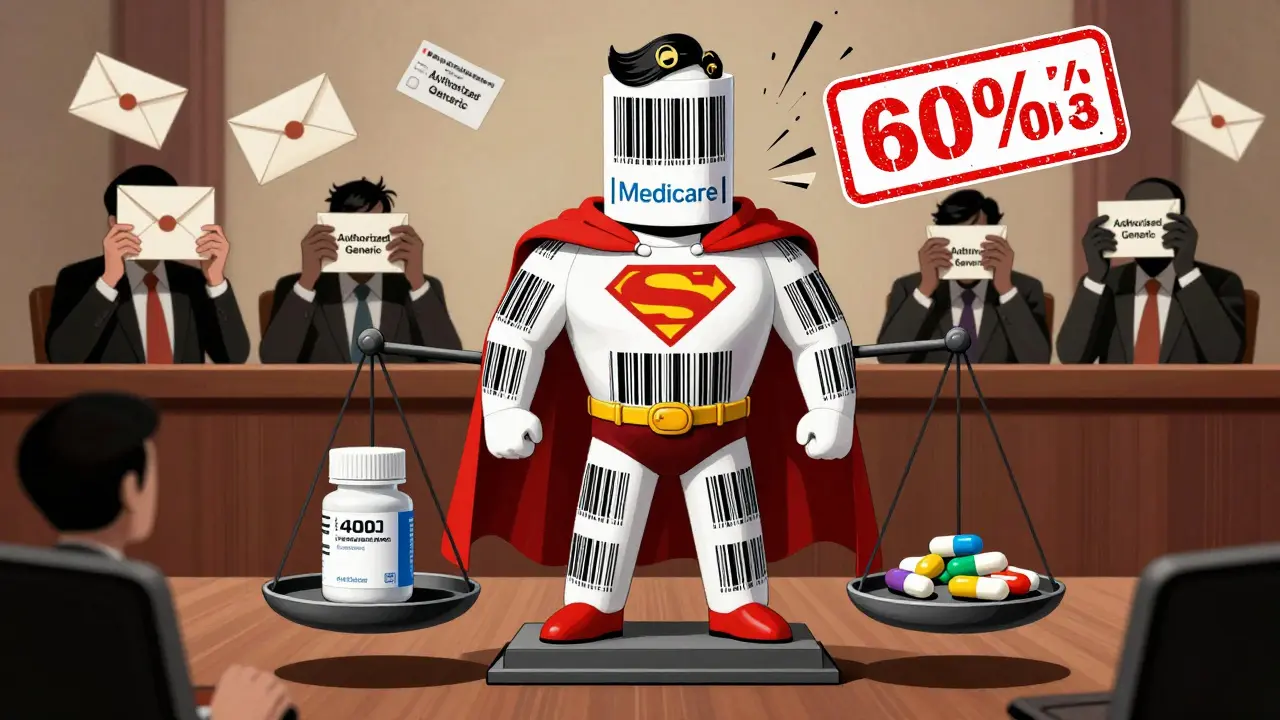
Who wins? Who loses?
Patients win. Medicare wins. Taxpayers win. In 2024, the Association for Affordable Medicines estimated that Medicare beneficiaries would save $6.8 billion annually just from the first 10 negotiated drugs. Generic manufacturers win too-when they’re allowed to compete fairly. The global generic market is worth $438 billion and growing at 7.2% a year. Companies like Teva, Sandoz, and Viatris dominate, but over 1,200 manufacturers are in the game. The more competitors, the better the deals. But the system isn’t perfect. Small generic makers struggle when the government sets a price before they can even enter the market. If CMS negotiates a brand-name drug down to $5, and a generic maker spends $2 million to get FDA approval, how do they recover that cost? They can’t. That’s why Avalere Health warns that premature government pricing can kill generic competition before it starts. In Europe, 78% of generic manufacturers say predictable pricing is essential for them to invest in new products. But in the U.S., where negotiations are new and rules are still being written, uncertainty is high. Some manufacturers are holding back. They’re waiting to see if the government will set a price they can’t beat.The data behind the deals
This isn’t guesswork. It’s built on hard numbers. - The FDA analyzed 2,400 new generics approved between 2018 and 2020. Prices dropped fastest when more companies entered. Six competitors? 90.1% discount. Nine? 97.3%. - CMS uses Average Manufacturer Price (AMP) data from manufacturers and Prescription Drug Event (PDE) data from pharmacies. These aren’t retail prices. They’re the real prices paid after rebates and discounts. - IQVIA found that in markets with just two generic competitors, brand-name prices drop by 30-40%. With five, they drop by 60-70%. - In Germany, where generics make up 72% of prescriptions, drug spending per person is 40% lower than in the U.S. - Japan’s generic market share is only 58%-and their drug prices are among the highest in the developed world. The pattern is clear: more competition = lower prices. No exceptions.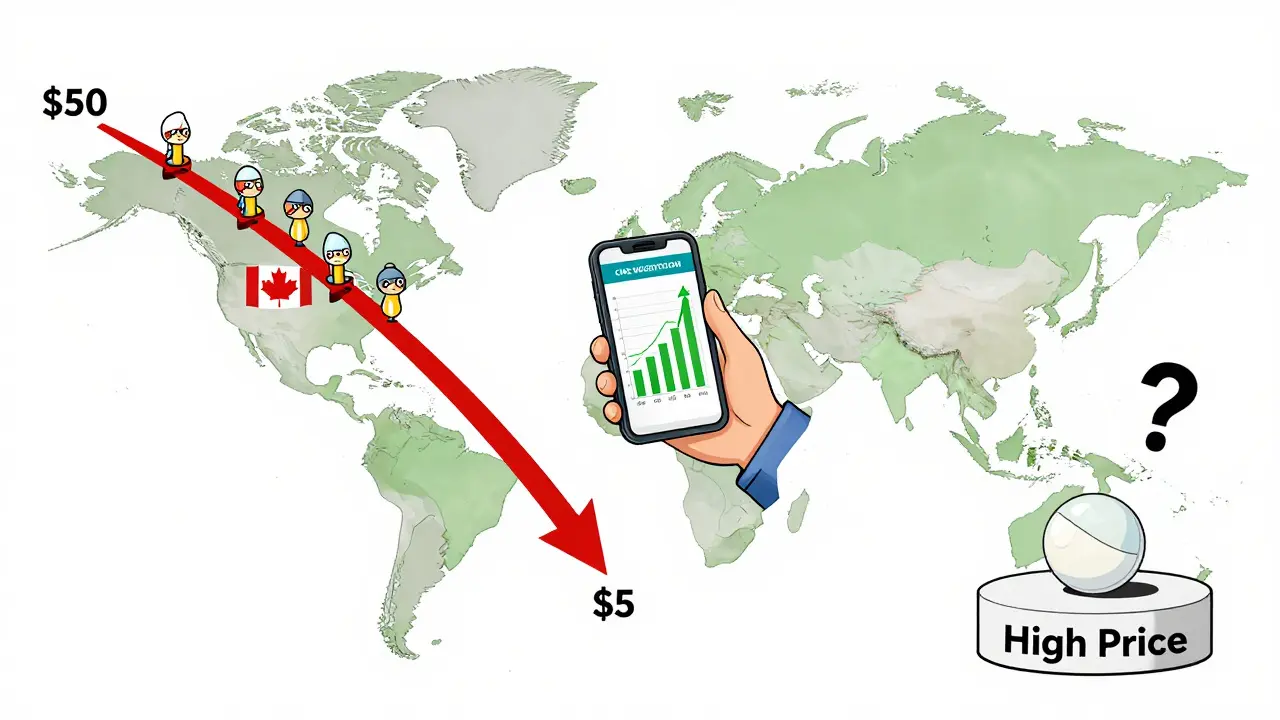
What’s next? The fight for fairness
The future of drug pricing depends on one thing: whether we protect real competition or let monopolies find new ways to hide. The proposed EPIC Act would delay Medicare price negotiations for small-molecule drugs until after generics have had a chance to enter the market. That’s a smart fix. Let the market work first. Then, if prices still stay high, step in. Meanwhile, regulators are pushing for better transparency. Many pharmacy benefit managers (PBMs) still use secret formulas to set prices. But in 2023, 87% of large PBMs now use structured negotiation frameworks that include generic competition data. That’s up from 32% in 2018. The next frontier? Complex generics and biosimilars. These aren’t simple pills. They’re intricate biologics-like insulin or rheumatoid arthritis drugs. They cost more to make. Their competition is slower. Only 45% of biosimilar drugs reach 90% market share like traditional generics do. But the same rule applies: more competitors = lower prices. The challenge is making sure patents don’t block them. And that reverse payments are stopped. And that authorized generics aren’t used to fake competition.What you can do
You don’t need to be a policymaker to benefit from this system. - Ask your pharmacist: “Is there a generic version?” If they say no, ask why. Sometimes it’s just inertia. - If you’re on Medicare, check the CMS website. They publish the negotiated prices for the first 10 drugs. See how much you could save. - Support policies that require transparency in drug pricing. If PBMs won’t show their rebates, push for laws that force them to. - Talk to your doctor. Sometimes they prescribe a brand-name drug out of habit. Generic alternatives are often just as effective. The system works best when people demand it. When buyers-whether governments, insurers, or individuals-use competition as leverage, prices fall. That’s not theory. It’s history. It’s data. It’s happening right now.How do generic drugs lower prices so dramatically?
Generic drugs lower prices because multiple manufacturers compete to sell the same medicine. When one company enters the market, prices drop 30-40%. With five or more competitors, prices often fall 70-90%. The cost to make a generic pill is a fraction of the R&D cost of the original drug, so manufacturers can afford to undercut each other. The FDA’s data shows that with nine generic competitors, prices drop by 97.3% on average.
Does Medicare negotiate prices for generic drugs?
No, Medicare doesn’t directly negotiate prices for drugs that already have generic versions on the market. But under the Inflation Reduction Act, CMS can use the prices of those generics as a benchmark to set initial offers for brand-name drugs. For example, if a brand-name drug costs $400 and generics are selling for $10, CMS will start negotiations at or near the generic price. This pressures brand-name makers to lower their prices significantly.
Why do some drug prices stay high even when generics exist?
Brand-name companies sometimes delay generic entry through reverse payments (paying generics to wait), product hopping (slightly changing the drug to get a new patent), or launching authorized generics (their own version sold under a different label). These tactics limit true competition. Also, some PBMs and pharmacies don’t always push generics to patients, even when they’re available.
Are generic drugs as safe and effective as brand-name drugs?
Yes. The FDA requires generics to have the same active ingredient, strength, dosage form, and route of administration as the brand-name drug. They must also meet the same strict manufacturing standards. Studies show generics are therapeutically equivalent in over 95% of cases. The only differences are in inactive ingredients like fillers or dyes, which rarely affect how the drug works.
What’s the difference between a generic and a biosimilar?
Generics are exact copies of small-molecule drugs, like pills for blood pressure or diabetes. Biosimilars are highly similar versions of complex biologic drugs, like insulin or rheumatoid arthritis treatments. They’re not exact copies because biologics are made from living cells, not chemicals. Biosimilars take longer to develop, cost more, and face slower market adoption. Their average market share is only 45%, compared to 90% for traditional generics.
How can I find out if a generic version of my drug is available?
Ask your pharmacist directly. You can also check the FDA’s Orange Book online, which lists all approved generic versions of brand-name drugs. Many pharmacy apps and Medicare plan websites also show generic alternatives when you search for your medication. If your doctor prescribes a brand-name drug, ask if a generic is appropriate. In most cases, it is.
Comments
Marie-Pier D.
OMG I just found out my insulin generic is $12 instead of $400?? 😭 I’ve been paying like a sucker for years. Canada’s system is literally genius-why can’t we just copy it?? 🇨🇦💪
January 24, 2026 at 05:22
Alexandra Enns
Ugh stop with the Canada lovefest. Our system’s better-no government price-fixing. You think generics lowering prices is magic? Nah. It’s free markets. You want cheap drugs? Stop letting bureaucrats play economist. 🇺🇸
January 25, 2026 at 17:08
Helen Leite
theyre lying. the fda is owned by big pharma. generics are just sugar pills with a different label. i know someone who took one and got sick. theyre trying to kill us. 🤫💊
January 27, 2026 at 10:46
Elizabeth Cannon
so like… if you got a generic for your blood pressure med and it works just fine? then why are we still paying $500 for the brand? smh. ask your doc. they dont even know half the time. just say ‘generic pls’ and boom. save money. easy.
January 28, 2026 at 20:20
Don Foster
the 97.3% figure is misleading because it conflates average manufacturer price with retail price. the real savings are diluted by PBM rebates and formulary restrictions. you think the consumer sees that $2 pill? no. they see the $15 copay because the middlemen took the rest
January 30, 2026 at 15:17
Shelby Marcel
wait so if generics drop prices so much why do some still cost like 30 bucks? is it the pharmacy or the manufacturer? i dont get it
February 1, 2026 at 04:46
blackbelt security
competition is the ultimate security protocol. when you let the market decide, the system defends itself. no hackers. no backdoors. just pure economic pressure. that’s how you win.
February 2, 2026 at 01:31
Patrick Gornik
the tragedy of the pharmaceutical commons is not merely economic-it’s ontological. we have commodified healing, turned vitality into a ledger entry, and now we’re shocked when the soul of medicine bleeds out through the cracks of shareholder value? the brand-name drug isn’t a molecule-it’s a monument to capitalist idolatry. and the generics? they’re the anarchist graffiti on its walls. the FDA doesn’t regulate safety-it legitimizes the illusion of choice. we don’t need more competition. we need a new metaphysics of care.
February 3, 2026 at 18:56
Tommy Sandri
While the data presented is compelling, it is essential to recognize the structural differences between healthcare systems. The Canadian and German models benefit from centralized procurement and uniform regulatory frameworks, which are not directly transferable to the U.S. context due to its fragmented payer landscape and constitutional constraints on federal price-setting authority.
February 4, 2026 at 23:40
Luke Davidson
you know what’s wild? i used to think generics were ‘weaker’… until my grandma switched from her $300 brand to the $8 generic and her blood pressure got better. she said the new one didn’t make her dizzy. turns out the fillers in the brand were messing with her. so yeah. trust the science. trust the data. and if your doc acts like you’re asking for something shady? tell them to google the orange book. it’s free. and it’s truth.
February 6, 2026 at 22:51
asa MNG
theyre all in on this scam. i saw a video on tiktok where a guy said the fda lets pharma companies pay off inspectors. and the authorized generics? thats just the same pill with a fake label. theyre lying to you. and your doctor knows. they just dont care. 💀💊
February 8, 2026 at 20:48