
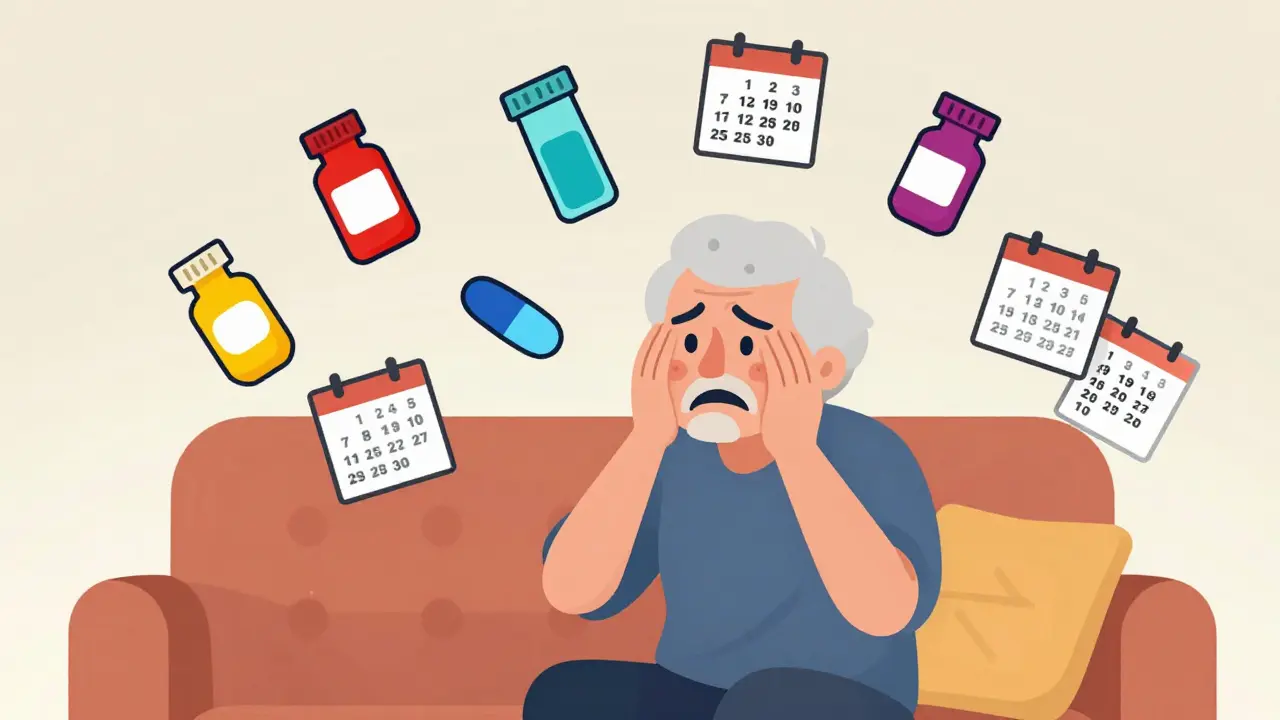
Why Missed Pills Cost More Than You Think
About half of people with chronic conditions don't take their medicines as prescribed. That's roughly 50% according to the World Health Organization. The cost? Not just money-missed doses lead to emergency room visits, hospitalizations, and preventable complications. But what if there was a simple system that aligned all your refills to one date each month?
Refill Synchronization is exactly that system. Also called medication synchronization or med sync, it consolidates multiple prescription refill dates into one coordinated schedule. A 2017 study in Health Affairs found synchronized patients had a 3 percentage point improvement in adherence metrics compared to those without synchronization. For someone managing diabetes, hypertension, and cholesterol-all requiring daily pills-that difference translates to months of consistent care instead of gaps.
What Is Refill Synchronization Actually?
Refill synchronization is a pharmacy service that aligns multiple medication refill dates to a single coordinated date each month. The concept emerged around 2010-2012 when pharmacists recognized that juggling different refill schedules was a major barrier to staying on track. Major pharmacy chains including CVS, Walgreens, and Rite Aid developed formal programs, though the idea evolved from earlier medication therapy management services.- Core components:
- All maintenance medications refill on the same day (e.g., every 15th)
- Pharmacy team proactively manages prescriptions
- Patient receives one appointment for pickup or delivery
- Ongoing monitoring for new medications or changes
The Four-Step Process Explained
Enrollment isn't complicated-just follow these documented steps from the ASHP Medication Synchronization Resource Guide:
- Initial Consultation: Your pharmacist reviews all current medications, refills, and dosing schedules. They'll check which drugs are truly maintenance medications versus occasional needs.
- Synchronization Plan Creation: Pharmacists adjust quantities slightly (sometimes providing a few extra doses initially) to align everything to one monthly date.
- Monthly Review and Refill: On your designated day, the pharmacy checks for updates, processes all refills together, and contacts you.
- Pickup or Delivery: Everything ready on one visit-no more trips between pharmacies or worrying about which pill is due next.
A patient survey from Walgreens (2016) found 87% were very satisfied once they understood how it worked. The initial adjustment takes some getting used to, especially if you've managed separate schedules for years.
Does It Actually Improve Adherence?
Numbers matter here. Let me break down what the evidence shows.
| Metric | Control Group (No Sync) | Synchronized Group | Improvement |
|---|---|---|---|
| Proportion of Days Covered (PDC) | 0.84 | 0.87 | +3 percentage points |
| Retail Pharmacy Users Only | Varies | PDC gain 0.08-0.11 | Higher benefit seen |
| Never Run Out Rate | 42% | 68% | +26 percentage points |
| Persistence Improvement | Baseline | 52% to 73% | Depends on drug class |
The American Journal of Managed Care study (2017) showed even bigger gains for certain drug classes. Antihypertensives, lipid-lowering drugs, and antidiabetic agents all saw meaningful improvements when synced. Dr. Douglas Wakefield from University of Iowa College of Pharmacy noted in 2016 that this represents "one of the most promising practice models" for both adherence and sustainable pharmacy revenue.
One real case from Farmington Drugs (2022): a 72-year-old patient with three chronic conditions improved from 65% to 92% PDC after enrollment. Their blood pressure and glucose control stabilized within six months.

Who Should Consider This Service?
Not every patient benefits equally. Here's who gets the most value:
- People taking 3+ maintenance medications: This is where scheduling complexity becomes overwhelming
- Medicare Advantage beneficiaries: 22% enrollment rate compared to 8% for commercial plans-these programs specifically incentivize adherence
- Those managing diabetes, hypertension, or high cholesterol: These conditions have specific adherence metrics tied to quality ratings
- Families with elderly relatives: One less trip to remember, fewer missed doses
Holdford and Inocencio's 2013 study of a rural midwestern independent pharmacy chain confirmed higher adherence across all drug classes in synchronized patients versus usual care groups.
Common Hurdles and Practical Solutions
It's not all smooth sailing. Here's what can go wrong-and how to fix it:
Insurance Coverage Issues
Forty-seven percent of pharmacists reported challenges with insurance plans restricting early refills, according to an NCPA survey. Some plans won't authorize refills until you've taken at least 85-90% of the previous supply. Workarounds:
- Contact your insurance provider before enrollment-they may waive restrictions for synchronized plans
- Ask your prescriber to submit prior authorization requests
- Some plans have exceptions for chronic condition medications
Understanding Initial Adjustments
When syncing first, your quantities might change slightly to get everyone to the same date. A pharmacy intern noted on Reddit (March 2021): "The biggest hurdle is explaining why we're adjusting initial refill quantities-it takes significant counseling time." Ask your pharmacist to walk through the math beforehand so surprises don't create anxiety.
Mixing Mail Order and Retail
If you use mail-order pharmacies for some prescriptions, the benefit shrinks. The 2017 American Journal of Managed Care study found retail-exclusive users saw larger differences (PDC difference of 0.08-0.11) versus mixed-method users (0.01-0.03). Ideally, bring everything to one location for true synchronization.
Comparison: How Does It Stack Up?
| Feature | Standard Pharmacy Care | Mail-Order Only | Med Sync Program |
|---|---|---|---|
| Adherence Improvement | Baseline | Modest gains | 3-5 percentage points |
| Convenience Rating | Multiple refills, variable dates | Home delivery, limited flexibility | Single monthly visit |
| Best For | Simple regimens (1-2 meds) | Stable long-term medications | Complex multi-medication regimens |
| Clinical Monitoring | Passive | Limited interaction | Active pharmacist review |
| Cost Savings Potential | Minimal | Moderate via bulk ordering | $206M annual savings per 1% cardiovascular adherence improvement |

Getting Started: Your Action Plan
Ready to enroll? Here's your checklist:
- Call your pharmacy and ask about their formal med sync program. As of 2022, 87% of chain pharmacies and 45% of independents offer it.
- List all your medications before the appointment-including supplements if you discuss them with your pharmacist.
- Check insurance policies regarding early refill authorizations during enrollment.
- Schedule your first consultation: Budget 20-30 minutes for the initial setup.
- Ask about reminders: CVS and Walgreens now integrate text alerts through digital health platforms.
The learning curve for pharmacists is typically 8-12 hours of training per ASHP guidelines. Once set up, expect just 5-10 minutes of monthly touchpoints rather than repeated individual calls.
Future Outlook and Integration
This isn't going away anytime soon. By 2022, approximately 12-15 million patients were enrolled nationally. The American Pharmacists Association predicts 35% annual growth through 2025, driven by value-based care contracts that tie reimbursement to outcomes.
New developments include:
- Telehealth integration (Kroger Health pilot, 2022)
- Digital tracking through patient portals
- Copay assistance combined with sync (Walgreens Sync & Save, 2023)
- Better interoperability between pharmacy software systems (PioneerRx, QS/1, Rx30 all have dedicated modules)
The market still has work to do-standardization across systems and harder clinical outcome studies remain priorities. But as ASHP predicts, 75% of U.S. pharmacies will likely offer formal programs by 2025.
Frequently Asked Questions
Can I sync medications from different pharmacies?
Ideally, no-best results come when all prescriptions stay at one location. However, some pharmacies will transfer your records and coordinate with outside providers to approximate synchronization. Mail-order medications complicate this, since delivery timing differs from in-person refills.
Does med sync cost extra?
Most programs don't charge additional fees beyond standard prescription costs. Some chains like Walgreens offer copay assistance bundled with sync services. Independent pharmacies may vary-ask directly about any enrollment fees before committing.
What happens if I travel or have an emergency refill need?
Emergency refills aren't affected by synchronization rules. Most pharmacies allow urgent refills regardless of sync status. If traveling, ask your pharmacist about partial fills or coordination with local pharmacies using network sharing.
Will my doctor know I'm enrolled in med sync?
Yes-if done properly. Your pharmacist should notify prescribers about enrollment and coordinate any schedule adjustments. Some practices appreciate this communication because it helps them understand adherence patterns and refill timing better.
Can I leave med sync later if I don't like it?
Absolutely-there's no permanent commitment. If the system doesn't fit your routine, you can return to traditional refilling. Just let your pharmacist know ahead of time so they can reset your schedules appropriately.
Are online pharmacies compatible with med sync?
Limited compatibility. True synchronization requires centralized management of all refills. Online/mail-order services often operate on separate timelines, reducing the measurable benefits. Best approach: choose one primary pharmacy for all maintenance medications.
Comments
Marwood Construction
The logistical framework for synchronized refills presents significant opportunities for operational efficiency within managed care organizations. Corporate structures often benefit when administrative overhead is reduced through consolidation of refill cycles. Standardized scheduling allows pharmacy teams to anticipate workload distribution more accurately. Consequently, patient interaction windows become predictable rather than sporadic throughout the month.
March 30, 2026 at 14:11
Carolyn Kask
Oh sure, because everything is perfect until the computer system crashes or you move apartments. Big chains love to talk about efficiency while squeezing every penny from our wallets. It feels like another way to lock patients into a specific network instead of helping them manage their health freely. We see this kind of bureaucracy everywhere else so healthcare shouldn't be exempt from scrutiny either.
March 30, 2026 at 21:42
emma ruth rodriguez
This point is valid; however, one must consider the data regarding insurance compatibility!! Many plans specifically authorize exceptions for synchronization protocols!!! The regulations are clear on what constitutes maintenance therapy versus acute management!!! Please consult your benefits administrator before proceeding with enrollment!!
March 30, 2026 at 23:31
Katie Riston
Human existence is defined largely by the rituals we construct around survival and wellbeing. When we strip away the complexity of daily pill taking we begin to see the underlying desire for order in chaos. One must wonder if it is merely convenience that drives us toward synchronization or a deeper existential need for control over mortality itself. The pharmaceutical industry offers tools but the application remains within the realm of personal agency and choice. We must examine whether the system serves the individual or the institution that created it. A single visit per month reduces friction yet potentially increases dependency on corporate infrastructure. There is a tension between medical autonomy and administrative ease that remains largely unexplored in literature. Patients may feel safer knowing their medication arrives on time regardless of memory lapses. Yet reliance on external timing mechanisms could erode internal habits of self-care over time. We see similar patterns in nutrition where meal planning services reduce decision fatigue. Removing the burden of remembering pills changes our relationship with our own bodies. Technology bridges gaps in cognition but cannot replace the fundamental biological drive to heal. Perhaps the true metric of success isn't adherence rates but rather the psychological peace achieved during routine. Systems designed for adherence inevitably shape the behavior they aim to correct. It becomes a feedback loop where convenience breeds habit until the habit becomes identity. We are witnessing the evolution of medication administration from active duty to passive receipt.
March 31, 2026 at 09:41
Beccy Smart
Sounds like more work for the staff who are already underpaid 😩 Why do companies think technology fixes basic laziness in management 🙄 If you cannot follow a schedule then you should not be managing medications personally 🤔 Maybe take responsibility for your own life instead of blaming the system 🚫💊 Health is a privilege not a right given by some app 🌟 Just my two cents though I am tired of reading this nonsense 🥱
March 31, 2026 at 19:15
sanatan kaushik
Poor people suffer most when systems get complicated. Insurance blocks many good ideas because they want profit. Real help means simple access not fancy programs. You fix the cost first then people will take medicine. Stop making money off sick bodies.
April 2, 2026 at 18:46
Rick Jackson
I find that perspective quite insightful regarding the balance of autonomy and support.
April 3, 2026 at 08:12
Jonathan Alexander
I had a scare last year when I missed three weeks of blood pressure meds. My family thought I was going to collapse at the kitchen table any minute. Now I understand why someone would want to lock in a schedule even if it feels restrictive. It's heavy knowing how fragile things can be without proper backups. Nobody wants to feel helpless when their own body fails them unexpectedly.
April 4, 2026 at 01:19