
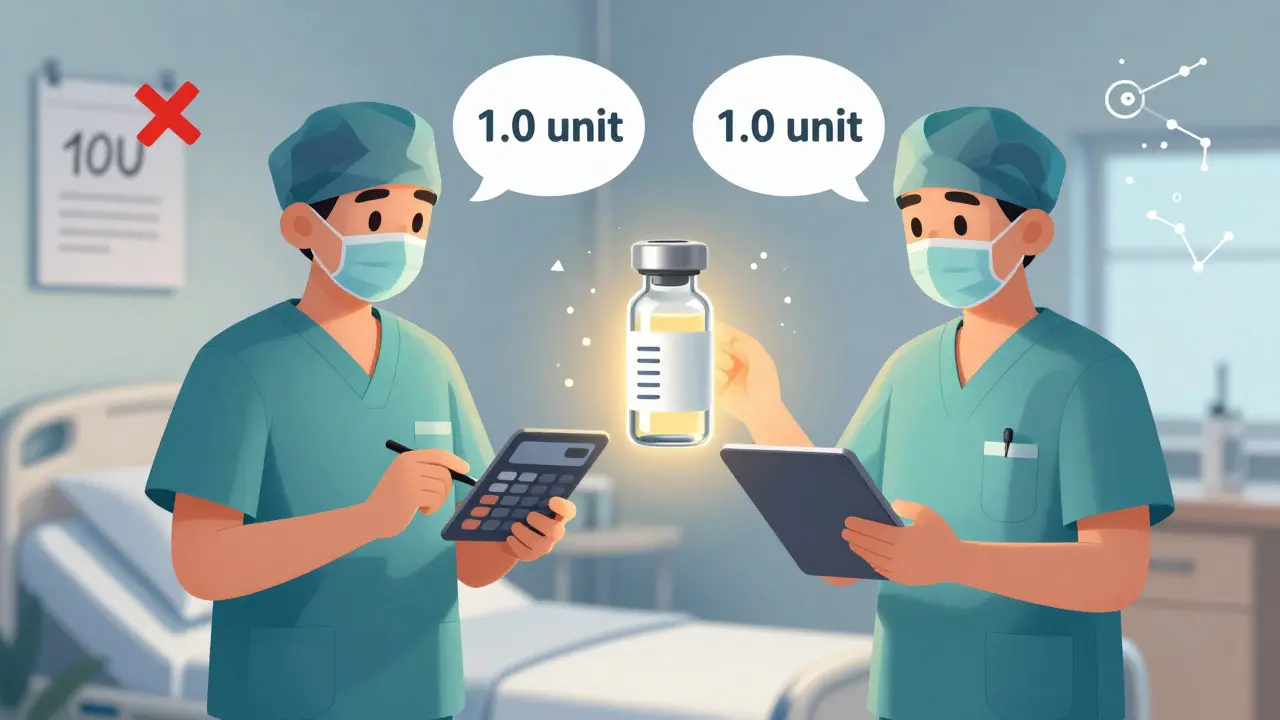
Getting a medication dose wrong can be deadly. A decimal point out of place. A handwritten "10U" mistaken for "1.0U." A nurse rushing through a shift change and skipping a step. These aren’t hypotheticals-they’re real incidents that happen every day in hospitals and clinics. In 2022 alone, over 1,200 reported cases of incorrect dose changes led to patient harm, according to the ECRI Institute. The good news? Most of these errors are preventable. The key isn’t just more rules-it’s smarter verification and clearer communication.
Why Dose Changes Are So Dangerous
Dose changes aren’t routine adjustments. They’re high-risk moments. When a doctor changes a patient’s insulin, heparin, or opioid dose, the margin for error shrinks. These are called high-alert medications-drugs that can cause serious harm if used incorrectly. The Institute for Safe Medication Practices (ISMP) lists 19 of them, and each one demands extra care.Why? Because small mistakes have big consequences. A 10-fold overdose of insulin can send a patient into a life-threatening coma. A wrong heparin dose can cause internal bleeding. Pediatric doses? They’re calculated by weight, often to the nearest 0.1 mg/kg. One decimal error means a 10-pound baby gets 10 times too much. And it’s not just about the number. It’s about context: Is the patient’s kidney function down? Did their INR level just spike? Did they just come from another hospital with conflicting records?
Studies show that 65% of medication error sentinel events trace back to poor communication during dose changes. That’s not just a typo. It’s a handoff between shifts, a rushed phone call, or a note scribbled in the wrong chart.
The Three-Step Verification System
The most effective way to catch errors before they reach the patient is a structured three-step process. It’s not complicated, but it must be followed every single time.- Independent calculation - Two qualified staff members calculate the dose separately, without talking to each other. One might use a calculator. The other might use an app or printed table. If they don’t match, they stop. No exceptions. This step takes 2-3 minutes but prevents 33% of dosing errors.
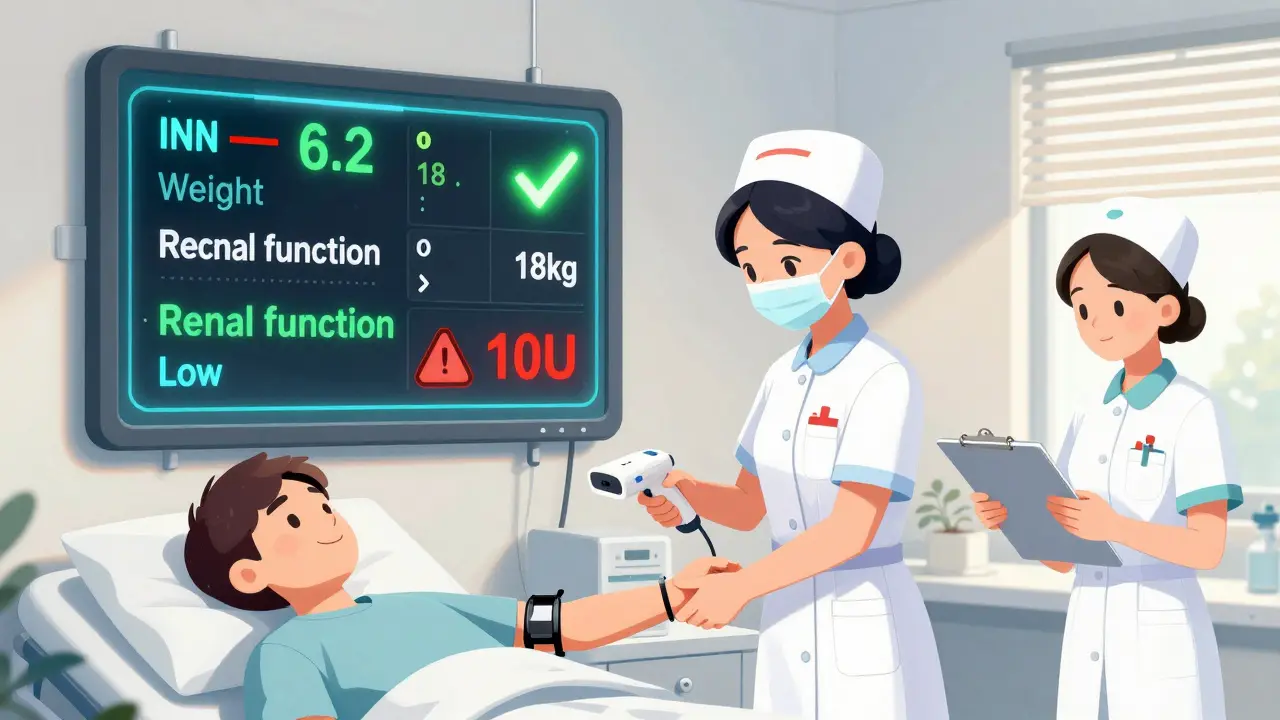
- Context check - Before moving forward, both verify the patient’s current condition. Renal function? Recent lab results? Weight? Allergies? A dose that was safe yesterday might be dangerous today. This adds 1-2 minutes but catches 40% of overlooked risks.
- Bedside barcode verification - The final step happens at the patient’s bedside. The nurse scans the patient’s wristband and the medication. If the system doesn’t match, it stops the process. This takes 30-60 seconds and prevents 86% of wrong-drug or wrong-dose errors.
This system isn’t optional. The Joint Commission made it mandatory as of January 1, 2024, under NPSG.01.01.01. Facilities that skip it risk penalties from CMS and increased liability.
Barcode Scanning vs. Human Double Checks
Technology helps-but it doesn’t replace people. And people help-but they can’t rely on technology alone.Barcode medication administration (BCMA) systems are powerful. They catch wrong drugs, wrong patients, and wrong doses with 86% accuracy. But they fail in one critical area: they can’t tell if a dose is too high or too low if the system was entered correctly. A nurse might scan a 10-unit insulin vial, and the system says “OK” because 10 units was entered as the ordered dose. But what if the doctor meant 1.0 unit? The system doesn’t know.
That’s where independent double checks shine. A 2018 study found that double checks caught 100% of wrong-vial errors in sepsis simulations. They’re also the only method that catches infusion pump programming errors. But they’re slow. Nurses spend 15-20% more time on them. And during busy shifts, compliance drops to 45%.
The best approach? Combine them. ASHP guidelines say high-alert dose changes need both. BCMA for accuracy, and a human double check for judgment.
Communication Tools That Actually Work
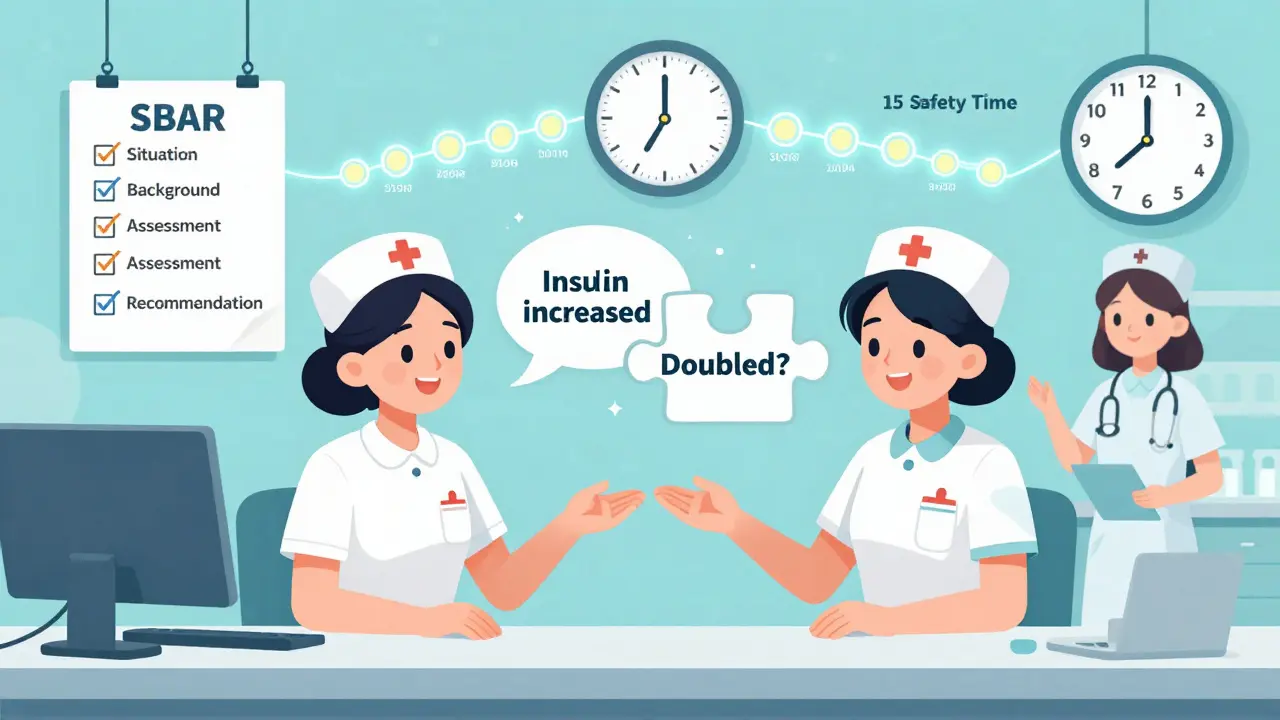
Miscommunication isn’t just about bad handwriting. It’s about unclear handoffs. A nurse says, “The insulin was increased.” Another nurse hears, “It was doubled.” What does that mean? Was it 5 units to 10? Or 5 to 20?Structured communication tools fix this. SBAR (Situation-Background-Assessment-Recommendation) is one of the most proven. When a provider changes a dose, they don’t just say, “Increase warfarin.” They say:
- Situation: “Mr. Johnson’s INR is 6.2 this morning.”
- Background: “He’s been on 5 mg daily for 3 weeks. No bleeding.”
- Assessment: “His INR is dangerously high. We need to hold the dose.”
- Recommendation: “Hold for 24 hours, restart at 2.5 mg, and recheck INR tomorrow.”
Studies show SBAR cuts miscommunication errors by 41%. It forces clarity. It’s not about being wordy-it’s about being precise.
What Happens When You Skip Steps
Nurses don’t skip verification because they’re careless. They skip it because they’re overwhelmed.A 2022 American Nurses Association survey found 73% of nurses admitted to skipping verification steps during high-pressure shifts. One nurse on AllNurses.com shared: “I almost gave 10 units of insulin instead of 1 unit. The doctor wrote ‘10U.’ I didn’t catch it. My partner did.”
Another common scenario: a pharmacist receives a faxed order for “10U insulin.” The “U” looks like a “0.” No one double-checks. The patient gets 10 times too much. That’s not negligence. That’s a system failure.
Alert fatigue is another problem. Nurses get 10-15 barcode alerts per shift. Most are false alarms. After a while, they start clicking “OK” without looking. One study found nurses only pay attention to 15% of alerts during a 12-hour shift.
And shift changes? That’s when 61% of verification failures happen. Between 6-8 a.m. and p.m., handoffs are rushed. Charts get lost. Messages get missed. That’s why Johns Hopkins Hospital now mandates 15-20 minutes of “safety time” per shift-no patient care allowed. Just verification, review, and handoff.
What’s Changing in 2026
The field is evolving. AI tools like Epic’s DoseRange Advisor now analyze a patient’s history and flag unusual dose changes before they’re even ordered. In a 12-hospital study, it cut inappropriate doses by 52%.Voice recognition systems are being tested. Instead of typing, a nurse says, “Verify insulin 1.0 unit for patient Smith.” The system confirms, logs it, and alerts the pharmacy. Mayo Clinic’s pilot cut documentation time by 65%.
Blockchain is being explored for immutable audit trails. Every dose change gets recorded with time, person, and device. If someone alters it later, the system knows.
But the biggest shift? From universal double checks to risk-stratified verification. Instead of checking every dose, you focus on the highest-risk ones: insulin, heparin, opioids, pediatric doses, and drugs with narrow therapeutic windows. Johns Hopkins cut nurse workload by 18% while reducing errors by 22% using this method.
What You Can Do Today
You don’t need a $5 million system to make a difference. Start here:- Always use SBAR when communicating dose changes-no shortcuts.
- Never rely on one person to verify a high-alert dose. Two independent checks are non-negotiable.
- Scan every dose, every time-even if you’ve done it a hundred times before.
- Insist on 15 minutes of protected time per shift for verification and handoff.
- If your facility doesn’t have a dose verification protocol, demand one. Cite the ISMP 2023 guidelines.
Medication safety isn’t about blame. It’s about systems. A single nurse can’t fix a broken process. But a team that commits to verification? That changes everything.
What are high-alert medications?
High-alert medications are drugs that carry a higher risk of causing serious harm if used incorrectly. The Institute for Safe Medication Practices (ISMP) identifies 19 of these, including insulin, heparin, opioids, IV potassium, and warfarin. Even small dosing errors with these drugs can lead to death, coma, or organ failure. They require extra verification steps, including independent double checks and barcode scanning.
Why do barcode systems sometimes miss errors?
Barcode systems only verify that the scanned drug, dose, and patient match what’s in the electronic record. They can’t detect if the ordered dose itself is wrong. For example, if a doctor orders 10 units of insulin instead of 1 unit, and the system has 10 units entered correctly, the barcode will scan as valid. Human verification is still needed to catch these inappropriate doses.
How long should a dose verification take?
A full verification using the three-step method takes about 5-7 minutes: 2-3 minutes for independent calculation, 1-2 minutes for patient context review, and 30-60 seconds for bedside scanning. While this may seem long, studies show it reduces errors by up to 28.9%. Skipping steps may save time, but it puts patients at risk.
Is a double check always necessary?
No. The ISMP recommends targeted double checks, not universal ones. For example, double checks should be mandatory for insulin, heparin, and pediatric doses, but not for routine antibiotics or blood pressure meds. Overusing double checks leads to complacency. The goal is to focus on the highest-risk situations.
What should be documented after verifying a dose change?
Documentation must include: the exact time of verification, the full names and credentials of both verifiers, the patient-specific factors reviewed (e.g., weight, renal function, INR), and confirmation that barcode scanning was completed. Incomplete documentation contributes to 29% of verification failures, according to AHRQ data.
Comments
Erin Pinheiro
ok but have u ever seen a nurse just SCAN the barcode and click ok without even looking at the med? i swear its like theyre on autopilot. i had a coworker give a patient 10x the dose because the system said "it matches" and she didnt even check the vial. we got lucky the patient was fine. this system is broken. 🙃
February 23, 2026 at 13:22
Michael FItzpatrick
Let me tell you something-verification isn’t about ticking boxes, it’s about creating a culture where safety is the loudest voice in the room. 💡 I’ve worked in units where nurses would high-five after a double-check caught a typo in a heparin order. Not because they were heroes-but because they *knew* their system had their back. It’s not about more rules. It’s about pride in the craft. When you treat every dose like it’s someone’s grandparent, you don’t need AI to tell you what’s right.
February 25, 2026 at 04:00
Brandice Valentino
Oh please. The Joint Commission mandates this? Of course they do. Because bureaucracy thrives on performative safety. I work in a hospital where we have 17 different verification forms, and not one of them asks if the patient is actually *alive* that day. 🤡 We’re optimizing for compliance, not outcomes. Also, "SBAR"? That’s just corporate-speak for "say the same thing 4 different ways so HR doesn’t get sued."
February 26, 2026 at 20:53
Larry Zerpa
Let’s be brutally honest: 86% error reduction from barcode scanning? That’s a lie. It’s 86% reduction in *documented* errors, not actual errors. You’re not preventing mistakes-you’re just hiding them from auditors. And the "independent calculation"? That’s a joke. Nurses calculate insulin doses on their phones while scrolling TikTok. The "context check"? They glance at a lab result from 3 days ago. This whole system is a theater of safety, not a system of safety. And don’t even get me started on "risk-stratified verification." That’s just code for "we’re too lazy to do the right thing every time."
February 27, 2026 at 08:09
Gwen Vincent
Thank you for writing this. I’ve been in nursing for 14 years, and I’ve seen too many near-misses. One time, a new grad almost gave a 10-unit insulin bolus instead of 1.0. We caught it because we paused. Not because we were told to. Because we cared. I think the real issue isn’t the protocol-it’s the culture. If we stop making nurses feel like cogs in a machine, they’ll start treating every dose like it’s their own mom’s life.
February 27, 2026 at 16:52
Nandini Wagh
lol at "SBAR". We use it in India too. But here’s the twist-we say it out loud while handing over meds, and the next nurse says "got it" and walks away. No one reads the chart. No one checks the weight. The system’s broken, but the words? They’re just a performance. 🤷♀️
February 28, 2026 at 00:16
Holley T
Here’s the uncomfortable truth: double checks don’t work because humans are terrible at repetition. Studies show that after the third time, we stop paying attention. So if you’re doing a double check on insulin every shift, you’re not preventing errors-you’re training your brain to ignore them. The real solution? Automation. Not just scanning-actual AI that says "this dose is 700% higher than the patient’s baseline and they haven’t eaten in 12 hours." That’s what we need. Not more paperwork. Not more meetings. Not more compliance theater. Real intelligence. And if your hospital doesn’t have it, they’re not just negligent-they’re dangerous.
February 28, 2026 at 10:50
Ashley Johnson
EVERYTHING is a trap. The barcode system? It’s controlled by Epic, and Epic is owned by a private equity firm that also owns a pharmaceutical company. The "dose range advisor"? It’s programmed to recommend higher doses because they make more money. The "15-minute safety time"? That’s when they slip in the secret meds. I’ve seen it. They’re injecting something into the IV line after the scan. No one talks about it because they’re scared. But I’m not. I’ve got screenshots. And I’m not stopping until this gets曝光.
March 1, 2026 at 17:09
tia novialiswati
Yesss!! 🙌 I just started my med-surg rotation and I was SO nervous about dosing, but our charge nurse made us do the 3-step thing EVERY time-even for antibiotics. She said "if you get lazy now, you’ll get someone killed later." I cried after my first double-check. Not because it was hard… but because it felt like the first time someone trusted me to be careful. Thank you for reminding me why we do this. 💕
March 1, 2026 at 22:41
Lillian Knezek
They say AI will fix this. But what if the AI is hacked? What if the blockchain is manipulated? What if the voice recognition system mishears "1.0 unit" as "10 units"? I’ve seen it happen. They used to use paper. At least you could see the handwriting. Now? We’re trusting algorithms written by people who don’t even know what a syringe looks like. 😈
March 3, 2026 at 20:52
Dominic Punch
Look-I’ve led safety teams across 3 continents. This isn’t about tech. It’s about leadership. If your manager doesn’t show up for shift handoffs, if they don’t enforce the 15-minute safety window, if they reward speed over safety-then no protocol matters. I once shut down a unit for 48 hours because the charge nurse skipped a double-check. People called me a monster. Two weeks later, a child died from an insulin error. That’s the math. Safety isn’t a policy. It’s a promise. And you break it, you break a life.
March 5, 2026 at 09:54
Emily Wolff
SBAR? Overrated. Double-checks? Inefficient. The real fix? Eliminate handwritten orders. Full stop.
March 7, 2026 at 00:07
Lou Suito
Wait. So you’re saying that nurses who skip steps are overwhelmed? That’s not an excuse. That’s a failure of management. And if your facility doesn’t have a protocol? Demand one? What? Are you kidding? The system doesn’t need demands-it needs revolution. You can’t fix a broken foundation with sticky notes and checklists. You need to burn it down and rebuild. From scratch. With AI. With blockchain. With mandatory psych evals for anyone handling high-alert meds. And if you’re not ready for that? Then you’re not part of the solution. You’re part of the problem.
March 8, 2026 at 08:06