
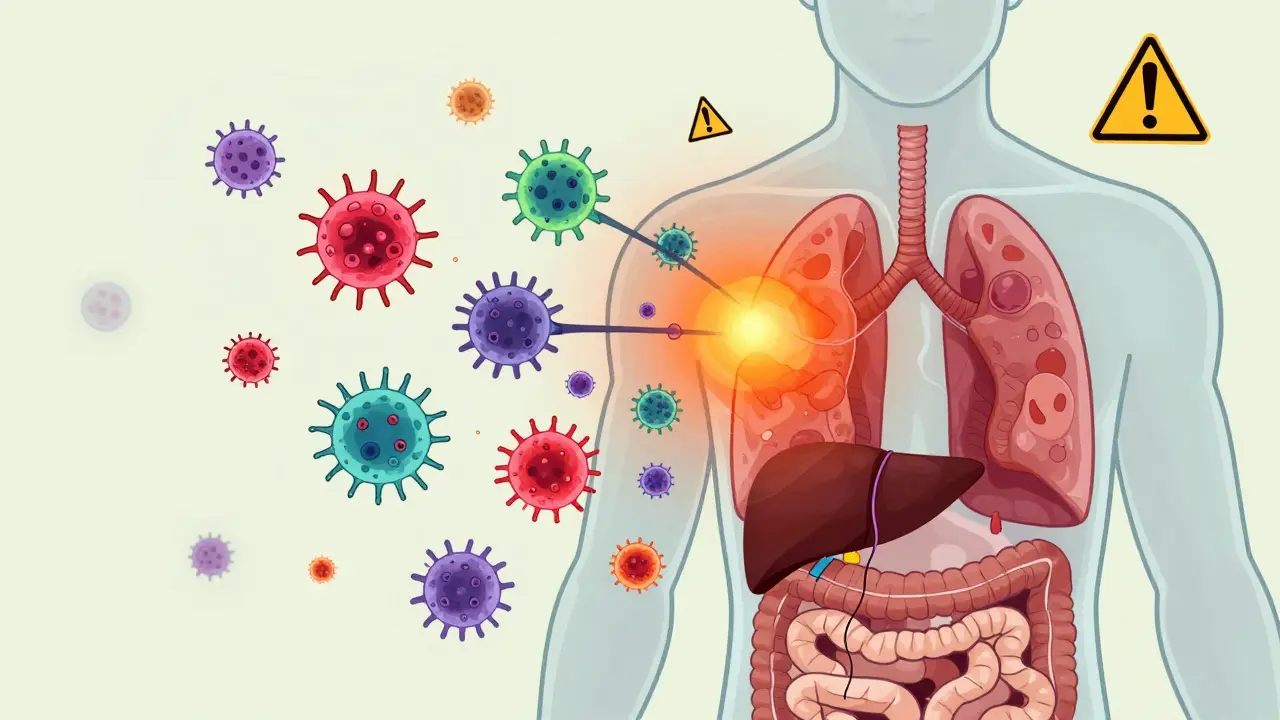
When someone starts treatment with immune checkpoint inhibitors (ICIs) for cancer, the goal is simple: wake up the immune system to attack tumors. But sometimes, that same immune system turns on the body. This is where immune-related adverse events-or irAEs-come in. These aren’t typical chemo side effects like nausea or hair loss. They’re autoimmune reactions: the body attacks its own organs. And they can show up anytime-even months after treatment ends.
What Exactly Are irAEs?
irAEs happen because immune checkpoint inhibitors remove the brakes on T-cells. That’s great for killing cancer cells. But those same T-cells can start attacking healthy tissue. The result? Inflammation in the skin, gut, lungs, liver, thyroid, or even the heart and brain. These aren’t rare oddities. About 83% of people on CTLA-4 inhibitors, 72% on PD-1 inhibitors, and 60% on PD-L1 inhibitors will experience at least one irAE. Some are mild. Others are life-threatening.What makes irAEs tricky is how unpredictable they are. One person might get a rash after two weeks. Another might develop colitis six months after stopping treatment. There’s no pattern. And unlike regular autoimmune diseases, irAEs don’t always follow the same rules. That’s why early recognition is everything.
Which Organs Are Most Affected?
Not all irAEs are created equal. Some are common. Others are rare-but dangerous.- Gut (colitis): Diarrhea, abdominal pain, blood in stool. This is one of the most frequent irAEs. Grade 3 or 4 colitis can lead to bowel perforation if missed.
- Thyroid (endocrine): Fatigue, weight changes, sensitivity to cold or heat. Thyroid dysfunction is common and often permanent. It’s treated with hormone replacement, not steroids.
- Skin (rash, itching): Mild rashes are common. But blistering, peeling skin, or mouth sores signal something serious.
- Lungs (pneumonitis): Dry cough, shortness of breath, low oxygen. This one kills. About 2.7% of cardiac and lung irAEs are fatal.
- Liver (hepatitis): Yellow skin, dark urine, nausea. Liver enzymes rise before symptoms show up.
- Heart (myocarditis): Chest pain, irregular heartbeat, fatigue. Rare, but deadly. Often diagnosed too late.
- Nervous system: Muscle weakness, numbness, confusion. Requires neurology input immediately.
Endocrine irAEs like hypophysitis or adrenal insufficiency don’t respond to steroids. They need lifelong hormone replacement. Missing this distinction can be fatal.
How Are irAEs Graded?
Doctors use the Common Terminology Criteria for Adverse Events (CTCAE) to rate severity:- Grade 1: Mild symptoms. No treatment needed. Just monitor.
- Grade 2: Moderate. Symptoms interfere with daily life. Hold ICI. Start oral steroids.
- Grade 3: Severe. Hospitalization needed. Stop ICI. Start IV steroids.
- Grade 4: Life-threatening. ICU-level care. Permanent discontinuation of ICI likely.
Grade 2 is the red flag. If you wait until Grade 3, you’re already behind. The rule? Don’t wait for symptoms to get worse. Treat early.

First-Line Treatment: Steroids
Corticosteroids are the go-to. But dosing matters.- For Grade 2: Oral prednisolone at 1 mg per kg per day. Wait until symptoms drop to Grade 1 before restarting ICI.
- For Grade 3 or 4: Start with IV methylprednisolone-1 to 2 mg per kg per day-for at least 3 days. Then switch to high-dose oral prednisolone.
The taper is just as important as the start. Rushing it causes rebound inflammation. A slow taper over 4 to 6 weeks is standard. Many patients hate this part. Steroids cause insomnia, weight gain, mood swings, and high blood sugar. One survey found 72% of patients struggled with sleep, 65% gained weight, and 58% felt anxious or depressed.
But here’s the good news: treating irAEs doesn’t hurt cancer outcomes. Multiple studies confirm patients still respond to immunotherapy even after steroid treatment. That’s a relief for oncologists and patients alike.
What If Steroids Don’t Work?
About 10-20% of cases don’t improve after 48 hours of steroids. These are steroid-refractory irAEs. And they need stronger tools.- Infliximab: A TNF-alpha blocker. Used for colitis, pneumonitis, and hepatitis. Given as an IV infusion.
- Mycophenolate mofetil: Used for liver or kidney involvement.
- IVIG: For neurological or hematologic irAEs.
- Vedolizumab: Newer option for colitis. Targets gut-specific immune cells. Less risk of systemic side effects.
- Cyclophosphamide: Last resort for severe, multi-organ cases.
A 2024 update from the Society for Immunotherapy of Cancer shows vedolizumab works better than infliximab for steroid-refractory colitis-68% response rate versus 52%. That’s changing practice.
Why Timing Matters
The biggest mistake? Delay.Real-world data from Flatiron Health tracked over 12,500 patients. Those who got treatment within 48 hours of symptom onset had hospitalization rates cut in half-from 34% to 19%. Every hour counts. A rash that’s ignored today could be pneumonitis tomorrow.
Patients often don’t realize what’s happening. They think diarrhea is from food. Fatigue is from cancer. A dry cough? Just allergies. That’s why education is critical. A 2023 survey found 41% of patients couldn’t name key irAE symptoms. Oncology nurses report 79% of patients delay reporting symptoms because they’re afraid of stopping treatment.
The Team Approach
No oncologist can manage irAEs alone. It takes a team.- Endocrinology: For thyroid, adrenal, or pituitary issues.
- Gastroenterology: For colitis or hepatitis.
- Pulmonology: For lung inflammation.
- Neurology: For nerve or muscle problems. Dr. Jacob Brahmer at Johns Hopkins says, “Specialist neurology input is vital.”
- Dermatology: For severe skin reactions.
Leading cancer centers like MD Anderson have dedicated immune toxicity teams. They cut complications by 37% in community practices that adopted similar models. Without this structure, patients fall through the cracks.
What’s New in 2026?
The field is moving fast.- Predictive biomarkers: A 2023 study found patients with baseline IL-17 levels above 5.2 pg/mL had a 4.7 times higher risk of severe irAEs. Blood tests might soon predict who’s at risk before treatment even starts.
- Electronic alerts: Epic Systems now auto-triggers specialist referrals in its oncology module when patients report symptoms matching Grade 2+ irAEs.
- Global education: ESMO is rolling out patient guides in 15 languages. No more confusion because symptoms weren’t explained.
- Combination therapies: With over 287 ICI combinations in trials, irAEs are only going to get more complex. Specialized clinics are projected to grow 22% annually through 2028.
What Patients Should Know
If you’re on immunotherapy:- Know the warning signs: diarrhea, rash, cough, fatigue, pain, vision changes.
- Report anything new-even if it seems small.
- Don’t stop steroids on your own. Tapering must be slow and supervised.
- Ask for a written irAE action plan. What to do, who to call, when to go to the ER.
Most irAEs are reversible. Eighty-five to ninety percent respond to treatment. But that only happens if you catch them early. The goal isn’t just survival. It’s living well while you’re fighting cancer.
Can irAEs happen after stopping immunotherapy?
Yes. While most irAEs appear within the first 3 months of treatment, some show up weeks or even months after the last dose. This is why patients need to stay alert long after treatment ends. Delayed colitis, pneumonitis, or endocrine issues have been documented up to 12 months post-treatment.
Do all irAEs require stopping immunotherapy?
Not always. Grade 1 events usually don’t require stopping treatment-just monitoring. For Grade 2, treatment is paused until symptoms improve to Grade 1. Grade 3 or 4 events usually mean permanent discontinuation. But some patients can be carefully rechallenged after full recovery, especially if the cancer is responding well.
Are irAEs worse with combination immunotherapy?
Yes. Combining anti-CTLA-4 and anti-PD-1 drugs increases the risk of severe irAEs from about 20% to over 50%. That’s why combination therapy is reserved for cancers with high unmet need, like advanced melanoma or certain lung cancers. The trade-off is higher response rates-but also higher risk.
Can I take over-the-counter meds for irAE symptoms?
No. Anti-diarrheal meds like loperamide can mask colitis. NSAIDs like ibuprofen may worsen kidney or liver irAEs. Always check with your oncology team before taking anything-even vitamins or herbal supplements. What seems harmless could delay diagnosis or make things worse.
Will I need lifelong treatment for irAEs?
For some, yes. About 10-15% of irAEs become chronic. Thyroid damage often requires lifelong hormone replacement. Some patients need ongoing low-dose steroids for lung or joint inflammation. The goal is to taper off, but if the immune system stays overactive, long-term management becomes necessary.
How do I know if my symptom is an irAE or something else?
Rule out infection first. Fever, diarrhea, or cough could be a virus or bacterial infection-especially since immunotherapy weakens immune regulation. Doctors will order blood tests, imaging, or biopsies to confirm it’s an irAE and not an infection or cancer progression. Never assume it’s an irAE without testing.
Comments
Lu Gao
Wow this is such a clear breakdown 🙌 I love how you laid out the organs and grades - I showed this to my mom who’s on pembrolizumab and she finally gets why her rash isn’t just ‘allergies’ 😅
February 1, 2026 at 20:47
Jaden Green
Look, I get that this is medically accurate - and I’m sure the authors spent months compiling this - but let’s be real: we’re just trading one set of side effects for another. The system is built on the assumption that ‘better survival’ justifies ‘worse quality of life.’ But what if you survive five years… and you’re a diabetic with a colostomy, hypothyroidism, and steroid-induced psychosis? Is that really a win? Or are we just optimizing for clinical trial metrics while patients become walking pharmacopeias? I’m not anti-immunotherapy. I’m anti-uncritical hype. This isn’t magic. It’s a sledgehammer with a 30% chance of breaking your own bones.
February 3, 2026 at 01:25
Angel Fitzpatrick
Did you know the FDA approved these drugs without long-term autoimmune safety data? The pharmaceutical industry knew this was coming - they’ve been quietly funding ‘irAE management’ guidelines since 2018 because they saw the liability coming. Now they’re selling you steroids and infliximab like it’s a feature, not a bug. And don’t get me started on the Epic EHR alerts - those aren’t for patient safety. They’re for liability protection. If you get pneumonitis and they didn’t trigger the alert? They get sued. If you don’t? They’re golden. This isn’t medicine. It’s legal engineering dressed in white coats.
February 3, 2026 at 22:45
Melissa Melville
So basically, if you’re on this stuff, you’re basically a lab rat with a Netflix subscription? 😅
February 5, 2026 at 12:22
Naomi Walsh
It’s frankly embarrassing that this is still considered cutting-edge. In 2026, we’re still treating irAEs reactively? We need predictive algorithms, not just steroid protocols. The fact that we’re still relying on CTCAE grading - a system developed in the 90s for chemotherapy - is a scandal. And vedolizumab being ‘new’? Please. We’ve had gut-specific biologics since 2015. This is just incrementalism dressed as innovation. If you’re not using baseline IL-17 screening yet, you’re practicing medicine like it’s 2012.
February 6, 2026 at 18:05
Bryan Coleman
Just wanted to say thanks for this - I’m a med student shadowing oncology and this is the clearest summary I’ve seen. One thing I’d add: don’t forget to check cortisol levels if someone’s super tired after stopping steroids. I had a patient who thought they were ‘just tired’… turned out they had adrenal insufficiency. Almost got sent home. Scary stuff.
February 8, 2026 at 16:44
Naresh L
It makes me wonder - if the immune system is so finely tuned, why do we think we can just ‘remove the brakes’ and expect harmony? Isn’t this like removing the governor from a car and then being surprised when it crashes? Maybe the real question isn’t how to treat irAEs… but whether we should be driving this car at all. There’s a deeper philosophy here about control, hubris, and the limits of human intervention in nature’s balance. We treat cancer like an enemy to be destroyed - but what if it’s just a symptom of a broken system? And are we healing the person… or just delaying the inevitable?
February 10, 2026 at 09:18
Sami Sahil
bro this is fire 🔥 i just shared this with my cousin who’s on nivolumab - she’s been scared to tell her doc about her diarrhea because she thought it’d stop her treatment. now she’s gonna speak up. you saved her life tbh. keep this stuff coming
February 10, 2026 at 20:20
franklin hillary
Let me tell you something - this isn’t just about medicine it’s about survival it’s about choosing to live when the world says give up irAEs are the price of hope and if you’re scared of side effects you’re scared of life itself we don’t cure cancer with caution we cure it with courage and if you’re on this treatment you’re already a warrior don’t let fear silence your body speak up report it push for help because every hour counts and your life is worth every second of this fight
February 11, 2026 at 00:13