
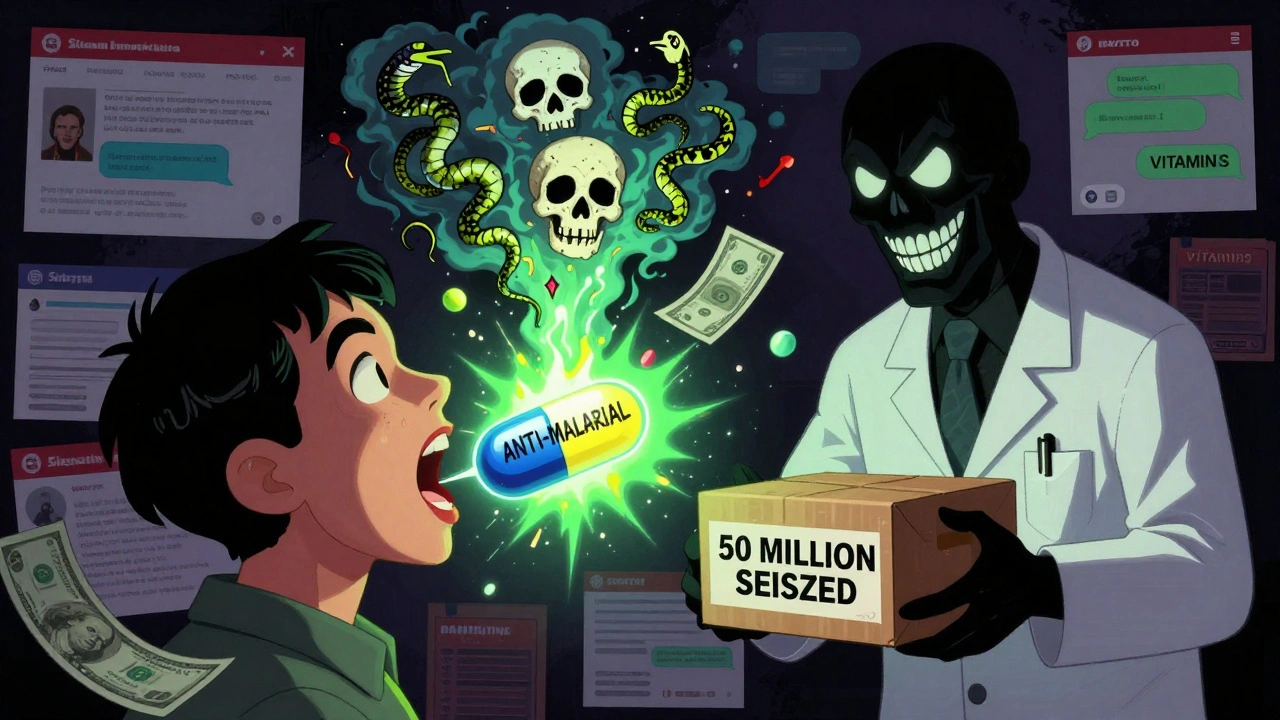
Buying medication from an international website might seem like a smart way to save money-until you realize you could be swallowing something that doesn’t work, or worse, something that could kill you. In 2025, global law enforcement seized over 50 million doses of counterfeit drugs in a single operation. These aren’t just fake pills with wrong labels-they’re dangerous, unregulated, and often laced with toxic chemicals. If you’ve ever ordered pills from a website that looks professional but isn’t licensed, you’re playing Russian roulette with your health.
What Exactly Are Counterfeit Drugs?
Counterfeit drugs aren’t just knockoffs like fake sneakers. They’re medical products that misrepresent their identity, source, or ingredients. The World Health Organization breaks them into two categories: falsified (deliberately fake) and substandard (poorly made but not intentionally deceptive). Both are deadly. A counterfeit diabetes pill might have no metformin at all-just sugar and chalk. An anti-malarial tablet could contain only 14% of the needed active ingredient, letting the disease spread unchecked. Some cancer drugs have been found with heavy metals like lead or arsenic. Others have too much of the active ingredient-like erectile dysfunction pills with 198% more sildenafil than labeled-leading to heart attacks, vision loss, or priapism. These aren’t rare cases. In 2024, over 6,400 incidents of pharmaceutical counterfeiting were documented across 136 countries. The Pharmaceutical Security Institute recorded 3,658 arrests linked to these crimes. And it’s getting worse. Between 2023 and 2024, incidents rose by 23%.Where Do These Drugs Come From?
Most counterfeit medicines are manufactured in unregulated labs, often in Southeast Asia, where oversight is weak or nonexistent. They’re then shipped through complex global networks, hidden in packages labeled as “vitamins” or “cosmetics.” Criminal groups use encrypted messaging apps and cryptocurrency to avoid detection. One operation in May 2025 shut down 13,000 websites, social media pages, and online stores selling fake drugs. The biggest targets? High-demand, high-cost medications. Oncology drugs, biologics, antibiotics, and erectile dysfunction pills are the most commonly faked. Why? Because they’re expensive, in constant demand, and people are desperate to buy them cheaply. A counterfeit cancer drug can cost a criminal $2 to make and sell for $200-giving them up to 9,000% profit. Australia, the U.S., Canada, and the U.K. saw the largest seizures in 2025. In Australia alone, over 5.2 million units of illegal drugs were intercepted by the Therapeutic Goods Administration. Most were psychostimulants like modafinil, anti-smoking patches, and ED pills.Why You Can’t Trust Online Pharmacies
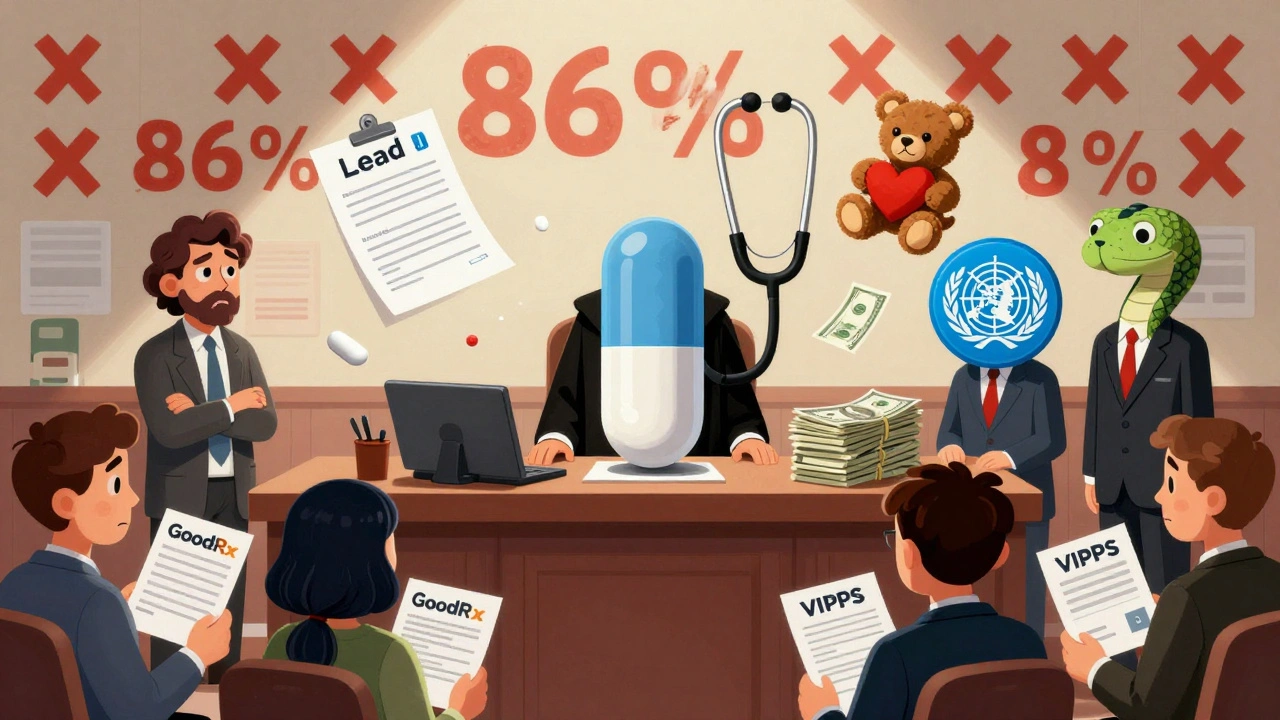
It’s easy to get fooled. Fake pharmacies look real. They have professional websites, fake certifications, customer testimonials, and even live chat with “pharmacists.” Many appear at the top of Google searches because they pay for ads. One study found that only 3% of online pharmacies meet all safety standards set by regulators. The National Association of Boards of Pharmacy (NABP) runs the VIPPS program, which certifies legitimate U.S. online pharmacies. But most consumers don’t check for it. A 2024 survey showed 72% of Americans who bought drugs from abroad never verified the pharmacy’s credentials. Even worse, 68% received products with mismatched packaging or spelling errors. Nearly a third got pills that failed basic visual checks-wrong color, wrong shape, wrong imprint. LegitScript, a verification service used by major search engines, has reviewed over 2.1 million online pharmacies since 2010. Only 14% passed their screening. That means 86% of the sites you might stumble on are unsafe.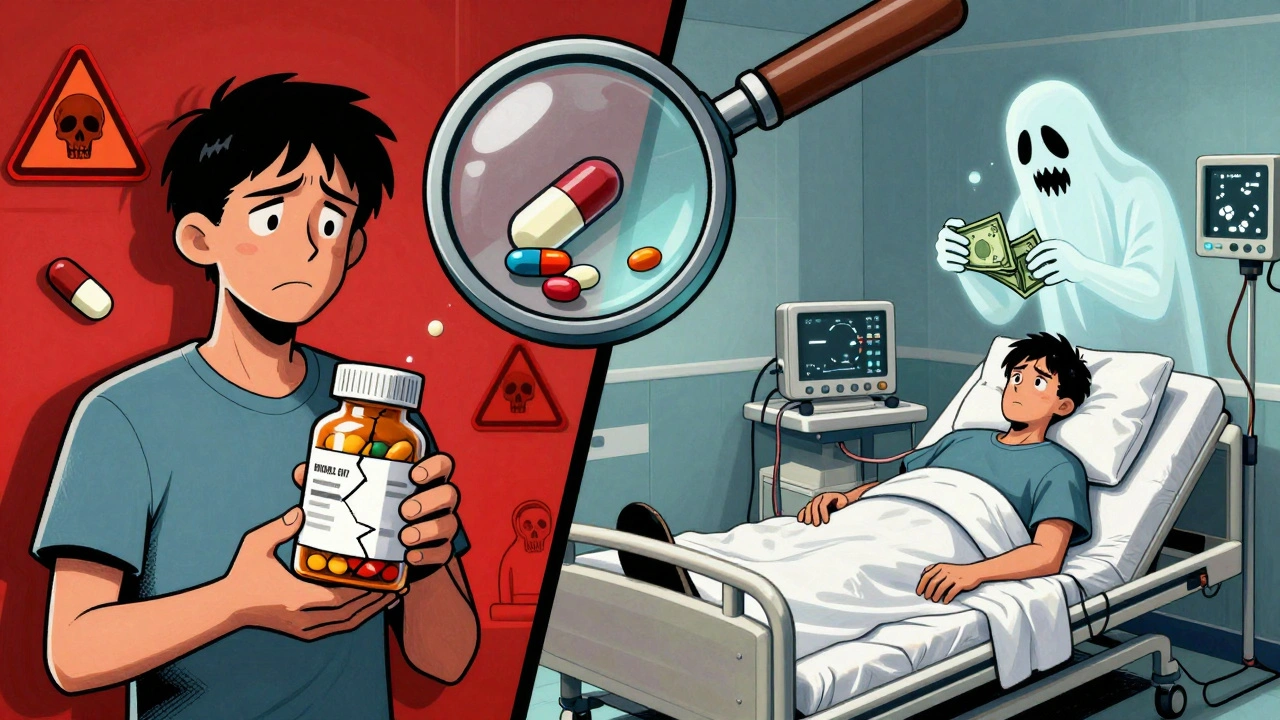
The Real Human Cost
These aren’t abstract risks. People die. The WHO estimates that counterfeit anti-malarial drugs alone cause 116,000 deaths each year. Counterfeit antibiotics contribute to antimicrobial resistance-a global crisis that could make common infections untreatable. A 2020 OECD report linked fake medicines to between 72,000 and 169,000 child deaths from pneumonia annually. Real stories are harder to track, but they’re out there. Reddit threads from 2025 describe users who took fake ED pills and ended up in the ER with permanent vision damage. Trustpilot reviews for unverified pharmacies average just 2.1 out of 5 stars, with common complaints like “the pills didn’t work” or “I got something that looked nothing like my usual medication.” Pfizer has prevented over 302 million counterfeit doses from reaching patients since 2004. But they’re fighting a losing battle. For every batch seized, ten more are made.How to Spot a Legitimate International Pharmacy
There is a safe way to buy medication from abroad-but you have to know how. Start with this checklist:- Requires a prescription-Legit pharmacies never sell controlled drugs without one.
- Has a licensed pharmacist on staff-They should be reachable by phone or email.
- Displays a physical address and phone number-No PO boxes. No vague “contact us” forms.
- Is licensed in your country-In Australia, check the TGA’s website. In the U.S., use the NABP’s VIPPS directory. In Canada, look for the Canadian International Pharmacy Association seal.
- Uses HTTPS and has a verifiable domain-Avoid sites with odd spellings like “pharmacy24h.com” or “buy-drugs-cheap.net.”
What Happens If You Get Caught With Fake Drugs?
In Australia, importing unapproved medicines-even for personal use-is illegal. The Therapeutic Goods Administration works with the Australian Border Force to intercept shipments. If your package is seized, you’ll get a letter explaining the violation. You might be asked to destroy the drugs or face fines. Repeat offenders can be prosecuted. In the U.S., the FDA doesn’t always prosecute individuals, but they do seize shipments and may warn you. In the U.K. and Canada, penalties are stricter. Some countries treat it as a criminal offense, especially if the drug is classified as controlled. But the real penalty isn’t legal-it’s health. Taking a fake drug can cause organ damage, allergic reactions, or death. And if you’re taking it for a chronic condition like hypertension or epilepsy, a single dose could trigger a crisis.What Should You Do Instead?
If you need cheaper medication, there are legal options:- Ask your doctor about generic versions-they’re the same drug, just cheaper.
- Use prescription savings programs like GoodRx or RxSaver (U.S.) or PBS (Australia).
- Check if your insurance covers mail-order pharmacy services.
- Travel to countries with lower drug prices (like Canada) and buy in person, with a valid prescription.
Final Warning: The Next Time You Click “Buy Now”
You think you’re saving money. But you’re risking your life. A counterfeit drug doesn’t just fail to treat your condition-it can make you sicker. It can kill your liver. It can blind you. It can spread drug-resistant infections to your family. The criminals behind this trade don’t care if you live or die. They only care about profit. And they’re getting smarter. If you’ve ever ordered medication from a foreign website, go back and check: Did you verify the pharmacy? Did you confirm the product with your doctor? Did you look up the batch number? If the answer is no-you were lucky. But luck doesn’t last forever. Stay informed. Stay cautious. Your life isn’t worth a discount.Are online pharmacies from other countries safe?
Only if they’re certified by your country’s regulatory body-like the U.S. VIPPS program, Canada’s CIPA, or Australia’s TGA-recognized suppliers. Over 85% of international online pharmacies are unlicensed and dangerous. Never trust a site just because it looks professional.
Can counterfeit drugs be detected by appearance?
Sometimes. Fake pills often have blurry printing, odd colors, wrong shapes, or missing imprints. But many are now made with high-quality molds that look identical to the real thing. The only reliable way to know is through lab testing-which you can’t do at home.
What should I do if I took a fake drug?
Stop taking it immediately. Contact your doctor or poison control center. Report the incident to your national health authority (like the TGA in Australia or the FDA in the U.S.). Save the packaging and pills as evidence. Even if you feel fine, the drug could have caused hidden damage.
Why are cancer drugs often counterfeited?
Because they’re expensive, life-saving, and hard to produce. Criminals know patients will pay anything to survive. Counterfeit cancer drugs often contain no active ingredient-or toxic fillers like lead or arsenic. Even a small dose can be fatal, especially since these drugs have narrow therapeutic windows.
Is it legal to import medication from abroad for personal use?
In many countries, including Australia and the U.S., it’s technically illegal to import prescription drugs without approval-even for personal use. Authorities may allow small quantities for personal treatment under rare circumstances, but you risk seizure, fines, or legal action. It’s never worth the risk when safer, legal alternatives exist.
Comments
Anna Roh
Just bought some viagra from a site that looked legit. Got little blue pills that tasted like chalk. Took one. Felt nothing. Then my heart started pounding. Called my doctor. He said I got a fake with too much sildenafil. Could’ve died. Don’t be stupid.
December 9, 2025 at 08:04
Ronald Ezamaru
This is one of the most important posts I’ve read all year. People think they’re saving money, but they’re gambling with their organs. The FDA and WHO data here isn’t exaggerated-it’s conservative. If you’re buying meds online without VIPPS or TGA certification, you’re not being smart-you’re being reckless. Talk to your pharmacist. Ask for generics. There are legal, safe ways to cut costs. This isn’t even close to a gray area.
December 11, 2025 at 06:17
Tim Tinh
Man I used to buy modafinil from some ‘Indian pharmacy’ site back in college. Looked like the real thing, came in nice packaging. Took it for all-nighters. Felt fine. Until I started seeing floaters in my vision. Went to the doc, they said my liver enzymes were through the roof. Turns out it had some weird stimulant mix + heavy metals. Never again. I still get weird headaches sometimes. Worth the lesson, I guess.
December 12, 2025 at 05:10
Simran Chettiar
It is not merely a matter of regulatory oversight or criminal enterprise, but rather a profound metaphysical failure of the modern human condition-our addiction to convenience, our surrender to algorithmic deception, our collective denial of mortality. We have outsourced not only our health but our responsibility to the shadowy architecture of the internet, where profit is the only god, and the body is merely a transactional vessel. The counterfeit pill is not an anomaly-it is the logical endpoint of late capitalism’s erosion of trust, of the sacred bond between healer and healed. We have become consumers of death, dressed in the clothing of efficiency.
And yet, we still click ‘Buy Now’.
December 13, 2025 at 13:45
Asset Finance Komrade
Interesting how the post assumes all foreign meds are dangerous. What about Canada? Or the UK? I’ve bought insulin from a Canadian pharmacy for years. Same brand, half the price. No issues. The real problem isn’t international trade-it’s the greedy U.S. pharma cartel that charges $500 for a vial of stuff that costs $12 to make. The government lets them get away with it. Then blames the patient for looking for a better deal. 🤷♂️
December 14, 2025 at 20:51
Brianna Black
My aunt died last year from a fake blood thinner she ordered from a ‘trusted’ site. She was 72. Thought she was saving $80 a month. The packaging looked better than her actual prescription. The pills were the same color. She didn’t know. No one told her. Now her family is suing the site. But she’s gone. This isn’t a ‘warning’-it’s a eulogy. And we’re all still clicking.
December 15, 2025 at 16:28
Shubham Mathur
Look I get it, people are scared, but let’s be real-most of these fake drugs come from places with weak enforcement, but so do a lot of legitimate generics. India makes 60% of the world’s generic meds. Are we saying all Indian pharma is bad? No. We’re saying the unregulated ones are bad. So check the manufacturer. Look up the batch. Use GoodRx. Talk to your doctor. Don’t just panic. Educate yourself. This isn’t rocket science. Just common sense.
December 17, 2025 at 06:33
Stacy Tolbert
I used to think I was being clever buying cheap antibiotics online when I had a UTI. I didn’t have insurance. I thought I was being resourceful. Took the pills. Felt worse. Ended up in the ER with sepsis. They said the antibiotic was mostly sugar and a little bit of something called ‘phenylbutazone’-a horse anti-inflammatory. I was in the hospital for 11 days. My kid had to stay with my mom. I still have nightmares about that pill. Don’t be me.
December 18, 2025 at 03:08
Sarah Gray
How is it possible that in 2025, people still fall for this? The entire internet is a circus of deception, and yet we cling to the illusion of convenience. You don’t need to be a genius to verify a website. You don’t need to be wealthy to ask your doctor about generics. This isn’t a medical crisis-it’s a moral and intellectual failure of the masses. The real tragedy isn’t the counterfeit drugs. It’s that so many people are too lazy to care enough to protect themselves.
December 18, 2025 at 16:30
Michael Robinson
It’s simple. If it’s too cheap, it’s fake. If it’s online and no prescription, it’s fake. If it’s from a site you’ve never heard of, it’s fake. People know this. But they do it anyway. Why? Because they think ‘it won’t happen to me’. But it does. Every day. To someone. And then they’re gone. We need to stop pretending we’re smart. We’re just lucky so far.
December 20, 2025 at 04:00
Tiffany Sowby
Why do we always blame the buyer? What about the U.S. government letting drug prices explode? What about the fact that pharmacies in Canada and India sell the same drugs for 90% less? This isn’t about ‘being careful’-it’s about systemic failure. If the system didn’t make people desperate, they wouldn’t risk it. Stop shaming the victims. Fix the system.
December 20, 2025 at 18:52
Katie Harrison
As a Canadian, I’ve used CIPA-certified pharmacies for years. My insulin costs $30 instead of $300. The process is simple: verify the seal, check the license, use a traceable payment method. It’s legal, safe, and ethical. The problem isn’t international sourcing-it’s the lack of transparency from domestic providers. We need better public education, not fearmongering. The tools exist. Use them.
December 22, 2025 at 17:04
Guylaine Lapointe
Let’s be crystal clear: importing unapproved pharmaceuticals is illegal in Canada, the U.S., Australia, and the U.K.-not because governments are controlling, but because lives are at stake. People who do this aren’t ‘resourceful’-they’re endangering themselves and potentially others through contamination or resistance. If you’re choosing to ignore the law, you’re choosing to be a risk to public health. And that’s not brave. It’s selfish.
December 24, 2025 at 16:31
Andrea Petrov
Did you know the FDA doesn’t even test 99% of the packages they seize? They just destroy them. What if the real drugs are being swapped in transit? What if the government is letting fake drugs in on purpose to push people toward expensive brand-name drugs? I’ve seen the documents. The data doesn’t add up. They don’t want you to know how easy it is to fake a certification. They don’t want you to know how many ‘legit’ sites are owned by the same conglomerates. This whole thing is a controlled distraction.
December 26, 2025 at 14:15