
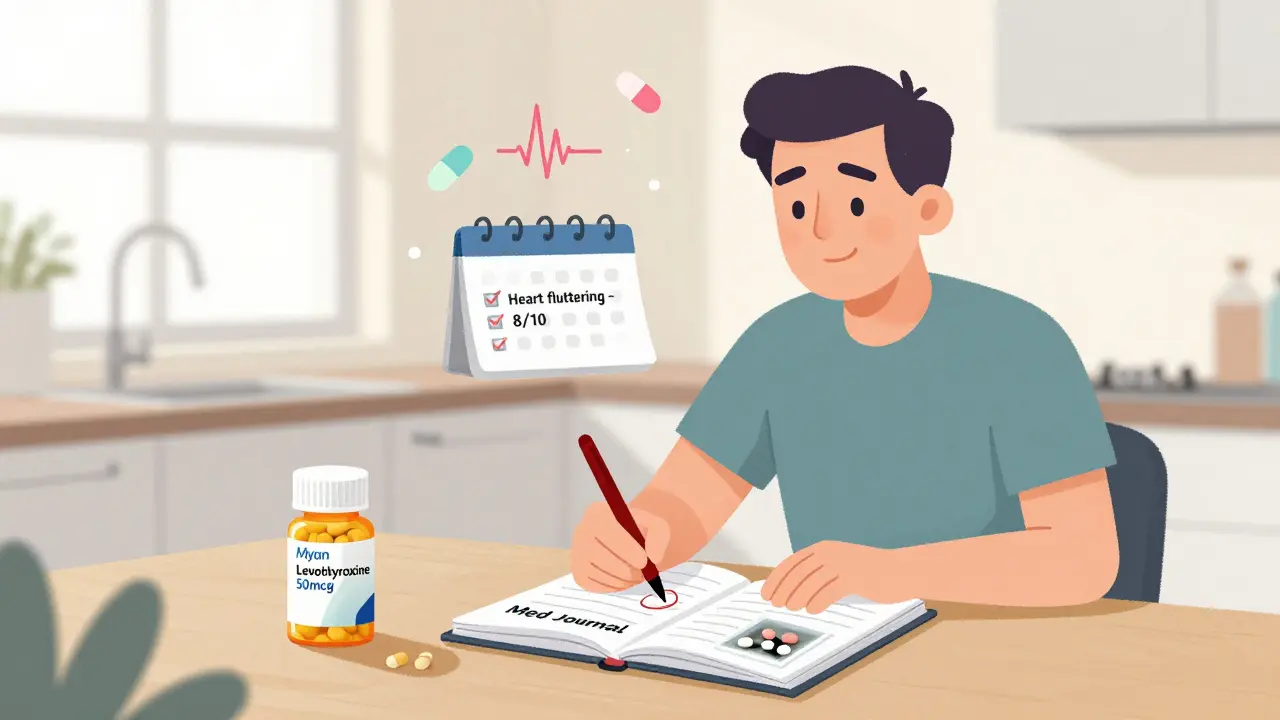
Switching from brand-name drugs to generics can save you hundreds of dollars a year. In Australia, more than 85% of prescriptions are filled with generics. But what happens when the pill that used to work perfectly starts feeling off? Your heart races. Your pain returns. Your mood drops. You didn’t change your dose. You didn’t miss a pill. So why now?
This isn’t just in your head. Many people report real, measurable differences after switching generic manufacturers-even when the FDA or TGA says they’re "bioequivalent." The truth is, bioequivalence doesn’t mean identical. It means the drug is absorbed within a range of 80-125% compared to the brand. That’s a wide gap. For some people, that gap matters.
Why Your Body Might React Differently to Generic Switches
Generic drugs contain the same active ingredient as the brand. That’s required by law. But they can differ in fillers, dyes, coatings, and manufacturing processes. These inactive ingredients don’t treat your condition-but they can affect how quickly the drug dissolves, how well it’s absorbed, or even how your body reacts to it.
Take levothyroxine, the most common thyroid medication. A 2021 study found that switching between different generic brands caused TSH levels to fluctuate by up to 30% in some patients-enough to trigger fatigue, weight gain, or heart palpitations. The same thing happens with seizure meds like phenytoin, blood thinners like warfarin, and even some antidepressants. These are called narrow therapeutic index (NTI) drugs. Small changes in blood levels can mean the difference between control and crisis.
One man in Sydney, 68, switched from his usual generic levothyroxine to a cheaper version after his pharmacy changed suppliers. Within two weeks, his heart started fluttering. His doctor blamed stress. He kept taking it. Three months later, his TSH jumped from 2.1 to 7.9. His journal-kept since his first switch-showed the pattern. He brought it to his endocrinologist. They switched him back. Within six weeks, his levels normalized.
What to Track in Your Medication Journal
A good medication journal isn’t just a list of pills. It’s a diagnostic tool. Here’s what you need to record every time you get a new prescription:
- Drug name - Both brand and generic. Write down the full name: "Levothyroxine sodium (Synthroid)" or "Levothyroxine sodium (Mylan)"
- Manufacturer - Look at the pill or bottle. Is it Mylan? Teva? Dr. Reddy’s? Aurobindo? Write it down. This is the most important detail.
- Lot number - Found on the bottle or blister pack. If you notice a reaction, this helps trace if it’s a bad batch.
- Date of switch - Exact day you started the new version.
- Dosage and form - 50 mcg tablet? 100 mg capsule? Is it scored? Is it round or oval?
- Physical appearance - Color, shape, imprint code (e.g., "M 50" or "100" on the pill). Take a photo with your phone. You’ll thank yourself later.
- Symptoms - Use a simple 1-10 scale: pain, fatigue, anxiety, dizziness, nausea. Note when they started and how they changed.
- Objective data - If you monitor blood pressure, blood sugar, INR, or thyroid levels, record them. Numbers don’t lie.
- Adherence - Did you miss a dose? Why? Stomach upset? Forgot? Confused by the new pill?
You don’t need fancy software. A notebook works. But if you prefer apps, Medisafe (rated 4.7/5 on the App Store) and MyTherapy (used by 8 million people) let you log symptoms, set reminders, and even generate printable reports for your doctor.
When Journaling Makes the Biggest Difference
Not every drug needs a journal. But for these, it’s critical:
- Antiepileptics - A 2020 study showed 7.3% of patients had breakthrough seizures after switching generic brands. None had seizures on the same manufacturer.
- Warfarin - Small changes in absorption can cause dangerous bleeding or clots. INR levels must stay between 2-3.
- Thyroid meds - TSH changes of even 0.5 can mean you’re under- or over-treated.
- Immunosuppressants - After organ transplants, even minor drops in blood levels can trigger rejection.
- Some antidepressants - While most people don’t notice a difference, a subset do. Journaling helps identify who they are.
For these drugs, your journal isn’t just helpful-it’s protective.

How to Use Your Journal at the Doctor’s Office
Most doctors won’t ask you to bring a journal. But if you show up with one, they’ll listen. Here’s how to make it count:
- Bring your journal to every appointment. Don’t wait for a problem.
- Highlight changes: "I switched to Teva levothyroxine on April 10. My fatigue went from 3/10 to 8/10 by day 7. My TSH jumped from 2.1 to 5.8."
- Ask: "Could this be the manufacturer change?"
- Request a blood test if you’re on an NTI drug. Don’t assume your doctor will order one.
A 2022 study from the University of Michigan found that patients who brought medication journals had 32% fewer unnecessary medication changes and 27% higher adherence. Why? Because data beats guesswork.
Common Mistakes (And How to Avoid Them)
Most people start journaling with good intentions. Then they stop. Here’s why-and how to fix it:
- "I forget to write it down." - Set a daily alarm labeled "Log meds" right after you take your pill. Takes 30 seconds.
- "I don’t know what to track." - Use a template. The Cleveland Clinic’s NTI tracker (free online) has 8 clear columns. Download it.
- "I think I’m overreacting." - You’re not. If your body feels different, it’s worth investigating. Don’t dismiss it as "anxiety."
- "The pharmacy switched again, and I didn’t notice." - Always check the pill. If it looks different, ask: "Is this the same as last time?" If not, note the new manufacturer.
One woman in Melbourne stopped journaling after two weeks because she "didn’t see a pattern." She switched manufacturers again. Two months later, her migraines returned. She started again. The pattern was clear: every time she got the Aurobindo brand, her headaches started on day 4. She switched back to Teva-and they vanished.

When Journaling Won’t Help
It’s not magic. Journaling won’t fix everything:
- Drugs with delayed effects - Antidepressants, some cholesterol meds. It takes weeks to see results. Don’t expect day-to-day changes.
- Minor side effects - If you get a slight headache after any pill, it’s probably not the manufacturer. It’s the drug itself.
- Placebo effect - If you believe generics don’t work, you might feel worse. Journaling helps separate belief from biology.
Focus on clear, repeatable changes. If your blood pressure drops 20 points after switching to a new generic, that’s data. If you just "feel worse," dig deeper.
What’s Next for Generic Drug Tracking
The system is changing. In 2023, the FDA launched a pilot with Apple Health to auto-populate medication logs from prescriptions. In Australia, the PBS is starting to track generic switches in electronic records. Some pharmacies now print QR codes on bottles that link to bioequivalence data.
But until every manufacturer is held to the same standard-and every doctor checks your pill before prescribing-you’re still your best line of defense.
Generic drugs are safe. For most people, they work just fine. But for those of us who notice the difference, a simple journal is the most powerful tool we have. It turns confusion into clarity. It turns guesswork into evidence. And it gives you back control over your own health.
Do generic drugs really work the same as brand-name drugs?
For most people, yes. But bioequivalence doesn’t mean identical. Generic drugs must deliver 80-125% of the active ingredient compared to the brand. That’s a wide range. For some, especially those on narrow therapeutic index drugs like thyroid meds or seizure drugs, even small differences can cause noticeable changes in how they feel or function.
What’s the best way to track my generic medication response?
Use a simple journal that records the drug name, manufacturer, lot number, date switched, physical appearance of the pill, symptoms on a 1-10 scale, and any lab results like TSH or INR. Apps like Medisafe or MyTherapy can help, but a paper notebook works just as well if you’re consistent.
Should I switch back to the brand if I feel worse on a generic?
Not immediately. First, confirm the change was due to the manufacturer switch by checking your journal. Then, talk to your doctor. For NTI drugs, they may request a blood test to check levels. If your symptoms match a pattern tied to a specific generic brand, your doctor can prescribe that brand or request a specific manufacturer be used.
How long should I wait before deciding if a new generic is working?
For most drugs, give it 2-4 weeks. But for fast-acting medications like blood pressure pills or pain relievers, changes can show up within days. For thyroid or antidepressant meds, wait 4-6 weeks. Don’t judge too soon-but don’t ignore symptoms that persist beyond that.
Can I trust my pharmacist to tell me if the generic changed?
Pharmacists are trained to know what’s in stock, but they’re not always required to tell you unless you ask. Always check the pill yourself. If it looks different, ask: "Is this the same manufacturer as last time?" Don’t assume they’ll volunteer the info.
Is keeping a medication journal worth the effort?
If you’re on a narrow therapeutic index drug-or if you’ve ever felt different after switching generics-yes. It takes 30 seconds a day. It can prevent hospital visits, unnecessary tests, and wrong medication changes. And it gives you real power in conversations with your doctor. The cost? A notebook and a few minutes. The benefit? Your health, clearly understood.
Comments
Henry Marcus
They say generics are bioequivalent… but have you ever seen the factory where they make these pills? I’ve got friends who work at a facility in China that churns out 12 different brands of levothyroxine on the same line-same powder, same machine, different color dye, different coating, different lot number… and then they slap on a new label and ship it to 17 countries. The FDA doesn’t inspect these places. The TGA? Barely tries. This isn’t medicine-it’s a global lottery, and your thyroid is the ticket.
December 20, 2025 at 09:52
Carolyn Benson
There’s a deeper metaphysical question here: if two pills contain the same active ingredient but produce different subjective experiences, which one is the ‘real’ drug? The one the state certifies as equivalent-or the one your body recognizes as itself? We’ve reduced human physiology to a spreadsheet of percentages, but the body doesn’t care about 80-125%. It cares about consistency. It remembers. And it rebels when betrayed.
December 20, 2025 at 23:35
Chris porto
I’ve been on warfarin for 8 years. Switched generics twice. First time, my INR spiked to 5.2. Second time, it dropped to 1.8. Both times, I checked the pill-different imprint, different color. I started writing it down. Now I only take the one with the blue oval and ‘M 5’ on it. My doctor doesn’t ask. I just say, ‘I need the blue one.’ He nods. Simple works.
December 21, 2025 at 13:41
William Liu
This is the kind of practical, life-saving advice that doesn’t get enough attention. Most people don’t realize how much power they have just by paying attention. Keep tracking. Keep sharing. You’re not just helping yourself-you’re helping everyone who comes after you.
December 22, 2025 at 19:22
Aadil Munshi
Wow, so you’re telling me the government lets pharmaceutical companies play Russian roulette with our internal chemistry? And you’re surprised people get weird symptoms? Let me guess-the same companies that lobbied to block generic labeling requirements also donate to your congressman’s campaign. Classic. Meanwhile, your ‘journal’ is just a Band-Aid on a leaking dam. The real fix? Ban the 80-125% loophole. Make them match exactly. Or don’t call it ‘generic’-call it ‘budget medicine’ and charge less. Honesty first.
December 22, 2025 at 21:36
Frank Drewery
I’ve got a cousin with epilepsy who had three seizures in six weeks after switching generics. Her neurologist didn’t believe her until she showed the pill photos and the journal. Now she gets the same brand every time-insurance covers it. It’s not about being ‘difficult.’ It’s about being informed. You’ve got a right to know what’s in that pill. And you’ve got a right to track how it affects you.
December 23, 2025 at 10:27
Danielle Stewart
Start small. Just write the manufacturer and how you feel each morning. No need to overthink it. I use a sticky note on my pill bottle. After a week, you’ll start seeing patterns. And when you go to your doctor, you won’t feel like you’re making things up-you’ll have proof. You’re not crazy. You’re just paying attention. That’s a superpower.
December 24, 2025 at 20:43
Meenakshi Jaiswal
In India, we’ve been switching generics for decades. My aunt took phenytoin for 20 years. She switched to a new batch-same dose, different color-and had a seizure. The pharmacist didn’t even know the brand changed. Now she takes a photo of every pill before she swallows it. Simple. Effective. And yes, it’s exhausting. But your life is worth the effort.
December 26, 2025 at 14:52
bhushan telavane
Bro, I used to think this was all in people’s heads. Then I switched my blood pressure med and started getting dizzy. Checked the pill-different shape, different imprint. Switched back. Gone in 48 hours. Now I always check. No big deal. Just don’t assume the pharmacy knows what they’re giving you.
December 28, 2025 at 12:18
holly Sinclair
It’s fascinating how we’ve normalized the idea that our bodies are interchangeable with statistical ranges-80-125%-as if human biology were a machine calibrated to tolerate variance. But we are not machines. We are biological entities shaped by decades of evolution, each with unique metabolic pathways, gut microbiomes, and epigenetic expressions. When a pill’s excipients alter dissolution kinetics, it doesn’t just change absorption-it disrupts a finely tuned ecosystem within us. And yet, the regulatory framework treats us like data points, not living systems. The journal isn’t just a tool-it’s a quiet act of resistance against the dehumanization of healthcare.
December 29, 2025 at 05:50
Emily P
I started journaling after I thought I was going crazy. Mood swings, brain fog, nausea-every time the pill looked different. I didn’t tell anyone. Then I showed my doctor. She said, ‘I’ve seen this before.’ Now I get the same brand every time. It’s not expensive. It’s just… mine.
December 29, 2025 at 14:17
Dikshita Mehta
For NTI drugs, the 80-125% range is dangerously outdated. We have the technology to require exact bioequivalence for critical medications. The fact that we don’t is a policy failure, not a biological one. Your journal is brilliant, but systemic change is overdue. Contact your health minister. Demand transparency in generic labeling. This shouldn’t be left to individual vigilance.
December 31, 2025 at 06:19
pascal pantel
Let’s be real: if you’re having side effects from a generic, you’re probably noncompliant, misdiagnosed, or just anxious. The FDA doesn’t approve junk. Bioequivalence studies are rigorous. Your ‘journal’ is confirmation bias with a pen. If your TSH is off, maybe your thyroid’s failing-not the pill. Stop blaming the manufacturer. Fix your lifestyle. Or better yet-pay for the brand name. Problem solved.
January 1, 2026 at 01:53
Sahil jassy
Bro just write the name and how you feel. No need to overcomplicate. I use notes app. Took me 3 days to notice the pattern. Now I only take Teva. Life’s better. 🙌
January 2, 2026 at 00:03
Kathryn Featherstone
I’ve been encouraging my patients to journal for years. The ones who do? They feel heard. They get better outcomes. The ones who don’t? They come back confused, frustrated, and sometimes hospitalized. This isn’t about being perfect-it’s about being consistent. Even one line a day changes everything. You’re not just tracking meds. You’re reclaiming your voice in your own care.
January 3, 2026 at 21:55