
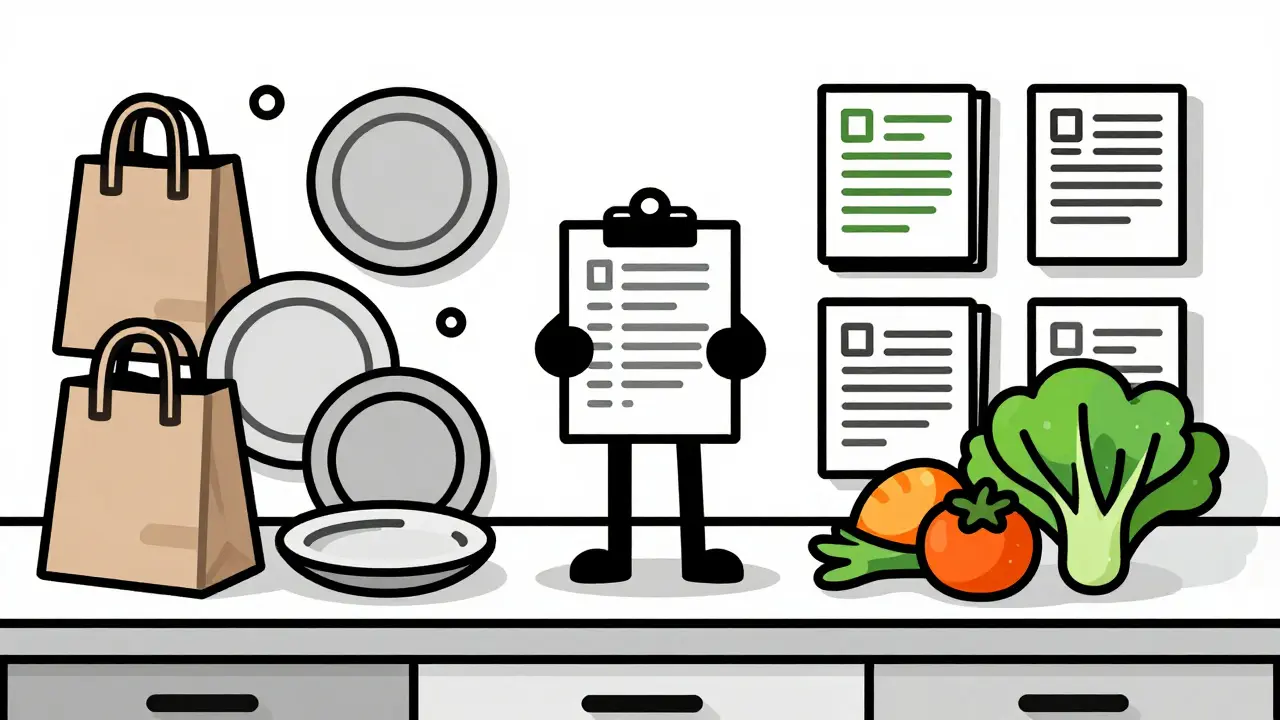
The statistics are stark. Between 1999 and 2019, the Centers for Disease Control and Prevention documented a staggering 305% increase in obesity-related deaths. If you've tried to lose weight before and failed, it might not be your fault; it could be the math. Research indicates that nearly 42% of adults attempting weight loss cite a simple "lack of planning" as their primary obstacle. You probably know the feeling: standing in the grocery aisle staring at empty shelves, impulse buying snacks that derail progress, or wondering what to cook after a long day.
This is where Meal Planninga structured approach to organizing dietary intake through pre-determined schedules and portion-controlled recipes changes the game. It isn't just about deciding what to eat for dinner; it's a strategic method backed by behavioral psychology and nutritional science. Studies published in the American Journal of Preventive Medicine show that people who plan their meals consume 150-200 fewer calories daily compared to those who wing it. That might sound small, but over a year, that compounds to significant weight loss without extreme dieting.
Why Templates Work Better Than Guesswork
You might think you can manage this in your head, but cognitive load plays a role here. When you are tired after work, the easiest option usually wins, and that rarely aligns with health goals. A Grocery List TemplateStructured Shopping List removes that decision fatigue. It transforms abstract goals like "eat healthier" into concrete actions like "buy spinach for Tuesday's salad."
Effective templates aren't just blank grids. They typically incorporate five key components based on analysis from Nutrition.gov: calorie-counted meal schedules, nutrient-dense recipe databases, categorized grocery lists, pantry inventory trackers, and progress monitoring sections. Government resources like MyPlate.gov offer evidence-based Mediterranean diet structures, while commercial tools have stepped in to fill the gaps with personalization. For instance, templates that organize grocery items by store layout (produce, dairy, meat, dry goods) save users an average of 12.7 minutes per trip according to Consumer Reports. That time back can be used for prep work or rest.
Digital Versus Printable: Choosing Your System
One of the first decisions you face is whether to go digital or stick to paper. Neither is inherently "better," but they serve different workflows. Let's break down the major players in the market so you can choose what fits your life.
| Platform | Format | Key Feature | Cost Model |
|---|---|---|---|
| 101Planners | Printable | Categorized grocery lists | Pay-per-download or subscription |
| Notion | Digital App | Database-style organization | Freemium (Free basic access) |
| Canva | Visual Design | Highly customizable aesthetics | Fremium ($12.99/mo Pro) |
| Nutrition.gov | Web Resource | Evidence-based guides | Completely Free |
| Plant Based With Amy | Niche Plans | Vegan/Vegetarian focus | $14.99-$29.99 per template |
If you prefer writing things down to make them feel real, printable planners from companies like 101Planners achieve high retention rates-83% of users stick with them for at least six weeks. These standard US Letter or A4 formats are easy to tear off and stick to the fridge. On the other hand, digital tools like the Notion Meal Planner allow for database-style organization that syncs across iOS, Android, and web platforms. A 2023 survey found that digital solutions hold 63% of the market share, likely due to features like barcode scanning for pantry trackers added in updates around late 2023.
However, technology has limits. Rigid digital systems can sometimes feel restrictive. If you are someone who needs flexibility, look for "flexible framework templates." These allow you to swap meals without breaking the calorie budget, which Dr. Yoni Freedhoff notes is critical to avoid abandonment. Over 68% of dieters drop plans that feel too rigid, often triggered by missing one specific meal component.
The Anatomy of a Winning Weekly Plan
So, what does a functional week actually look like on paper? It's not just a random assortment of healthy foods. To drive weight loss, the plan must create a specific energy gap. Dr. Susan Roberts, a Professor of Nutrition at Tufts University, highlights that a 200-calorie daily deficit created through planned meals can lead to losing 20 pounds annually without aggressive dieting.
A standard effective template allocates calories strategically throughout the day:
- Breakfast: 400-500 calories (keeps you satiated until lunch).
- Lunch: 500-600 calories (maintains energy for afternoon work).
- Dinner: 500-600 calories (supports muscle repair during sleep).
- Snacks: 150-200 calories (prevents binging).
For a 1,800 calorie target-which is common for active adults-this balance prevents the "starving by 3 PM" effect reported by 34% of users on strict 1,500-calorie templates. When you design your weekly schedule, start with the non-negotiables. Maybe Monday is leftovers from Sunday's roast chicken. Wednesday is a designated "new recipe" night where you try something unfamiliar. The template should accommodate these variables.

Crafting the Perfect Shopping List
Your plan is useless if you buy the wrong things. This is where the grocery list becomes your most valuable tool. A generic list leads to missed ingredients, which leads to eating takeout. A categorized list leads to efficiency. A study analyzing grocery habits noted that templates organizing items by store section reduced shopping time significantly.
You should organize your list into four distinct zones to mimic the actual layout of most supermarkets:
- Fresh Produce: Veggies, fruits, herbs (e.g., Spinach, apples, lemons).
- Protein & Dairy: Meat, eggs, cheese, yogurt.
- Pantry Staples: Grains, oils, spices, canned goods.
- Frozen Goods: Frozen veggies, ice cream (yes, even for treats).
Before you shop, run a quick pantry inventory. This simple step alone can save you money. According to USDA data, checking what you already have before heading to the store saves approximately $28.50 weekly by preventing duplicate purchases. If you already have three jars of pasta sauce, do not write "pasta sauce" on your list.
A Step-by-Step Implementation Guide
Learning a new system takes time. A 2023 study in the Journal of Nutrition Education estimated the learning curve averages 2.3 weeks. Don't beat yourself up if the first week feels messy. Follow this proven five-step workflow to get started efficiently.
1. Inventory Your Pantry
Spend 10 minutes looking at what you have. Do you have rice? Canned beans? Olive oil? Use these staples as the base for 3-4 meals. This reduces the number of new ingredients you need to buy immediately.
2. Select Recipes Strategically
The Workweek Lunch project recommends choosing three existing pantry items first. Then, find recipes that bridge the gap between your stock and your goals. Aim for recipes that share ingredients. If you buy sweet potatoes for Tuesday's breakfast, plan to use them again for Friday's side dish to minimize waste.
3. Allocate Calories and Macros
Decide on your daily range. Whether it is 1,500, 1,800, or 2,200 calories, fill the template slots. Ensure protein is distributed evenly. High-protein days tend to have better satiety feedback loops.
4. Build the Categorized List
Write every ingredient needed into the four zones mentioned earlier. Do not group everything under "Vegetables"; separate "Carrots" from "Broccoli" if they are sold in different aisles. This keeps you moving forward in the store rather than zig-zagging back and forth.
5. Prep and Schedule
Plan a 90-minute session on Sunday. Wash greens, chop veggies, marinate meats. A 2022 Consumer Reports analysis found that including a detailed grocery list reduced food waste by 37%. Having prepped ingredients means you are less likely to order pizza when exhausted on a Tuesday night.
Expert Validation and Success Stories
You are not just guessing with this method; experts validate it. The Academy of Nutrition and Dietetics released a position paper in 2023 confirming that meal planning interventions produce 2.5 times greater weight loss than calorie counting alone. It's the combination of foresight and restriction that works.
Dr. David Ludwig at Harvard University demonstrated in 2022 that participants using structured templates lost 7.3% of their body weight versus 3.1% in control groups over six months. Real-world success stories reinforce this. On Reddit, a user named u/MealPrepMaster89 documented a 72-pound weight loss using a weight loss template with macro tracking over 11 months. Another community member, u/HealthyHabitJenny, reported cutting her grocery bill by $47 a week using a specific booklet format.
Be aware of the pitfalls though. Some templates lack flexibility for dietary restrictions. 41% of users report abandoning plans because they cannot adapt them for gluten-free or allergy concerns. Always choose a system that allows for swaps. If a template demands "Almond Butter" and you are allergic to nuts, the plan fails immediately. Look for resources that offer substitutions or flexible portions.
Troubleshooting Common Issues
Sometimes you will want to stop. That is normal. If you find yourself craving comfort food or feeling overwhelmed, re-evaluate the rigidity. Are you forcing yourself to cook a complex salmon dish every day? Simplify. Switch to sheet pan meals that require minimal chopping. If the grocery list gets too long, shorten the plan. Two weeks ahead is plenty; some people stick with two-week cycles while others prefer one.
Food waste is another hurdle. A 2022 Environmental Research study highlighted that 43% of print templates contribute to paper waste, pushing many toward digital-first solutions. However, if you use printables, try to keep the sheets in a binder so you can reuse the same physical page next month instead of printing fresh ones.
Is meal planning expensive?
It depends on the tool. Government resources like Nutrition.gov are free, while premium templates can range from $15 to $30 per download. However, the cost of the planner itself is negligible compared to the savings. Users report saving an average of $47 per week on groceries by sticking to the list and avoiding impulse buys.
How much time does meal planning take?
A complete system including inventory, planning, and shopping usually takes about 2 hours on Sunday. The initial setup for digital tools like Notion takes roughly 4.1 hours to customize, whereas printable templates take about 1.7 hours. Once the system runs, weekly updates usually take under 30 minutes.
Can I still eat out while using templates?
Yes, absolutely. Good templates include buffer days or "cheat meals" to account for spontaneous dining. Dr. Yoni Freedhoff advocates for flexible frameworks that prevent bingeing. Just track the approximate calories of the restaurant meal so you don't accidentally blow your entire week's deficit.
What if I have dietary restrictions?
Choose niche templates. Platforms like Plant Based With Amy specifically offer vegan and vegetarian adaptations with calorie ranges. Avoid generic templates that don't allow for substitution. Approximately 41% of users abandon plans because they lack gluten-free or allergy-adapted options.
Which is better: digital or printable planners?
Digital tools offer syncing and editing power, while printables offer focus and lower tech barriers. Retention rates are higher for printables (83%) among those who prefer tangible tasks, but digital holds 63% of the market share overall due to convenience. Test both to see which fits your workflow.
Comments
Monique Louise Hill
People really think following a template makes them healthy when it is actually about morality 🥦 If you truly care about wellness then stop buying processed garbage and learn to cook properly 🤢 It is so sad how society pushes convenience over dignity 👋 We deserve better than these corporate diet plans that drain our wallets 💸
March 28, 2026 at 09:45
Sarah Klingenberg
I completely agree that planning helps reduce decision fatigue :) It is amazing how much time we waste deciding what to eat every single day Sometimes having a structure frees up mental energy for more important things :)
March 30, 2026 at 02:36
walker texaxsranger
The glycemic index manipulation in commercial templates is obvious when you analyze the data streams. Most nutritionists ignore the endocrine disruption caused by processed grains listed in those categories. They suggest spinach but forget the pesticide residue levels remain high regardless of organic labels. Corporate funded studies push low carb narratives that benefit seed oil manufacturers significantly. You see the calorie counting apps tracking macros but missing the metabolic cost of stress hormones during planning. It is a behavioral conditioning loop designed for compliance rather than health outcomes. The inventory tracker concept assumes storage capability which urban residents rarely possess. Cold chain logistics break down if you do not plan for refrigeration failures during power outages. People claim efficiency yet spend three hours prepping meals on Sundays instead of resting. This optimization culture creates burnout within six months of implementation cycles. The deficit calculation ignores genetic variance in basal metabolic rate calculations across demographics. Bioindividuality is lost when templates enforce standard portion sizes without accounting for muscle mass retention. Gut microbiome diversity suffers under rigid macronutrient protocols that lack fermented food integration. We must question who funds the research behind these government guidelines and their funding sources. Trust the body signals over spreadsheet projections because biology resists artificial structuring mechanisms.
March 31, 2026 at 11:37
Devon Riley
Hey there I know reading that might feel overwhelming but remember everyone starts somewhere 😊 There is so much noise online about perfect diets but your health journey is unique to you 😌 Take small steps and be kind to yourself during the process ✨ You do not need to be perfect to make progress 💪
April 1, 2026 at 07:49
Tommy Nguyen
Just start cooking and dont worry about perfection too much
April 1, 2026 at 17:21
Eva Maes
The linguistic architecture of these guides is surprisingly manipulative using vivid imagery to induce compliance They frame deprivation as empowerment which is a psychological sleight of hand often seen in marketing literature. While the structural advice holds some merit regarding organization the underlying premise assumes infinite cognitive bandwidth. Most adults face resource constraints that make such granular tracking impossible without significant mental tax.
April 2, 2026 at 01:13
Rachael Hammond
its cool to see people talking about this stuff honestly I always thought it was to hard back in the day now i see why its useful though cant wait to try some of the lists out my self next week hope it works for me
April 2, 2026 at 09:37
Shawn Sauve
That is a lovely perspective Rachael thank you for sharing your honest experience with us here today I hope your trial goes well next week and you find balance soon :)
April 2, 2026 at 11:10
Paul Vanderheiden
keep going folks you got this motivation is key to changing habits dont let the details stop you from starting today even if you just buy one extra veggie it counts towards the bigger goal
April 2, 2026 at 19:49
Jordan Marx
From a systems perspective we are seeing a paradigm shift in behavior modification through gamified tracking interfaces. The retention metrics suggest that digital integration improves adherence rates compared to analog methods due to friction reduction in data entry. However one must optimize for individual workflow compatibility to prevent system abandonment. Scalability remains a bottleneck for users with irregular schedules or unpredictable income flows.
April 4, 2026 at 19:47
kendra 0712
This sounds AMAZING!!! I love how detailed the sections are!!! Finally someone talks about the real struggle!!! Do you guys think the printable ones work better??? Let me know your results please!!! So excited to try this myself right now!!! Thank you for posting this!!!
April 5, 2026 at 09:29
Kameron Hacker
Your enthusiasm is noted but one must exercise intellectual rigor before adopting such consumerist methodologies. The market saturation of these products indicates a demand for simplistic solutions to complex biological problems. Proceed with caution and maintain critical faculties regarding vendor claims. Formal assessment of nutritional efficacy is required prior to financial commitment.
April 6, 2026 at 19:53
Sophie Hallam
We have a lot of different opinions here which is okay Everyone wants to feel safe and healthy in their own way. Its good that we share tips without arguing too much about the best method. Balance seems to be the goal for most people in the long run.
April 6, 2026 at 22:37