
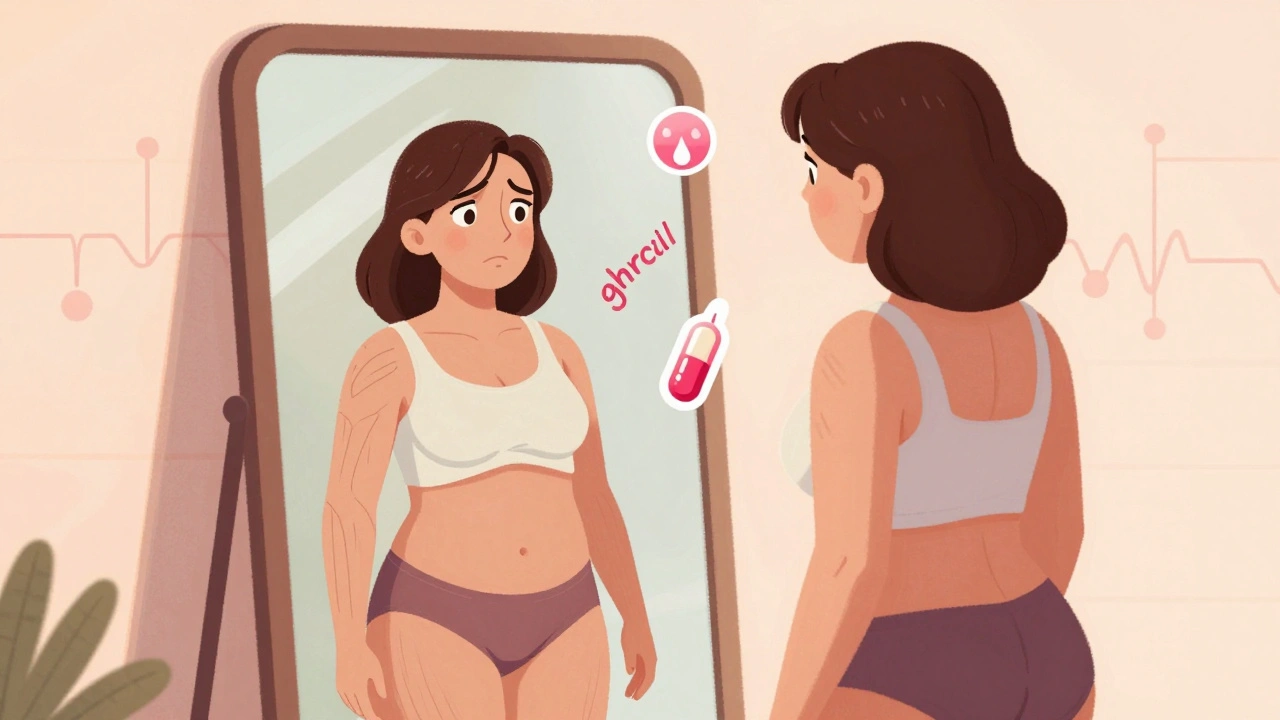
Women in their 40s and 50s often wake up one day to find their jeans don’t zip anymore-even though they haven’t changed what they eat or how much they move. It’s not laziness. It’s not bad willpower. It’s biology. Menopause weight gain isn’t just about eating too much. It’s about hormones shifting, muscles disappearing, and metabolism slowing down-all at once. And if you’re still trying to lose weight the same way you did in your 30s, you’re fighting an uphill battle with the wrong tools.
Why Your Body Changes During Menopause
Before menopause, your body stores fat mostly around your hips, thighs, and buttocks. That’s estrogen at work. It tells fat cells where to settle, and for most women, that’s the lower half. But as estrogen drops-by 60 to 70% during the transition-your body doesn’t just lose balance. It rewires itself. Fat starts moving to your belly. Not just under the skin, but deep inside, wrapped around your organs. That’s visceral fat, and it’s dangerous. This isn’t random. When estrogen falls, testosterone becomes relatively stronger. That hormonal shift pushes fat storage toward your midsection. At the same time, your body produces less leptin-the hormone that tells you you’re full-and more ghrelin-the one that makes you hungry. You’re not imagining it. You feel hungrier, even when you’re eating the same amount. And then there’s muscle. After 30, you naturally lose 3 to 8% of muscle every decade. Menopause adds another 1 to 2% per year. Less muscle means your body burns fewer calories at rest. Your metabolism drops by 2 to 3% each decade. So even if you eat exactly what you used to, you’re now storing more of it as fat. That’s why so many women say, “I did everything right-and still gained weight.” They did. But the rules changed.The Real Culprit Isn’t Just Hormones
It’s easy to blame estrogen. But experts agree: hormones aren’t the whole story. The real problem is a mix of aging, muscle loss, and lifestyle. Dr. Stephanie Faubion, medical director of The Menopause Society, says it clearly: “Hormonal changes alone don’t cause the weight gain. It’s usually related to aging, as well as lifestyle and genetic factors.” A study from the Study of Women’s Health Across the Nation (SWAN) followed over 3,300 women for more than 20 years. Even when women kept their diet and exercise routine exactly the same, they still gained 4.5 to 6.8 kilograms (10 to 15 pounds) during the menopausal transition. That’s not a fluke. It’s a pattern. And it’s happening to millions of women right now. One of the biggest overlooked factors? Sleep. Hot flashes and night sweats disrupt sleep in 75% of perimenopausal women. Poor sleep spikes ghrelin and lowers leptin. That means more cravings, especially for carbs and sugar. And when you’re tired, you’re less likely to move. It’s a cycle: bad sleep → more hunger → less activity → more fat storage.Why Diets That Worked Before Now Fail
If you used to lose weight by cutting calories and doing cardio, you’re not broken. Your body just changed. A 2021 study in Obesity Reviews found that postmenopausal women lose weight 20 to 30% slower than younger women-even when they’re in the same caloric deficit. That’s because muscle loss lowers your metabolic engine. Cardio alone won’t fix that. Women in online forums like Reddit’s r/menopause and Mayo Clinic Connect say the same thing: “I lost 20 pounds in my 30s with running and salads. Now I can’t lose 5, no matter what I do.” The reason? You’re not building muscle. You’re not stimulating your metabolism. You’re just burning calories during the workout-and then your body burns even fewer the rest of the day. The old model of “eat less, move more” doesn’t work anymore. You need to change the game. Not just the numbers. The strategy.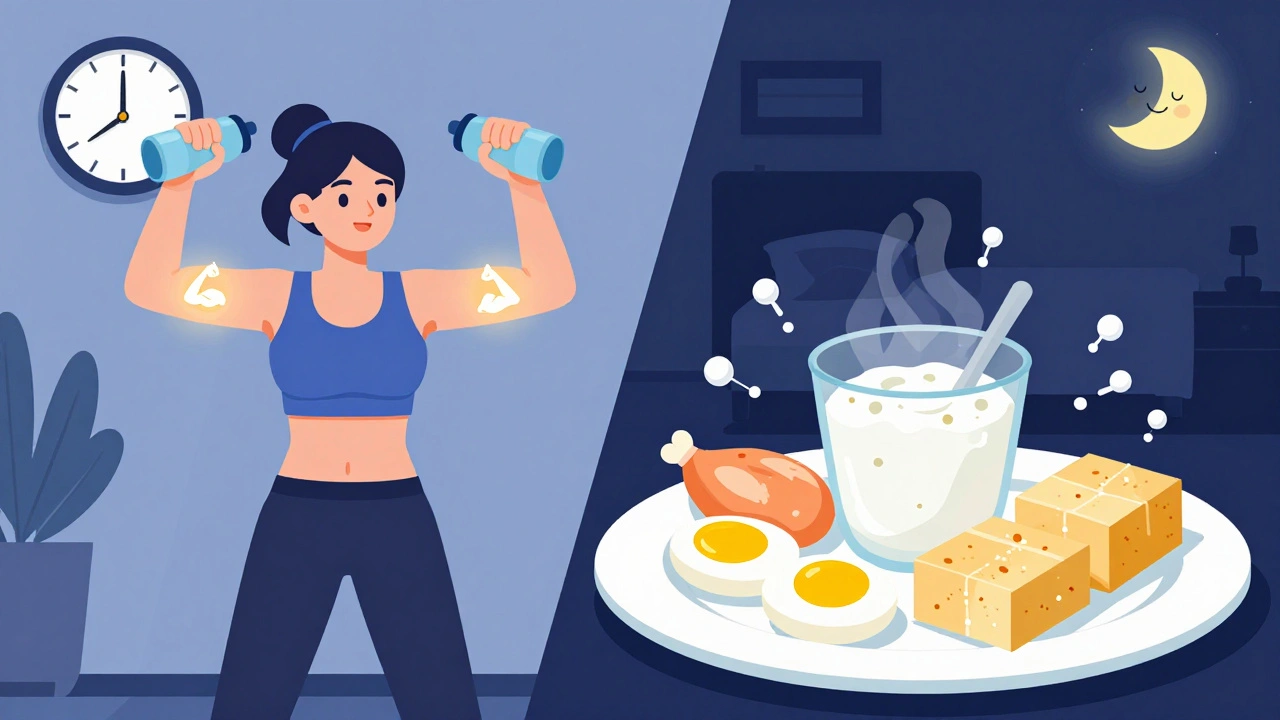
What Actually Works: The Science-Backed Strategy
There’s one proven approach that flips the script: build muscle, move smart, eat protein. Resistance training is non-negotiable. Lifting weights or doing bodyweight exercises 2 to 3 times a week increases muscle mass by 1.8 to 2.3 kilograms over six months, according to a 2022 trial in Menopause: The Journal of The North American Menopause Society. That’s not just about looking toned. More muscle means your body burns 50 to 100 extra calories a day-even while you sleep. High-intensity interval training (HIIT) is the second piece. Just 1 to 2 sessions a week of short bursts of effort (like sprinting, jumping, or cycling hard for 30 seconds, then resting) reduces abdominal fat by 8 to 12% in half a year. It’s more effective than steady-state cardio for burning visceral fat. Protein intake needs to go up. Most women eat 15 to 20 grams of protein per meal. That’s not enough. Your body becomes resistant to building muscle after 40. You need 25 to 30 grams per meal-three times a day. That’s about 3 eggs and a chicken breast at lunch, or a protein shake with Greek yogurt and nuts at breakfast. The British Menopause Society recommends 1.2 to 1.6 grams of protein per kilogram of body weight daily. For a 70kg woman, that’s 84 to 112 grams a day. Sleep matters more than you think. Aim for 7 to 8 hours. Better sleep lowers ghrelin by 15 to 25% and improves leptin sensitivity by 20 to 30%. Try cooling your bedroom, avoiding caffeine after 2 p.m., and practicing 10 minutes of deep breathing before bed. It’s not magic. It’s biochemistry.What to Avoid
Don’t fall for quick fixes. Detox teas, extreme low-carb diets, and fasting protocols might work short-term-but they often make muscle loss worse. You need strength. You need fuel. You need consistency. Avoid blaming yourself. This isn’t about discipline. It’s about physiology. If you’ve tried everything and nothing works, it’s not you. It’s the system. Your body is doing exactly what biology tells it to do. Also, don’t ignore your waistline. A waist measurement over 88 cm (35 inches) after menopause signals increased risk for heart disease and diabetes-even if your BMI is “normal.” That’s why doctors now recommend measuring your waist at every checkup, not just stepping on the scale.The Bigger Picture: Why This Matters Beyond the Scale
Menopause weight gain isn’t just about clothes fitting tighter. It’s about health. Visceral fat releases inflammatory chemicals that raise insulin resistance by 20 to 40%. That means higher risk of type 2 diabetes. It also increases cardiovascular risk by 25 to 30%, independent of your overall weight, according to Dr. Mary Jane Minkin of Yale. Postmenopausal women are nearly five times more likely to develop abdominal obesity than premenopausal women. And they’re 3.2 times more likely to develop metabolic syndrome-a cluster of conditions that include high blood pressure, high blood sugar, and abnormal cholesterol. This isn’t vanity. It’s prevention. Building muscle and reducing belly fat now can prevent heart disease, stroke, and diabetes later. That’s the real win.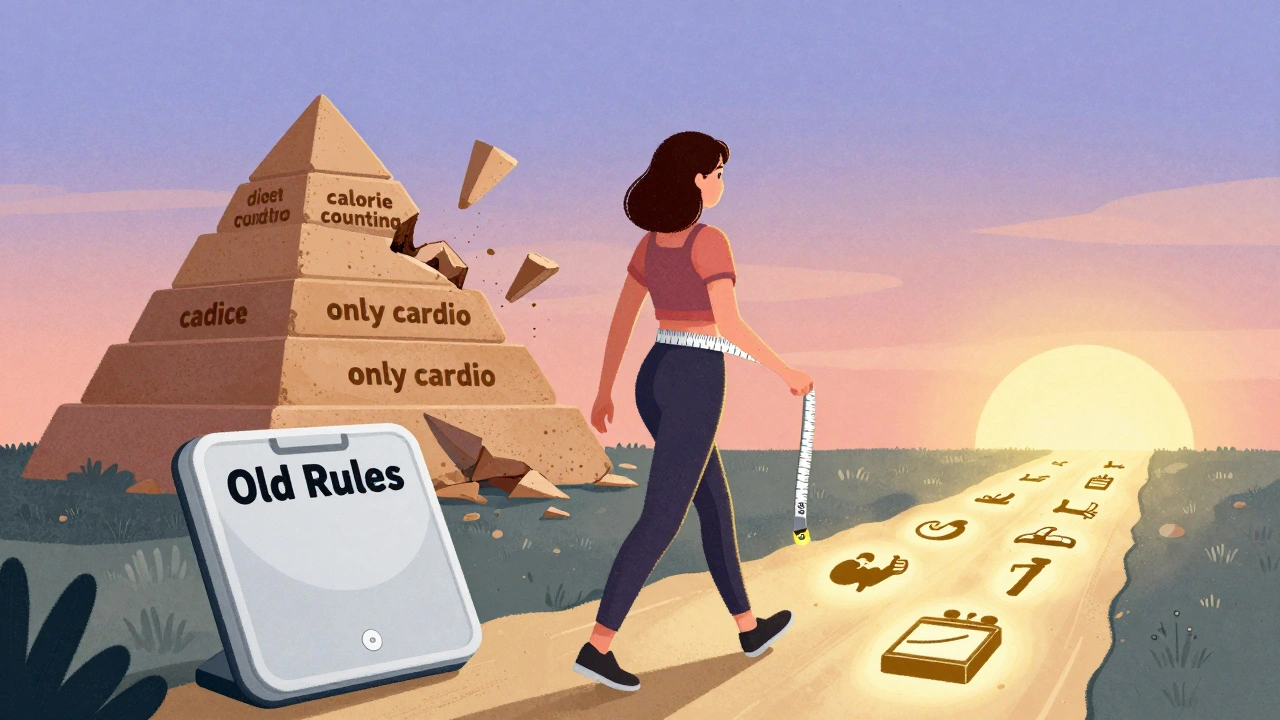
Where the Medical World Is Headed
The good news? Science is catching up. In September 2023, the FDA approved bimagrumab for Phase 3 trials-a drug that increases muscle mass by 5 to 7% and reduces fat mass by 8 to 10% in just 24 weeks. It’s not available yet, but it shows we’re moving toward targeted treatments. The NIH is funding a $12.5 million study called EMPOWER, testing whether early hormone therapy can prevent the shift to belly fat. And Mayo Clinic now offers a metabolic test that checks 17 hormonal and metabolic markers to create a personalized plan. But here’s the reality: only 17% of primary care doctors feel trained to handle menopause-related weight issues. Most still treat it like a lifestyle problem, not a medical one. That’s why you need to be your own advocate. Ask your doctor for a waist measurement. Ask about muscle mass. Ask if you should get your metabolic rate checked.Start Today: Your 3-Step Plan
You don’t need a gym membership or a nutritionist. Start small. Here’s what to do this week:- Do 2 strength sessions-bodyweight squats, push-ups (on knees if needed), dumbbell rows, and planks. Do 3 sets of 10 to 12 reps. No equipment? Use water bottles or a backpack filled with books.
- Eat 25 grams of protein at each meal-breakfast: 2 eggs + 1 cup Greek yogurt; lunch: 100g chicken + lentils; dinner: 100g fish + tofu.
- Protect your sleep-turn off screens 1 hour before bed, keep your room at 18°C (65°F), and try 5 minutes of box breathing: inhale 4 seconds, hold 4, exhale 4, hold 4.
Final Thought: This Is Not Your Fault
You didn’t fail. Your body changed. And now it needs a new strategy. Menopause isn’t the end of your health. It’s the beginning of a smarter one. The goal isn’t to look like you did at 30. It’s to feel strong, energized, and protected for the next 30 years. Build muscle. Eat protein. Sleep well. That’s not a diet. That’s your new foundation.Why am I gaining weight even though I eat the same as before?
Your metabolism slows down because you’re losing muscle mass and estrogen levels drop. Even if your calorie intake hasn’t changed, your body burns fewer calories at rest. Hormonal shifts also increase hunger signals and reduce fullness cues, making it easier to overeat without realizing it.
Is belly fat during menopause dangerous?
Yes. Belly fat after menopause is often visceral fat, which surrounds internal organs. This type of fat releases inflammatory chemicals that increase insulin resistance, raise blood pressure, and boost the risk of heart disease and type 2 diabetes. Even if your overall weight is normal, a waist measurement over 88 cm (35 inches) signals higher health risks.
Should I take hormone therapy to stop weight gain?
Hormone therapy may help some women by reducing fat redistribution, especially when started early in menopause. But it’s not a weight-loss drug. The NIH is currently studying whether early hormone therapy can prevent metabolic changes, but it’s not recommended solely for weight control. Talk to your doctor about your personal risks and benefits.
How much protein do I need daily after menopause?
Aim for 1.2 to 1.6 grams of protein per kilogram of body weight. For a 70kg (154lb) woman, that’s 84 to 112 grams per day. Spread it across meals: 25 to 30 grams per meal. This helps fight muscle loss and keeps you fuller longer.
Is cardio enough to lose menopause weight?
No. Cardio helps burn calories, but it doesn’t rebuild muscle. Without strength training, you’ll lose even more muscle as you age, slowing your metabolism further. Combine cardio with resistance training 2-3 times a week for the best results.
How long until I see results from strength training?
You’ll start feeling stronger in 4 to 6 weeks. Noticeable changes in body composition-like looser clothes or better energy-usually appear after 3 months. Fat loss and muscle gain take time, especially after menopause. Consistency matters more than intensity.
Can I lose weight without counting calories?
Yes. Focus on protein-rich meals, strength training, and sleep. These three factors naturally regulate appetite and metabolism. When you build muscle and stabilize hormones, your body will start to rebalance without needing to track every calorie.
Comments
kevin moranga
Man, I wish I’d read this 5 years ago. My wife went through this and I just thought she was ‘eating too much’-turns out I was clueless. Now I help her with her protein shakes and we do bodyweight circuits together on weekends. No more blaming, just building. She’s got more energy than I do now. 😊
December 13, 2025 at 14:42
Alvin Montanez
Let’s be real-this isn’t biology, it’s laziness dressed up as science. If you had any discipline, you wouldn’t need a 2000-word essay to lose weight. Back in my day, we ate less, moved more, and didn’t blame hormones for our poor choices. This whole ‘menopause excuse’ culture is toxic. Get off the couch and lift something.
December 14, 2025 at 19:48
Lara Tobin
Thank you for writing this. I cried reading the part about ‘this isn’t your fault.’ I’ve felt so broken for years. I tried keto, intermittent fasting, even personal trainers-but nothing worked until I started lifting light weights and eating more eggs. I’m not ‘thin’ but I’m strong. And that’s enough. 🤍
December 15, 2025 at 21:26
Jamie Clark
Let’s cut through the noise: menopause isn’t the villain. Capitalism is. The medical-industrial complex sells us ‘solutions’ because they profit from our insecurity. Muscle loss? Sure. Hormones? Fine. But why is the only answer ‘buy protein powder’ or ‘join a gym’? Where’s the systemic support? Where’s the healthcare that doesn’t treat women like broken machines? This post is good-but it’s still inside the cage.
December 17, 2025 at 02:27
Keasha Trawick
OMG, this is the most *biochemically accurate* thing I’ve read since my endocrinologist went full TED Talk. 🤯 The visceral fat thing? It’s like your belly is hosting a rave for inflammatory cytokines while your leptin is passed out on the couch. And HIIT? It’s not cardio-it’s metabolic sabotage. You’re basically hacking your aging system with short bursts of chaos. Protein? 30g per meal? That’s not nutrition, that’s alchemy. I’m telling my book club about this. 📚💥
December 17, 2025 at 14:32
Webster Bull
Just do the 3 things. Protein. Lift. Sleep. No magic. No apps. Just show up. You got this. 💪
December 19, 2025 at 02:19
Donna Hammond
I’m a registered dietitian and I can confirm: the protein recommendation is spot-on. Most women over 45 are consuming less than 1g/kg/day-well below the 1.2–1.6g/kg range needed to preserve muscle. Also, sleep disruption from night sweats directly dysregulates ghrelin and insulin. This isn’t anecdotal-it’s evidence-based. If you’re struggling, start with protein timing: 25g within 30 minutes of waking. It makes a measurable difference in appetite control within days.
December 20, 2025 at 01:25
Richard Ayres
While the biological mechanisms are compelling, I wonder if we’re over-medicalizing a natural life stage. The emphasis on muscle gain and fat loss may unintentionally reinforce aesthetic ideals rather than holistic well-being. Is the goal to look younger, or to feel resilient? I’d love to see more discussion on emotional resilience alongside metabolic strategy.
December 20, 2025 at 14:44
Sheldon Bird
This hit me right in the feels. My mom just hit 52 and she’s been crushing her strength routine. She said, ‘I’m not trying to look like I did in ’99-I’m trying to carry my grandkids without crying.’ Now I’m doing squats with her on Zoom. 🙌 We’re not fixing our bodies-we’re upgrading them. Love this post.
December 20, 2025 at 18:23
Karen Mccullouch
Of course this is ‘biology’-but who made it okay for women to just… give up? You’re telling me women can’t fight this? That’s BS. I’ve seen women in their 60s squat 180lbs. You don’t need permission to be strong. Stop listening to the ‘it’s not your fault’ noise and get your ass to the gym. You’re not a victim-you’re a warrior. 💥
December 22, 2025 at 03:06
Ronan Lansbury
Interesting. The NIH study? The FDA trial? All funded by pharmaceutical interests. Bimagrumab? A synthetic myostatin inhibitor. They’re not curing menopause-they’re monetizing it. The real solution? Quit soy, avoid plastics, and return to ancestral diets. This ‘science’ is just another corporate narrative to sell you pills. Wake up.
December 22, 2025 at 10:43
Rawlson King
Protein? HIIT? Strength training? You’re still missing the point. The real issue is estrogen dominance from environmental toxins and soy-based foods. Your body isn’t ‘losing muscle’-it’s being poisoned. Cut out all processed foods, avoid gym memberships, and eat only organic meat and vegetables. That’s the only way. Everything else is distraction.
December 23, 2025 at 01:51
Tyrone Marshall
I’m a 56-year-old dad who’s watched three female friends go through this. One quit. One cried. One started lifting. She’s now coaching other women. This isn’t about weight. It’s about reclaiming agency. You don’t need a perfect plan-you need to start. One squat. One egg. One deep breath. That’s the revolution. Keep going.
December 23, 2025 at 20:37