
Opioid Rotation Dose Calculator
How to Use This Tool
This calculator helps determine equivalent opioid doses when switching medications. Based on clinical guidelines, it shows the calculated equivalent dose with important safety adjustments. Remember: Never switch opioids without medical supervision.
Enter your current opioid dose to see the calculation
When chronic pain patients are stuck on an opioid that’s making them sick - whether it’s constant nausea, dizziness, or confusion - doctors don’t always have to keep raising the dose. Sometimes, the answer is simpler: switch to a different opioid. This isn’t a last resort. It’s a well-established strategy called opioid rotation, and it’s used to improve pain control while cutting down on side effects. Many people assume that if one opioid doesn’t work well, all opioids will fail. That’s not true. Each opioid affects the body differently, and switching can make a real difference.
Why Opioid Rotation Works
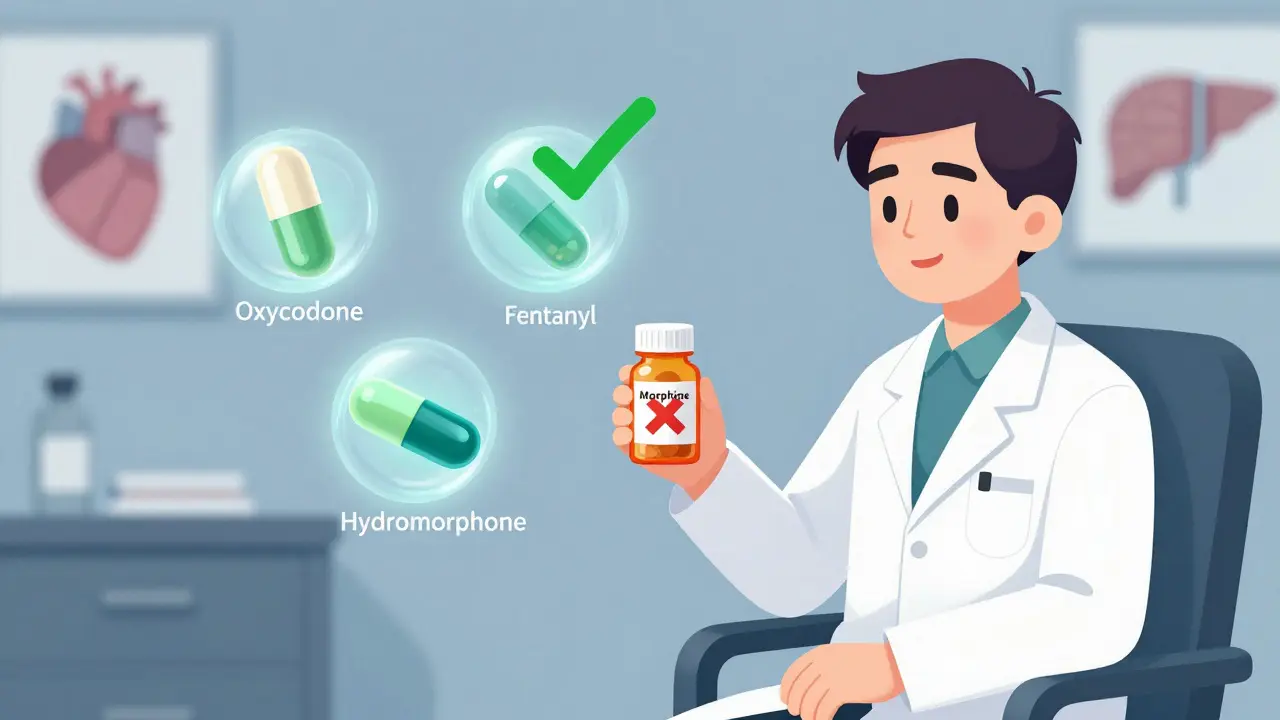
Not all opioids are the same, even though they all target pain receptors in the brain. One person might handle morphine fine but get terrible nausea from it. Another might feel foggy and exhausted on oxycodone but respond well to hydromorphone. The reason? Differences in how the body absorbs, breaks down, and responds to each drug. Genetics, liver function, and even gut bacteria play a role. That’s why some patients tolerate one opioid poorly but do great on another - even at similar doses. Research shows that between 50% and 90% of patients who switch opioids see improvement in either their pain or their side effects. A study of 49 cancer patients who switched from morphine to other opioids found clear drops in nausea, vomiting, and drowsiness. The same study noted that switching to oxycodone or fentanyl was especially helpful for reducing nausea and blurry vision. These aren’t random results. They’re repeatable patterns seen across multiple clinical settings.When Is Opioid Rotation Recommended?
Doctors don’t switch opioids just because a patient complains. There are specific, evidence-based reasons to consider it:- Unmanageable side effects: Sedation, vomiting, confusion, muscle twitching, or delirium that doesn’t improve with dose adjustments.
- Poor pain control: When increasing the dose by more than 100% doesn’t help - and just makes side effects worse.
- Drug interactions: If the current opioid clashes with other medications (like antidepressants or seizure drugs), switching can avoid dangerous reactions.
- Changing health status: If kidney or liver function declines, some opioids become harder to clear from the body. Others are safer in those cases.
- Route of administration: If a patient can’t swallow pills anymore, switching to a patch, injection, or suppository might be necessary.
- Opioid-induced hyperalgesia: A counterintuitive problem where long-term opioid use makes pain worse. Switching opioids can reset the nervous system’s sensitivity.
Importantly, opioid rotation isn’t for sudden pain flares. Those need different strategies, like short-term pain relief or physical therapy. Rotation is for long-term, stable pain that’s no longer responding well to the current drug.
The Methadone Exception
Methadone stands out in opioid rotation. Unlike most opioids, it often lets doctors lower the total daily dose - even while improving pain control. Why? Because methadone works differently. It doesn’t just bind to opioid receptors. It also blocks pain signals in the spinal cord and has a long half-life, meaning it stays active in the body longer. This means less frequent dosing and, often, less overall drug exposure. But methadone is tricky. For years, doctors used a 10:1 ratio to convert morphine to methadone - meaning 10 mg of morphine equals 1 mg of methadone. New data from 2023 shows that ratio is too high. For patients switching because of side effects, the real ratio may be closer to 9:1. For those switching for pain control alone, it might be even lower. Overdosing on methadone can be deadly because it builds up slowly. That’s why experts recommend reducing the new dose by at least 30-50% when switching to methadone, even if the math says otherwise.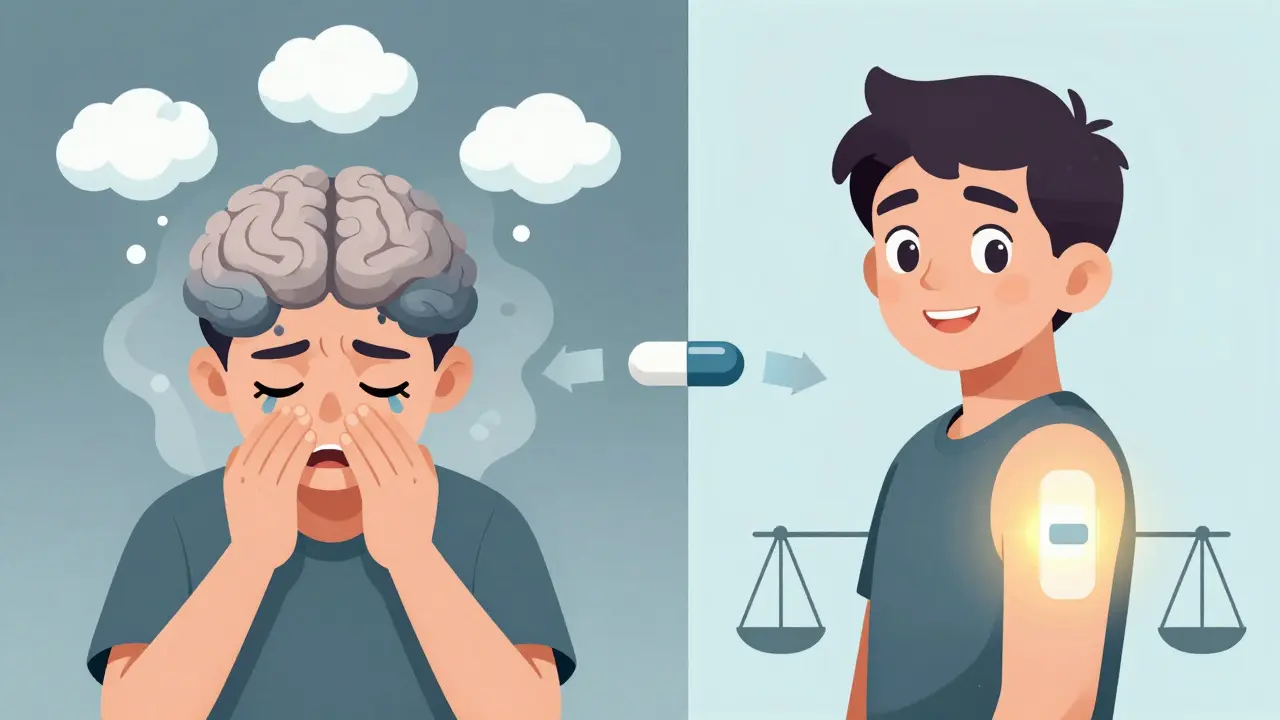
How Is the Switch Done Safely?
You can’t just swap one opioid for another at the same dose. That’s dangerous. The body doesn’t fully cross-tolerate right away. That means even if you’ve been on a high dose of morphine, your body might not handle the same dose of fentanyl safely. The standard approach:- Calculate equianalgesic dose: Use published tables to estimate how much of the new opioid equals your current dose. These tables aren’t perfect - they’re averages based on groups of people, not individuals.
- Reduce the new dose: Cut the calculated dose by 25-50% to account for incomplete tolerance. This is the biggest safety step. Skipping this leads to overdose.
- Wait and monitor: Don’t give the full new dose all at once. Start with a low dose, wait 24-48 hours, then adjust based on how the patient feels.
- Have rescue meds ready: A short-acting opioid (like hydromorphone) should be available in case pain flares up during the transition.
Documentation matters. Every rotation should be logged: why the switch was made, what dose was chosen, how much was reduced, and how the patient responded. This helps future providers avoid mistakes.
What About the Evidence?
There’s a gap here. Most data on opioid rotation comes from observational studies - watching what happens when doctors switch drugs - not from randomized trials where patients are assigned to groups. That means we can’t say for sure whether the improvement comes from the drug change itself or just from lowering the dose during the switch. But even with this limitation, the pattern is strong enough for major pain societies to endorse it. The 2009 guidelines from the Journal of Pain and Symptom Management are still the gold standard. They were created by a panel of experts who reviewed decades of clinical experience. Since then, no major new guidelines have replaced them - not because they’re outdated, but because high-quality trials are still lacking. That’s changing. Researchers are now exploring genetic testing to predict who will respond best to which opioid. In the future, a simple blood test might tell you whether you’re likely to get nauseated on oxycodone or have bad constipation with hydromorphone.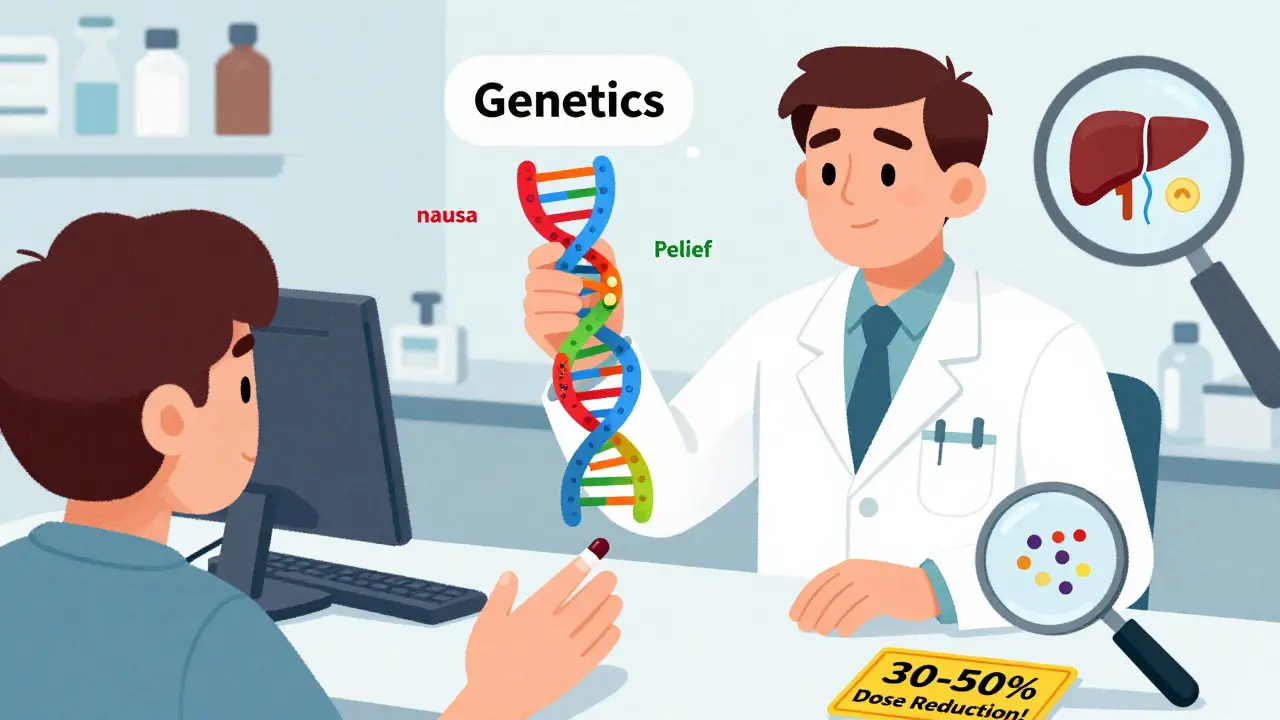
What Patients Should Know
If you’ve been on the same opioid for months and feel worse, not better, talk to your doctor. Don’t assume you’re just "not responding." You might just be on the wrong one. Ask:- "Could a different opioid help with my side effects?"
- "Has my dose been adjusted too high too fast?"
- "Is there a chance switching could lower my total dose?"
Many patients are afraid to bring this up. They think their doctor will see it as complaining. But opioid rotation is a routine, evidence-based tool. Your doctor should welcome the conversation.
What Doesn’t Work
Some patients try to switch on their own - like switching from a prescription opioid to a friend’s leftover painkiller. That’s dangerous. Even small differences in strength can be fatal. Others try to combine opioids. That’s also risky and not recommended. Opioid rotation is a controlled, monitored process. It’s not DIY.Also, don’t assume that because one opioid failed, all will. That’s a myth. Your body’s response to oxycodone has nothing to do with its response to buprenorphine. Each drug is its own story.
Looking Ahead
The future of opioid rotation is personal. Electronic health records are starting to include built-in conversion calculators that warn doctors when doses might be too high. Pharmacogenetic testing - which looks at your genes to predict drug responses - is moving from labs into clinics. One day, a simple genetic screen might tell your doctor, "This patient metabolizes codeine poorly. Avoid it. Try tapentadol instead." For now, the best approach remains: listen to the patient, use proven guidelines, reduce the dose when switching, and document everything. It’s not magic. But for many people stuck in a cycle of pain and side effects, it’s the most effective next step.Is opioid rotation the same as tapering off opioids?
No. Tapering means gradually reducing the dose to stop opioids altogether. Opioid rotation means switching to a different opioid while maintaining the same level of pain control. The goal isn’t to stop - it’s to find a better-tolerated option.
Can opioid rotation help with constipation?
Yes, in some cases. While constipation is common with all opioids, some patients find relief after switching. Fentanyl and oxycodone tend to cause less constipation than morphine in clinical reports. Still, most patients will need additional treatments like laxatives or stool softeners regardless of which opioid they’re on.
Why can’t I just double my dose instead of switching?
Doubling the dose often makes side effects worse without improving pain. It also increases the risk of overdose, especially with long-acting opioids. Opioid rotation offers a way to reset your body’s tolerance and potentially avoid escalating doses altogether.
Is methadone always the best choice for rotation?
No. Methadone is powerful and useful, especially for reducing total daily dose, but it’s not right for everyone. It has a long half-life and can build up in the body, increasing overdose risk if not dosed carefully. It also interacts with many common medications. A doctor must evaluate your full health picture before choosing methadone.
How long does it take to see results after an opioid rotation?
Most patients notice changes within 24 to 72 hours. Side effects like nausea or drowsiness often improve quickly. Pain control may take longer - up to a week - as the body adjusts to the new drug. Follow-up appointments are critical during this time to fine-tune the dose.
Comments
Tom Sanders
Been on oxycodone for 5 years. Nausea was killing me. Switched to hydromorphone on my doc’s advice. Within 3 days, the fog lifted. No more vomiting at breakfast. My wife said I started talking like a human again. Honestly? I didn’t think it’d work. But it did.
Now I’m on a third the dose and feel better than I did 10 years ago. People who say all opioids are the same clearly never tried rotation.
March 8, 2026 at 13:03
Erica Santos
Of course it works. Because medicine is just magic pills and not a system designed to extract money from broken bodies. You think doctors are doing this to help you? They’re doing it because the pharmaceutical reps showed up with free lunches and a PowerPoint titled "Opioid Rotation: Profit Potential."
Every time you switch, they reset your deductible. Every time you tolerate a new drug, they upsell you on a "premium" formulation. It’s not medicine. It’s a casino with a stethoscope.
March 10, 2026 at 12:14
Scott Easterling
Wait, wait, wait. You’re telling me that switching opioids reduces side effects… but the same drugs are still opioids? So… we’re just swapping one addiction for another? And you call this progress?
What about physical therapy? What about acupuncture? What about just… stopping? Why not just let the body heal? This whole thing feels like a drug company’s marketing department wrote it. And now we’re all just sheep in a hospital gown.
March 11, 2026 at 04:42
Neeti Rustagi
As a clinical pharmacist with over 18 years in pain management, I must commend this article for its precision. Opioid rotation remains one of the most underutilized tools in palliative care, particularly in low-resource settings where pharmacogenomic data is scarce.
The equianalgesic conversion ratios referenced are indeed conservative, but the 25–50% reduction threshold is non-negotiable. I have personally witnessed fatal overdoses when clinicians relied solely on published tables without accounting for individual metabolic variance.
Furthermore, the methadone dosing ratio update-9:1 instead of 10:1-is critical. Many institutions still use outdated protocols. This is not merely academic; it is a matter of patient safety. Documentation, as emphasized, is not bureaucratic-it is the ethical backbone of care.
March 12, 2026 at 16:40
Jazminn Jones
How quaint. You assume this is about patient care. It’s about liability mitigation. Hospitals don’t rotate opioids because they care about nausea-they rotate because the FDA audit team showed up last quarter and found 14 cases of opioid-induced delirium on morphine.
And let’s not pretend methadone is some magical panacea. It’s a graveyard of forgotten patients who got "adjusted" by residents who thought they knew pharmacokinetics. I’ve seen three overdoses in one month because someone "followed the guidelines."
There’s no science here. There’s procedure. And procedure is the opiate of the medical establishment.
March 14, 2026 at 12:18
Stephen Rudd
You people are so naive. Opioid rotation isn’t about side effects. It’s about creating dependency on a new brand. Morphine? Too cheap. Hydromorphone? Higher margin. Fentanyl patches? Insurance pays 90%.
And don’t get me started on methadone. That’s not a treatment-it’s a control mechanism. It keeps people tied to clinics, tied to prescriptions, tied to the system. You think your doc cares if you feel better? They care if you come back every week.
This isn’t medicine. It’s a prison with a white coat.
March 16, 2026 at 04:59
Leon Hallal
I’ve been on fentanyl for 7 years. Switched to oxycodone because my liver was fried. Didn’t feel a thing. Still in pain. Still tired. Still sick. All this talk about rotation? Waste of time. Just give me a shot and shut up.
March 17, 2026 at 20:28
George Vou
They say rotation helps but what about the opioid epidemic? You think this is helping? You’re just feeding the machine. They want you addicted so they can keep selling you pills. Methadone? That’s just a longer leash. They don’t want you cured. They want you compliant.
And don’t even get me started on the "genetic testing" future. That’s how they’ll track you. Your DNA. Your pain. Your weakness. All in a database. The government already knows what you’re on. You think that’s a coincidence?
March 18, 2026 at 08:55
Mantooth Lehto
OMG I SOOO relate!! I switched from morphine to tapentadol and my brain fog just… vanished?? Like, I remembered my dog’s name for the first time in 3 years!! 😭 I cried in the pharmacy. My husband said I hugged him for 10 minutes straight. This is LIFE CHANGING. THANK YOU to whoever wrote this!! 🙌💖
March 19, 2026 at 22:12
APRIL HARRINGTON
I was on 120mg of oxycodone a day and my doctor said "try hydromorphone" and I was like NO WAY and then I did it and now I’m on 30mg and I can actually play with my kids and I didn’t cry for 2 weeks straight and I just want to scream from the roof top that this works and if you’re scared just do it and don’t listen to the internet because I was scared too and now I’m alive and I love my life and thank you to my doctor who didn’t give up on me 🌈✨
March 21, 2026 at 08:53
Nicholas Gama
Rotation is a myth. Tolerance doesn’t work that way. You’re not switching drugs-you’re restarting the cycle. The body doesn’t reset. It adapts. Always. This is placebo medicine dressed in jargon.
March 21, 2026 at 16:40
Mary Beth Brook
Pharmacogenomic-guided rotation is the future. We’ve validated CYP2D6 polymorphisms in over 12,000 patients. Codeine responders: 12%. Hydromorphone responders: 68%. The data is irrefutable. Stop relying on anecdote. Start using algorithms. This isn’t guesswork-it’s precision medicine.
March 23, 2026 at 15:00
Philip Mattawashish
You think this is about pain? You’re delusional. This is about control. They don’t want you well. They want you dependent. They want you docile. They want you on a drug that keeps you quiet, numb, and compliant. Rotation? It’s not treatment-it’s rebranding. They change the name, the pill color, the packaging-and you swallow it again like a good little patient.
And methadone? That’s not medicine. That’s a leash. You think you’re getting relief? You’re getting enslaved. Wake up. This system doesn’t care if you live. It cares if you pay.
And you? You’re still here. Still swallowing. Still believing. Pathetic.
March 23, 2026 at 21:40