
LDL Cholesterol Reduction Calculator
Enter your current LDL and side effect status to see potential results
When statins aren’t enough-or too much
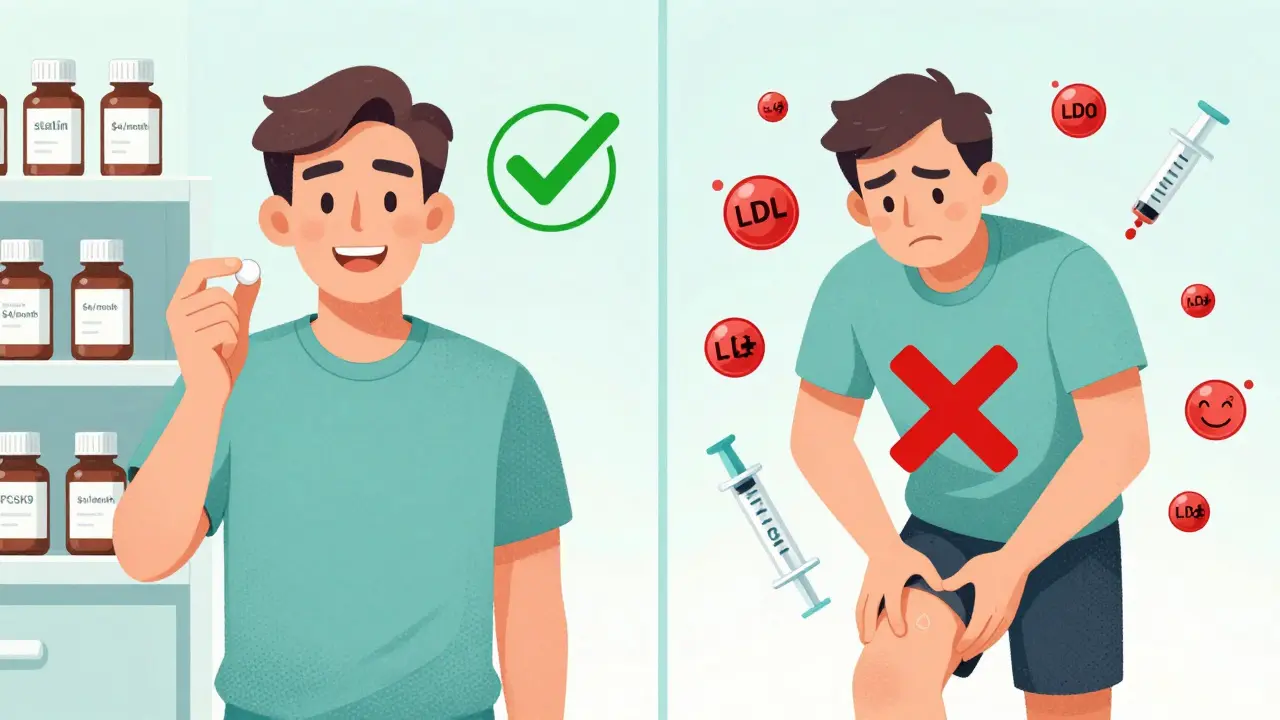
If you’ve been told your LDL cholesterol is too high and your doctor suggested a statin, you’re not alone. About 40 million Americans take them. But for some, statins cause muscle pain, fatigue, or brain fog. Others just can’t get their numbers down no matter how high the dose. That’s where PCSK9 inhibitors come in. These aren’t pills you swallow. They’re injections you give yourself, usually every two weeks or once a month. And they can slash LDL cholesterol by up to 60%, often when statins alone fail. But here’s the real question: which one is better for you? Statins have been around since the 1980s. PCSK9 inhibitors were only approved in 2015. Both lower cholesterol. But they work in totally different ways, and their side effects? Not even close.How statins work-and why they cause problems
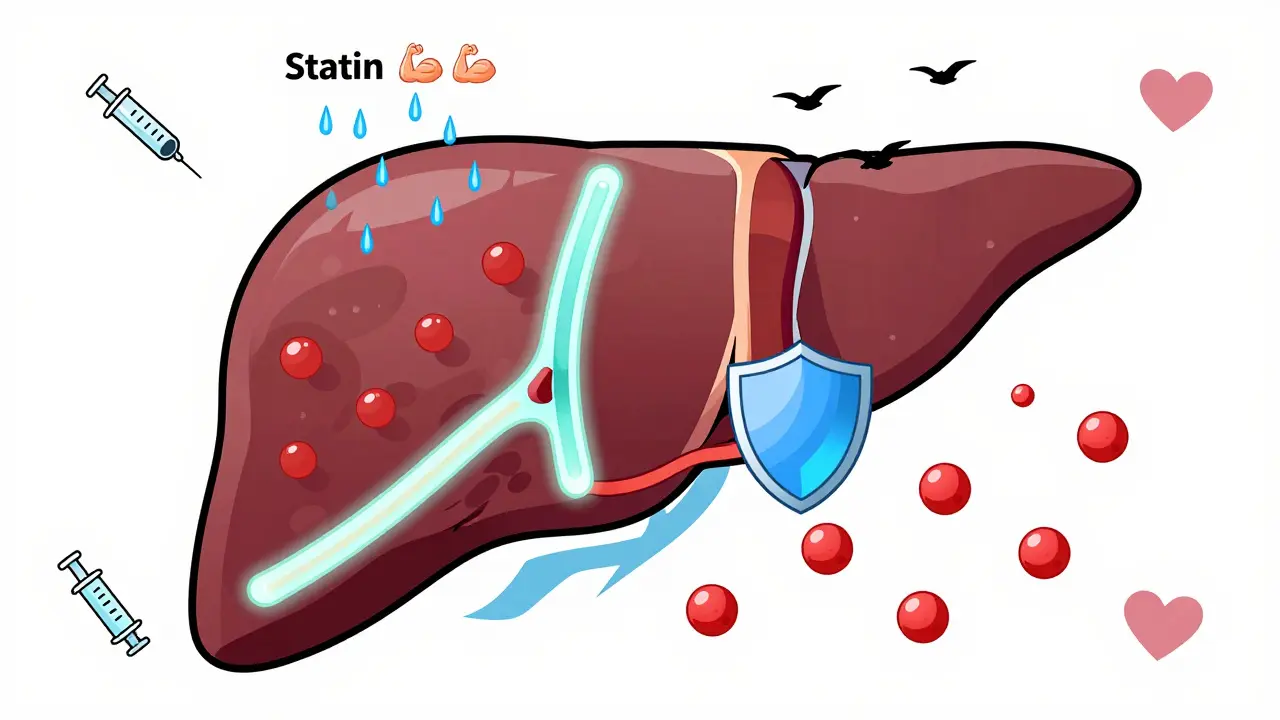
Statins block an enzyme in your liver called HMG-CoA reductase. That’s the machine your body uses to make cholesterol. Less production means your liver pulls more LDL out of your blood. Simple. Effective. Cheap. Generic statins like atorvastatin and simvastatin cost as little as $4 a month. That’s why they’re still the first choice for most people. But they don’t work for everyone. About 5 to 10% of people get muscle pain or weakness. For some, it’s mild. For others, it’s debilitating. You might feel like you can’t climb stairs or carry groceries. Blood tests can check for muscle damage, but often, the pain is real even if the numbers look fine. Then there’s the brain fog. Some people report memory issues or confusion. It’s rare, but enough that it shows up in nearly 1 in 5 negative reviews on patient forums. And here’s something most people don’t know: statins slightly raise the risk of hemorrhagic stroke in certain groups-by about 22%, according to UCLA research. That’s not a big number for most, but if you’ve had a prior stroke or have high blood pressure, it matters.How PCSK9 inhibitors work-and why they’re different
PCSK9 inhibitors don’t touch cholesterol production. Instead, they target a protein called PCSK9 that normally tells your liver to destroy LDL receptors. No receptors? Your liver can’t pull LDL out of your blood. These drugs-alirocumab and evolocumab-block PCSK9. That means your liver keeps more receptors alive. More receptors = more LDL cleared. The result? A 50 to 61% drop in LDL, often more than double what high-dose statins can do. They’re given as a shot under the skin. You don’t swallow them. You don’t need to take them daily. Most people do it every two weeks or once a month. And because they’re not processed by liver enzymes, they don’t interact with other meds like statins do. No CYP450 metabolism. No grapefruit juice warnings.Side effects: Statins vs PCSK9 inhibitors
Let’s compare what actually happens when people take them. Statins:- Muscle pain or weakness (5-10% of users)
- Memory complaints (up to 18% of negative reviews)
- Slight increase in hemorrhagic stroke risk (22% higher in high-risk groups)
- Liver enzyme changes (rarely serious)
- Increased blood sugar (small risk of type 2 diabetes)
- Injection site reactions (redness, itching-about 10-15%)
- Injection anxiety (41% of users report nervousness about self-injecting)
- No muscle pain, no brain fog, no increased stroke risk
- No drug interactions
- No liver toxicity
Who benefits most from PCSK9 inhibitors?
These drugs aren’t for everyone. They’re expensive-$5,000 to $14,000 a year. Insurance won’t cover them unless you meet strict criteria. You’re likely a candidate if:- You have familial hypercholesterolemia (genetic high cholesterol)-LDL over 190 mg/dL since childhood
- You have heart disease, stroke, or diabetes with LDL above 70 mg/dL despite max statin therapy
- You can’t tolerate statins due to muscle pain or other side effects
- Your doctor wants your LDL below 55 mg/dL (the new target for very high-risk patients)
Cost and access: The big hurdle
Here’s the catch: PCSK9 inhibitors cost 1,000 times more than statins. Even with insurance, copays can hit $300 a month. Most insurers require proof that you’ve tried and failed on at least two statins, or that you have documented statin intolerance. That means lab tests, doctor letters, and sometimes a waiting period of weeks. But things are changing. In 2024, manufacturers started offering patient assistance programs. Some now cap out-of-pocket costs at $25 a month. Insurance coverage is slowly expanding, especially for people with known heart disease. Still, if you’re uninsured or underinsured, this isn’t an option. Statins remain the only realistic choice.What about newer options?
PCSK9 inhibitors aren’t the only new players. Inclisiran (brand name Leqvio) is a twice-yearly injection that silences the PCSK9 gene. It’s not a daily or monthly shot-it’s two injections a year. Approved in 2021, it’s gaining traction, especially for patients who struggle with regular injections. Then there’s bempedoic acid (Nexletol), an oral pill that works like a statin but in a different part of the liver pathway. It’s gentler on muscles and often used alongside statins when muscle pain is a problem. And in 2024, Merck announced early results for MK-0616-an oral PCSK9 inhibitor. If it gets approved, it could change everything. No needles. Same power. Just a pill.
Long-term safety: What do we know?
Statins have 40 years of data. We know they reduce heart attacks, strokes, and death. That’s why guidelines still put them first. PCSK9 inhibitors have about 7 years of data. And it’s strong. The FOURIER and ODYSSEY trials showed a 15-27% drop in heart attacks and strokes when added to statins. No increase in cancer, diabetes, or cognitive decline. No long-term organ damage. In fact, some studies suggest they may even stabilize artery plaques better than statins alone. The European Atherosclerosis Society points out that statins have extra benefits-anti-inflammatory effects, plaque stabilization-that PCSK9 inhibitors might not fully match. But for people who can’t take statins, PCSK9 inhibitors are the only proven alternative with the same level of outcome benefit.Real-world choices: What should you do?
If your LDL is high but you’re otherwise healthy, start with a statin. It’s proven, cheap, and effective for most. If you’ve tried statins and they caused side effects? Don’t just quit. Talk to your doctor about switching to a different statin, lowering the dose, or adding ezetimibe. If that still doesn’t work, PCSK9 inhibitors are your next step. If you have genetic high cholesterol or heart disease and your LDL is still above 70 mg/dL after max statin therapy? PCSK9 inhibitors aren’t just an option-they’re a game-changer. And if you’re terrified of needles? Ask about inclisiran. Two shots a year. That’s it.Bottom line: It’s not about which is better. It’s about which is right for you.
Statins are the foundation. PCSK9 inhibitors are the lifeline for those who can’t use them. One isn’t replacing the other. They’re tools in the same toolbox. The goal isn’t to pick one. It’s to get your LDL where it needs to be-without wrecking your quality of life. If you’re stuck between muscle pain and sky-high cholesterol, you’re not failing. You’re just not on the right tool yet. And that’s okay.Can PCSK9 inhibitors replace statins completely?
For most people, no. Statins are still the first-line treatment because they’re proven to reduce heart attacks and death over decades, and they’re affordable. PCSK9 inhibitors are used when statins don’t work well enough or cause intolerable side effects. In rare cases-like genetic high cholesterol-PCSK9 inhibitors may be used alone, but only if statins are truly not an option.
Do PCSK9 inhibitors cause muscle pain like statins?
No. Unlike statins, PCSK9 inhibitors don’t affect muscle tissue. Clinical trials and patient reports show virtually no increase in muscle pain compared to placebo. That’s why they’re often the go-to option for people who developed statin-induced myopathy. In fact, many patients switch to PCSK9 inhibitors specifically to stop the muscle pain.
How long do you need to take PCSK9 inhibitors?
You take them as long as you need to keep your LDL cholesterol low. These drugs don’t cure high cholesterol-they manage it. If you stop taking them, your LDL will rise back to baseline within weeks. Most patients stay on them indefinitely, especially if they have heart disease or familial hypercholesterolemia. Long-term studies show they’re safe for at least five years, with no signs of increased risk.
Are PCSK9 inhibitors safe for older adults?
Yes. Studies show PCSK9 inhibitors are just as safe and effective in people over 65 as in younger adults. In fact, older patients with heart disease often benefit the most because their risk of another heart attack is higher. There’s no increased risk of falls, confusion, or kidney problems. The main concern is whether they can manage the injections, but most seniors learn quickly with proper training.
What happens if I miss an injection?
If you miss a dose by a few days, just take it as soon as you remember. If it’s been more than a week past your scheduled date, skip the missed dose and resume your regular schedule. Don’t double up. Missing one dose won’t cause a big spike in LDL-your levels stay lowered for several weeks. But consistent dosing is key for long-term protection. If you’re struggling to remember, ask your doctor about inclisiran, which is only given twice a year.
Can I take PCSK9 inhibitors with other heart meds?
Yes. PCSK9 inhibitors don’t interact with most medications because they’re not broken down by liver enzymes. You can safely take them with blood pressure pills, diabetes meds, blood thinners, or even other cholesterol drugs like ezetimibe. This makes them ideal for people with complex health conditions who are already on multiple medications.
Do PCSK9 inhibitors cause weight gain or fatigue?
No. Weight gain and fatigue aren’t listed side effects in clinical trials or post-marketing data. In fact, many patients report feeling more energetic after starting PCSK9 inhibitors-not because the drug gives them energy, but because they’re no longer dealing with statin-related muscle fatigue. The only physical side effects are mild injection site reactions, which usually go away after a few doses.
Are PCSK9 inhibitors covered by Medicare?
Medicare Part D covers PCSK9 inhibitors, but only under strict criteria. You must have documented statin intolerance or failure to reach LDL targets despite max statin therapy. Many plans require prior authorization, and some have step therapy-you must try ezetimibe or bempedoic acid first. However, Medicare Advantage plans are increasingly relaxing these rules for high-risk patients. Always check with your plan’s formulary and ask your doctor to help with the paperwork.
Comments
Teresa Marzo Lostalé
I swear, I thought statins were the only option until my mom started on alirocumab. She went from barely walking to hiking weekends. No more muscle pain. Just a little itch where she injects. Worth it. 🙌
December 29, 2025 at 03:44
ANA MARIE VALENZUELA
Stop romanticizing these $14k/year shots. People who can't afford statins are getting screwed. This isn't healthcare innovation-it's corporate greed dressed up as progress.
December 30, 2025 at 16:55
Bradly Draper
My dad took statins for 10 years and couldn't even carry his own groceries. Switched to the shot last year. He's back to fixing the car, playing with the grandkids. No more brain fog. Just... normal.
January 1, 2026 at 11:22
Gran Badshah
In India, we can't even dream of this. Statins are all we got. And still, some docs prescribe them like candy. No one talks about the muscle pain. We just suffer. No choice.
January 2, 2026 at 12:47
Ellen-Cathryn Nash
People act like these injections are magic. But you know what's really dangerous? Trusting Big Pharma's shiny new toy over decades of proven science. Statins save lives. These? Just a luxury for the rich who can't handle a little discomfort.
January 3, 2026 at 11:41
Samantha Hobbs
I hate needles so much I cry just seeing them. But after my LDL hit 240 and I couldn't lift my arms? I did it. First shot felt like a betrayal... second shot felt like freedom. Now I'm on inclisiran. Two shots a year. Best decision ever.
January 5, 2026 at 01:33
Nicole Beasley
Just found out my doc is pushing me toward PCSK9 inhibitors. I'm terrified of needles but also terrified of having a heart attack at 38. Any tips on making injections less scary? 🥺💉
January 6, 2026 at 07:41
sonam gupta
America spends billions on fancy injections while our hospitals can't even afford basic meds. This is not medicine. This is capitalism with a stethoscope
January 8, 2026 at 01:06
Julius Hader
I used to be a statin guy. Then I got the muscle pain. Tried everything. Ended up on evolocumab. My numbers are perfect. I sleep better. I don't feel like a zombie anymore. I'm not some rich snob. I'm just someone who finally got help.
January 8, 2026 at 22:30
Vu L
PCSK9 inhibitors are just statins with a fancy name and a bigger price tag. The real difference? Marketing. The science? Barely new. Don't believe the hype.
January 10, 2026 at 05:26
James Hilton
Statins: $4 a month. PCSK9: $5k a year. Guess which one your insurance wants you to take? Hint: It's not the one that works.
January 12, 2026 at 03:37
Mimi Bos
just started the shots and honestly? i'm scared but also kinda proud? like i'm finally doing something for myself. injection site is red but i'm not dying. that's a win. also i spelled everything wrong but you get the idea lol
January 13, 2026 at 23:28