
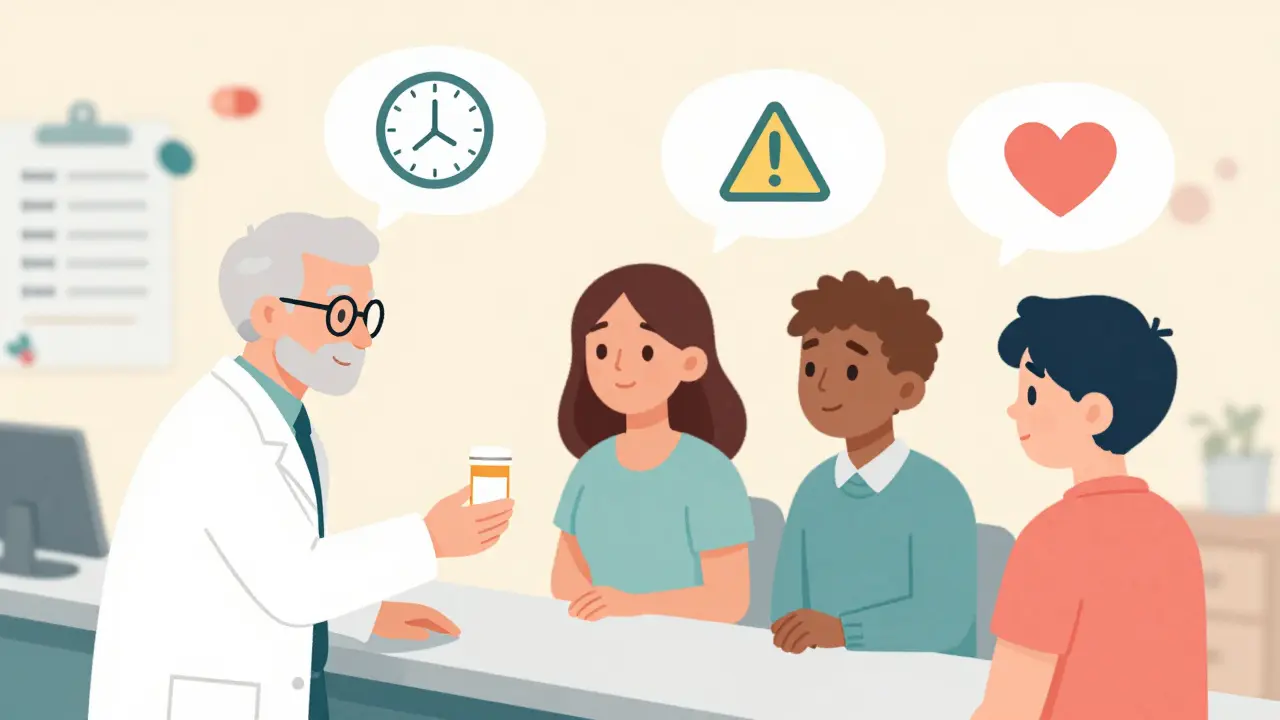
When a pharmacist hands you a new prescription, they’re not just giving you pills. They’re giving you instructions that could mean the difference between getting better and ending up back in the hospital. But how do they make sure every patient hears the same critical info - without spending 20 minutes at the counter? That’s where pharmacist counseling scripts come in.
Why Scripts Are Necessary, Not Just Convenient
In 1990, the U.S. government passed OBRA '90, a law that changed how pharmacies operate. It said: if you want to get paid by Medicaid for dispensing drugs, you must counsel patients. Not just offer it. Not just say, “Do you have any questions?” - actually talk to them. That single rule forced pharmacies to create systems. Scripts were the answer. These aren’t word-for-word monologues. They’re frameworks. Think of them like a checklist for conversation. They ensure the pharmacist covers the essentials: what the drug is for, how to take it, what side effects to watch for, and what to do if something goes wrong. Without these structures, busy pharmacists might forget key points - especially when juggling five patients at once. The Indian Health Service model, often used in training, boils it down to three core questions:- What do you already know about this medication?
- How should you take it?
- What problems should you watch out for?
What Goes Into a Good Script?
A solid counseling script isn’t just a list of facts. It’s built around what patients actually need to know to stay safe and take their meds correctly. According to ASHP guidelines, every script should include:- The name and purpose of the medication
- How to take it (dose, timing, with or without food)
- How long to take it
- What to do if a dose is missed
- Common and serious side effects
- Interactions with food, alcohol, or other drugs
- Storage instructions
- When to call the doctor
One Size Doesn’t Fit All
Here’s the catch: scripts fail when they’re read like robots. I’ve heard pharmacists recite a 10-point script in a monotone while the patient stares blankly. That doesn’t help. It frustrates people. And it defeats the whole purpose. The best scripts are flexible. They give structure, not scripts. Dr. Daniel Holdford, who studied this in 2006, put it perfectly: “Scripts help inexperienced students learn the basics. As they gain experience, they adapt them to their own style.” For example, a script for an elderly patient with high blood pressure might focus on avoiding dizziness when standing up. A script for a young parent getting antibiotics for their child needs to explain how to measure liquid doses accurately. A script for opioids must include naloxone education - where to get it, how to use it, and why it’s life-saving. That’s why one-size-fits-all corporate scripts often get pushback. A 2022 survey found 42% of pharmacists felt “script fatigue” - they were forced to use rigid templates that ignored patient literacy, language, or cultural context. The fix? Customize. Use the script as a base, then adjust.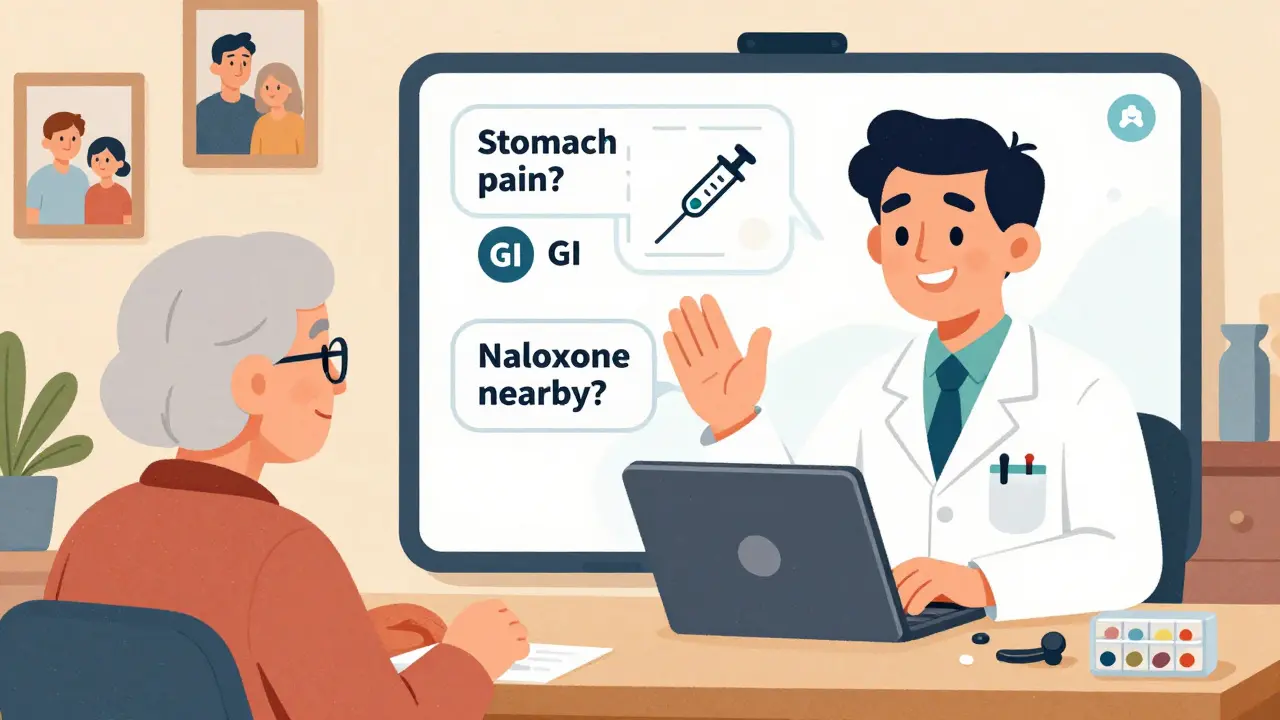
Special Cases Need Special Scripts
Some medications demand extra care. Opioids are a big one. Since 2023, RXCE training materials require pharmacists to cover four key points when dispensing them:- Proper storage (away from children, locked up)
- How to dispose of unused pills (take-back programs, not flushing)
- Signs of overdose (slow breathing, unresponsiveness)
- Where to get naloxone (free in many states)
How Do Pharmacists Learn to Use Them?
No one walks out of pharmacy school knowing how to counsel perfectly. It takes practice. At the University of North Carolina, new grads spend 8 to 12 weeks under supervision before they’re allowed to counsel independently. They start by reading scripts aloud. Then they practice with simulated patients. Then they do real ones - with feedback after each session. They learn to listen. To pause. To ask open-ended questions. To recognize when a patient is confused - even if they’re nodding along. Continuing education is required. The American Society of Consultant Pharmacists recommends 15 hours per year just on counseling skills. That’s because guidelines change. New drugs come out. Laws change. In 2024, Ireland’s Pharmaceutical Society updated its guidelines to focus on “concordance” - working with the patient, not just telling them what to do.Technology Is Changing the Game
Most chain pharmacies now use electronic systems that trigger counseling reminders when a prescription is filled. The software pops up a checklist: “Did you cover dosage? Side effects? Teach-back?” Walgreens and CVS have integrated these scripts into their EHRs. One internal audit showed a 35% drop in documentation time - because the system auto-filled what the pharmacist said. That means more time to talk, less time typing. And now, AI is stepping in. Pilot programs at CVS and Walgreens tested dynamic scripts that adjust based on patient answers. If a patient says, “I’m worried about stomach pain,” the system suggests adding info about GI side effects. If they say, “I take this with coffee,” it flags possible interactions. Early results show 23% better patient comprehension than with static scripts.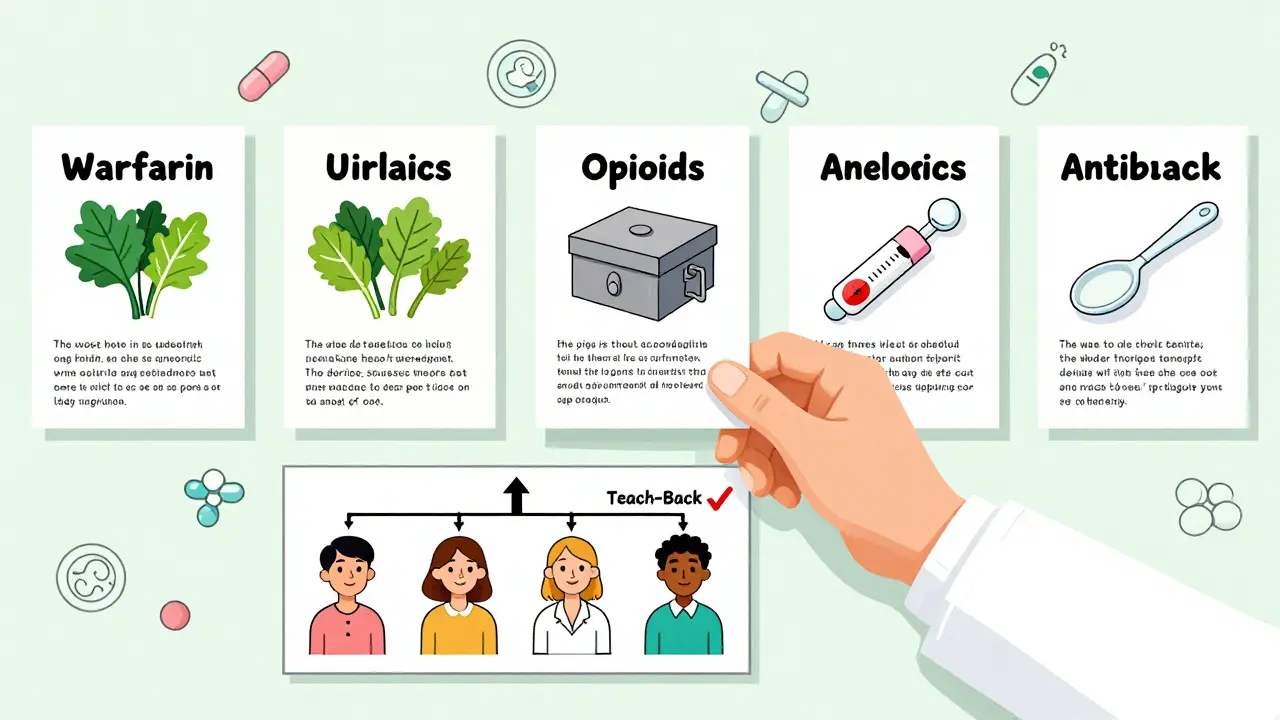
What’s Holding Pharmacists Back?
Time. Always time. The average counseling session in a community pharmacy is just 2.1 minutes, according to NACDS. That’s not enough to cover everything - unless you’ve got a solid script. Language barriers are another hurdle. One in five patients speaks a language other than English. Pharmacies that use pre-translated materials - in over 150 languages - see better outcomes. Telephonic interpreters help too, but they’re not always available during peak hours. Then there’s documentation. California requires detailed written notes on what was said. Most other states use checkboxes. That means pharmacists in California spend 22% more time on paperwork - and they’re the ones who actually get paid for it. Only 19 states reimburse pharmacists directly for counseling beyond the dispensing fee. That’s a big reason why some pharmacies cut corners. If no one’s paying for it, why spend the time?What’s Next?
The future of counseling is outcome-based. The Pharmacist Counseling Outcomes Registry, launched in 2024, is tracking whether patients actually take their meds after counseling. Early data shows a clear link: structured, personalized counseling leads to higher adherence. CMS is pushing for 2025 changes to Medicare Part D: all plans must now document that patients understood their counseling. That means teach-back isn’t optional anymore - it’s mandatory for 38 million seniors. More states are passing laws to expand pharmacist authority. In 2023 and 2024, 43 states introduced bills to let pharmacists adjust doses, switch medications, or even prescribe for minor conditions. All of it depends on solid counseling.Final Thought: It’s Not About the Script - It’s About the Connection
Scripts are tools. They’re not replacements for empathy. The best pharmacists don’t read them. They use them as anchors - then let the conversation flow. They notice when a patient hesitates. They ask, “What’s making you nervous about this pill?” Because at the end of the day, it’s not about checking boxes. It’s about making sure someone leaves the pharmacy feeling confident, not confused. That’s the real goal.Are pharmacist counseling scripts mandatory by law?
Yes, in many cases. The OBRA '90 law requires pharmacists to counsel Medicaid patients. Today, 32 states require pharmacists to offer counseling, and 18 require them to actually provide it. Medicare Part D plans will also require documented patient understanding starting in 2025. Failure to comply can mean lost reimbursement or regulatory penalties.
What are the three core questions in the Indian Health Service counseling script?
The three core questions are: (1) What do you already know about this medication? (2) How should you take it? (3) What problems should you watch out for? This simple framework helps pharmacists quickly assess patient knowledge and tailor their advice - and it’s widely used in training programs across the U.S.
Do pharmacists have to document counseling sessions?
Yes. Documentation is required by law in most states and by Medicare. Pharmacists must record whether counseling was offered, accepted, or refused, and note their assessment of the patient’s understanding. The “teach-back” method - asking the patient to repeat the instructions - is the gold standard for proving comprehension.
Why do some pharmacists dislike using scripts?
Some find rigid, corporate scripts feel robotic and impersonal. When pharmacists are forced to read them verbatim without adapting to the patient’s needs, it can reduce trust and engagement. Script fatigue is real - especially when templates don’t account for low literacy, language barriers, or complex conditions like diabetes or mental health.
How do scripts help with medication adherence?
Studies show patients who receive structured, personalized counseling are significantly more likely to take their meds as prescribed. One reason: they understand why the drug matters and what to expect. When patients know what side effects to watch for and what to do if they miss a dose, they’re less likely to stop taking the medication out of fear or confusion.
Can scripts be used over the phone or for family members?
Absolutely. ASHP guidelines from 1997 support counseling via phone, video, or with caregivers. This is especially important for elderly patients, those with mobility issues, or when the patient is unconscious or unable to speak. Pharmacists must still document who received the counseling and confirm understanding - even if it’s a family member.
Are there free resources for pharmacist counseling scripts?
Yes. The American Society of Health-System Pharmacists (ASHP) and the Centers for Medicare & Medicaid Services (CMS) offer free downloadable counseling guides. Many state pharmacy associations also provide templates. The Indian Health Service’s 3-question model is widely shared in academic circles and can be adapted without cost.
How do I know if a counseling script is effective?
Measure outcomes. The best scripts lead to higher adherence, fewer emergency visits, and better lab results (like lower blood pressure or HbA1c). Pharmacies using the Pharmacist Counseling Outcomes Registry track these metrics. If patients are still missing doses or calling with questions weeks later, the script needs tweaking - not just more repetition.
Pharmacist counseling isn’t a box to check. It’s a moment of care - and scripts are the best tool we have to make sure that moment counts.
Comments
Bret Freeman
Pharmacists have become glorified drug vending machines with a clipboard. OBRA '90 didn't improve patient care-it just turned a human interaction into a compliance checkbox. I've seen pharmacists read scripts like they're reciting a grocery list while the patient stares at the ceiling. This isn't care. It's corporate theater.
And don't get me started on 'teach-back.' You think asking someone to repeat 'take one pill twice daily' proves they understand? Half the people don't even know what 'daily' means. We're not fixing the system-we're just documenting its failure better.
Meanwhile, the real problem? No one's paying pharmacists to actually listen. They're paid to dispense. Not to care. Not to connect. Just to check boxes and move to the next person.
And now AI is stepping in to 'personalize' scripts? That's like giving a robot a stethoscope and calling it a doctor. The humanity is already gone. We're just automating the emptiness.
December 23, 2025 at 18:27
Rachel Cericola
Let’s be real: scripts aren’t the problem-the lack of training, time, and support is. I’ve trained over 200 new pharmacists, and I can tell you this: the ones who thrive aren’t the ones who memorize scripts. They’re the ones who learn to listen first, then use the script as a safety net, not a script.
The Indian Health Service model works because it’s not a monologue-it’s a conversation starter. 'What do you already know?' That question alone flips the dynamic from authority to ally. Patients open up when they’re not being lectured.
And yes, corporate templates are terrible. I’ve seen scripts written by marketing teams that mention 'adherence' three times and never say 'your life might depend on this.' That’s not counseling. That’s a PowerPoint slide.
But here’s the good news: when you give pharmacists the time, the tools, and the trust to adapt, magic happens. I had a pharmacist recently use a script to talk to a non-English-speaking grandmother about her blood pressure med. She paused, switched to Spanish, asked what her grandson told her, then adjusted the whole approach. That’s not automation. That’s care.
Documentation isn’t busywork-it’s accountability. If you can prove a patient understood, you can prevent an ER visit. That’s worth the extra two minutes.
And yes, AI can help. Not replace. Help. If it flags that a patient mentioned 'stomach pain' and the script didn’t cover GI side effects? That’s a win. Not a threat.
We’re not losing the human element-we’re giving it better structure. And structure doesn’t kill empathy. It protects it.
December 25, 2025 at 09:09
Gray Dedoiko
My grandma’s pharmacist used to sit down with her for 10 minutes every time she picked up her meds. Didn’t use a script. Just asked how she was doing, what she was eating, if the pills were making her dizzy. She lived to 94. I think that mattered.
Scripts aren’t bad. It’s when they replace the person behind them that things go wrong.
Also, naloxone education? That’s not just a script point. That’s a life saved. I’ve seen it.
December 26, 2025 at 03:16
Aurora Daisy
Oh, wonderful. Now Americans are outsourcing their healthcare to robots and spreadsheets while pretending it’s 'patient-centered.' In the UK, we don’t need scripts-we have pharmacists who actually know their patients by name. We don’t need AI to tell them what to say. We need to stop treating healthcare like a call center.
OBRA '90? More like OBRA '90: American Healthcare, But With More Paperwork.
And don’t get me started on 'teach-back.' You ask a 70-year-old with dementia to repeat a medical instruction? Brilliant. Just brilliant. We’re not improving care-we’re just making it more bureaucratic.
At least in Britain, we still have human beings behind the counter. Not checklists.
December 27, 2025 at 01:27
Paula Villete
Okay, so let me get this straight: we’re automating empathy because we don’t have time to be human? And we’re calling that progress?
Script fatigue? Yeah, that’s what happens when you treat people like data points. You can’t 'personalize' a human moment with a dropdown menu. You can’t 'adapt' a conversation with an algorithm that says 'if patient says coffee, flag interaction.'
Meanwhile, the real issue? No one’s asking: why are patients so confused in the first place? Why do we hand out 12 pills with 7 different instructions and expect them to remember? Why not simplify the system instead of scripting the symptom?
Also, 'teach-back'? Cute. But if your patient can’t read, or speaks three words of English, or is terrified of hospitals, repeating 'take one pill daily' won’t help. You need to see them. Not scan them.
And AI? Please. The only thing it’s optimizing is liability coverage. Not compassion.
Scripts aren’t the enemy. The system that forces them into being the only tool is.
December 28, 2025 at 21:54
Georgia Brach
Let’s examine the data objectively. The 2022 study claiming a reduction in counseling time from 4 to 3 minutes lacks a control group for clinical outcomes. Did adherence improve? Did hospitalization rates drop? Or did they just reduce conversation length and call it efficiency?
The ASHP guidelines are not law-they’re recommendations. And yet, you treat them as gospel. Meanwhile, 18 states mandate counseling, but only 3 require documentation of patient comprehension. The rest? Checkbox compliance.
AI-driven dynamic scripts? The pilot programs had n=47 patients. That’s not statistically significant. And where’s the peer-reviewed data? You cite CVS internal audits like they’re peer-reviewed journals.
Also, 'script fatigue' is not a clinical term. It’s a buzzword invented by pharmacists who don’t want to do their job. If you can’t follow a template, you shouldn’t be dispensing controlled substances.
And the 'three questions'? That’s not a framework. That’s a lazy heuristic. What about polypharmacy? What about mental health interactions? What about patients who are non-verbal? You can’t reduce complex pharmacology to a three-point checklist and call it evidence-based practice.
This post reads like a pharmaceutical industry marketing brochure. The real problem isn’t the script-it’s the lack of clinical rigor behind every assumption made here.
December 30, 2025 at 17:33
Katie Taylor
Y’all are overcomplicating this. It’s simple: if you give someone clear, calm, human instructions, they’ll take their meds. No AI needed. No corporate script needed. Just a pharmacist who cares enough to slow down.
I’ve watched my mom take 7 pills a day. She didn’t need a checklist. She needed someone to look her in the eye and say, 'This one’s for your heart. If you feel weak, call us.' That’s it.
Stop trying to automate kindness. Just be kind.
And if you’re too busy to do that? Maybe you’re in the wrong job.
December 31, 2025 at 07:28
Payson Mattes
Wait-so you’re telling me the government passed a law in 1990 to force pharmacists to talk to patients… and now they’re using AI to do it? That’s not a system. That’s a trap.
Did you know that the same companies pushing these scripts also own the pharmacies? And the EHRs? And the AI? And the data? You think this is about patient care? Nah.
This is about tracking every word you say so they can sell your health data to insurers later. 'Patient hesitated when asked about side effects' = high-risk profile = higher premiums.
And 'teach-back'? That’s not for patient understanding-it’s for legal protection. If you say 'I understood' and then you die? They’ve got your voice recording saying you agreed.
They’re not teaching you to take your meds. They’re training you to sign away your rights.
And don’t even get me started on naloxone. You think they’re giving it out for free because they care? No. They’re covering their asses so you don’t OD on their opioids.
This isn’t healthcare. It’s surveillance with a stethoscope.
January 1, 2026 at 10:44
Isaac Bonillo Alcaina
Let’s cut through the fluff. You’re romanticizing a broken system. Scripts exist because pharmacists are underpaid, overworked, and undertrained. The fact that you call them 'tools for empathy' is laughable. They’re tools for liability mitigation.
The Indian Health Service model? That’s a Band-Aid on a hemorrhage. It works in a clinic with 10 patients a day. It collapses in a Walmart pharmacy with 200.
And 'teach-back'? Most patients say 'yes' because they’re too embarrassed to admit they didn’t understand. You think they’re going to tell the pharmacist they’re confused? Not when they’re standing in line behind three people and the cashier is yelling at them to hurry up.
The real solution? Pay pharmacists a living wage. Reduce their patient load. Give them time. Not scripts. Not AI. Time.
Until then, you’re just decorating a sinking ship with checklists and calling it innovation.
January 2, 2026 at 16:59