

When the days get shorter and the sun barely rises before you’re already heading to work, it’s not just the weather that feels heavy-it’s your mood. If you’ve ever felt exhausted, sluggish, or deeply down during the winter months-with no clear reason-you’re not alone. This isn’t just a case of the blahs. It’s seasonal affective disorder, or SAD, a real and recognized form of depression tied to the seasons. For many, the drop in daylight isn’t just inconvenient; it triggers a biological shift that messes with sleep, energy, and mood. The good news? There’s a simple, science-backed tool that’s helped millions get through winter without medication: light therapy.
What Exactly Is Seasonal Affective Disorder?
Seasonal affective disorder isn’t just feeling a little sad when it’s cold outside. It’s a clinical subtype of major depression that follows a seasonal pattern, usually starting in late fall and lifting in spring. Symptoms include oversleeping, intense cravings for carbs, weight gain, low energy, trouble concentrating, and pulling away from friends and family. People with SAD often describe it as feeling like they’re moving through thick syrup all day. According to the American Psychiatric Association, about 5% of U.S. adults experience full-blown SAD. That number jumps in places farther from the equator-like Alaska, where nearly 1 in 20 people report symptoms. Even in places like Sydney, where winters are mild, around 1-2% of people still struggle with noticeable SAD symptoms. Women between 25 and 45 are most affected, making up nearly 70% of cases. What’s happening in your body? Less sunlight means your brain produces less serotonin, the chemical linked to mood. At the same time, your body makes too much melatonin-the hormone that makes you sleepy-because darkness triggers its release. Your internal clock, or circadian rhythm, gets out of sync. That’s why you feel tired even after sleeping 10 hours, and why you crave sugar like your body’s trying to self-medicate.How Light Therapy Works (And Why It’s Not Just a Bright Lamp)
Light therapy isn’t about sitting under a desk lamp or opening the curtains. It’s about using a specially designed device that mimics natural sunlight in a controlled, safe way. These devices, called light boxes, deliver 10,000 lux of full-spectrum white light-about 20 times brighter than a typical indoor light. That’s the gold standard backed by decades of research. The first major study proving this worked came out in 1984 from the National Institute of Mental Health. Since then, over 100 clinical trials have confirmed it. A 2024 meta-analysis of 850 patients showed that 50-60% of people with SAD saw significant improvement within just one to two weeks of daily light therapy. That’s faster than most antidepressants, which can take four to six weeks to kick in. The mechanism? Light enters your eyes (without staring directly at the box) and signals your brain to reduce melatonin and boost serotonin. It also helps reset your internal clock. Morning exposure is key-using the light box within an hour of waking gives the best results. Studies show morning users have a 68% remission rate, while evening users only hit 47%.How to Use Light Therapy Correctly
It sounds simple, but most people do it wrong. Here’s what actually works:- Use a device that emits 10,000 lux of light (check the label-many cheaper ones don’t reach this)
- Use it for 30 minutes every morning, within an hour of waking
- Place the box 16 to 24 inches from your face, slightly to the side (not directly in front)
- Keep your eyes open but don’t stare at the light-read, drink coffee, or scroll on your phone while it’s on
- Never use it after 3 p.m.-it can mess up your sleep
- Make sure the device filters out UV light (to protect your eyes)
What the Research Says About Effectiveness
A 2006 study comparing light therapy to the antidepressant fluoxetine (Prozac) found that light therapy worked faster. By week two, people using light therapy felt significantly better than those on the pill. By week eight, both groups felt similar-but the light group got there quicker and with fewer side effects. Another study tracked 64 people with SAD. Half used a 10,000 lux light box. The other half used a dim placebo light. After four weeks, 61% of the real light group went into remission-meaning their depression symptoms dropped below clinical thresholds. Only 32% of the placebo group did. Even outside of SAD, light therapy is showing promise. A 2024 JAMA Psychiatry study found it helped 41% of people with non-seasonal depression achieve remission, compared to just 23% in the control group. It’s also being used successfully in pregnant women with depression, where medication use is risky.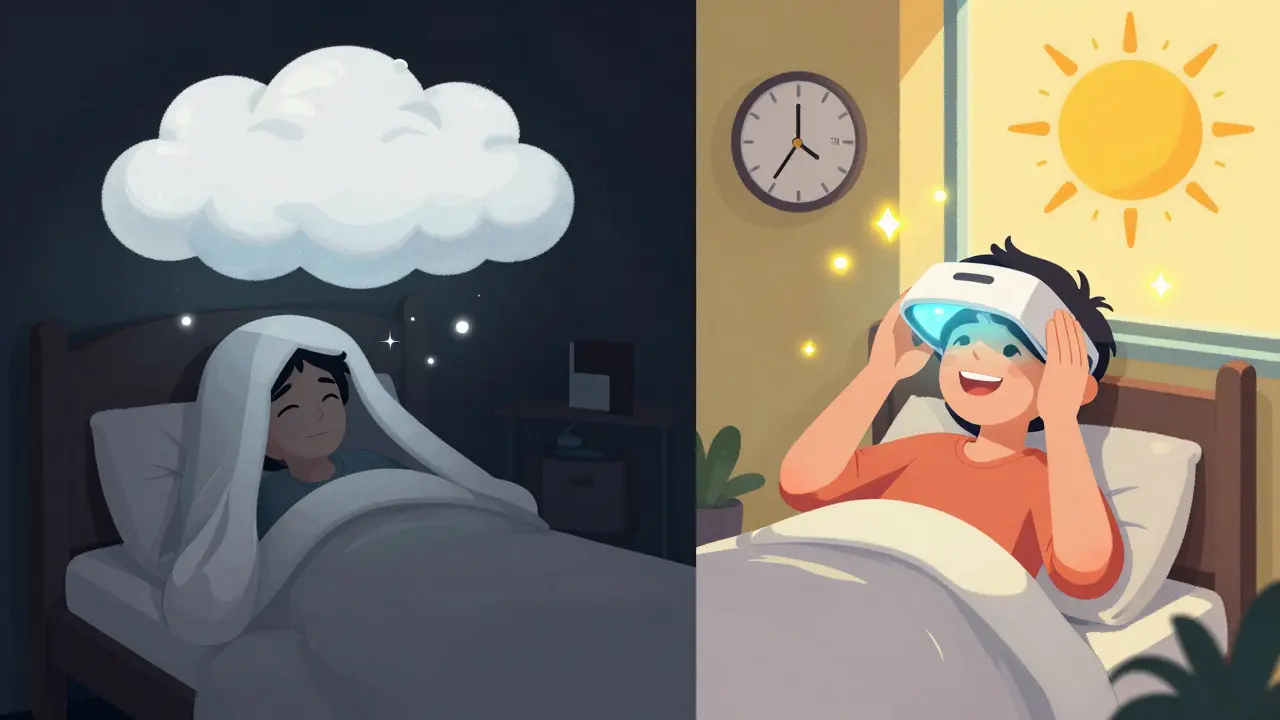
Light Therapy vs. Other Treatments
You might be wondering: should I try light therapy, meds, or both?- Light therapy: Fast-acting, no systemic side effects, safe for pregnancy, doesn’t interfere with other meds. Requires daily discipline.
- Antidepressants: Effective, but take weeks to work. Can cause weight gain, sexual side effects, or nausea. Not ideal during pregnancy.
- Cognitive behavioral therapy (CBT): Helps change negative thought patterns tied to winter. Effective long-term, but takes time and access to a therapist.
- Vitamin D: Popular, but studies show it doesn’t fix SAD on its own. Might help as a supplement, not a replacement.
What to Look for in a Light Box
Not all light boxes are created equal. A 2024 Consumer Reports test found that 37% of cheaper, non-certified models didn’t deliver the advertised light intensity. That means you’re wasting your time and money. Look for these features:- 10,000 lux output at 12-16 inches
- UV-free (less than 100 lux UV radiation)
- Full-spectrum white light (not blue-only, unless prescribed)
- Large surface area (at least 12 x 15 inches)
- CET (Center for Environmental Therapeutics) certification-this is the gold standard
Who Should Avoid Light Therapy?
Light therapy is safe for most people. But it’s not for everyone.- If you have bipolar disorder, light therapy can trigger mania in 5-10% of cases. Always talk to your doctor first.
- If you have eye conditions like glaucoma, macular degeneration, or diabetic retinopathy, you should get clearance from an ophthalmologist.
- If you’re taking photosensitizing medications (like certain antibiotics, antipsychotics, or St. John’s Wort), light therapy could increase your risk of eye damage.
Real People, Real Results
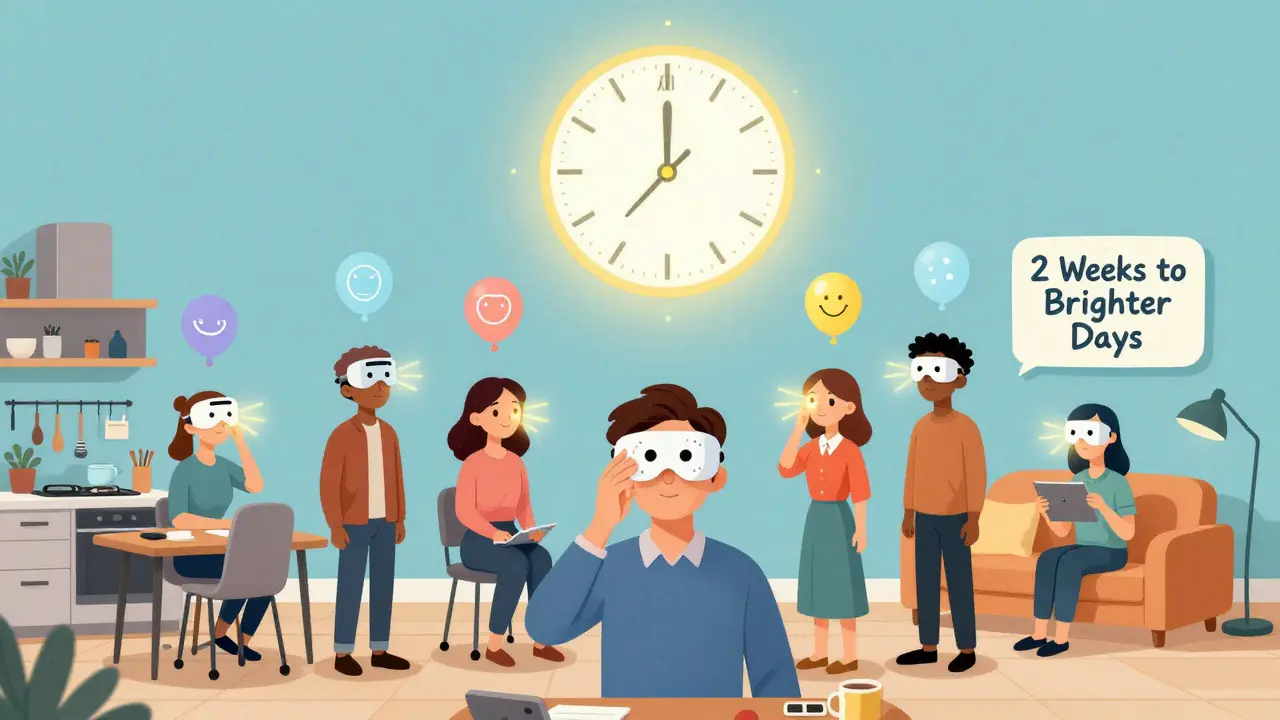
On Reddit’s r/SAD community, users share daily updates. One person wrote: “After five days of using my light box every morning, I actually woke up excited for the day. No more dragging myself out of bed like I’m in a fog.” Another said: “I tried three different boxes. None worked. Just gave me headaches.” That’s the reality. About 40-60% of people respond well. The rest don’t. But even among non-responders, many report better sleep or less brain fog-even if their depression didn’t fully lift. A 2023 NAMI survey found that 61% of people who tried light therapy kept using it long-term. The main reason? “It just works.” The main reason people quit? “Too hard to stick with every morning.”What If Light Therapy Doesn’t Work for You?
If you’ve given it a solid two weeks-daily, at the right time, with a quality device-and you’re not seeing any change, it’s time to adjust your plan.- Try combining light therapy with daily walks outside, even on cloudy days. Natural light, even at 1,000-2,000 lux, helps.
- Use a dawn simulator-a device that gradually brightens your room 30 minutes before you wake. It’s gentler and helps with waking up.
- Pair it with CBT. A therapist can help you tackle the negative thoughts that come with winter.
- If symptoms are severe, talk to your doctor about medication. Light therapy can still be part of your plan.
The Future of Light Therapy
The market for light therapy devices is growing fast-projected to hit $1.1 billion by 2028. New tech is emerging: wearable light visors that let you move around while getting treatment, and smart devices that sync with your phone to adjust intensity based on your sleep patterns. In 2024, the FDA cleared the first prescription-only light therapy device for treatment-resistant depression. That’s a big deal-it means doctors are starting to see it as a legitimate medical tool, not just a wellness gadget. Soon, AI may personalize your light schedule. Stanford researchers are testing algorithms that adjust your light exposure based on your body’s natural rhythms, measured by wearable sensors. This could make light therapy even more effective.Final Thoughts: It’s Not Magic, But It’s Powerful
Seasonal affective disorder is real. Winter depression isn’t weakness. And light therapy isn’t a placebo-it’s a clinically proven tool that works for millions. It doesn’t require a prescription. It doesn’t cost a fortune. And if you use it right, it can turn a dark, heavy winter into something manageable. You don’t need to wait until next year. Start now. Get a certified light box. Use it every morning for 30 minutes. Give it two weeks. And if it helps-even a little-you’ve already done more than most people do to take back their mood.Can light therapy help with depression that’s not seasonal?
Yes. A 2024 study in JAMA Psychiatry found that light therapy helped 41% of people with non-seasonal major depression achieve remission, compared to 23% in the control group. While it’s best known for winter depression, it’s increasingly used for other forms of depression, especially when people can’t tolerate medications or want a non-drug option.
Do I need a doctor’s prescription to buy a light box?
No. Light boxes are available over the counter. But if you have bipolar disorder, eye disease, or are taking medications that make you sensitive to light, you should talk to your doctor first. Some insurance plans cover light therapy with a doctor’s note, so it’s worth checking.
How long does it take to see results from light therapy?
Most people notice a difference within 3 to 7 days. Energy levels and mood often improve first. Full symptom relief usually takes 2 to 4 weeks of consistent daily use. If you don’t feel any change after two weeks, check your device’s intensity, timing, or usage habits-you may need to adjust.
Is blue light better than white light for SAD?
Some studies suggest blue light (around 460-480 nm) may be just as effective and require shorter exposure times. But the clinical standard remains full-spectrum white light at 10,000 lux. Most certified devices use white light because it’s proven safe and effective over decades of use. Blue-only devices are still being studied and aren’t yet recommended as a first choice.
Can I use a regular bright lamp or LED bulb instead of a light box?
No. Regular lamps, even bright ones, don’t deliver enough intensity. A typical indoor light is 300-500 lux. Even a bright desk lamp rarely hits 2,000 lux. Light therapy requires 10,000 lux at a specific distance to trigger the biological response. A regular bulb won’t cut it.
What if I miss a day of light therapy?
Missing one day won’t undo your progress, but consistency matters. Light therapy works by reinforcing your circadian rhythm daily. If you skip a day, try to get outside for 20-30 minutes in natural daylight. If you miss more than two days in a row, your symptoms might creep back. Treat it like brushing your teeth-daily, non-negotiable.
Are light therapy glasses or visors effective?
Yes. Wearable light therapy devices like Luminette 3 deliver the same 10,000 lux intensity and are FDA-cleared. They’re great for people who need to move around in the morning or have trouble sitting still. Studies show they work just as well as traditional light boxes, with similar response rates. They’re more expensive, but offer more flexibility.
Can children or teens use light therapy?
Yes, under supervision. Light therapy is used safely in adolescents with SAD, especially those who can’t take antidepressants. A 2022 study in the Journal of Child and Adolescent Psychopharmacology showed significant improvement in teens with seasonal depression after four weeks of daily use. Always consult a pediatrician or child psychiatrist before starting.
Comments
Candice Hartley
OMG YES THIS. I used to think I was just lazy until I got my light box. Now I wake up and actually want to do things 🌞💛
January 27, 2026 at 05:21
astrid cook
So you’re telling me my winter blues aren’t just because I’m dramatic? 🤔 I mean… I guess I could try this. But I still think it’s all in my head. Or maybe my ex. Probably my ex.
January 27, 2026 at 11:45
Kegan Powell
light therapy isn’t magic it’s biology and that’s beautiful honestly we’ve spent so long treating winter sadness like a personal failing when really our bodies are just responding to the earth’s rhythm
we’re not broken we’re just out of sync
and the fact that something this simple can reset us
it’s kinda humbling
also i’ve been using mine while making coffee and it’s the best part of my day now 🌞☕
January 29, 2026 at 04:58
suhail ahmed
As someone from Mumbai where winters are warm but the skies stay gray for weeks, this hit different. I didn’t realize I had SAD until I moved to the States. The light box? Game changer. My brain finally stopped feeling like a damp sock. Also, sunrise simulators? Pure witchcraft in the best way. Try one with a Bluetooth alarm that plays birdsong. Your inner toddler will thank you 🌅
January 29, 2026 at 18:10
Anjula Jyala
10000 lux is the only standard anything less is marketing bullshit. Also you need full spectrum not blue light because blue light is for circadian rhythm not serotonin. Vitamin D doesn't help. CBT is overrated unless you have a good therapist. And no you can't use a lamp. End of discussion
January 29, 2026 at 21:08
Kirstin Santiago
I tried light therapy last year and didn’t notice anything for the first week. Then one morning I realized I’d smiled without thinking about it. That’s when I knew. It’s not flashy. It’s quiet. But it’s real. Keep at it. Even if it feels pointless at first.
January 30, 2026 at 03:31
Kathy McDaniel
so i got this light box and i used it for like 3 days and then forgot about it and then i remembered and now i’m on day 12 and i swear i feel a lil better idk maybe its placebo but i’m gonna keep going anyway 😅
January 31, 2026 at 13:44
April Williams
Who let Big Light Box into your life? This is just corporate wellness nonsense. They want you to buy a $200 gadget so you don’t question why your job makes you feel like a zombie. Also, your circadian rhythm is fine. You just need to stop scrolling at 2am. #WakeUp
February 1, 2026 at 22:00
Harry Henderson
Stop wasting time. Get the damn box. Use it. No excuses. If you’re still tired after two weeks you’re not trying hard enough. I used mine while doing squats. I’m not depressed anymore. You can be too. Just stop being lazy.
February 3, 2026 at 17:40
Andrew Clausen
Correction: The 2024 meta-analysis included 850 patients, but 127 were excluded due to non-compliance. The actual efficacy rate drops to 43% when accounting for adherence. Also, 'full-spectrum' is a marketing term-most boxes emit white LED with a high CRI, not true sunlight. And UV filtering is irrelevant since the light doesn't reach the skin. Don't be fooled by jargon.
February 5, 2026 at 03:30
John O'Brien
bro i got the carex one and it’s a beast. i use it while i’m on zoom calls. my boss asked if i was glowing and i just said yes. also i stopped craving donuts. that’s a win. also i’m not crying in the shower anymore. small victories
February 6, 2026 at 06:26
Paul Taylor
When you think about it, light therapy is just modern humans trying to replicate the evolutionary conditions our ancestors lived under before artificial lighting and indoor jobs. We evolved under the sun, not fluorescent bulbs. Our biology hasn’t caught up with the 9-to-5. So we’re stuck in this weird limbo where our bodies are screaming for daylight but our schedules won’t let us have it. The light box isn’t a cure-it’s a Band-Aid on a broken system. But hey, if it keeps you alive until we fix society, then it’s worth every penny. Also I use mine while reading Nietzsche. Makes the existential dread a little more bearable.
February 8, 2026 at 05:34
Desaundrea Morton-Pusey
Why are we always trying to fix ourselves instead of fixing the fact that we’re forced to live in dark cubicles during winter? This is capitalism’s solution to depression. Buy a box. Don’t protest your 6am shift. Don’t demand daylight in workplaces. Just pay $250 and smile. Thanks for the distraction, wellness industrial complex.
February 9, 2026 at 07:34
Murphy Game
Have you considered that light therapy is just a distraction from the fact that the sun is being blocked by HAARP? Or that the government is suppressing natural sunlight to control our moods? I’ve seen the data. The 10,000 lux standard? That’s what they want you to believe. Real sunlight is 100,000 lux. You’re being fed a lie. And the certification? That’s just a logo printed by the same people who sell the boxes. Wake up.
February 11, 2026 at 07:30
Conor Flannelly
Living in Ireland, we know about gray skies. My light box sits by the kettle. I use it while making tea and staring out at the rain. It doesn’t fix everything, but it makes the waiting bearable. And honestly? That’s enough. Sometimes healing isn’t about fixing-it’s about finding a way to sit with the dark until the light comes back. And sometimes, the box is your little anchor in the storm. 🌧️🕯️
February 13, 2026 at 07:10