
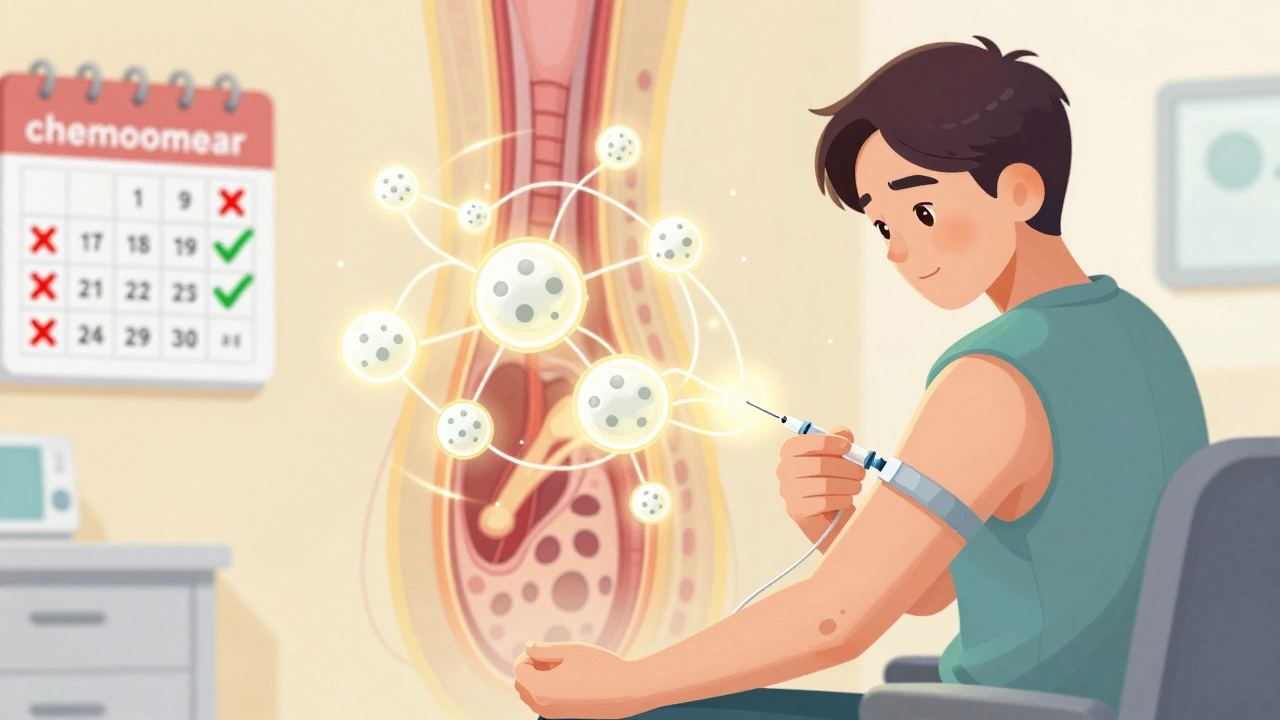
When someone is undergoing chemotherapy for cancer, the treatment itself can be just as hard to endure as the disease. Fatigue, nausea, pain, and low blood counts aren’t just side effects-they can delay treatment, reduce quality of life, and even threaten survival. That’s where supportive care comes in. It’s not about curing cancer. It’s about keeping patients strong enough to keep fighting it.
Growth Factors: Keeping Blood Counts from Crashing
One of the most dangerous side effects of chemotherapy is febrile neutropenia-a sharp drop in white blood cells that leaves patients vulnerable to life-threatening infections. Without intervention, up to 17% of high-risk patients develop it. But with growth factors like pegfilgrastim (Neulasta®) or filgrastim (Neupogen®), that number drops to under 10%. These drugs, called myeloid colony-stimulating factors, tell the bone marrow to make more white blood cells. They’re given as a single subcutaneous injection, usually 24 to 72 hours after chemo. Giving them too soon can interfere with chemotherapy’s effect on cancer cells, so timing matters. Pegfilgrastim is the most common choice because it lasts the whole cycle-just one shot per treatment. It reduces the duration of neutropenia by about 1.6 days compared to no treatment. That means fewer hospital visits, fewer antibiotics, and fewer delays in chemo schedules. But it’s not perfect. Around 20-30% of patients get bone pain after the injection. It’s not dangerous, but it can be intense enough to need over-the-counter painkillers. Rarely, there’s a risk of spleen rupture or lung problems, which is why doctors screen for risk factors before prescribing. Biosimilars now make these drugs more affordable. While the brand-name pegfilgrastim costs $6,000-$7,000 per dose in the U.S., biosimilars run $3,500-$4,500. That’s a big deal for patients on Medicare Part D or without good insurance. Still, a 2022 study found 42% of community oncology clinics underuse growth factors because of cost barriers-even when patients qualify.Antiemetics: Taking Back Control from Nausea and Vomiting
Nausea and vomiting from chemotherapy used to be a given. Today, with the right antiemetic combo, 75-85% of patients with high-risk chemo (like cisplatin) can avoid vomiting entirely. The standard for high-risk regimens is a three-drug cocktail: a 5-HT3 blocker (like palonosetron), an NK1 blocker (like aprepitant), and dexamethasone (a steroid). These work on different brain pathways to stop nausea before it starts. Palonosetron lasts longer than older versions, making it ideal for delayed nausea, which can hit 24-120 hours after treatment. For moderate-risk chemo, like doxorubicin, a two-drug combo (5-HT3 + dexamethasone) is usually enough. Low-risk drugs like paclitaxel may only need a single pill. Newer options like netupitant/palonosetron (NEPA) combine both drugs in one capsule and boost complete response rates by 10-15% over older regimens. But they cost 30-50% more. Aprepitant alone runs $150-$300 per cycle. Generic options are cheaper, but not always as effective. Patient feedback is mostly positive. On cancer forums, 850+ users gave antiemetics a 4.2/5 rating. One person wrote: “My first chemo cycle left me in bed for three days. The three-drug combo made my second cycle bearable.” But here’s the problem: only 58% of U.S. oncology clinics consistently follow NCCN antiemetic guidelines. Some still use single drugs like ondansetron alone for high-risk chemo-despite clear evidence it fails half the time. This isn’t just ineffective-it’s substandard care.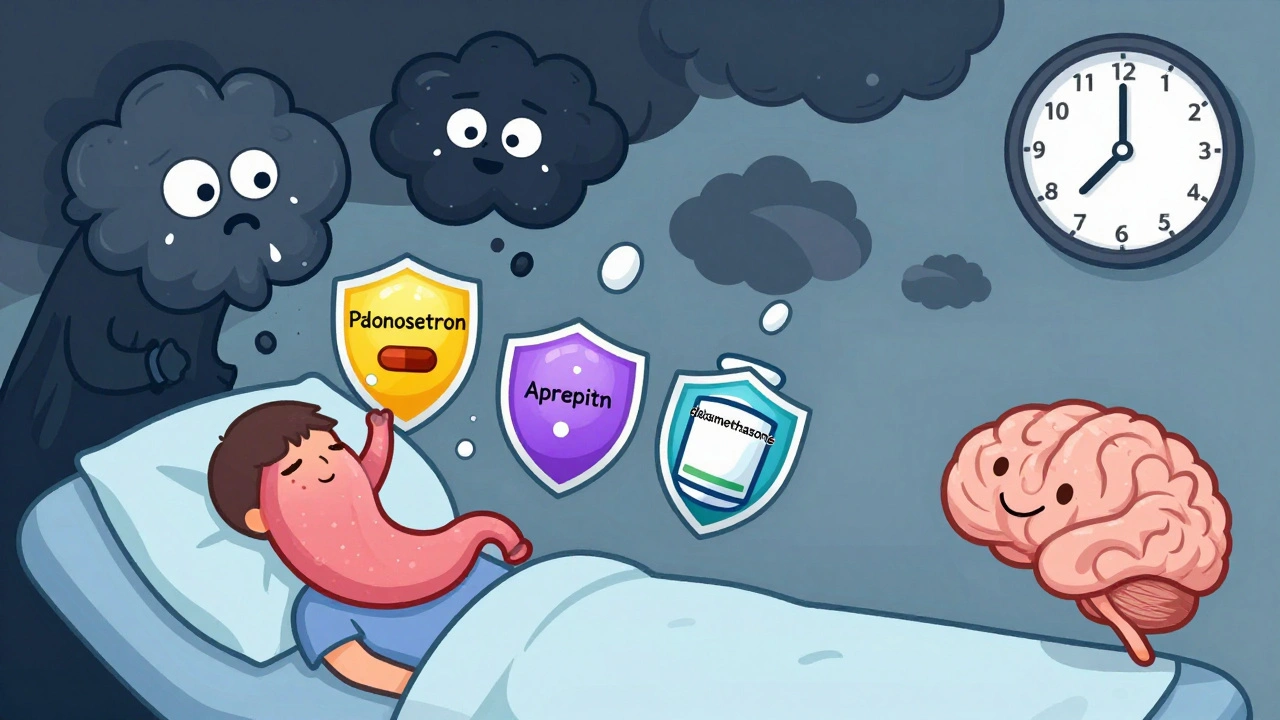
Pain Relief: More Than Just Opioids
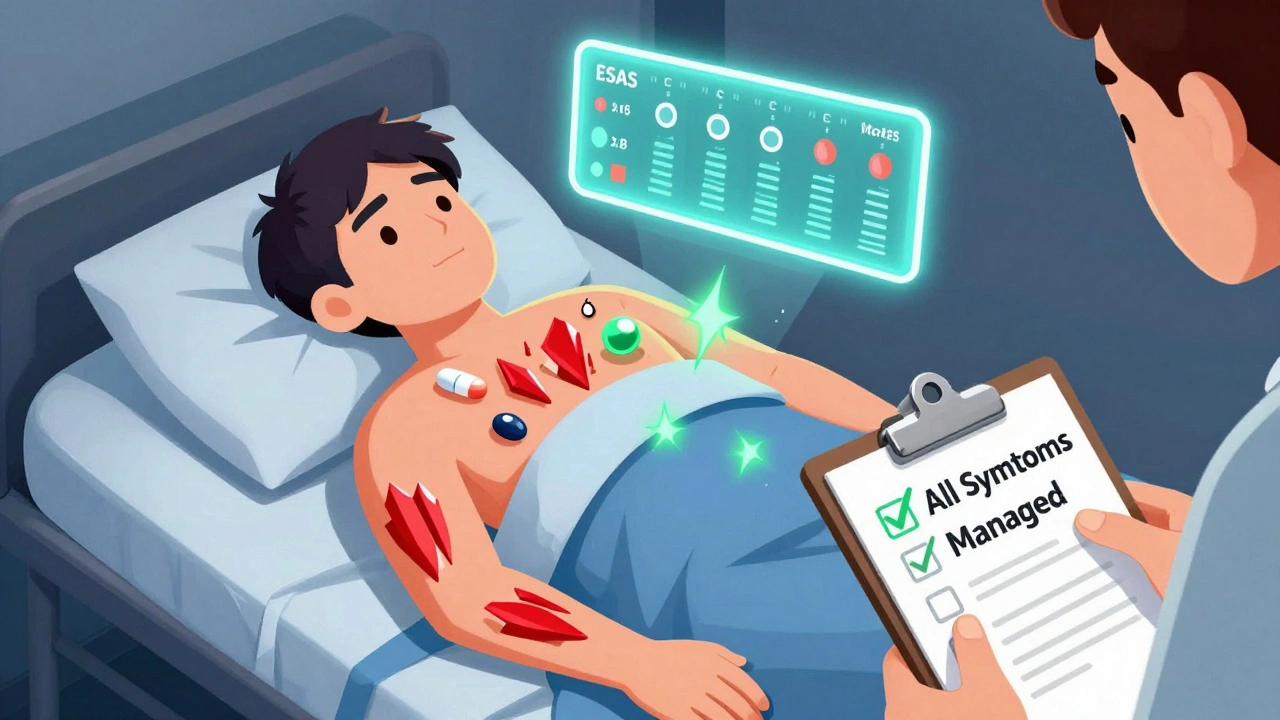
Cancer pain isn’t one thing. It can be sharp and localized (somatic), dull and deep (visceral), or burning and tingling (neuropathic). Each type needs a different approach. The WHO’s three-step ladder still guides treatment: start with acetaminophen or NSAIDs, move to weak opioids like codeine, then strong opioids like morphine or oxycodone for severe pain. But modern guidelines go further. For neuropathic pain-common after surgery, radiation, or from tumors pressing on nerves-drugs like gabapentin or pregabalin help. They don’t eliminate pain, but they reduce it by 30-50% in about half of patients. For bone pain, bisphosphonates or denosumab can slow damage and ease discomfort. Opioids work for 70-90% of moderate-to-severe cancer pain. But side effects are brutal: constipation affects 90% of users, drowsiness hits 50%, and respiratory depression is a real risk in older or frail patients. That’s why opioid rotation-switching from one opioid to another-is needed in 20-30% of cases when side effects outweigh benefits. Pain isn’t just physical. It’s emotional, spiritual, and social. That’s why tools like the Edmonton Symptom Assessment System (ESAS) are used at every visit. Patients rate their pain, nausea, fatigue, and anxiety on a scale of 0-10. This isn’t paperwork-it’s a lifeline. Without regular screening, pain goes under-treated. Patients report mixed results. On HealthUnlocked, 65% said their pain was controlled at first, but 40% said breakthrough pain wasn’t managed well. One wrote: “They gave me oxycodone, but when it wore off, I was left screaming. No one asked if I needed more.” New options are emerging. A 2023 FDA update included limited guidance on cannabis for neuropathic pain, with studies showing 25-30% effectiveness. Clinical trials are testing nav1.7 inhibitors-non-opioid drugs that block pain signals at the source-with early results showing 40-50% reduction in pain.How These Three Work Together
Growth factors, antiemetics, and pain relief aren’t separate pieces. They’re parts of a system. A patient getting cisplatin might get:- Pegfilgrastim 24 hours after chemo to prevent infection
- Palonosetron + aprepitant + dexamethasone before chemo to stop nausea
- Morphine and gabapentin for bone and nerve pain
Cost, Access, and the Real Barriers
The global supportive care market hit $18.7 billion in 2022. Growth factors made up $6.5 billion, antiemetics $4.7 billion, and pain meds $3.7 billion. But money isn’t evenly distributed. In the U.S., Medicare and private insurance cover most of this-but copays can still hit $500 a month for complex pain regimens. A 2023 Patient Advocate Foundation survey found 38% of patients struggled to afford supportive medications. In low- and middle-income countries, access is even worse. Only 30-40% of clinics there follow basic supportive care guidelines. Morphine might be unavailable. Antiemetics are too expensive. Growth factors? Almost never used. The result? Patients die not from cancer alone, but from preventable complications. A patient in rural India or rural Australia might skip chemo because they can’t afford the drugs that make it safe.What’s Next?
The future of supportive care is smarter, not just more expensive. AI models are being tested to predict who’s most likely to get neutropenia-so growth factors are only given to those who need them. New antiemetics like HTS-18000 are in phase 2 trials, targeting multiple nausea pathways at once. The NCCN updated its guidelines in 2023 to include more flexible growth factor use for intermediate-risk patients with extra risk factors-like age over 65 or diabetes. That’s a big step toward personalization. But the biggest change needed isn’t a new drug. It’s a system change. Supportive care must be treated like cancer treatment itself-not an add-on, not a luxury. Every patient deserves to be protected from the worst side effects. That’s not just good medicine. It’s basic human care.Do growth factors increase cancer growth?
No. There’s no strong evidence that growth factors like pegfilgrastim make cancer grow faster. That’s why they’re given 24-72 hours after chemotherapy-not before or during. This timing avoids any potential interference with chemo’s cancer-killing effect. Studies tracking survival rates show no increase in recurrence or death from using them properly.
Can I skip antiemetics if I don’t feel nauseous?
Don’t skip them. Nausea and vomiting often start after the first day, especially with drugs like cisplatin or cyclophosphamide. Antiemetics work best when taken before chemo to block the signals that cause nausea. Waiting until you feel sick means the drugs are already behind. Up to 70% of patients who skip prophylaxis end up with breakthrough symptoms that are harder to control.
Are opioids the only option for cancer pain?
No. Opioids are powerful, but they’re not the only tool. For nerve pain, gabapentin or pregabalin help. For bone pain, bisphosphonates or radiation can be more effective. Even non-drug options like physical therapy, acupuncture, or mindfulness reduce pain perception. The goal is a multimodal approach-using several tools together so lower doses of opioids are needed.
Why do some clinics not use these supportive care drugs?
Cost is the biggest barrier. Growth factors and newer antiemetics are expensive, and not all insurance plans cover them fully. Some clinics lack staff trained to manage complex regimens. Others don’t have access to guidelines or don’t prioritize supportive care. In community settings, especially outside big cities, resources are stretched thin.
How do I know if I’m getting the right supportive care?
Ask your oncology team: Are you following NCCN guidelines? Are you using a symptom tracking tool like ESAS? Are you adjusting medications based on my side effects? If your nausea isn’t controlled, your white blood cells keep dropping, or your pain isn’t improving, speak up. Good supportive care should make your treatment tolerable-not harder than the cancer itself.
Comments
Deborah Jacobs
My mom went through chemo last year, and honestly? The antiemetics were the difference between hell and just a really rough Tuesday. They gave her the three-drug combo, and she actually ate lunch the next day. Not just crackers. Actual food. I cried when she told me. That’s not medicine-that’s magic.
December 5, 2025 at 05:51
Katie Allan
It’s staggering how much of cancer care is still treated as optional. Growth factors, antiemetics, pain protocols-they’re not luxuries. They’re the scaffolding that holds the whole treatment together. Without them, you’re not treating cancer. You’re just throwing poison at it and hoping the patient survives the fallout. That’s not oncology. That’s roulette with a side of guilt.
December 6, 2025 at 22:44
James Moore
Look-I get it, the system’s broken. But let’s not pretend this is just about money. In Europe, they’ve got universal care, right? And yet, they still underuse these drugs! Why? Because doctors are lazy! They don’t want to learn the new guidelines, they don’t want to deal with the paperwork, they don’t want to explain to patients why they need five different pills instead of one. It’s easier to say, ‘Just take ondansetron.’ And then, when the patient pukes for three days, they say, ‘Well, chemo’s just tough.’ Bullshit. It’s incompetence dressed up as tradition. And it’s killing people.
December 8, 2025 at 05:44
Lucy Kavanagh
Ever wonder why these drugs are so expensive? Big Pharma buys politicians. They fund research that says ‘growth factors don’t cause cancer’-but what if they’re lying? What if the real data is buried? I’ve seen studies that got pulled. I’ve seen patients whose labs showed tumor spikes after pegfilgrastim-but the clinic just ‘adjusted’ the numbers. They’re not saving lives. They’re selling hope at $6,000 a shot. And you’re all just nodding along.
December 9, 2025 at 15:12
Norene Fulwiler
I’m from Nigeria. We don’t have access to any of this. My cousin got chemo here in the U.S. on a visa-and she cried because she was getting pegfilgrastim. In Lagos, they use ginger tea and prayer. No antiemetics. No pain meds beyond paracetamol. They tell patients, ‘It’s God’s will.’ I want to scream. This isn’t healthcare disparity-it’s moral failure.
December 11, 2025 at 00:48
Manish Shankar
As a physician in rural India, I can confirm: morphine is often unavailable due to bureaucratic restrictions. We have no access to NK1 antagonists. We use metoclopramide for nausea, and it works poorly. Growth factors? A dream. We ration them for pediatric cases only. The tragedy is not that patients die-they die slowly, alone, and in pain, because we are not allowed to help them fully. This is not a medical issue. It is a human rights issue.
December 12, 2025 at 19:37
aditya dixit
There’s a quiet revolution happening in supportive care. It’s not flashy like immunotherapy, but it’s saving more lives. The real breakthrough isn’t a new drug-it’s the shift in mindset: supportive care isn’t a side note, it’s the main event. When you treat nausea, fatigue, and pain as core components of therapy-not afterthoughts-you’re not just improving comfort. You’re extending survival. And that’s something we should all be shouting from the rooftops.
December 14, 2025 at 14:24
Kylee Gregory
I think we need to stop framing this as ‘cost vs. care.’ It’s not either/or. It’s ‘how do we make this sustainable?’ Biosimilars are a start. AI-guided prescribing is another. But what if we trained nurses to manage supportive care protocols? Let oncologists focus on the cancer, and let others handle the side effects. We don’t need more drugs-we need better systems. And maybe, just maybe, we need to stop treating patients like problems to be managed, and start treating them like people to be protected.
December 14, 2025 at 21:40
Annie Grajewski
So let me get this straight… you’re telling me we’ve got drugs that stop vomiting, boost white blood cells, and take the edge off pain… but people still skip them because they’re ‘too expensive’? Like… we live in a country where a latte costs $8 but a drug that lets someone live to see their kid graduate is ‘not covered’? I’m not mad. I’m just… disappointed. Like, deeply, soul-crushingly disappointed. And also, can we talk about how the word ‘chemo’ sounds like a villain in a Marvel movie? Just saying.
December 16, 2025 at 08:27
William Chin
As a former oncology nurse, I’ve seen too many patients denied growth factors because their insurance ‘didn’t pre-authorize’-even when the guidelines were clear. One woman, 72, diabetic, on cisplatin-her WBC dropped to 0.4. She got sepsis. Died in three days. The chart said ‘patient refused supportive care.’ She didn’t refuse. She didn’t know she was entitled. That’s not patient failure. That’s systemic failure. And it’s on us to fix it.
December 16, 2025 at 20:57
Lynette Myles
They’re lying about the safety of growth factors. I read the FDA’s internal memos. The trials were funded by Amgen. The data was cherry-picked. Your ‘evidence’ is a marketing brochure. Don’t trust them.
December 18, 2025 at 15:47