
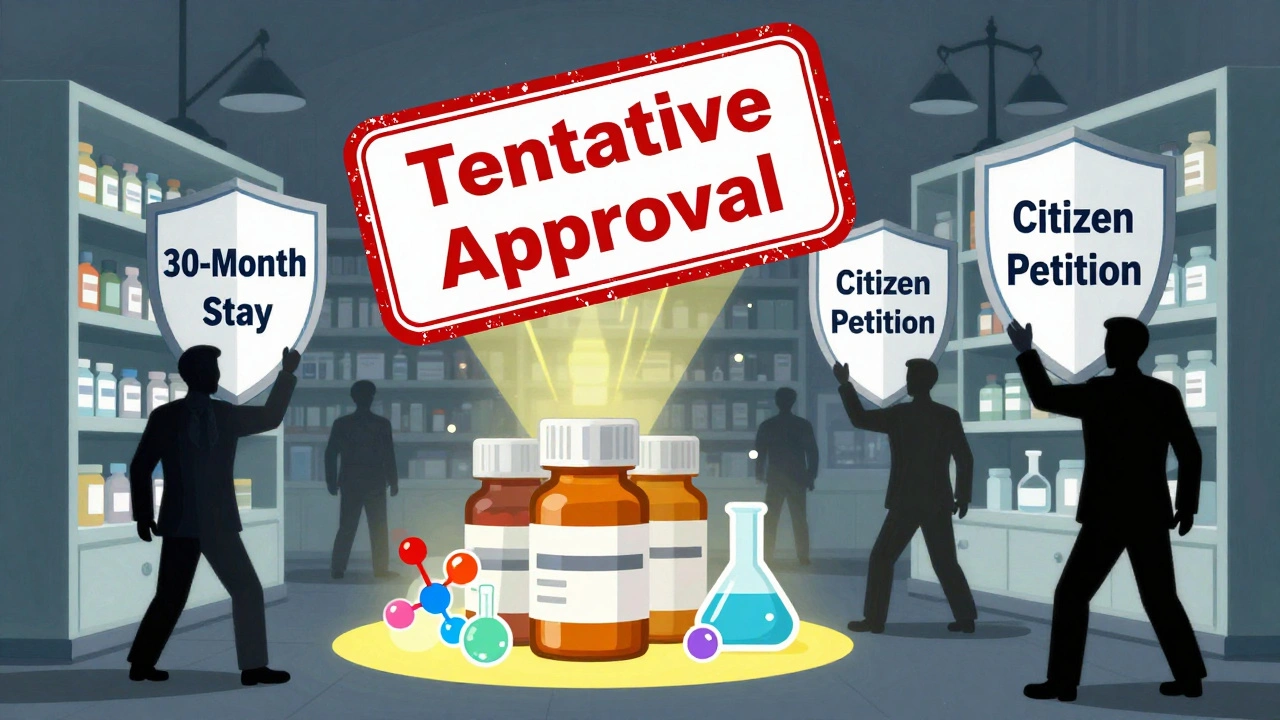
When a generic drug gets tentative approval from the FDA, it doesn’t mean it’s ready to hit pharmacy shelves. It means the agency has checked every scientific box - purity, potency, safety, bioequivalence - and found everything in order. But the drug still can’t be sold. Why? Because something else is blocking it. And that something is often not a science problem. It’s a legal, financial, or bureaucratic one.
What Tentative Approval Really Means
Tentative approval isn’t a halfway mark. It’s a full pass on the science. The FDA has reviewed the chemistry, manufacturing, and clinical data. The generic version matches the brand-name drug in how it works in the body. The manufacturing site passed inspection. The labeling is correct. Everything checks out. But the FDA can’t give final approval because of patents or exclusivity rights held by the original drugmaker. This system was created by the Hatch-Waxman Act in 1984 to speed up generic access once patents expire. The idea was simple: let generic companies prepare in advance. File the application early. Get approved early. Then launch the moment the patent runs out. But in practice, that’s not what happens. Thousands of generics sit in limbo. As of 2023, over 2,500 applications had tentative approval. Yet many never make it to market. The gap between approval and launch can stretch for years. Here’s why.Patent Litigation Is the Biggest Roadblock
The most common reason a tentatively approved generic doesn’t launch? A lawsuit. When a generic company files an ANDA and claims the brand’s patent is invalid or won’t be infringed (a Paragraph IV certification), the brand company has the right to sue. And if they do, the FDA is legally forced to delay final approval for up to 30 months - even if the generic passed every test. Between 2010 and 2016, 68% of tentatively approved generics were held up by this 30-month stay, according to the Commonwealth Fund. Some lawsuits are legitimate. Many aren’t. Brand companies often file lawsuits just to delay competition, even when the patent is weak or about to expire. Then there’s the “citizen petition” trick. Brand companies submit petitions to the FDA arguing that the generic’s testing method is flawed, or that more data is needed. These petitions rarely succeed scientifically - the FDA approved only 3 out of 67 between 2013 and 2015. But they work as delays. One petition filed within 30 days of patent expiration delayed generic entry by an average of 7.2 months, according to legal expert Robin Feldman. And it gets worse. Some brand companies change the drug slightly - add a new coating, tweak the dose - just to get a new patent. This is called “product hopping.” The FTC found this tactic affected 17% of top-selling drugs. It’s legal. It’s effective. And it pushes generics back by years.Manufacturing Problems Are Slowing Things Down
Even if patents clear, the generic company still has to make the drug. And making it right isn’t easy. In 2022, 41% of FDA complete response letters - the official notice that an application is incomplete - were due to manufacturing issues. The biggest problems? Poor quality control systems (63% of facility-related rejections), bad environmental monitoring (29%), and unqualified equipment (24%). It’s not just about clean rooms and machines. It’s about proving your process is consistent. If you’re making a simple tablet, the FDA expects stability data showing the drug won’t break down over time. If you’re making an inhaler or a topical cream? That’s a whole different level of complexity. Complex generics like these take 2.3 times more review cycles than simple pills. And they take longer to scale up for mass production. Many generic manufacturers don’t have the resources to fix these issues quickly. The average time to respond to an FDA deficiency letter in 2022 was 9.2 months - almost double the recommended six months. That’s not because they’re lazy. It’s because fixing a manufacturing flaw can cost millions and take months of re-testing.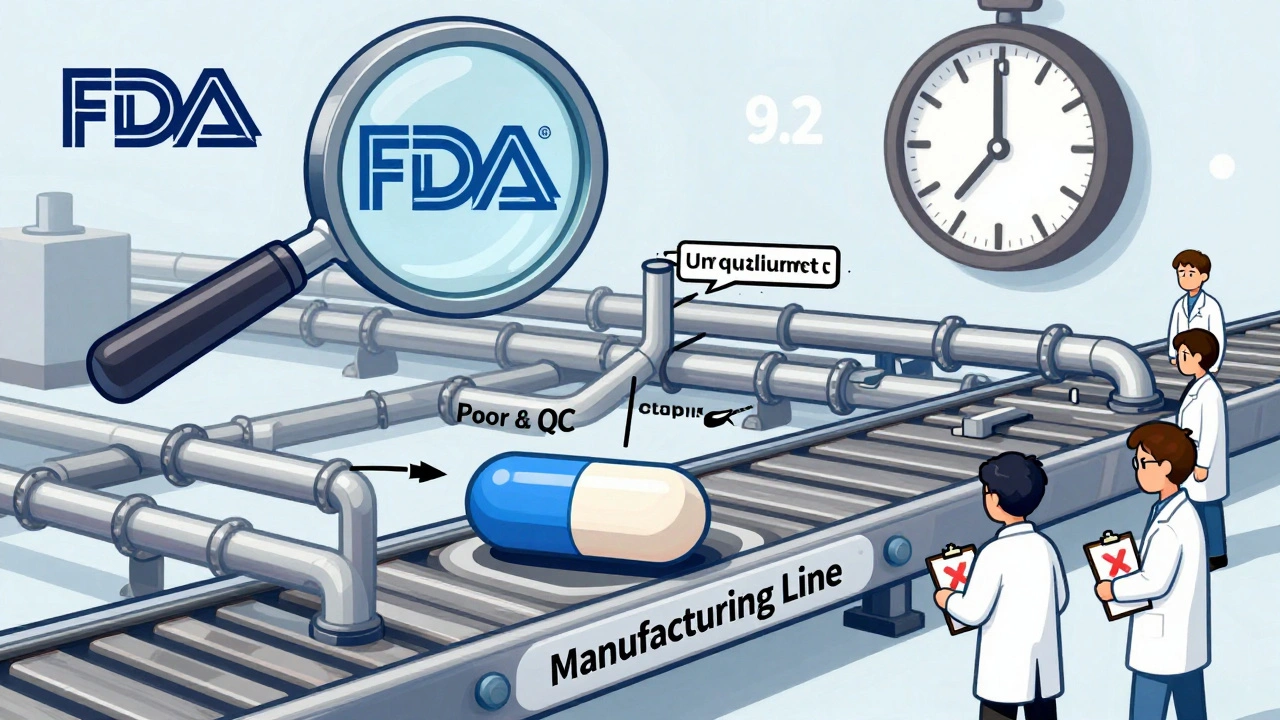
Applications Are Messy - And Applicants Are Slow
The FDA doesn’t reject applications because they’re bad. They reject them because they’re incomplete. In 2021, 29% of initial ANDA submissions had missing or unclear data on chemistry, clinical results, or labeling. In 2022, 43% of all deficiencies were tied to unstable or poorly documented stability data. Another 31% were missing details on the container and closure system - the vial, cap, or blister pack that keeps the drug safe. Applicants often submit applications too early, before their data is fully ready. Or they use outdated methods. The FDA updated its guidance for bioequivalence studies in 2020. Many companies are still using old protocols. That means the FDA sends back the application for more work. And the clock keeps ticking.The Economics Don’t Always Add Up
Even when a generic clears every hurdle - patents expire, manufacturing is fixed, the FDA gives final approval - the company might still sit on it. Why? Because it’s not worth it. A 2022 analysis by DrugPatentWatch found that 30% of approved generics never launch. That number jumps to 47% for drugs with annual U.S. sales under $50 million. If the market is small, the profit margin is thin. If five other companies are already making the same drug, there’s no room for another player. Sometimes, the first generic enters and prices stay high - 80% of the brand’s price - for two full years. Why? Because no one else bothers to enter. The market is too crowded, or too unprofitable. So the tentatively approved drug stays in limbo, even after the patent expires.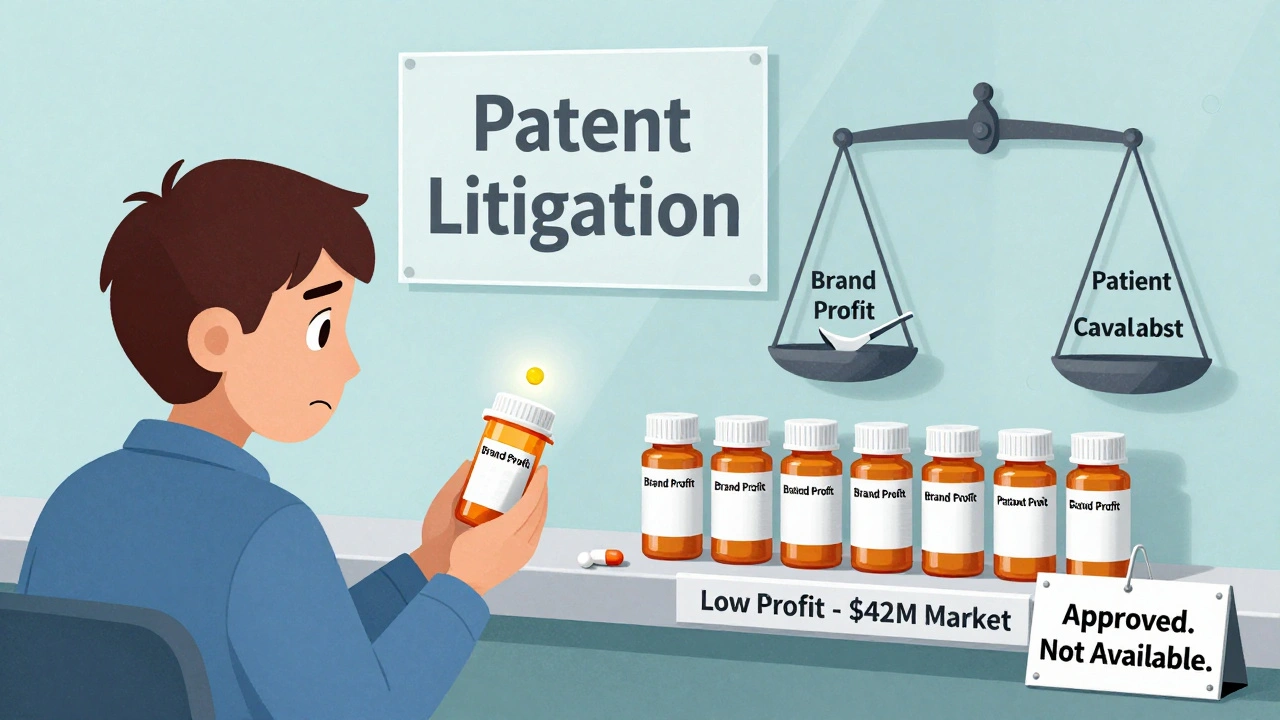
What’s Being Done to Fix This?
The FDA knows this system is broken. They’ve tried to fix it. The Generic Drug User Fee Amendments (GDUFA) created fees paid by generic companies to fund faster reviews. GDUFA II (2018-2022) aimed to cut review cycles from 3.9 to 2.5. They got it down to 3.2 - progress, but not enough. The Competitive Generic Therapy (CGT) pathway, launched in 2017, gives priority review to drugs with little or no generic competition. Of the 78% of CGT-designated drugs that got tentative approval, 80% did so within 8 months - half the normal time. In 2023, the FDA launched a new initiative targeting 102 high-priority tentative approvals. Of those, 67% got final approval within 12 months, compared to just 34% in the control group. Legislation like the CREATES Act (2019) tries to stop brand companies from refusing to sell samples needed for testing. The Affordable Drug Manufacturing Act (2023) aims to bring more production back to the U.S. to avoid overseas delays. But progress is slow. The median time from tentative approval to market launch was still 16.5 months in 2022. And the FDA admits that patent strategies, complex products, and funding limits will keep delays going through 2025 and beyond.What This Means for Patients
Behind every delayed generic is a patient paying more than they should. The Congressional Budget Office estimated that patent-related delays cost U.S. patients $9.8 billion in 2018. By 2027, Evaluate Pharma predicts that number will hit $12.4 billion annually. Imagine needing a blood pressure pill that costs $300 a month. The generic version is ready. It’s safe. It’s approved. But it’s stuck in legal limbo. So you keep paying $300. For years. That’s not science. That’s a system that’s been gamed. The FDA can approve drugs faster. But they can’t break patents. They can’t force companies to sell samples. They can’t stop lawsuits. They can’t fix the market incentives that make some generics unprofitable. Until those things change, tentative approval will remain a promise - not a guarantee.What’s the difference between tentative approval and final approval for generics?
Tentative approval means the FDA has confirmed the generic drug meets all scientific standards for safety, quality, and effectiveness. But final approval - which allows marketing - is blocked by patents or exclusivity rights on the brand-name drug. Final approval only happens after those legal barriers expire.
How long does it take for a tentatively approved generic to reach the market?
On average, it takes 16.5 months from tentative approval to market launch, according to 2022 FDA data. Some launch immediately after patent expiration. Others never launch at all - especially if the market is small or already crowded with competitors.
Why do brand-name companies file citizen petitions against generics?
Brand companies file citizen petitions to delay generic entry, even when the scientific claims are weak. The FDA approved only 3 out of 67 petitions between 2013 and 2015. But the petitions still work as delays - each one added an average of 7.2 months to the timeline for generic launch.
Are complex generics like inhalers or creams harder to get approved?
Yes. Complex generics require more testing, more manufacturing control, and more review cycles. Topical creams and inhalers average 3.7 review cycles compared to 2.9 for oral tablets. This adds about 14 months to the approval timeline. Many companies lack the resources to meet these higher standards.
Can a generic drug be approved but never sold?
Yes. About 30% of approved generics never reach the market. For drugs with annual sales under $50 million, that number rises to 47%. If the profit is too low or competition is already fierce, manufacturers choose not to launch - even after getting final approval.
Comments
ATUL BHARDWAJ
Tentative approval is just paperwork. Real access needs real competition. India makes these drugs cheap. Why are we waiting?
December 2, 2025 at 08:19
Steve World Shopping
The regulatory arbitrage is staggering. Paragraph IV certifications are weaponized as strategic litigation tools, effectively extending monopolistic rent extraction via legal entanglements. The Hatch-Waxman Act’s original intent has been subverted by patent thickets and procedural gaming.
December 2, 2025 at 19:37
Lynn Steiner
I’m so sick of this. People die waiting for cheap meds while Big Pharma laughs all the way to the bank. 😔💸
December 3, 2025 at 08:04
Steve Enck
The structural inefficiencies in the ANDA review pipeline are symptomatic of a broader institutional failure to align regulatory incentives with public health imperatives. The 30-month stay mechanism constitutes a de facto extension of patent life, undermining the foundational premise of generic competition.
December 4, 2025 at 07:31
मनोज कुमार
Manufacturing issues are just excuses. If they can make it in China or India with half the budget, why can't US labs fix their QC? The FDA is too soft on these guys
December 5, 2025 at 18:58
Joel Deang
so like... the FDA says yes but then some pharma bros just sue and its like 7 years later and we still paying 300$ for a pill that costs 2$ to make?? 😭
December 7, 2025 at 05:42
Roger Leiton
This is wild. I didn’t realize so many generics just sit there. 🤯 The CGT pathway sounds promising though - hope it scales. We need more of this.
December 8, 2025 at 05:58
Zed theMartian
Oh wow. So the FDA is just a glorified paper pusher while pharma CEOs play chess with people’s lives? How is this legal? I thought we lived in a democracy. Apparently not.
December 9, 2025 at 23:52
Ella van Rij
Ah yes. The classic 'we approved it but... *checks notes* oh right, we're waiting for a 30-month stay because someone filed a citizen petition about the color of the tablet'. Truly, we are the most advanced civilization in the galaxy.
December 11, 2025 at 14:52
Rebecca M.
I just cried reading this. My mom needs that blood pressure med. She’s been paying $300 for years. The system is broken. And no one cares.
December 12, 2025 at 16:11
Alicia Marks
You’re not alone. This is why we need more people to speak up. Change starts with awareness.
December 12, 2025 at 21:25
Paul Keller
The economic disincentives for launching generics in low-margin markets represent a profound market failure. When the marginal cost of market entry exceeds the anticipated net present value of revenue streams - even after regulatory clearance - rational actors will abstain. This is not negligence; it is utility maximization under constrained conditions. The systemic solution requires either public subsidy of low-volume generics or mandatory minimum market entry thresholds. Without structural intervention, tentative approval remains an empty promise - a bureaucratic mirage in the desert of pharmaceutical capitalism.
December 13, 2025 at 05:56