
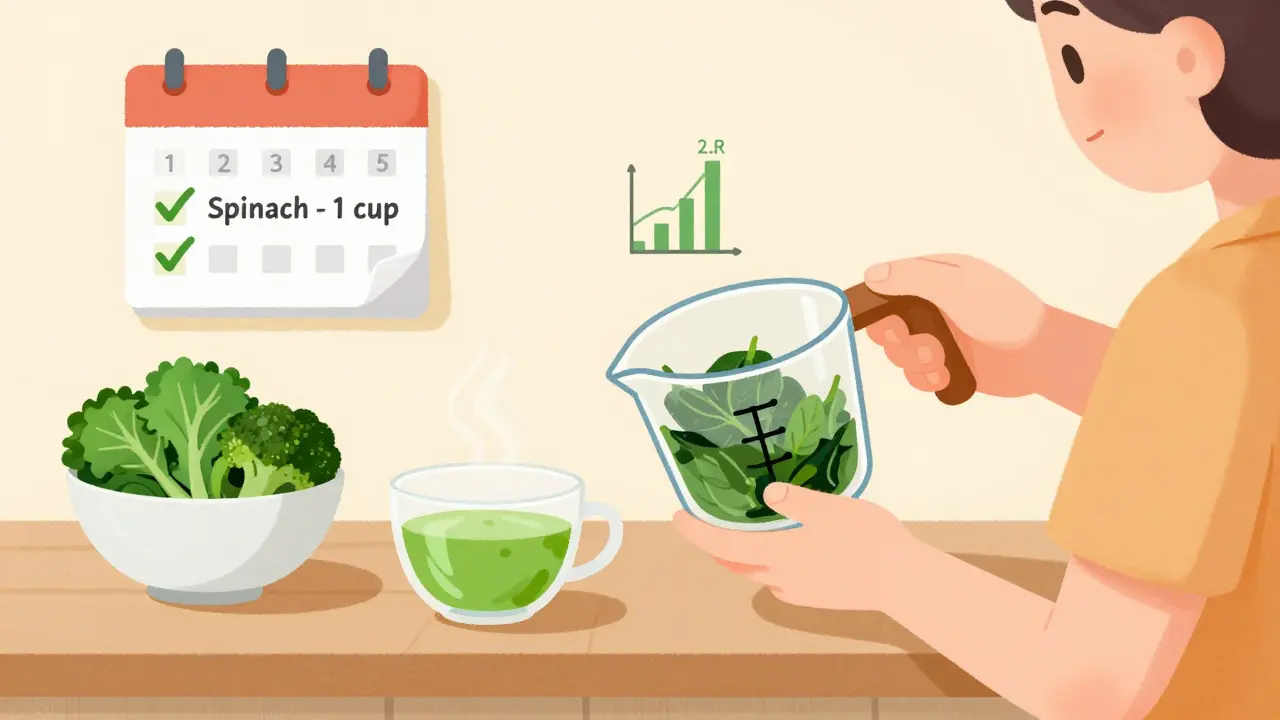
Vitamin K Intake Tracker
Consistency is more important than specific values
Your average daily vitamin K intake: 0 mcg
Consistency score: 0%
-
1
Measure your greens with a cup
2 cups raw spinach = 100 mcg, 1 cup cooked = 800-900 mcg -
2
Maintain your routine
Eat same portions on same days -
3
Track your intake for 1 week
Identify patterns before making changes
Daily vitamin K changes affect your INR:
When you're on warfarin, your diet isn't about cutting out healthy foods-it's about keeping things steady. One day you eat a big bowl of spinach, the next day you skip it entirely, and suddenly your blood clotting time goes off balance. That’s not just inconvenient-it can be dangerous. The goal isn’t to avoid vitamin K. It’s to eat about the same amount every day.
Why Vitamin K Matters with Warfarin
Warfarin works by blocking vitamin K’s role in making blood clotting proteins. Without enough vitamin K activity, your blood takes longer to clot, which helps prevent strokes and dangerous clots. But if you suddenly eat a lot more vitamin K-say, from a large salad or a kale smoothie-your body has more of the vitamin to work with. That makes warfarin less effective. Your INR drops. Your blood clots faster. Risk goes up.On the flip side, if you suddenly eat way less vitamin K-maybe you’re on a juice cleanse or switched to a low-veggie diet-your body doesn’t have enough to counteract the warfarin. Your INR spikes. You’re at risk of bleeding. That’s why even small changes in your daily intake can throw off your numbers. Studies show a 100 mcg increase in vitamin K can drop your INR by 0.5 to 1.0 points. For someone with a target range of 2.0-3.0, that’s the difference between being protected and being at risk.
What Foods Are High in Vitamin K?
Most of the vitamin K you eat comes from vitamin K1, found in plants. The top sources aren’t hidden or exotic-they’re common, healthy foods you probably already eat:- Cooked kale: 1,062 mcg per cup
- Cooked spinach: 889 mcg per cup
- Cooked Brussels sprouts: 156 mcg per cup
- Raw Swiss chard: 299 mcg per cup
- Raw broccoli: 85 mcg per cup
- Asparagus: 70 mcg per cup
- Green tea: 41-88 mcg per serving
Other foods like natto (fermented soy), liver, and certain cheeses contain vitamin K2, but they make up a smaller part of most people’s diets. The real issue? Leafy greens. They’re packed with vitamin K1, and they’re also the foods people often start eating more of when they try to get healthier. That’s when things go sideways.
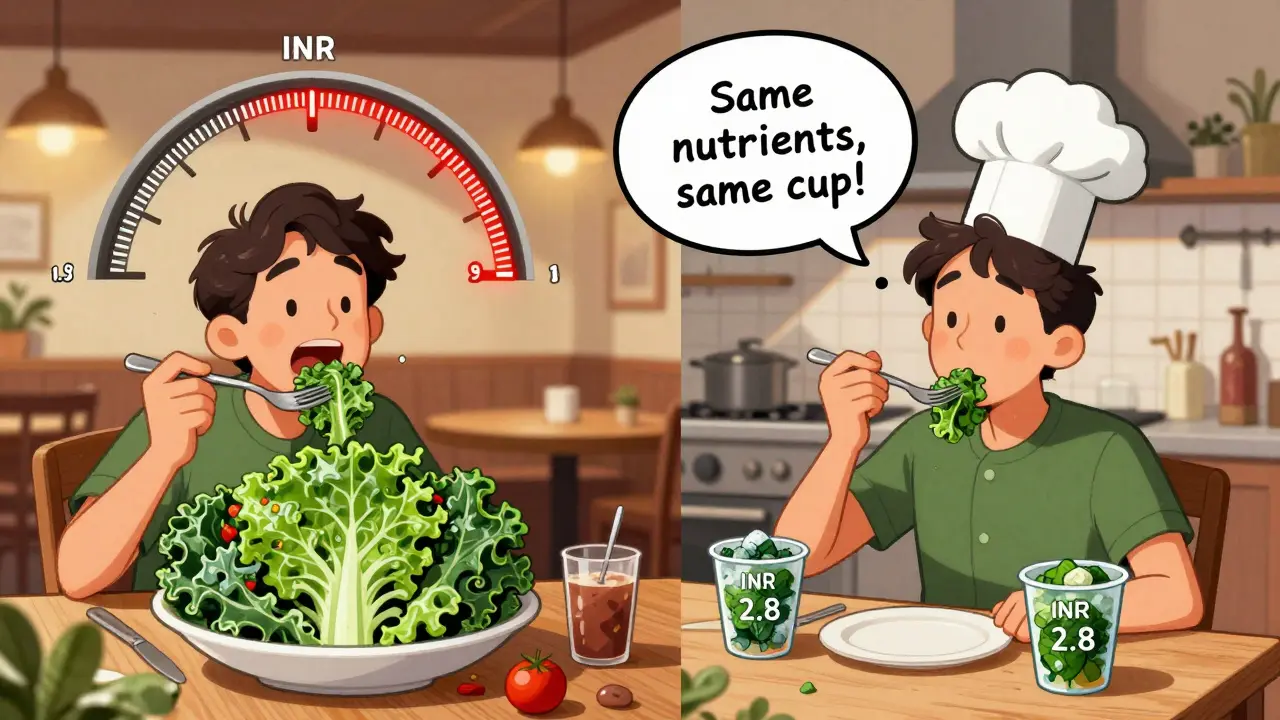
One patient I spoke with started eating three kale salads a week after reading about their "superfood" benefits. His INR dropped from 2.8 to 1.9 in four days. He needed a 15% warfarin dose increase. He didn’t stop eating kale-he just made sure to eat the same amount every day. That’s the fix.
Consistency Over Restriction
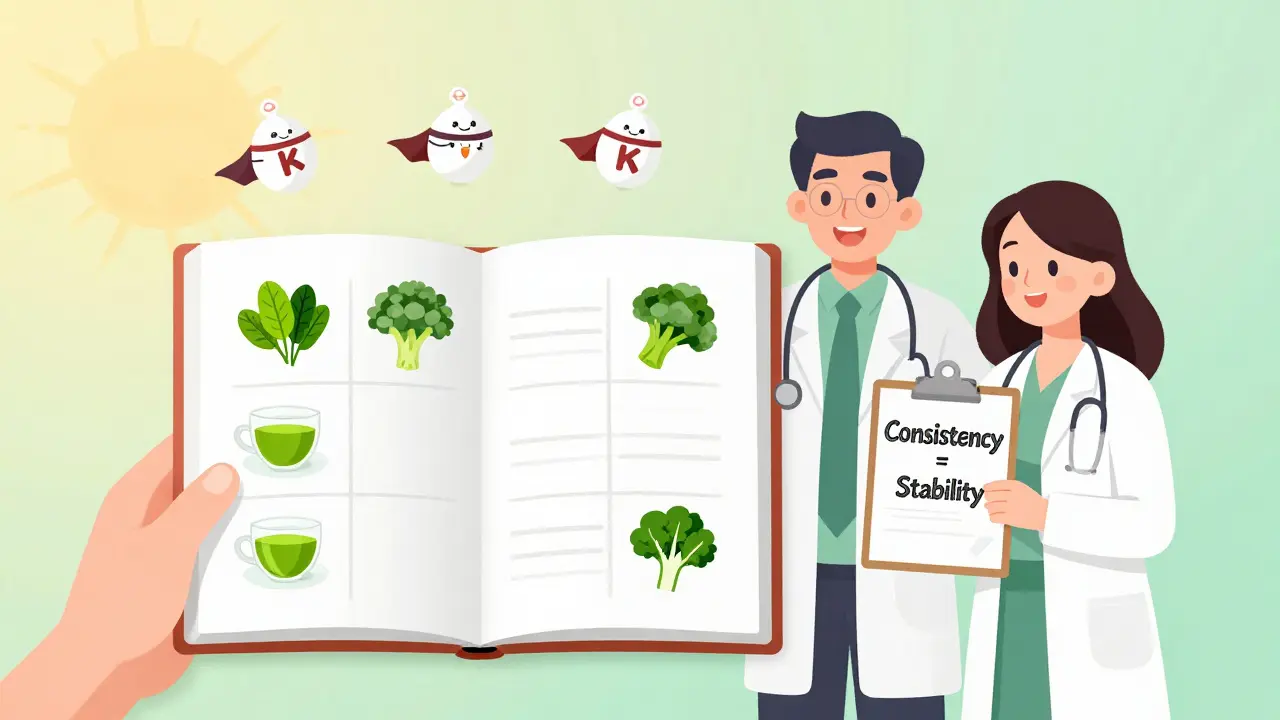
You don’t need to stop eating spinach. You don’t need to avoid broccoli. You don’t need to live on white rice and chicken breast. What you need is consistency.Studies show that people who keep their daily vitamin K intake within 20% of their usual amount stay in their target INR range 78% of the time. Those who swing wildly? Only 42%. That’s a huge difference. The American Heart Association, the Anticoagulation Forum, and the Mayo Clinic all agree: it’s not how much vitamin K you eat-it’s how consistent you are.
Think of it like your sleep schedule. If you sleep 7 hours every night, your body adapts. If you sleep 4 hours one night, 10 the next, your energy crashes. Same with vitamin K. Your body and your medication work best when the input doesn’t jump around.
Real-Life Traps and How to Avoid Them
People run into problems not because they’re careless-they’re trying to do the right thing.- Seasonal changes: In summer, you eat tons of fresh greens. In winter, you switch to canned veggies. That’s a 70% drop in vitamin K. Solution: Keep frozen spinach or kale on hand. One cup cooked frozen spinach has the same vitamin K as fresh.
- "Healthy" diets: Juice cleanses, keto, or vegan diets often change your vitamin K intake dramatically. One patient went from 100 mcg/day to 500 mcg/day on a green smoothie cleanse. His INR crashed. Solution: Talk to your doctor before starting any new diet.
- Restaurant meals: A salad at a fancy restaurant might have 3 cups of mixed greens. Your usual at home is half that. Solution: Ask for dressing on the side, and if you’re unsure, stick to your usual portions.
Many patients report their INR went off after trying a new recipe or eating out more often. That’s not weakness-it’s normal. The system isn’t designed for flexibility. You have to build structure around it.
Practical Tips to Stay on Track
Here’s what actually works for people who’ve mastered this:- Measure your greens: Don’t guess. Use a measuring cup. Two cups of raw spinach is about 100 mcg. One cup cooked is around 800-900 mcg. Know what your typical serving looks like.
- Stick to a routine: Eat your usual amount of vitamin K-rich foods on the same days. One patient eats two cups of cooked spinach every Tuesday and Thursday-no more, no less. That’s been stable for eight years.
- Use a food diary: Write down what you eat, especially leafy greens, for a week. You’ll see patterns. You might not realize you eat kale every Sunday morning.
- Take your multivitamin daily: If you take one, make sure it has the same amount of vitamin K every day. Some brands change their formula. Check the label.
- Don’t start new supplements: Herbal teas, fish oil, or garlic pills can also affect warfarin. Talk to your doctor before adding anything.
Patients who get personalized advice from a dietitian who specializes in anticoagulation keep their INR in range 85% of the time. That’s better than most clinics. It’s worth asking your doctor for a referral.
What to Do If You Eat Too Much Vitamin K
If you accidentally eat a huge amount-say, a giant kale salad or a bowl of natto-you don’t panic. You don’t skip your warfarin. You call your doctor or anticoagulation clinic.They might advise you to increase your warfarin dose by 10-20% the next day. Or they might just ask you to return to your normal diet and retest your INR in a few days. The key is communication. Don’t wait until your next scheduled test.
If your INR gets too high (above 10), your doctor may give you a small dose of vitamin K to bring it down. That’s a standard, safe procedure. It’s not a failure. It’s part of managing the medication.
It’s Not Perfect-But It’s Manageable
Warfarin isn’t the easiest drug to take. It needs attention. But it’s also one of the most studied, safest, and cheapest options out there. Millions of people manage it successfully-not by eating bland food, but by building habits.You can still enjoy a salad. You can still eat broccoli. You can still have green tea. You just need to make sure you do it the same way, every day.
Think of it like driving a manual car. You don’t stop driving because it’s harder than an automatic. You learn the rhythm. You get used to the clutch. Warfarin is the same. It’s not about perfection. It’s about consistency.
Can I eat spinach if I’m on warfarin?
Yes, you can eat spinach. The key is to eat about the same amount every day. If you normally eat one cup of cooked spinach twice a week, keep doing that. Don’t suddenly eat three cups one day and none the next. Consistency matters more than avoiding it.
Does vitamin K make warfarin less effective?
Yes, if you suddenly eat a lot more vitamin K than usual, it can make warfarin less effective, causing your INR to drop. But if you eat the same amount every day, your body adjusts, and your medication works as it should.
How often should I get my INR checked?
When your levels are stable, most people get tested every 2 to 4 weeks. If you change your diet, start a new medication, or get sick, your doctor will likely ask you to test more often-maybe weekly-until things stabilize again.
Can I drink green tea while on warfarin?
Yes, but keep your intake consistent. Green tea contains vitamin K (41-88 mcg per serving), and drinking one cup daily is fine. If you suddenly switch from one cup to five cups a day, your INR could drop. Stick to your usual amount.
Should I avoid all vitamin K-rich foods?
No. Avoiding vitamin K-rich foods is not recommended and can be unhealthy. Leafy greens provide important nutrients. The goal is consistency-not elimination. Eating the same amount daily helps your warfarin work better and keeps your INR stable.
What happens if I miss a dose of warfarin?
If you miss a dose, don’t double up the next day. Call your doctor or anticoagulation clinic for advice. Missing one dose rarely causes immediate problems, but consistency in both your medication and diet is what keeps you safe long-term.
What’s Next?
If you’re struggling to keep your INR stable, ask your doctor for a referral to a registered dietitian who works with anticoagulation patients. They can help you build a simple, realistic plan that fits your life. You don’t need to eat perfectly. You just need to eat the same way, day after day.Most people who stick with this approach find that their INR becomes predictable. Their doctor’s visits get easier. Their anxiety goes down. And they can still enjoy their food-just on their own steady schedule.
Comments
Sarah Mailloux
Just started warfarin last month and this post saved my life. I was eating kale smoothies every day thinking I was being healthy-turns out I was just flirting with a stroke. Now I measure my spinach like it’s coffee grounds. Same amount, same day. No drama.
January 16, 2026 at 00:16
Nilesh Khedekar
Oh wow, so now we’re policing people’s salads because some doctor can’t adjust a dose? This is why America’s healthcare system is a joke. You eat spinach? Great. You eat kale? Even better. If your INR’s off, fix the med-not your diet. You’re treating a symptom, not the problem.
January 16, 2026 at 08:43
Ayush Pareek
As someone from India who eats spinach curry every day, this hits home. We don’t ‘avoid’ greens-we just keep the portion the same. My uncle’s been on warfarin for 12 years. He eats the same amount of palak every Tuesday and Friday. No issues. Consistency, not fear.
January 17, 2026 at 06:20
Jami Reynolds
Have you considered that vitamin K is a government-manipulated tool to control anticoagulant patients? The FDA and pharmaceutical companies benefit from keeping you dependent on frequent INR tests. Frozen spinach? It’s not the same as fresh. The nutrient profile is altered. This is all part of the warfarin-industrial complex.
January 17, 2026 at 22:23
Amy Ehinger
I love how this post doesn’t just say ‘don’t eat greens’ but actually tells you how to keep doing what you love. I used to panic every time I had a salad. Now I just log it in my phone-same amount every Tuesday and Thursday. My INR hasn’t budged in six months. I still eat broccoli. I still drink green tea. I just don’t go wild. It’s not hard, it’s just… routine. Like brushing your teeth but for your blood.
January 18, 2026 at 01:20
RUTH DE OLIVEIRA ALVES
It is imperative to underscore the clinical significance of dietary vitamin K1 consistency in patients undergoing long-term anticoagulation therapy with warfarin. Empirical evidence from peer-reviewed studies, including those published in the Journal of Thrombosis and Haemostasis, corroborates the assertion that intra-individual variability in vitamin K intake directly correlates with INR instability. Therefore, structured dietary protocols, rather than restrictive regimens, constitute the standard of care.
January 18, 2026 at 09:50
Diane Hendriks
Consistency? That’s just capitalism disguised as health advice. Why should I have to eat the same damn spinach every Tuesday? Why not change the drug? Why not develop a better anticoagulant? No, we’d rather make you a slave to your grocery list. This isn’t medicine-it’s behavioral control dressed up as science.
January 19, 2026 at 21:29
ellen adamina
I’ve been on warfarin for 7 years and I never knew green tea had vitamin K. I drink one cup every morning. Never changed it. Never had an issue. I just… kept doing it. I didn’t even think about it until now. Funny how the simplest things work.
January 21, 2026 at 20:39
Nicholas Urmaza
If you’re on warfarin and you’re not tracking your greens you’re doing it wrong. It’s not complicated. You don’t need to be a nutritionist. You just need to be consistent. One cup cooked spinach on Tuesdays and Thursdays. That’s it. Your doctor will thank you. Your blood will thank you. Your life will thank you. Stop overthinking it.
January 23, 2026 at 01:31
Crystel Ann
This is the kind of post that makes me feel seen. I used to feel so guilty eating my salads. Like I was breaking some invisible rule. But this? This is just… practical. Like a friend telling you how to not accidentally kill yourself. No judgment. Just clear steps. Thank you.
January 23, 2026 at 12:16
Nat Young
Let’s be real-this whole ‘consistent vitamin K’ thing is a myth. I’ve had INRs swing wildly while eating the exact same amount of spinach. It’s the weather. It’s your gut bacteria. It’s the phase of the moon. They just need a scapegoat so they don’t have to admit warfarin is a crap drug. This post is just corporate fluff wrapped in a measuring cup.
January 25, 2026 at 00:44
Niki Van den Bossche
Oh darling, the tragedy of modern medicine is that it reduces the sublime art of nourishment to a spreadsheet. You are not a lab rat with a vitamin K quota. You are a soul navigating a broken system that commodifies your biology. Your kale is not a variable-it is an expression of your being. To quantify it is to annihilate its essence. What is your INR, really, but a shadow of your soul’s equilibrium?
January 25, 2026 at 09:15
Iona Jane
They don’t want you to know this-but vitamin K is secretly used to track your movements. Every time you eat spinach, your location is logged. Your INR? It’s not about clotting-it’s about surveillance. I stopped eating greens. Now I only eat white bread. I’m free. They can’t track me anymore.
January 26, 2026 at 06:20
Jaspreet Kaur Chana
Bro, I’m from Punjab and we eat sarson ka saag every Sunday. My dad’s been on warfarin since 2010. Same pot. Same day. Same spoon. He doesn’t measure. He just knows. That’s culture. That’s instinct. You don’t need an app. You need a routine that fits your life-not some American dietitian’s spreadsheet. This post? It’s good. But it’s missing the real thing-family, habit, memory. That’s what keeps you stable.
January 27, 2026 at 21:19