
Have you been told your doctor wants to switch your medication to a biosimilar? Maybe you’ve seen the name on your prescription and wondered: What are biosimilars, really? And are they safe? You’re not alone. Many patients feel confused when they hear this term-especially if they’ve always taken the same brand-name drug for years.
Let’s cut through the jargon. Biosimilars aren’t generics. They’re not copies in the way aspirin is a copy of another aspirin. They’re something more complex-and just as important.
Biologics Are Not Like Regular Pills
First, you need to understand what biologics are. These are medicines made from living cells-like human or animal cells grown in a lab. Think of them as tiny biological machines: proteins, antibodies, or hormones that your body can’t make on its own. They treat serious conditions like rheumatoid arthritis, Crohn’s disease, cancer, diabetes, and even severe skin disorders.
Unlike regular pills made from chemicals you can mix in a beaker, biologics are grown. They’re delicate. Tiny changes in temperature, the type of cell used, or how it’s purified can affect the final product. That’s why they cost so much-sometimes over $100,000 a year.
What Exactly Is a Biosimilar?
A biosimilar is a medicine that’s made to be highly similar to an already approved biologic-called the reference product. It’s not an exact copy. You can’t make an exact copy of something grown from living cells. But it doesn’t need to be. The U.S. Food and Drug Administration (FDA) requires that biosimilars show no meaningful difference in how well they work, how safe they are, or how your body reacts to them.
Before a biosimilar gets approved, manufacturers must prove it matches the original in:
- Molecular structure
- Purity
- How it behaves in the body (bioactivity)
- Effectiveness in treating the same conditions
- Safety profile-side effects, risks, and how often they happen
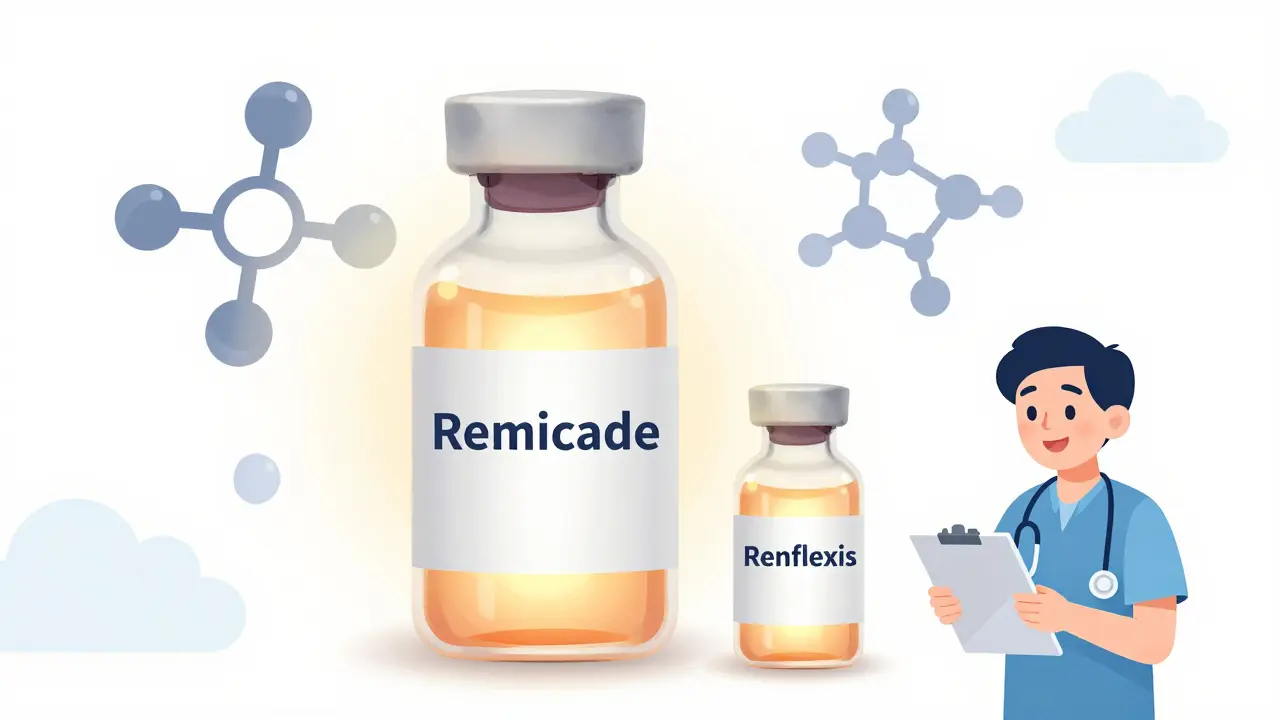
They do this with hundreds of lab tests, animal studies, and often clinical trials involving hundreds of patients. For example, the biosimilar Renflexis (infliximab-abda) was tested in 541 people with rheumatoid arthritis before approval. The results? No difference in outcomes compared to the original drug, Remicade.
Biosimilars vs Generics: The Big Difference
This is where most people get confused. Generics are exact copies of chemical drugs. Take metformin for diabetes. The generic version has the same active ingredient, same shape, same dose, same everything. It’s chemically identical.
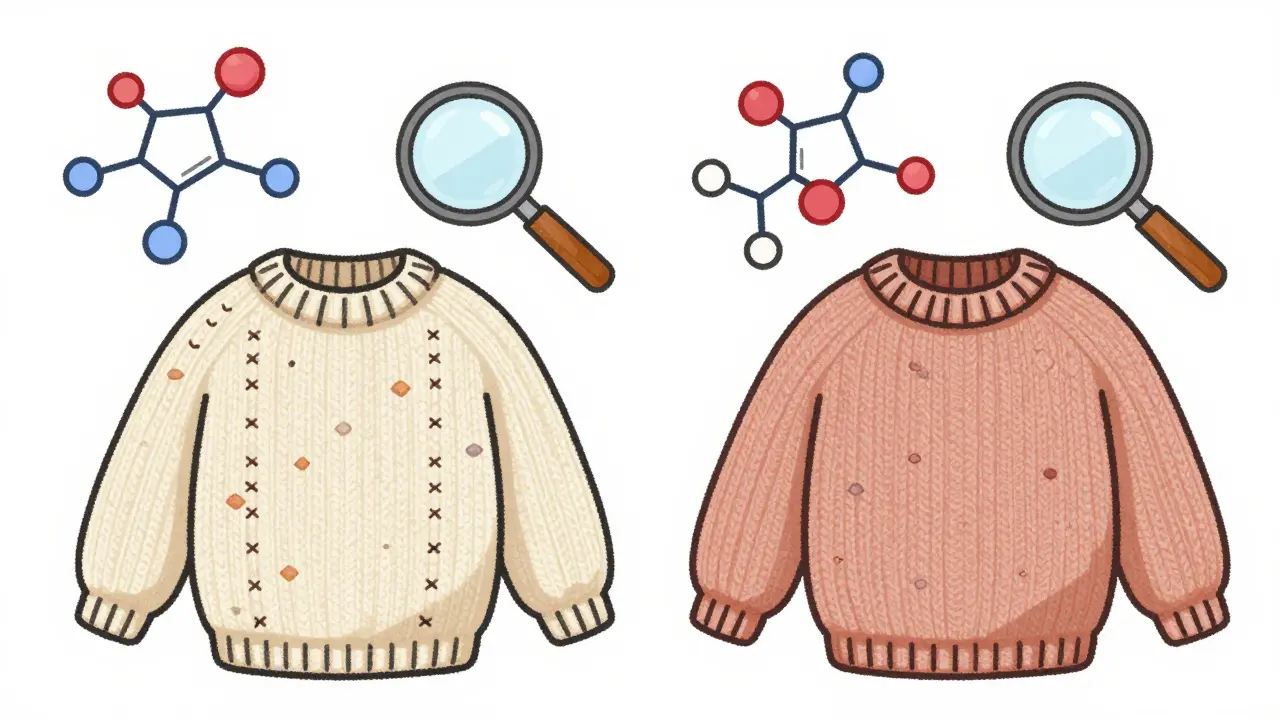
Biosimilars? Not even close to identical. Because they’re made from living cells, no two batches of a biologic are exactly alike-even from the same manufacturer. So a biosimilar isn’t trying to be identical. It’s trying to be so similar that your body can’t tell the difference.
Think of it like two handmade wool sweaters. Same pattern, same yarn, same knitter’s skill. But one was made in Canada, the other in Australia. They might have tiny differences in stitch tension or dye shade. But they keep you just as warm. That’s biosimilars.
Are Biosimilars Safe?
Yes. The FDA says biosimilars are as safe and effective as the original biologics. That’s not a guess. It’s backed by data from over a decade of use in Europe, where biosimilars have been common since the early 2000s. Millions of patients have used them without new or unexpected side effects.
Here’s what you should know:
- Biosimilars don’t cause more side effects than the original.
- They work just as well for the same conditions.
- Switching from the original biologic to a biosimilar has been studied-and shown to be safe.
Organizations like the American Cancer Society, the Arthritis Foundation, and the American Society of Hematology all agree: if your doctor recommends a biosimilar, you can trust it.
Why Do Biosimilars Cost Less?
Because they don’t need to repeat all the early research. The original biologic company spent billions developing it-clinical trials, safety studies, manufacturing setup. A biosimilar maker doesn’t have to start from scratch. They just need to prove they’ve matched it closely enough.
That saves money. Biosimilars typically cost 15% to 30% less than the original. For a drug that costs $120,000 a year, that’s $18,000 to $36,000 saved. That’s not just good for your wallet-it helps make these life-changing treatments available to more people.
What Do Biosimilars Look Like on a Prescription?
You’ll see two names:
- The generic name (like infliximab)
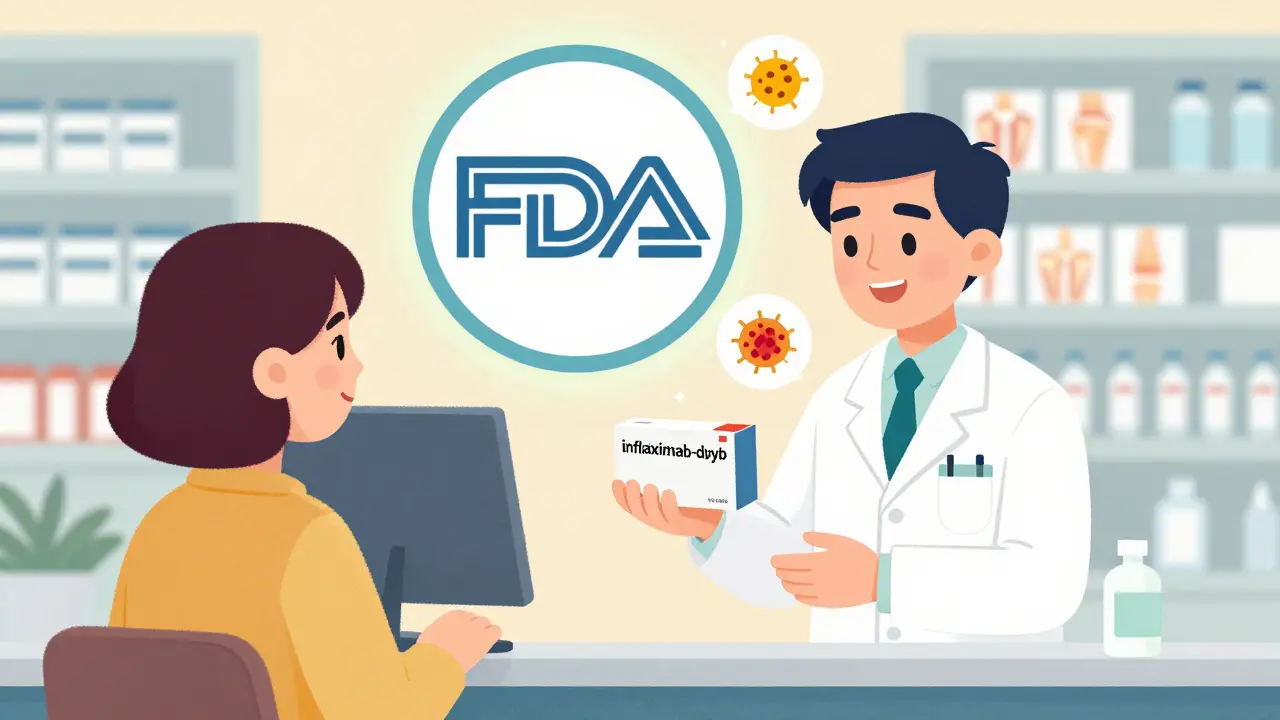
- The brand or biosimilar name (like infliximab-dyyb)
The four-letter suffix at the end is there to tell them apart. It’s not random-it’s required by the FDA so doctors and pharmacists know exactly which version you’re taking. If you have a reaction, they can track it back to the right product.
Don’t be alarmed if your prescription changes from Remicade to Renflexis. That’s normal. It doesn’t mean your treatment is changing-it means you’re getting the same care at a lower price.
Will Your Insurance Force You to Switch?
Possibly. Many insurance plans now prefer biosimilars because they’re cheaper. Some require you to try a biosimilar before they’ll cover the original biologic. This isn’t about cutting corners-it’s about making sure more people can afford treatment.
If you’re worried, talk to your doctor. Ask: “Is this biosimilar right for me?” and “Has it been used safely in people like me?” Most doctors are comfortable with biosimilars. They’ve seen the data. They’ve seen patients do just as well on them.
What About Interchangeable Biosimilars?
There’s a special category called “interchangeable.” This means a pharmacist can swap it for the original biologic without asking your doctor first-just like they do with generics.
The first one approved in the U.S. was Semglee, an interchangeable version of insulin glargine (Lantus). More are coming. This will make access even easier.
But even non-interchangeable biosimilars are safe. The difference is just about who makes the switch-your doctor or your pharmacist.
What Should You Do?
If your doctor suggests a biosimilar:
- Ask: “Is this the same as what I’m taking now, just cheaper?”
- Ask: “Has this been used by other patients with my condition?”
- Ask: “What happens if I switch?”
Don’t be afraid to say no if you’re uncomfortable. But know this: the science is solid. Millions of people worldwide are using biosimilars without issue.
And if you’re already on one? Keep taking it. Monitor how you feel. Report any side effects. And remember-you’re getting the same treatment, just at a better price.
The Bottom Line
Biosimilars are not second-rate drugs. They’re not experimental. They’re not shortcuts. They’re carefully tested, FDA-approved versions of complex medicines that work just like the originals. They’re helping patients get the care they need without financial ruin.
For the first time, more people with arthritis, cancer, or diabetes can access treatments that once felt out of reach. That’s progress.
And if you’re ever unsure-ask your doctor. You deserve to understand what’s in your body. You also deserve to get the best care possible, no matter your budget.
Are biosimilars the same as generics?
No. Generics are exact chemical copies of small-molecule drugs, like metformin or lisinopril. Biosimilars are highly similar versions of complex biologic drugs made from living cells. Because biologics are so large and intricate, biosimilars can’t be identical-but they’re proven to work the same way with no meaningful difference in safety or effectiveness.
Are biosimilars safe to use?
Yes. The FDA requires biosimilars to go through extensive testing-analytical studies, animal trials, and often human clinical trials-before approval. Real-world data from Europe, where they’ve been used for over 20 years, shows no new safety concerns. Organizations like the American Cancer Society and Arthritis Foundation confirm they’re as safe as the original biologics.
Can I switch from my current biologic to a biosimilar?
Yes, switching is safe and common. Studies have shown that patients who switch from a reference biologic to a biosimilar experience the same level of effectiveness and safety. Many doctors regularly make this switch to help reduce costs without affecting outcomes. Always talk to your doctor before switching, but know that it’s a well-supported practice.
Why do biosimilars have strange names with four-letter endings?
The four-letter suffix (like -dyyb or -sndz) is required by the FDA to help track each product. It distinguishes the biosimilar from the original biologic and from other biosimilars. This helps doctors and pharmacists identify exactly which drug you’re taking, especially if there’s a side effect or reaction. It’s not random-it’s a safety feature.
Will my insurance cover a biosimilar?
Most insurers prefer biosimilars because they cost 15-30% less than the original biologic. Many plans require you to try a biosimilar first before covering the more expensive version. This isn’t a penalty-it’s a way to make treatment affordable for more people. If you’re unsure, ask your pharmacy or insurance provider about your coverage options.
Are biosimilars used for cancer treatment?
Yes. Several biosimilars are approved for cancer care, including versions of trastuzumab (for breast cancer), bevacizumab (for colon and lung cancer), and rituximab (for lymphoma). These have been shown to work just as well as the original drugs, with no increase in side effects. Many oncologists now use biosimilars as standard practice.
Do biosimilars work as quickly as the original biologics?
Yes. Clinical trials show that biosimilars act in the same way, at the same speed, and with the same duration of effect as the reference product. Whether it’s reducing joint pain, lowering blood sugar, or shrinking tumors, the timing and strength of the response are equivalent.
Comments
Stacy Thomes
OMG I was SO scared when my doctor switched me to a biosimilar-I thought I was getting some cheap knockoff! But after six months? Same energy, same no-more-pain results. I even saved $20K a year. Why are we still scared of science??
January 23, 2026 at 23:13
Dawson Taylor
The regulatory framework governing biosimilars reflects a sophisticated understanding of biological complexity. One must distinguish between chemical equivalence and functional equivalence; the former is irrelevant in this context.
January 25, 2026 at 05:13
Oladeji Omobolaji
Back home in Nigeria, we don’t even have the original drugs sometimes. If biosimilars get here cheap and work? Bless them. No drama, just medicine.
January 25, 2026 at 08:43
Vanessa Barber
Maybe they’re ‘safe’… but I’ve heard stories. And I don’t trust corporate shortcuts, even if the FDA says so.
January 25, 2026 at 13:21
dana torgersen
Okay so like… biosimilars aren’t generics… right?? Like, they’re like… kinda the same but not?? And the four letters?? I think I read somewhere that they’re for tracking… but what if they mess up the spelling?? Like, what if it’s -sndz instead of -sndz??
January 25, 2026 at 20:52
Sallie Jane Barnes
As a long-term patient with autoimmune disease, I want to express profound gratitude to the scientists, regulators, and advocates who made biosimilars accessible. This is not just pharmacology-it is justice.
January 26, 2026 at 17:32
Laura Rice
I switched to a biosimilar last year and honestly? My joints feel better than ever. I used to think ‘cheap’ meant ‘bad’-but now I know it just means ‘smart.’ To anyone scared: you’re not alone, but you’re also not wrong to try it. Talk to your doc. I did. And I’m still here.
January 27, 2026 at 04:40
charley lopez
While the pharmacokinetic and pharmacodynamic profiles of biosimilars demonstrate non-inferiority relative to reference biologics, the immunogenicity risk remains a clinically significant variable requiring longitudinal monitoring.
January 28, 2026 at 20:31
Kerry Evans
People act like biosimilars are some miracle. Newsflash: Big Pharma invented them to keep profits up while pretending to care. They’re just rebranded generics with extra steps. Don’t let them fool you.
January 30, 2026 at 04:03
Susannah Green
Just a quick note: if your insurance forces a switch, ask for the lot number and track your symptoms. I had a weird reaction after switching-turned out it was the preservative, not the biosimilar itself. Always document everything. And yes, they’re safe-but your body’s the final judge.
January 30, 2026 at 08:06
Kerry Moore
I appreciate the clarity of this explanation. The distinction between chemical generics and biological biosimilars is often misunderstood. The rigorous standards applied by the FDA provide a robust foundation for patient confidence.
January 31, 2026 at 21:27
Sue Stone
I’ve been on one for two years. No issues. My dog even likes the new injection pen better. Weird, right?
February 1, 2026 at 05:57