
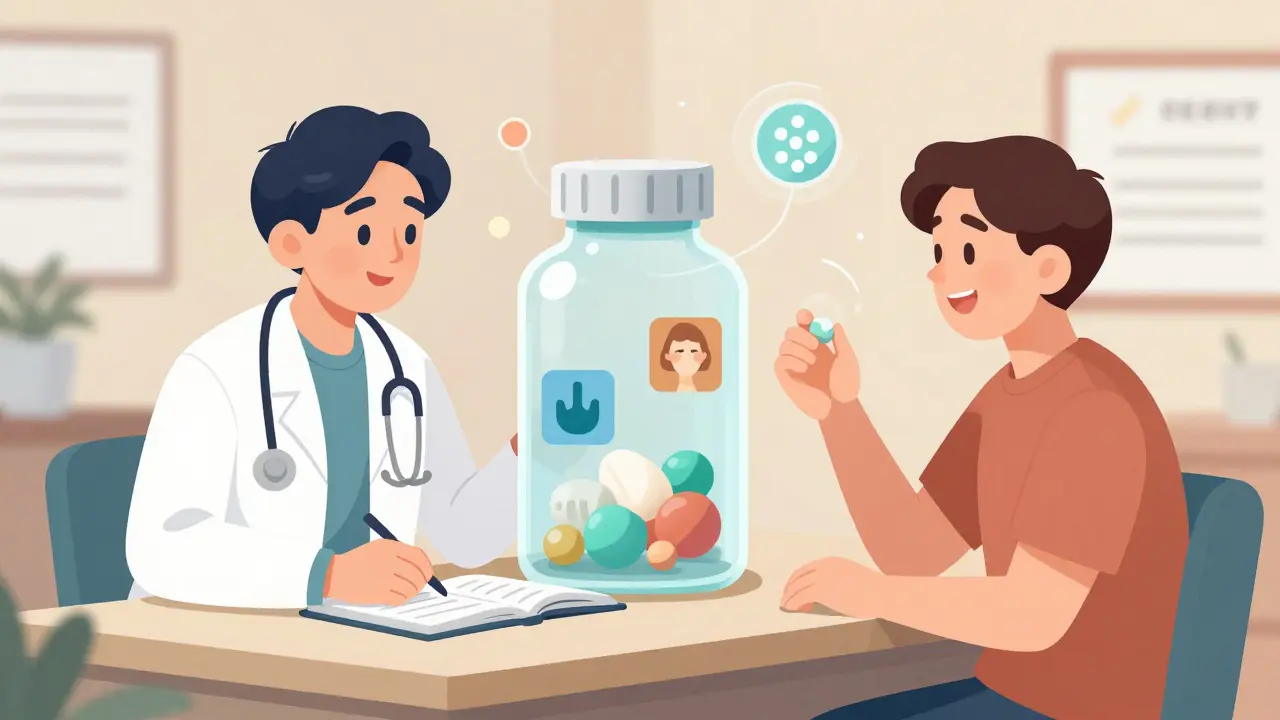
When your doctor prescribes a medication, they’re not just handing you a pill. They’re asking you to make a daily commitment - one that can mean the difference between feeling better and ending up back in the hospital. But here’s the thing: medication adherence isn’t the same as compliance. And the difference isn’t just semantics. It’s life-changing.
Adherence Isn’t About Obedience - It’s About Partnership
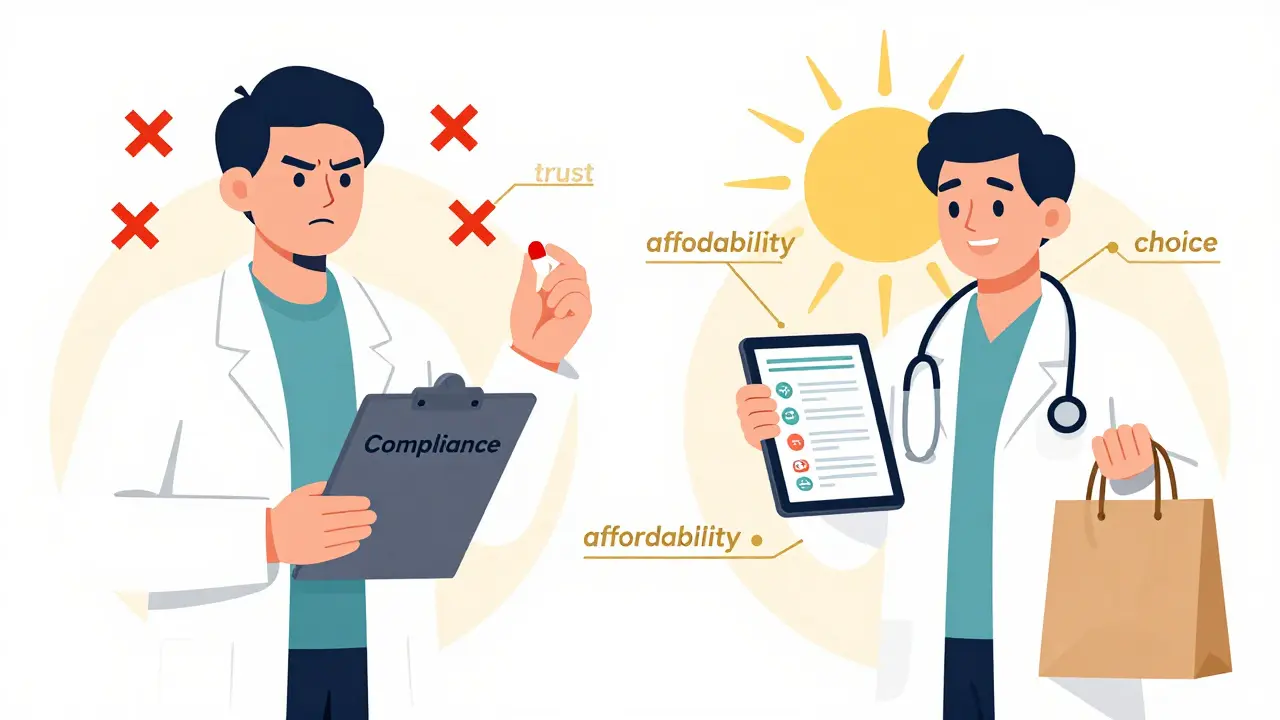
For decades, doctors used the word "compliance" to describe whether patients took their meds as told. If you missed a dose, you were labeled non-compliant. It sounded like a rule you broke. Like a child who didn’t clean their room. But that language is outdated. And it’s harmful. Today, the medical world uses "adherence" instead. Why? Because it flips the script. Adherence means you’re an active part of your own care. It’s not about following orders. It’s about making informed choices - even when it’s hard. The American Pharmacists Association defines adherence as "the extent to which a patient’s behavior matches agreed-upon recommendations." Notice the word "agreed-upon." That’s key. It means you and your provider talked about the plan. You understood why the medicine matters. You had a say in how it fits into your life. Adherence includes three big pieces: starting the medicine (initiation), taking it right (implementation), and sticking with it over time (continuation). Compliance? It only cares about whether you took the pill that day.Why the Shift From Compliance to Adherence Happened
In the 1990s, researchers started noticing something strange: even when patients "complied" with their prescriptions, many still ended up sicker. Why? Turns out, people stopped taking meds for reasons no checklist could capture. - Cost: A 60-year-old with diabetes might skip insulin because they’re choosing between medicine and groceries. - Side effects: Someone on blood pressure meds might stop because they feel dizzy all day. - Beliefs: A patient might think "if I feel fine, I don’t need it." - Forgetfulness: Life gets busy. Kids, work, appointments - meds fall off the radar. Compliance doesn’t ask why. It just counts pills. Adherence does. It says: "Tell me what’s stopping you. Let’s fix it together." This shift wasn’t just trendy - it was backed by hard data. Studies from the Annals of Internal Medicine and the Journal of Clinical Pharmacy and Therapeutics showed that when patients felt heard, adherence rates jumped. By the early 2000s, major medical journals stopped using "compliance" in clinical papers. The American Medical Association officially defined adherence as taking 80% or more of prescribed doses. That’s not perfection. That’s realistic.How Adherence Is Measured - And Why It’s More Accurate
Compliance used to be measured by asking patients: "Did you take your pills?" That’s unreliable. People lie - even to doctors. They don’t want to feel judged. Adherence uses smarter tools:- Pill counts: Pharmacists count leftover pills during visits.
- Prescription refill records: How often do you refill? Gaps mean trouble.
- Electronic caps (MEMS): These caps on pill bottles record exactly when you open them - no guesswork.
- Medication Possession Ratio (MPR): If you had enough pills to cover 80% or more of the days you were supposed to take them, you’re considered adherent.
Where Compliance Still Has a Place - And Where It Fails
Compliance isn’t dead. It’s just limited. In tuberculosis treatment, for example, nurses still watch patients swallow every pill. That’s called Directly Observed Therapy (DOT). It works because TB is dangerous, and missing doses can breed drug-resistant strains. But for chronic conditions like high blood pressure, diabetes, or depression? Compliance falls apart. The World Health Organization says half of all patients stop taking their chronic meds within a year. Why? Because compliance doesn’t solve cost, side effects, or confusion. It just blames the patient. Adherence, on the other hand, looks at the whole picture. It asks: "Can you afford this? Do you understand how it works? Does it interfere with your job or family life?"What Works: Real Strategies That Boost Adherence
Healthcare systems that switched to adherence-focused care saw results. - Motivational interviewing: Instead of saying "You need to take this," providers ask, "What would make it easier for you?" - Personalized education: A patient with arthritis gets a visual chart showing how meds reduce joint damage over time - not just a handout. - Technology: Systems like Hero Health and Dose Packer send reminders, track doses, and alert pharmacists if a patient misses a week. One Kaiser Permanente study found missed doses dropped 42% with these tools. - Billing codes: Starting in 2025, the AMA introduced new billing codes (99487-99489) so doctors get paid for spending 15-25 minutes talking about adherence. That’s huge. It means time spent listening is now valued. The National Community Pharmacists Association found that clinics using these methods saw adherence rates rise by 37.6% compared to those still using old compliance tactics.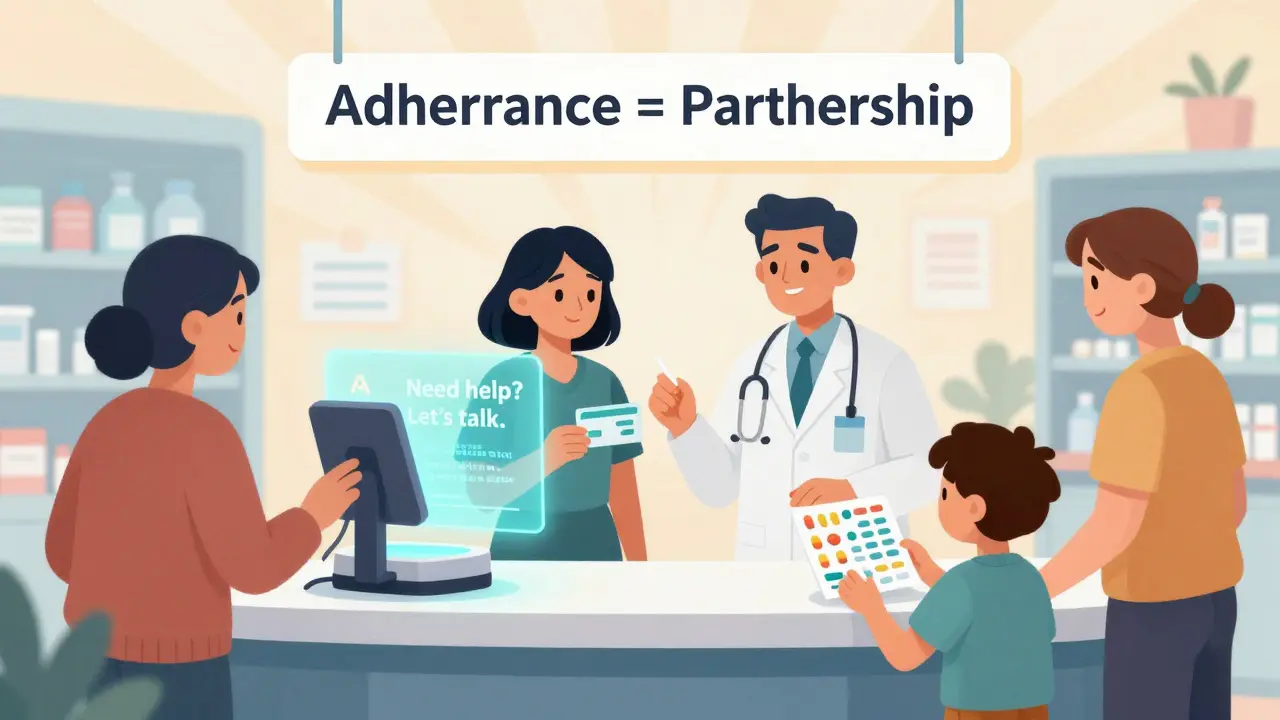
The Bigger Picture: Why This Matters for Everyone
This isn’t just about taking pills. It’s about saving lives. The FDA and European Medicines Agency now require adherence data in clinical trials. Why? Because if a drug works only in people who take it perfectly - but most don’t - then the drug isn’t as effective as it seems. In the U.S., Medicare now ties 8% of hospital payments to how well patients stick to their meds. If you’re readmitted for heart failure because you skipped your diuretics, the hospital loses money. That’s pushing hospitals to hire adherence coordinators, not just pharmacists. By 2025, 87% of major health systems had dropped "compliance" from their policies. Patient advocacy groups pushed hard for this. They said: "We’re not disobedient. We’re struggling. Help us." The numbers are clear: adherence-focused care reduces hospital stays by 22-34% and cuts treatment costs by 18-27%. That’s billions saved every year. And it’s not just rich countries. The WHO predicts adherence programs could prevent 850,000 premature deaths in low- and middle-income countries by 2030.What You Can Do - Whether You’re a Patient or a Provider
If you’re taking meds:- Don’t stop because you feel fine. Ask why you’re still taking it.
- Speak up about cost. There are often cheaper generics or patient assistance programs.
- Use a pill organizer or phone reminder. It’s not weakness - it’s strategy.
- Bring your meds to your next appointment. Let your provider see what you’re actually taking.
- Stop asking, "Are you taking your meds?" Ask, "What’s getting in the way?"
- Use the new CPT codes. You’re being paid to listen - use that time wisely.
- Don’t label someone "non-adherent." Ask: "What’s your story?"
- Partner with your pharmacy. They’re often the first to notice missed refills.
What’s Next? AI, Prediction, and the Future of Care
The next wave is personalization. Google Health’s 2024 study used machine learning to predict who’d miss doses - not by looking at their medical history, but by analyzing their phone usage, grocery spending, and even weather patterns. The algorithm was 83.7% accurate. Imagine: Your app notices you haven’t opened your pill bottle in three days. It texts you: "Hey, I see you’ve been busy. Need help setting a reminder? Or maybe we can switch to a once-daily pill?" That’s adherence in action. Not punishment. Not pressure. Support. By 2035, McKinsey & Company predicts 95% of healthcare systems will require adherence-focused care. It’s not a trend. It’s the only way forward. Because medicine isn’t about obedience. It’s about partnership. And when patients are treated like partners - not patients - they don’t just take their pills. They live better.Is medication adherence the same as compliance?
No. Compliance means following orders without question. Adherence means actively choosing to follow a treatment plan you understand and agree with. Adherence considers your life, beliefs, and barriers - not just whether you took the pill.
What percentage of patients are considered adherent?
According to the American Medical Association, a patient is considered adherent if they take 80% or more of their prescribed doses. In real-world settings, adherence rates for chronic conditions often hover between 50% and 70%, meaning many patients still struggle - not because they’re careless, but because of cost, side effects, or lack of support.
Why do people stop taking their medications?
People stop for many reasons: side effects, cost, feeling better and thinking they don’t need it anymore, forgetting, confusion about instructions, or cultural beliefs. The biggest factor isn’t laziness - it’s lack of support. When providers don’t ask why, patients don’t speak up.
Can technology help with medication adherence?
Yes. Tools like electronic pill caps (MEMS), smartphone apps, and automated dispensers like Hero Health or Dose Packer track when doses are taken and send reminders. Studies show these tools reduce missed doses by 30-42%. But tech alone isn’t enough - it works best when paired with human conversations.
Is adherence only important for chronic diseases?
It’s most critical for chronic conditions like diabetes, heart disease, and depression - where missing doses leads to serious complications. But adherence matters for any long-term treatment, including antibiotics for infections or post-surgery meds. Even short courses fail if patients don’t finish them.
How can I talk to my doctor about adherence without sounding like I’m failing?
You’re not failing - you’re human. Try saying: "I want to take this right, but I’m having trouble with [cost/side effects/forgetting]. Can we talk about options?" Providers who use adherence-focused training know this is normal. They’re there to help, not judge.
Are there financial incentives for providers to improve adherence?
Yes. Since 2025, the American Medical Association has added specific billing codes (99487-99489) for adherence counseling. Medicare also ties 8% of hospital payments to adherence metrics for chronic conditions. This means providers are now financially rewarded for spending time helping patients stick to their plans.
What’s the difference between unintentional and intentional non-adherence?
Unintentional non-adherence happens when you forget, get confused, or can’t afford the meds. Intentional non-adherence is when you choose not to take them - maybe because you don’t believe they work, fear side effects, or think they’re unnecessary. Adherence-focused care addresses both. Compliance only sees the missed pill - not the reason behind it.
Comments
Winni Victor
So let me get this straight - we’re now calling it 'adherence' because saying 'non-compliant' makes us feel guilty? Cool. So if I skip my blood pressure meds because I’m broke and my kid needs shoes, now I’m a 'partner in care' instead of a lazy ass? I’ll take the label. At least it sounds like a TED Talk instead of a lecture.
December 25, 2025 at 06:43
Linda B.
Adherence is just the pharmaceutical industry’s way of making you feel bad for not taking poison every day. They rebranded compliance because people started asking why they needed to swallow chemicals that make them dizzy, depressed, and broke. The real agenda? Keep you dependent. The data? Manufactured. The truth? You’re not sick. You’re being sold a lifestyle.
December 25, 2025 at 15:01
Oluwatosin Ayodele
In Nigeria, we don’t have the luxury of electronic pill caps or Kaiser Permanente. We have one pill, one dose, and a prayer. Adherence isn’t a buzzword here - it’s survival. If you don’t take your HIV meds, you die. No one’s asking if you 'agreed' to it. You take it because you know what happens if you don’t. The West needs to stop romanticizing non-adherence and fix the system that makes it inevitable.
December 26, 2025 at 21:31
Jason Jasper
I think the shift from compliance to adherence is subtle but powerful. It’s not about language - it’s about respect. When you treat people like they’re capable of making decisions, even flawed ones, they respond. I’ve seen it in my dad’s diabetes care. He didn’t start taking his meds until his doctor sat down and asked, 'What’s the hardest part?' Not 'Why aren’t you taking it?' That’s the difference.
December 28, 2025 at 05:41
Mussin Machhour
YES. Finally someone gets it. My grandma used to skip her statins because she thought 'if I feel fine, I’m fine.' Then she had a stroke. After her pharmacist started calling her every week just to check in - not scold, just check in - she started taking them. No fancy app. Just a human voice saying, 'Hey, you got this.' That’s adherence. That’s love.
December 29, 2025 at 17:59
Carlos Narvaez
Adherence is a buzzword for corporate healthcare’s failure to deliver affordable medicine. The AMA introduced billing codes because they realized they can’t profit off compliance. So now they monetize empathy. Brilliant. The patient is still drowning. The system just got a new logo.
December 29, 2025 at 22:28
Harbans Singh
I’m from India and we’ve been doing adherence the hard way for decades. My uncle takes 12 pills a day for diabetes, BP, and thyroid. He uses a small cardboard box with compartments labeled 'morning,' 'noon,' 'night.' No app. No tech. Just discipline and family reminding him. Adherence isn’t about gadgets - it’s about community. We need to bring that back here.
December 31, 2025 at 05:16
Justin James
They say 'adherence' but what they really mean is surveillance. MEMS caps? Electronic tracking? You think they’re helping you? No. They’re building a database of every time you skip a dose. That data gets sold to insurers. Then your premiums go up. Or worse - your employer finds out. This isn’t care. It’s social control disguised as compassion. Wake up. The system wants you docile, not healthy.
January 1, 2026 at 19:14
Rick Kimberly
While the semantic evolution from compliance to adherence reflects a laudable shift in patient-centered care paradigms, it remains imperative to acknowledge that linguistic rebranding alone cannot substitute for structural reform. The underlying socioeconomic determinants - namely, pharmaceutical pricing, access to primary care, and insurance fragmentation - remain unaddressed. Without systemic intervention, adherence metrics are merely performative indicators of a broken system.
January 3, 2026 at 00:52
Terry Free
You people act like taking medicine is a moral choice. It’s not. It’s a business. Big Pharma makes billions off chronic conditions. They don’t want you cured. They want you compliant. Adherence? Just a nicer word for 'keep buying.' Stop being fooled. If your doctor really cared, they’d give you a cure - not a lifetime supply of pills.
January 3, 2026 at 19:05
sagar patel
Adherence is a myth. People don't skip meds because they're 'non-partners.' They skip them because they're poor, tired, and ignored. No amount of motivational interviewing fixes a $500 co-pay. Stop romanticizing suffering as a conversation starter.
January 5, 2026 at 02:11
Christopher King
They’ve been lying to us since the 1950s. Compliance was the control mechanism. Adherence is the trap. Now they don’t just want you to take the pill - they want you to *believe* in it. To love it. To feel guilty when you don’t. That’s psychological domination wrapped in a rainbow of empathy. They’re not trying to heal you. They’re trying to own your mind. And the worst part? You’re cheering for them.
January 5, 2026 at 15:24
Bailey Adkison
Stop calling it adherence. It’s just obedience with a therapy session. You don’t get to call someone a 'partner' when they can’t afford the product you’re selling them. This isn’t progress. It’s propaganda dressed in white coats. The system is still broken. You’re just giving it a new name.
January 7, 2026 at 13:00