
When you pack your suitcase, you might not think twice about tossing in your usual pills—but banned travel meds, medications prohibited by foreign governments even if legal at home can land you in serious trouble. A prescription you rely on at home might be classified as a controlled substance, narcotic, or even illegal drug overseas. Countries like Japan, Dubai, Thailand, and Australia have strict lists of forbidden medications, and customs officials don’t care if your doctor wrote it. What’s legal in the U.S. or Canada could get you arrested, fined, or deported.
Many travelers don’t realize that common drugs like Adderall, Xanax, codeine, or even certain cold medicines containing pseudoephedrine are banned or heavily restricted abroad. controlled substances, drugs with high abuse potential regulated under international treaties are the biggest red flag. Even if you have a prescription, some countries require special permits or won’t allow them at all. For example, Japan bans nearly all stimulants, including ADHD meds, and Australia restricts painkillers with codeine unless you’ve pre-approved them. international drug laws, national regulations that override personal prescriptions when crossing borders vary wildly—what’s a routine anxiety treatment in one country is a criminal offense in another.
You might think carrying a doctor’s note is enough, but that’s often not the case. Some countries require official translations, specific forms, or even a letter from their embassy. Others don’t accept any foreign prescriptions. And if you’re flying through a hub like Dubai or Singapore, they scan luggage for meds—not just your checked bags, but your carry-on too. Missing a single pill on their list can trigger a full investigation. It’s not just about getting caught—it’s about how they respond. In some places, possession of a banned drug carries mandatory jail time, even for small amounts.
So what should you do? Start by checking the official government travel site of your destination. The U.S. State Department, UK Foreign Office, and Health Canada all list restricted meds by country. Call the embassy if you’re unsure. If your medication is banned, ask your doctor for an alternative that’s allowed. Don’t assume generics are safe—many are chemically identical to the banned brand name. And never, ever try to hide pills. Customs dogs and X-rays don’t miss much.
Below, you’ll find real stories and expert insights on what happens when travel meds go wrong—from counterfeit pills bought overseas to legal nightmares from forgetting to declare a simple painkiller. Whether you’re flying for business, vacation, or medical care, knowing the rules isn’t optional. It’s the difference between a smooth trip and a life-altering mistake.
Posted by
Jenny Garner
9 Comments
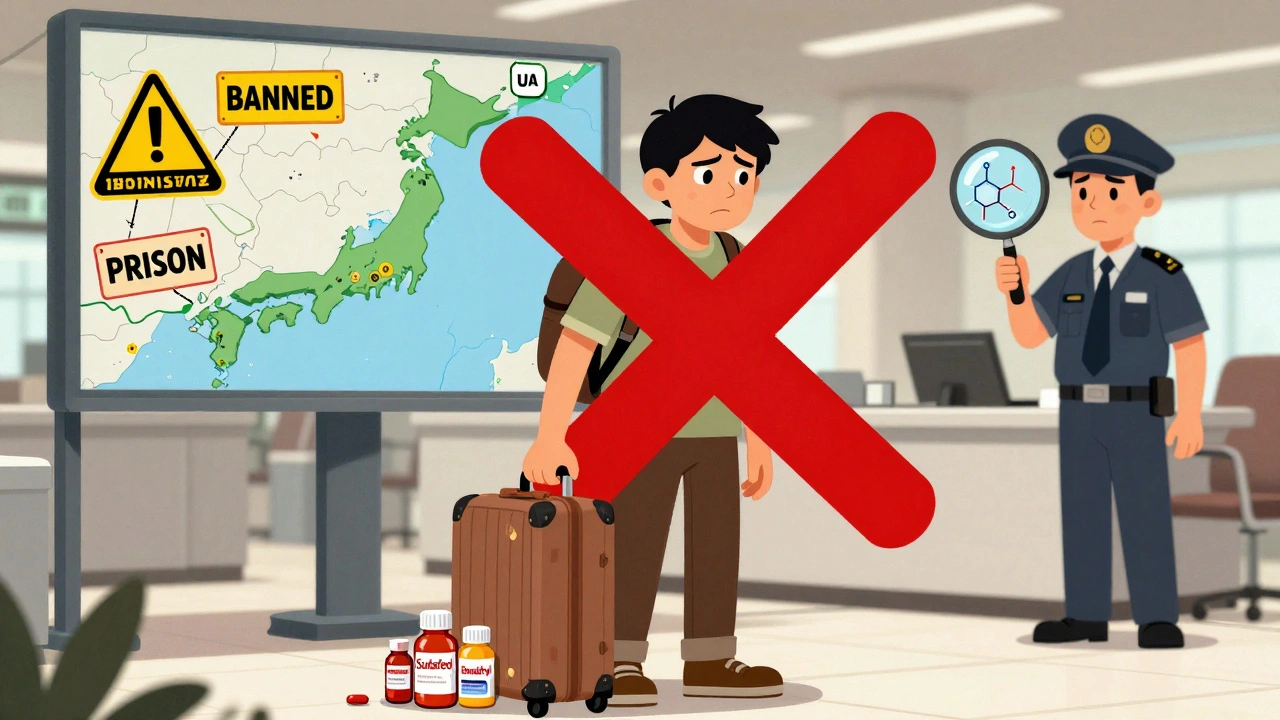
Many common OTC drugs like Sudafed, Benadryl, and Ambien are banned or restricted abroad. Learn which medications can get you arrested overseas and how to travel safely with your prescriptions.
read more