
When your body’s immune system can’t stop cancer, CAR-T cell therapy, a personalized treatment that reprograms a patient’s own immune cells to target cancer. Also known as chimeric antigen receptor T-cell therapy, it’s not a drug—it’s a living medicine made from your cells. This isn’t science fiction. Since the first FDA approvals in 2017, it’s helped people with advanced blood cancers who had run out of options.
Here’s how it works: Doctors take T cells—your body’s natural cancer fighters—from your blood. In a lab, they add a special receptor (the CAR) that lets those T cells recognize and lock onto cancer cells. Then they multiply them by the billions and put them back into you. These upgraded T cells hunt down cancer like guided missiles. It’s most used for relapsed or refractory leukemia, a type of blood cancer that doesn’t respond to standard treatments, and certain lymphomas. The results? Some patients with no other hope go into complete remission.
But it’s not simple. This treatment can cause serious side effects like cytokine release syndrome—where your immune system goes into overdrive—and neurological issues. That’s why it’s only given in specialized centers with teams trained to handle these risks. It’s also expensive, and access isn’t equal. Insurance coverage, geographic location, and eligibility rules still block many who could benefit.
And while CAR-T works best for blood cancers, researchers are trying to make it work for solid tumors—like lung, breast, and brain cancers. Early trials are mixed, but progress is happening. Meanwhile, newer versions are being tested: off-the-shelf CAR-T from donor cells, faster production times, and ways to reduce side effects. These aren’t just upgrades—they could make the therapy available to far more people.
What you’ll find in the articles below isn’t just theory. These posts connect CAR-T to real-world issues: how supportive care helps patients survive the treatment’s toughest moments, why drug shortages delay access, how insurance formularies decide what gets covered, and how post-marketing safety systems track long-term effects. You’ll see how this therapy fits into the bigger picture of cancer care, medication safety, and healthcare equity. This isn’t just about a new treatment. It’s about how medicine is changing—and who gets left behind when it does.
Posted by
Paul Fletcher
16 Comments
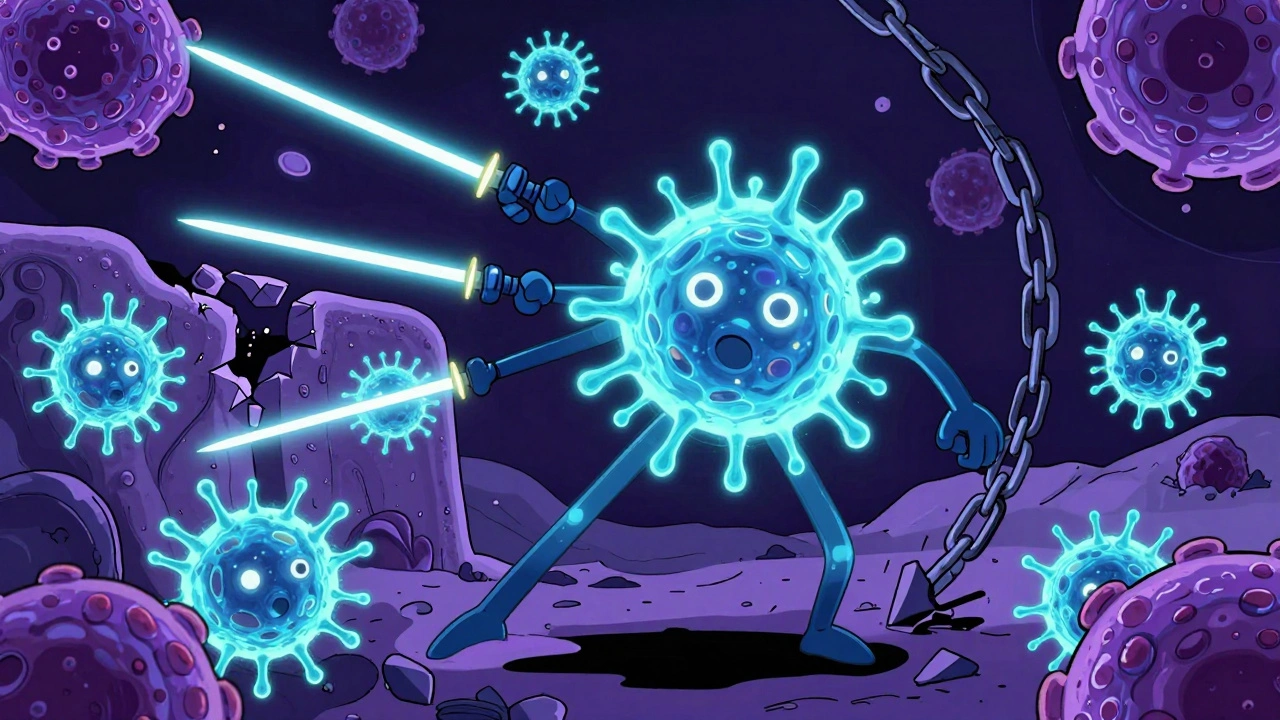
Checkpoint inhibitors and CAR-T cell therapy are transforming cancer treatment by harnessing the immune system. Learn how they work, who benefits most, their side effects, and why access remains unequal.
read more