
When your body holds onto too much fluid, it can raise your blood pressure, swell your ankles, or make you feel bloated. That’s where diuretics, medications that help your kidneys remove extra water and salt from your body. Also known as water pills, they’re one of the most common treatments for high blood pressure and heart failure. They don’t cure anything—they just help your body manage what’s already there. And while they sound simple, how they work, who they help, and what side effects to watch for can be surprisingly complex.
Not all diuretics are the same. Some, like Indapamide, a thiazide-like diuretic often used for high blood pressure and mild fluid retention, work slowly and gently. Others, like furosemide, act fast and strong—often used in people with advanced heart or kidney problems. Kidney disease, a condition where the kidneys can’t filter waste and fluid properly changes how diuretics are used. In these cases, dosing needs to be adjusted carefully, because your kidneys aren’t working the way they should. That’s why you can’t just take someone else’s prescription—even if they have the same diagnosis.
Diuretics are often paired with other meds. People with heart failure might take them with ACE inhibitors. Those with high blood pressure might combine them with calcium channel blockers. But mixing drugs isn’t always safe. Some diuretics can drop your potassium too low, making your heart beat irregularly. Others, like Indapamide, are less likely to cause that problem—which is why doctors sometimes choose them over older options. And if you’re on a diuretic and start feeling dizzy, weak, or notice your muscles cramping, it’s not just "getting old." It could be your electrolytes out of balance.
You’ll also find diuretics used in unexpected places. Someone with liver disease might take one to reduce belly swelling. A pregnant woman with preeclampsia might get one to manage fluid buildup. Even people taking certain psychiatric meds—like lithium—need to be careful, because diuretics can change how much lithium stays in their system. That’s why your doctor needs to know everything you’re taking, even over-the-counter supplements or herbal teas that might act like diuretics.
Side effects aren’t rare. Dry mouth, frequent urination, and tiredness are common. But more serious ones—like low sodium, high uric acid (which can trigger gout), or even kidney damage if misused—are real. That’s why you shouldn’t skip your checkups just because you feel fine. Blood tests catch problems before you feel them. And if you’re on a diuretic long-term, your doctor should be monitoring your kidney function, electrolytes, and blood pressure regularly.
The posts below cover real stories and facts about diuretics—not just what they do, but how they affect daily life. You’ll find detailed guides on Indapamide’s side effects, how kidney disease changes dosing, and why some people feel better on certain types while others don’t. There’s no fluff here—just what matters when you’re taking these pills every day. Whether you’re new to diuretics or have been on them for years, you’ll find something that helps you understand what’s really going on inside your body.
Posted by
Jenny Garner
10 Comments
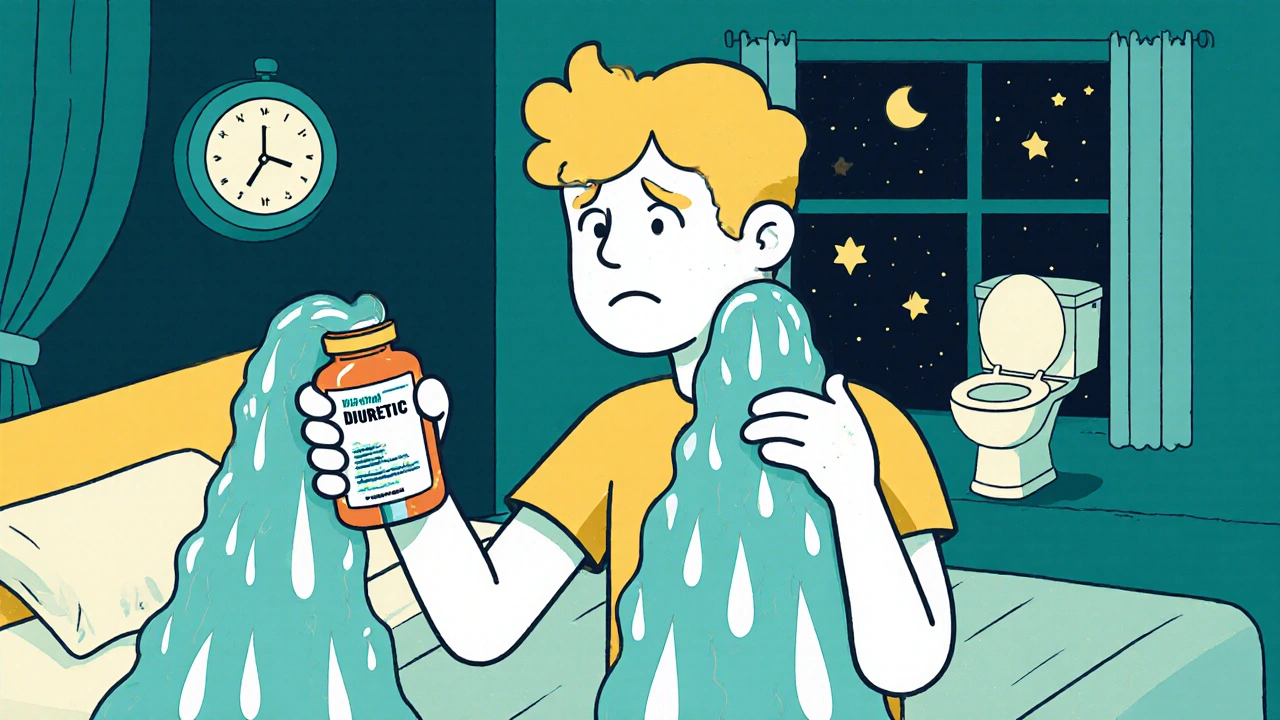
Many common medications like diuretics, antidepressants, and blood pressure drugs can cause frequent urination and urgency. Learn which drugs are most likely to trigger bladder side effects and what you can do about them.
read more