
When you hear FDA patent litigation, legal disputes over drug patents that delay generic versions from reaching the market. Also known as Hatch-Waxman litigation, it’s the quiet war behind your prescription price tag. This isn’t just courtroom drama—it’s the system that decides whether a life-saving drug stays at $1,000 a month or drops to $20 as a generic. The FDA doesn’t make these calls, but its approval process and patent rules turn every lawsuit into a high-stakes game of timing and money.
At the center of this are drug patents, legal protections that give brand-name companies exclusive rights to sell a drug for up to 20 years. But here’s the catch: those 20 years start when the drug is invented, not when it hits shelves. By the time the FDA approves it, companies often have only 7–12 years left to profit. That’s why they file multiple patents—on coatings, dosages, even delivery methods—to stretch their monopoly. Meanwhile, generic drug makers challenge those patents with Abbreviated New Drug Applications (ANDAs), betting they can prove the original patent is invalid or doesn’t cover what they’re selling. If they win, their version hits the market fast. If they lose, you keep paying the brand price.
These lawsuits don’t just affect big pharma. They ripple through hospitals, pharmacies, and your wallet. When a drug like Humira or Enbrel faces patent challenges, insurers scramble to switch patients to cheaper alternatives. But if litigation drags on for years—sometimes with settlements that delay generics—you’re stuck with high costs. The FDA tracks these cases in its Orange Book, but it doesn’t stop them. Real change comes from court rulings, congressional pressure, and the growing number of generic companies willing to fight back. In 2024 alone, over 100 patent challenges were filed against top-selling drugs, many targeting heart meds, biologics, and cancer treatments.
You won’t always see the battle, but you’ll feel the result. That’s why the posts below cover everything from how the FDA monitors generic safety after approval to how insurers push for cheaper drugs through formularies. You’ll find real stories about how patent delays affect access to cancer drugs, why biosimilars struggle to compete even after approval, and how patient reports help uncover hidden risks when generics finally arrive. This isn’t about legal jargon—it’s about who gets treated, when, and at what cost.
Posted by
Paul Fletcher
12 Comments
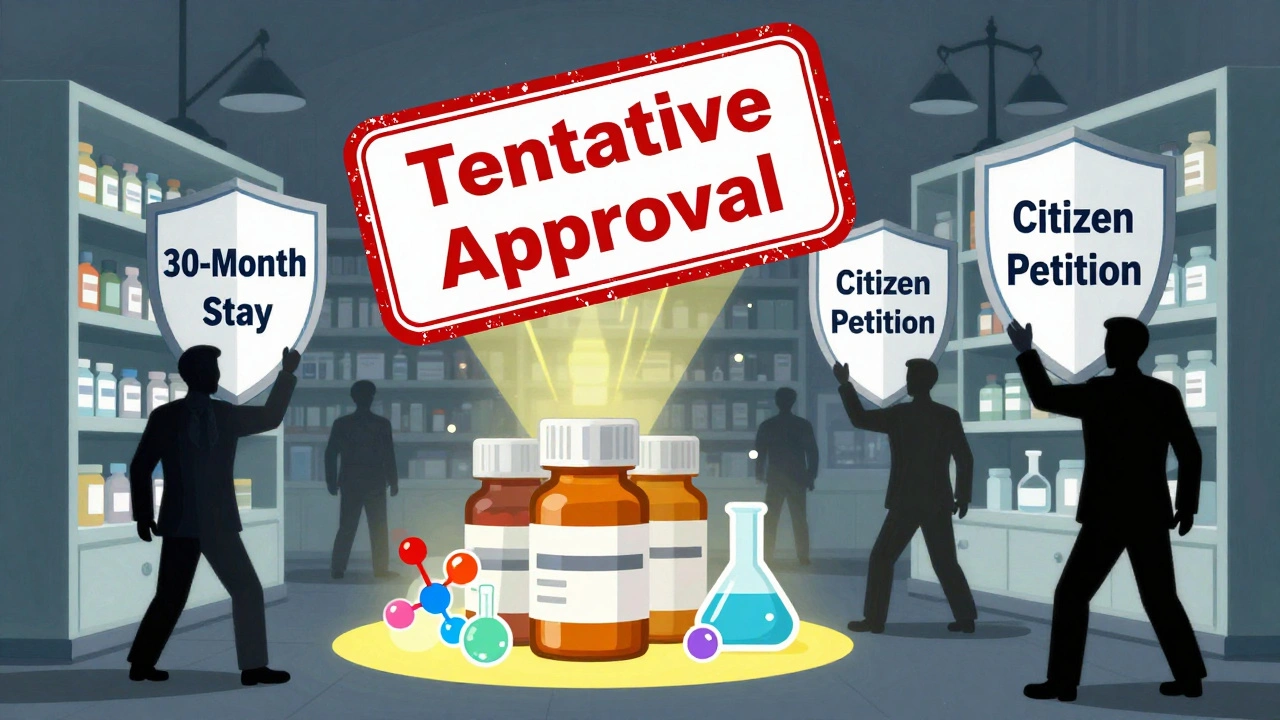
Tentative FDA approval for generics means the drug is scientifically ready - but legal, manufacturing, or economic barriers often block its market launch. Here's why so many generics never reach patients.
read more