
When you pick up a prescription, you might see two names: one you recognize, and one that looks like a chemical code. The first is the brand name drug, a medication developed and marketed by a pharmaceutical company under a patent. Also known as name-brand medicine, it’s what your doctor originally wrote on the script. The second is the generic drug, a version of that same medicine made after the patent expires, using the same active ingredient. Also known as generic medication, it’s often cheaper and just as effective—if it’s approved properly. The FDA requires generics to match brand names in strength, dosage, safety, and how they work in your body. That’s not marketing. That’s science.
But here’s what no one tells you: not all generics are created equal. Some are made in factories with stricter controls than others. The FDA generic approval, the process that ensures a generic drug is bioequivalent to the brand doesn’t end when the pill hits the shelf. The FDA keeps watching through the FAERS system, a real-time database that collects reports of side effects from patients and doctors. If a generic causes more problems than the brand, they pull it. That’s why some people swear their old brand worked better—it might have been a batch with different fillers, or a less reliable manufacturer. It’s not the active ingredient. It’s the rest of the pill.
Insurance companies push generics because they save money—sometimes 95% less than the brand. But that doesn’t mean you should accept any generic without asking. Ask your pharmacist: Is this the same as the one I used before? If you switch and feel different, it’s not in your head. Talk to your doctor. Some drugs, like those with a narrow therapeutic index, where the difference between a helpful dose and a toxic one is tiny, need extra care. Even small changes in how your body absorbs the drug can matter. That’s why the FDA treats NTI generics differently. And why some people stick with the brand, even when it costs more.
You don’t need to choose between saving money and staying safe. You need to know what’s in the bottle, who made it, and how to spot if something’s off. Below, you’ll find real stories and facts from patients, pharmacists, and regulators about what actually happens when you switch from brand to generic. Some switches work perfectly. Others don’t. And you deserve to know why.
Posted by
Jenny Garner
8 Comments
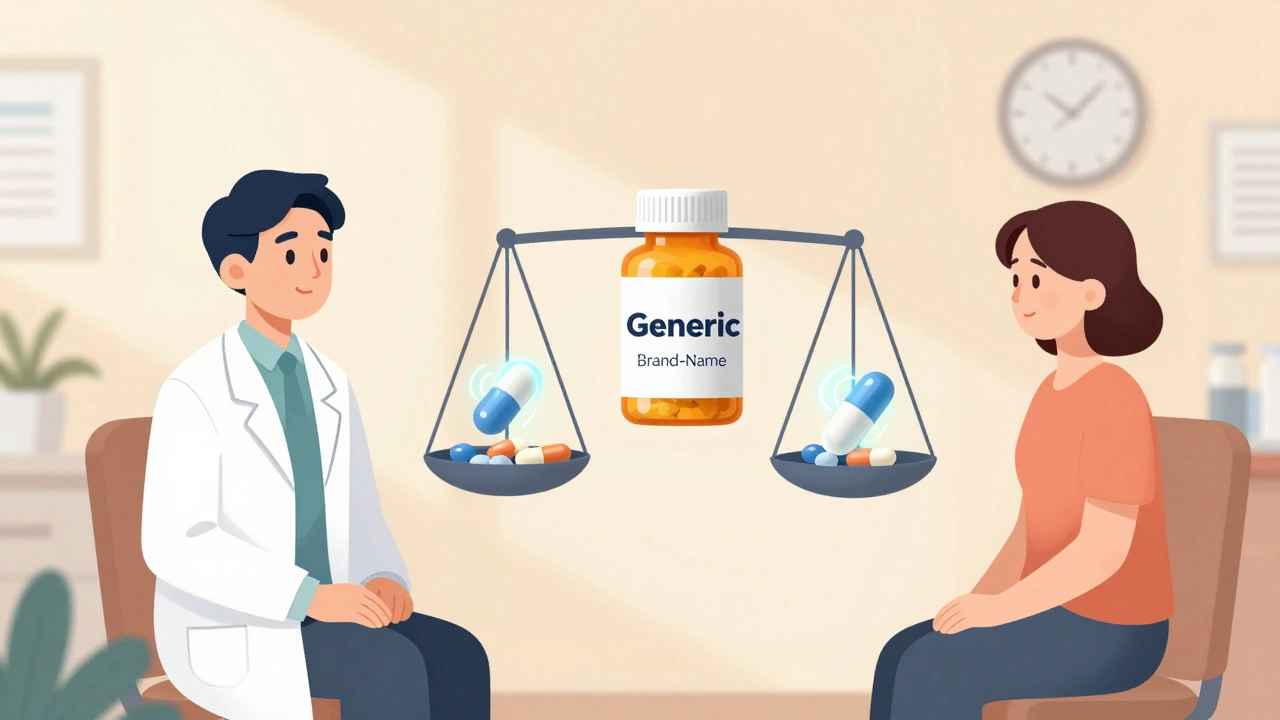
Learn how to talk to your doctor about generic vs. brand-name medications-when generics work just as well, when to ask for the brand, and how to save money without risking your health.
read more