
When you reach for a cold medicine, you might not think twice about pseudoephedrine, a decongestant found in many over-the-counter cold and allergy pills. Also known as Sudafed, it’s one of the most effective nasal decongestants available—but it’s also tightly controlled because it can be used to make methamphetamine. That’s why you can’t just grab it off the shelf like aspirin. You need to show ID, sign a logbook, and buy only a limited amount per day. These pseudoephedrine restrictions aren’t about making life harder—they’re about stopping dangerous drug production at the source.
These rules vary by state and country, but in the U.S., the Combat Methamphetamine Epidemic Act of 2005 set the baseline: you can buy no more than 3.6 grams per day and 9 grams per month. That’s roughly two or three boxes of regular Sudafed. Pharmacies keep electronic logs that track your purchases across all locations. If you hit the limit, you’re out of luck until the next month. It’s not just about quantity, either. Some stores keep pseudoephedrine behind the counter, and some states require a prescription even for small doses. The goal? Make it harder for drug makers to stockpile the chemical without hurting people who just need relief from a stuffy nose.
It’s not just the law you’re dealing with. Pseudoephedrine can raise your blood pressure, cause jitteriness, or keep you up at night. If you have high blood pressure, heart issues, or an overactive thyroid, it might not be safe for you at all. That’s why pharmacists often ask questions before selling it. And if you’re looking for something that works just as well without the restrictions, phenylephrine, a common alternative found in many cold medicines is often used instead—but studies show it’s much less effective for congestion. Nasal saline sprays, a simple, non-medicated option can help clear mucus without any risk. For long-term relief, antihistamines, like loratadine or cetirizine may be better if your congestion comes from allergies.
These restrictions don’t mean you’re stuck without options. They mean you need to be smarter about how you treat your symptoms. The system isn’t perfect—some people with legitimate needs still get caught in the net—but it’s designed to protect public health on both sides: keeping communities safe from meth labs, and making sure people get safe, effective care. Below, you’ll find real stories and facts about what happens when these rules clash with real life, how counterfeit drugs sneak in, and what to do when your usual medicine isn’t available anymore.
Posted by
Jenny Garner
9 Comments
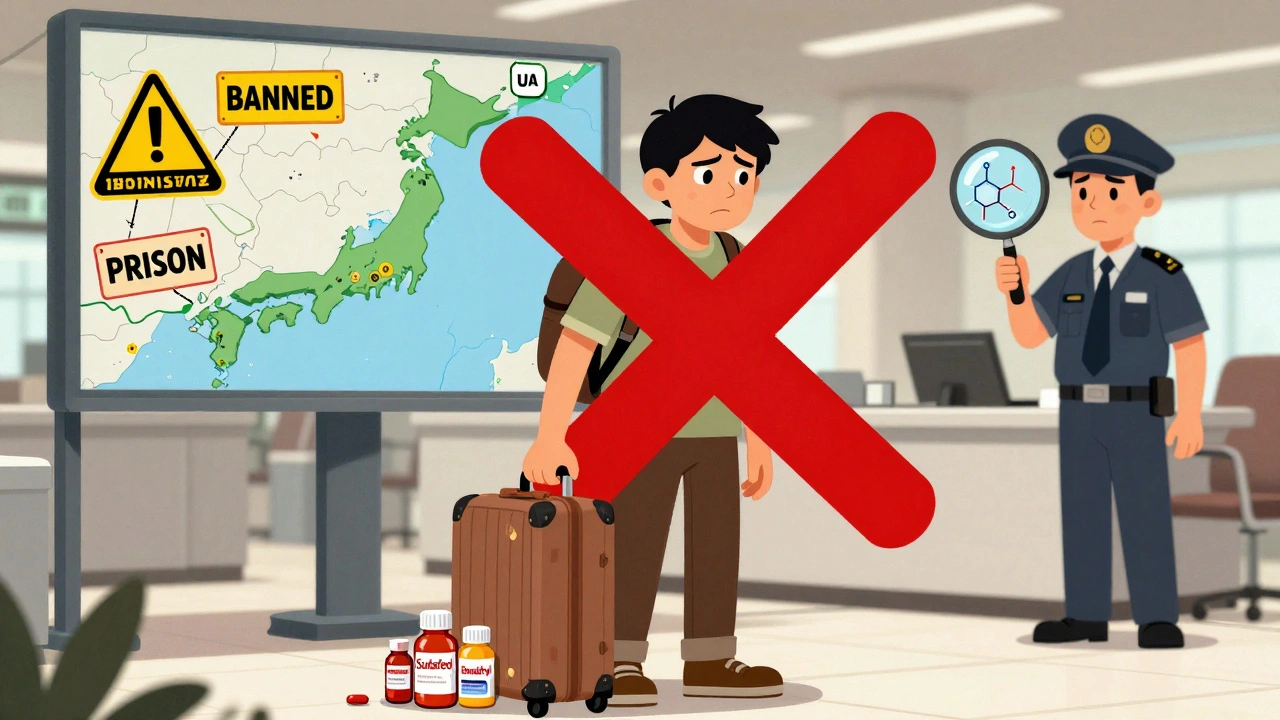
Many common OTC drugs like Sudafed, Benadryl, and Ambien are banned or restricted abroad. Learn which medications can get you arrested overseas and how to travel safely with your prescriptions.
read more